
If you love your dog and your wood floors, you know the struggle. Dogs bring joy and energy into our homes, but their claws, accidents, and habits can quickly damage beautiful wood floors. Many owners are surprised how fast scratches, stains, and dents can appear.
Protecting your wood floors from your dog is not just about keeping your house looking nice—it’s also about saving money on repairs and keeping your home healthy and comfortable for everyone.
The good news? You don’t need to choose between your pet and your flooring. With the right knowledge and a few simple habits, you can keep your wood floors in great shape, even with the most playful pup. In this guide, you’ll learn what really causes damage, how to prevent problems, and which solutions work best for every type of home and dog.
Some tips may surprise you, and a few are often missed by even experienced pet owners. Let’s dive in and protect your investment—and your peace of mind.
Understanding How Dogs Damage Wood Floors
Before you can protect your floors, it’s important to know how damage happens. Dog claws, accidents, and even water bowls can all create problems.
Scratches From Claws
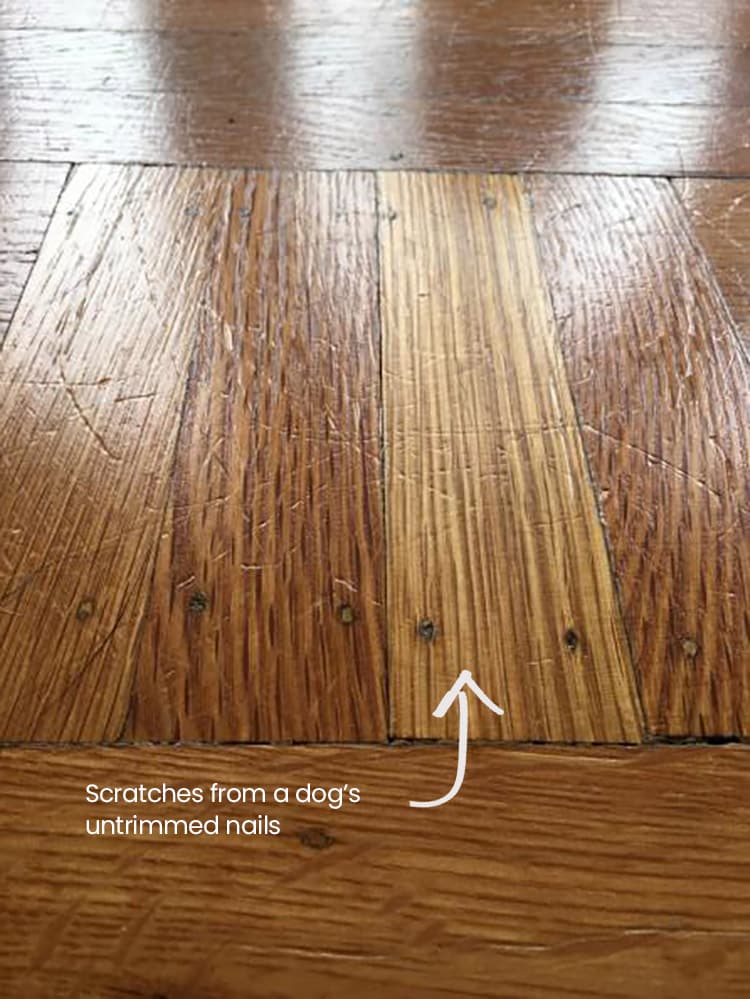
The most common damage comes from dog nails. Even small dogs can leave visible scratches. Over time, these scratches make the floor look dull and worn. Some scratches are just on the surface, but deep ones can be hard to fix.
Moisture And Accidents
Dog urine, water from bowls, or even drool can seep into wood and cause stains, warping, or bad smells. Wood floors do not like moisture. Even a small accident, if left too long, can leave a permanent mark.
Dirt, Grit, And Oils
Dogs bring in dirt and small stones from outside. When these get trapped under paws, they act like sandpaper. Over time, they wear down the finish and can even scratch the wood itself. Dog oils and fur can also build up, making the floor look dull.
Heavy And Repeated Impact
Jumping, running, or playing fetch can dent wood floors, especially if your dog is big or heavy. Repeated impact in the same area creates small dents and can loosen floorboards.
Non-obvious insight: Many owners think only large dogs cause problems, but small dogs with sharp nails can do just as much damage. Also, floors with a glossy finish often show scratches more than matte finishes.
Choosing The Right Wood Floor For Dog Owners
If you’re planning to install new wood floors or refinish existing ones, some choices are better for homes with dogs.
Wood Species
Some woods are harder than others. Hardwoods like oak, hickory, and maple resist scratches better than softwoods like pine or cherry. Here’s a quick comparison:
| Wood Species | Janka Hardness Rating* | Scratch Resistance |
|---|---|---|
| Oak | 1,290 | Good |
| Maple | 1,450 | Very Good |
| Hickory | 1,820 | Excellent |
| Pine | 690 | Poor |
*Janka rating measures wood hardness (higher is harder).
Finish Types
- Matte or satin finishes hide scratches better than glossy finishes.
- Oil-based polyurethane is durable and forms a protective coat.
- Aluminum oxide finishes (used on prefinished floors) are very tough.
Color And Grain
Floors with a natural color or strong grain pattern show scratches less. Very dark or very light floors, or smooth finishes, make marks more visible.
Engineered Vs. Solid Wood
Engineered wood has a real wood surface but is more stable and less likely to warp from moisture than solid wood.
Practical tip: If you’re still choosing, go for a harder wood with a matte finish. It will save you trouble for years.
Keeping Dog Nails Under Control
Regular nail care is one of the simplest and most effective ways to protect your wood floors.
Trimming Nails
Cut your dog’s nails every 1-2 weeks. If you hear “click, click” as your dog walks, the nails are too long. Use dog nail clippers or a grinder. If you’re not comfortable, ask a groomer or vet.
Smoothing The Edges
After trimming, use a nail file or grinder to smooth sharp edges. Even trimmed nails can scratch if they’re rough.
Protective Nail Caps
Soft nail caps (like Soft Paws) can be glued onto your dog’s nails. They’re safe, last 4-6 weeks, and prevent scratches. Some dogs need time to get used to them.
Non-obvious insight: Many dogs’ dewclaws (the “thumb” nail higher up the paw) are often forgotten. If left sharp, these can scratch floors too.
Using Rugs And Runners In High-traffic Areas
Rugs are a dog owner’s best friend for protecting wood floors.
Where To Place Rugs
- Entrances and exits – Catch dirt and moisture as your dog comes in.
- Hallways and main paths – Dogs often run or walk in the same places.
- Under food and water bowls – Prevent spills and water damage.
- Favorite resting spots – Protect where your dog likes to lie down.
Rug Materials
Choose rugs with a non-slip backing or use a rug pad. Washable, durable materials like nylon, polyester, or wool are best. Avoid rubber-backed rugs on wood floors, as they can trap moisture.
Cleaning Tips
Vacuum and wash rugs often. This prevents dirt from building up and scratching the floor.
Sample Placement Plan
| Location | Recommended Rug Size | Purpose |
|---|---|---|
| Entry Door | 2’ x 3’ | Catch dirt and water |
| Hallway | 2’ x 8’ runner | Protect high-traffic path |
| Under Bowls | 2’ x 3’ or mat | Stop spills |
| Dog Bed Area | 3’ x 5’ | Prevent wear and fur buildup |
Cleaning And Maintenance Habits That Make A Difference
Simple, regular cleaning protects floors from damage and keeps your home fresh.
Sweep And Vacuum Often
Dog hair, dirt, and grit scratch floors. Sweep or vacuum daily, especially in areas where your dog spends time. Use a vacuum designed for hard floors, not one with a beater bar.
Mop With The Right Cleaner
Use a damp mop (not soaking wet) with a wood floor cleaner. Avoid steam mops or harsh chemicals, as these can damage the finish.
Tackle Accidents Fast
If your dog has an accident, clean it up right away. Blot liquids with a paper towel, then use a wood-safe cleaner to remove any residue and odor.
Control Moisture
Keep your home’s humidity stable (ideally 35–55%). Too much moisture causes wood to swell and warp, while too little can make it crack.
Use Floor Protectors
Place felt pads under furniture. This prevents damage when your dog bumps or moves things.
Pro tip: Set up a cleaning routine—daily sweeping, weekly mopping, and immediate spill cleanup will add years to your floor’s life.
Setting Up Dog-friendly Zones
Creating special areas for your dog helps limit damage and keeps your home organized.
Dedicated Play Area
Use washable rugs or mats in your dog’s favorite play spot. This gives your dog a place to run and roll without risking the wood.
Feeding Station
Set up a feeding area with a waterproof mat under bowls. Some mats have raised edges to catch spills.
Sleeping Spot
Place your dog’s bed or blanket on a rug or mat. Dogs move and circle before lying down, which can scratch wood.
Gates And Barriers
Use pet gates to block off rooms or areas with delicate flooring, especially when you’re not home.
Training Your Dog
Train your dog to wipe paws on a mat when coming in. You can teach this using treats and repetition.
Dealing With Dog Accidents And Spills
Accidents are part of life with dogs. Fast action and the right cleaners are key.
Handling Urine And Feces
- Blot up as much liquid as possible with a paper towel or cloth.
- Use an enzyme cleaner made for wood floors. Enzyme cleaners break down odor and prevent staining.
- Wipe with a damp cloth, then dry the area completely.
If urine sits for long, it can seep into cracks and cause dark stains. In that case, you may need professional help or to refinish that section.
Cleaning Water And Food Spills
Pick up spills quickly and dry the spot. For water bowls, use a tray or waterproof mat to catch drips.
Odor Control
If you notice a lingering smell, sprinkle baking soda on the area, let it sit for an hour, then vacuum. For tough cases, use a wood-safe odor eliminator.
Non-obvious insight: Many wood floor finishes are not fully waterproof. Even sealed floors can let moisture through tiny cracks, so speed is essential.
Grooming And Hygiene Tips
A clean dog means cleaner floors. Good grooming protects both your pet and your wood.
Bathing
Bathe your dog regularly (once a month or as needed). Clean fur sheds less and brings less dirt inside.
Paw Care
Wipe paws with a damp cloth after walks, especially if it’s muddy or snowy. You can keep a towel by the door for this purpose.
Fur Control
Brush your dog often to reduce shedding. Less fur means less sweeping, and fewer oils and dander on the floor.
Ear And Skin Care
Check for ear infections or skin issues that might cause your dog to scratch more. Scratching can lead to more floor damage.
Practical tip: Keeping your dog’s bedding clean also reduces odors and dirt on your floors.
Credit: flawlessfloorsbaltimore.com
Using Protective Coatings And Sealants
A strong finish adds a layer of defense between your dog and your wood.
Types Of Floor Finishes
- Polyurethane (water or oil-based): Most common, easy to apply, and durable.
- Aluminum oxide: Found on prefinished planks, extremely tough.
- Penetrating oils: Give a natural look but are less protective.
Applying A Fresh Coat
Every few years, add a new coat of finish to high-traffic areas. This fills in small scratches and keeps the wood protected.
Spot Treatments
For small scratches, use a wood floor repair marker or a colored wax stick. For dull spots, use a polish designed for wood floors.
Professional Refinishing
If damage is deep, professionals can sand and refinish the floors. This is expensive but can make floors look new again.
Non-obvious insight: Some DIY “scratch repair” products can make the problem worse if the color does not match. Test in a hidden spot first.
Smart Solutions For Water Bowls
Water bowls are a hidden risk for wood floors. Even careful dogs drip, and spills happen.
Best Practices
- Use a silicone mat or a tray under water bowls. Silicone is waterproof and does not slide.
- Choose heavier or no-tip bowls that are hard to move.
- Place bowls in a tiled or easy-to-clean area if possible.
Automatic Waterers
Automatic water dispensers can help, but they must be checked for leaks. Always place a mat underneath.
Cleaning
Clean under the mat and bowl regularly. Water can get trapped, causing mold or stains.
Extra Tip
If your dog loves to play in water, consider a separate water play area outside.
Regular Inspections And Repairs
Catching small issues early prevents bigger problems.
Inspect Floors Weekly
Look for scratches, stains, or raised boards, especially in dog hangout spots.
Fix Scratches Quickly
Shallow scratches can be buffed or filled with a repair marker. Deeper scratches may need sanding.
Watch For Signs Of Moisture Damage
If you see swelling, dark spots, or a musty smell, address it immediately. Left untreated, moisture can ruin wood floors.
Move Furniture Occasionally
Moving rugs and furniture lets you check for hidden damage and clean underneath.
Training Your Dog For Floor Safety
A well-trained dog is less likely to damage your floors.
Nail-related Behavior
Teach your dog not to jump up on people or furniture. This reduces deep scratches.
Calm Entry
Train your dog to wait calmly at the door. Excited dogs running in can track in dirt and scratch floors.
No Chasing Games Indoors
Keep fetch and chase games outside or on carpeted areas. This prevents dents and heavy wear.
Reward Good Behavior
Use treats and praise to reinforce gentle walking and calm play inside.
Practical tip: It’s easier to train good habits early, but even older dogs can learn with patience.

Credit: www.nationalfloorsdirect.com
When To Consider Alternative Flooring Solutions
Some homes or lifestyles need extra help. There are options that look like wood but are more dog-friendly.
Wood-look Alternatives
- Luxury vinyl plank (LVP): Looks like wood, is waterproof, and resists scratches.
- Laminate: Tough and easy to clean, but can be slippery for dogs.
- Tile: Very durable, but cold and hard.
Area Rugs Or Carpet Tiles
If you can’t change your floors, add large area rugs or carpet tiles. These protect high-traffic areas and can be replaced if damaged.
Transition Mats
In homes with multiple flooring types, use mats at the transition points to catch dirt and moisture.
Non-obvious insight: Some “pet-friendly” floors are more slippery, which can be hard on older dogs’ joints. Always test with your pet before making a big change.
Realistic Expectations And Long-term Care
No floor is 100% safe from dogs. The goal is to prevent most damage and deal with problems quickly.
Accept Some Wear
Even with the best care, some small scratches or dents will happen. These can add character to your floors.
Budget For Maintenance
Set aside money for regular cleaning, refinishing, or small repairs. It’s cheaper than replacing the whole floor.
Insurance
Some homeowners’ insurance policies cover damage from pets. Check your policy and ask your agent.
Keep Records
Write down when you trim nails, apply floor finish, or clean rugs. A simple notebook or phone reminder helps you stay on track.
Credit: napervillehardwood.com
Comparing Key Dog-proofing Solutions
Here’s a quick overview of the most effective ways to protect wood floors from dogs:
| Solution | Effectiveness | Cost | Effort Required |
|---|---|---|---|
| Regular Nail Trimming | High | Low | Low |
| Rugs and Runners | High | Medium | Medium |
| Protective Coating | Medium-High | Medium | Medium |
| Training | High | Low | High (initially) |
| Alternative Flooring | Very High | High | High (one-time) |
Frequently Asked Questions
How Often Should I Trim My Dog’s Nails To Protect My Wood Floors?
Trim your dog’s nails every 1–2 weeks. If you hear their nails clicking on the floor, it’s time for a trim. Keeping nails short and smooth reduces scratches and protects your floor’s finish.
What Type Of Rug Backing Is Safe For Wood Floors?
Rug pads made of felt or natural rubber are safe for wood floors. Avoid PVC or cheap rubber, which can trap moisture and damage the finish. Always check the rug pad’s label for compatibility with wood flooring.
Can I Use Homemade Cleaners For Dog Messes On Wood Floors?
Homemade cleaners (like vinegar and water) are not recommended for wood floors, as vinegar can dull the finish over time. Use a cleaner specifically made for wood floors, or an enzyme cleaner for pet messes.
Are All Wood Finishes Equally Protective Against Dogs?
No, some finishes are stronger. Polyurethane (especially oil-based) and aluminum oxide finishes provide the best protection. Matte finishes also hide scratches better than glossy ones.
Should I Let My Dog’s Water Bowl Sit Directly On The Wood Floor?
No, always use a waterproof mat or tray under your dog’s water bowl. Even small drips can cause stains or warping if they reach the wood. Check under the mat often to be sure the area stays dry.
Taking care of wood floors with dogs in the house does require some effort, but it’s completely possible. Smart choices, regular habits, and a little planning go a long way. You can enjoy the warmth and beauty of wood flooring, along with the love and fun that your dog brings. For more floor care tips, the American Kennel Club offers helpful advice.
With the right approach, your floors—and your bond with your dog—can last for many happy years.