
Spotting a true Labarge coffee table can feel like a treasure hunt. These tables, known for their style and craftsmanship, have become prized pieces for collectors and home decorators. But with so many vintage and reproduction tables on the market, how do you know you’re looking at the real deal? Many people mix up Labarge tables with similar designs or overlook small details that reveal their true value. Whether you found a table at an estate sale, inherited one, or are hunting online, being able to confidently identify a Labarge coffee table can save you money and help you invest in genuine quality.
This guide will walk you through every aspect of Labarge coffee tables. You’ll learn about their history, key design features, materials, markings, and the subtle clues that beginners often miss. We’ll also cover ways to compare Labarge tables to similar brands, practical inspection tips, and common mistakes to avoid.
By the end, you’ll be able to spot a genuine Labarge coffee table with ease, making your next purchase (or discovery) a smart one.
Understanding Labarge: The Background
Labarge is a name that stands out in the world of luxury furniture. Founded in the 1940s in Grand Rapids, Michigan, the company started by making mirrors and soon expanded to tables and other decorative pieces. Their coffee tables quickly gained a reputation for elegance, unique shapes, and high-quality craftsmanship.
Unlike mass-produced furniture, Labarge pieces are often made in limited numbers. This makes them more valuable and collectable. The company’s focus has always been on using fine materials like brass, glass, marble, and gilded wood. Their designs borrow from European classical styles, with influences from French, Italian, and English antiques.
Today, a real Labarge coffee table is not just a functional item—it’s a statement piece that can anchor a living room and spark conversation. But with so many vintage and modern tables available, understanding what makes Labarge special is your first step.
Key Design Features Of Labarge Coffee Tables
Spotting a Labarge coffee table often starts with its design features. These tables are known for specific styles and details that set them apart.
Signature Shapes And Styles
Labarge coffee tables come in several distinct shapes:
- Oval and rectangular: These are the most common shapes. The oval tables often have softly curved edges, which give them a classic yet modern look.
- Round and square: Less common but still authentic, these shapes often feature elaborate bases or legs.
- Demilune (half-moon): Some rare models use this elegant shape, typically for smaller rooms or as accent tables.
Labarge often blends classic European styles with a modern touch. For example, you might see neoclassical columns, Italian-style scrolls, or French gilded details mixed with clear glass tops.
Unique Bases And Legs
One of the easiest ways to spot a Labarge table is by looking at its base and legs. Labarge is known for:
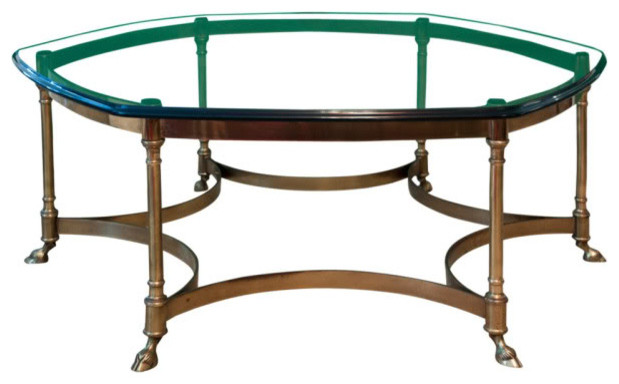
- Curved, cabriole legs: Inspired by French antiques, these legs curve outward and then inward, ending in a graceful foot.
- Gilded animal motifs: Some tables feature lion’s paw feet, rams’ heads, or other animal shapes, especially on bases.
- Scrolled brass or iron: Labarge often uses metalwork with intricate scrolls, twists, or rope details.
These details are rarely found in mass-market tables. If you see elaborate, well-crafted bases, that’s a strong clue.
Materials And Construction
Labarge is famous for using top-quality materials. Most coffee tables feature:
- Thick glass tops: Usually beveled, the glass is much heavier and clearer than cheap imitations.
- Solid brass or gold-toned metal: The metal has a weighty feel and a warm, deep color (not the bright yellow of fake gold finishes).
- Stone or marble insets: Some Labarge tables have marble tops or accents, always with a smooth, cold feel and natural veining.
- Gilded or painted wood: The wood is often hand-gilded with gold leaf or painted with antique finishes.
A key point: Labarge never used plastic or lightweight metals. If a table feels flimsy, it’s probably not authentic.
Decorative Details
Labarge coffee tables are famous for their ornate decorations. Look for:
- Rope or tassel motifs: Some tables use cast brass ropes or faux tassels as part of the frame.
- Beveled edges: The glass top often has a wide, smooth bevel, about half an inch deep.
- Etched or painted designs: Some vintage models have etched glass or painted floral details on the frame.
These decorative touches often require skilled handwork, which shows in the crispness and depth of the details.
Identifying Authentic Labarge Markings
Genuine Labarge coffee tables often include manufacturer markings. Knowing where and how to find these marks can give you peace of mind about authenticity.
Labels And Stickers
Most Labarge tables made from the 1960s onward have a gold or black sticker underneath the glass top or on the bottom of the frame. These stickers usually read:
- “Labarge”
- “Labarge, Grand Rapids, Michigan”
- Sometimes, “Made in Italy for Labarge” (for imported pieces)
The font is often elegant and serifed. Modern stickers may include a model number or “Made in USA.” If the sticker is missing but there’s a clear spot where it once was, that can still be a clue (stickers often fall off after decades).
Brass Plaques
A few high-end Labarge tables use a small brass plaque screwed into the frame’s underside. These are rarer but highly desirable. The plaque will always be neatly attached, not glued.
Engraved Or Stamped Marks
Some vintage Labarge tables have a stamped or engraved logo on the brass or wood, usually in an inconspicuous spot under the table. This mark may be faint, so use a flashlight to check carefully.
Paper Tags
Occasionally, you’ll find an old paper tag with a handwritten number or style name. These are original to the piece and can help confirm authenticity, but are easily lost over time.
Not all authentic tables will have a marking, especially older ones. But if you find one, it’s a strong sign.
Comparing Labarge To Similar Brands
It’s easy to confuse Labarge tables with those from other high-end makers. Here’s a comparison to help you spot the differences:
| Brand | Key Features | Common Materials | Typical Markings |
|---|---|---|---|
| Labarge | Ornate bases, beveled glass, gold/brass, European influences | Brass, glass, marble, gilded wood | Sticker, plaque, stamp |
| Maitland-Smith | Exotic woods, inlays, Asian motifs, heavier construction | Stone, wood, brass, inlay | Brass plate, paper tag |
| La Barge (French) | More delicate, often lighter construction, French antique styles | Wood, gilt, glass | Burned stamp or paper label |
| Baker | Classic American/European styles, simpler lines, less ornate | Wood, glass, metal | Brass badge or stamp |
Labarge tables tend to have more sculptural bases and a heavier, more luxurious feel compared to others. Also, the spelling—“Labarge” (no space)—is a US brand, while “La Barge” (with a space) may refer to French pieces, which are not the same.
Evaluating Materials And Construction Quality
Understanding what materials Labarge uses helps you distinguish real pieces from fakes or later reproductions.
Brass Vs. Brass-plated
Labarge uses solid brass or thick brass-plated steel—not thin, cheap metal. Solid brass is:
- Heavy (pick up a leg; it should feel substantial)
- Slightly warm gold in color, not bright yellow
- Develops a gentle patina with age, not rust
Fake tables often use light, hollow tubes or painted metal.
Glass Quality
Labarge glass tops are usually 1/2 inch thick and very clear. They have:
- Wide, smooth beveled edges
- No bubbles or waviness in the glass
Tap the glass; it should sound solid, not tinny. Cheap tables often use thinner or lower-quality glass.
Marble And Stone
If your table has a stone top, it should be real marble. Real marble is:
- Cold to the touch
- Shows natural veins and color changes
- Heavy for its size
Fake marble (resin or painted stone) feels warm and looks too perfect.
Wood Frame And Gilding
Wood parts on Labarge tables are either:
- Hand-gilded with real gold leaf
- Painted with an antique finish
Look for brush strokes, subtle cracks, or uneven color—signs of handwork. Mass-produced tables have flat, uniform paint.
Researching The Table’s History
Finding out where and when a table was made helps confirm if it’s a Labarge.
Provenance And Paperwork
If you’re buying from a dealer or at auction, ask for provenance—the table’s history. Original receipts, catalogs, or family stories add credibility. You can also ask for old photos of the table in the seller’s home.
Catalog References
Labarge published catalogs in the 1970s, 1980s, and 1990s. If you can find a copy (sometimes available online or in libraries), you may spot your table’s exact model. Matching the design and features to catalog images is a strong confirmation.
Auction And Dealer Listings
Many Labarge tables appear in online auction archives. Searching for your table’s shape or features may turn up old listings with photos, descriptions, and sale prices.
Serial Numbers And Model Info
Some newer Labarge tables have a model number on the sticker or plaque. If you find one, try searching it online or contacting Labarge or a vintage furniture expert.
Credit: outoftheboxstore.net
Common Mistakes When Identifying Labarge Tables
Even experienced buyers sometimes make mistakes. Here are some pitfalls to avoid:
- Confusing Labarge with “La Barge”: The US Labarge company is different from French “La Barge.” French tables are usually lighter and less ornate.
- Assuming all gold tables are Labarge: Many companies make gold/brass tables, especially in the Hollywood Regency style.
- Overlooking subtle fakes: Some reproductions use thick glass and metal, but the design details are off. Look closely at feet, scrolls, and decoration.
- Relying only on markings: Stickers and plaques can be faked or moved. Always check the overall build and style.
- Ignoring repairs or modifications: Some tables have had parts replaced—like a new glass top or painted legs. Compare closely with known Labarge designs.
- Trusting online descriptions: Sellers often list any gold/brass/glass table as “Labarge style.” Ask for close-up photos of marks and features.
Practical Inspection Tips
When you find a table you think might be Labarge, use these tips:
- Bring a flashlight: Check underneath for stickers, stamps, or plaques.
- Feel the weight: Authentic Labarge tables are heavy, especially the base and glass.
- Examine the details: Look for clean welds, crisp castings, and detailed decorations.
- Check for repairs: Look for mismatched screws, new glass, or repainted surfaces.
- Ask the seller: Even a simple question like “How long have you had it?” can reveal history.
If you’re shopping online, request extra photos—especially of the base, legs, and any markings.
Credit: www.houzz.com
Value And Collectibility
Labarge coffee tables are not just stylish—they are highly collectable. Their value depends on several factors:
- Age: Older (1960s-1980s) tables tend to be more valuable, especially with original markings.
- Condition: Mint condition tables fetch higher prices. Minor wear is normal, but chips, cracks, or missing parts lower value.
- Rarity: Unusual shapes, rare motifs, or limited editions are more desirable.
- Materials: Tables with marble, heavy brass, or special finishes often command higher prices.
In 2023, a vintage Labarge coffee table in good condition might sell for $1,000 to $3,500 depending on design and location. Some rare models can reach $5,000 or more at auction.
Real-world Examples: Labarge Coffee Table Models
To help you identify common Labarge tables, here are three examples:
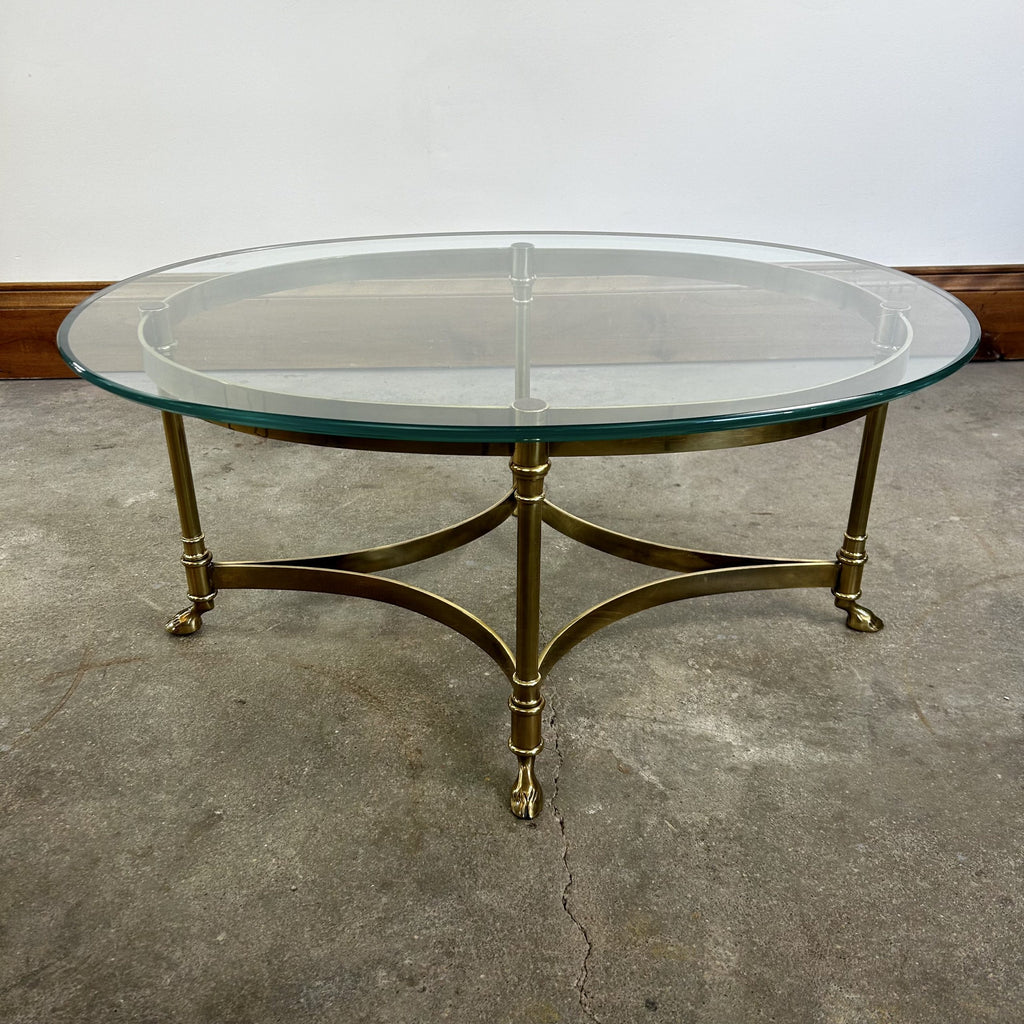
Classic Brass And Glass Oval Table
- Shape: Oval
- Base: Four curved brass legs with lion paw feet, joined by a stretcher with a central rosette
- Top: 1/2 inch beveled glass, removable
- Decoration: Rope motif around the frame
- Markings: Gold sticker under frame
This is one of the most popular Labarge models from the 1970s and often copied by other brands.
Italian Giltwood And Marble Table
- Shape: Rectangular
- Base: Carved, hand-gilded wood in an Italian neoclassical style
- Top: Cream or green marble slab
- Decoration: Acanthus leaves and scrolls
- Markings: “Made in Italy for Labarge” sticker
These tables are heavier and more ornate, showing the European influence.
Hollywood Regency Rope Motif Table
- Shape: Round
- Base: Cast brass ropes, twisted and looped, with tassel feet
- Top: Thick glass, wide bevel
- Decoration: Rope and tassel details
- Markings: Brass plaque on underside
This model is especially sought after by fans of Hollywood Regency style.
How To Authenticate A Labarge Coffee Table: Step-by-step
If you’ve found a table you believe is Labarge, follow these steps:
- Check for markings: Look for stickers, plaques, or stamps under the frame.
- Assess materials: Is the metal solid brass? Is the glass thick and beveled? Is marble real?
- Examine design: Do the legs, base, and decorations match known Labarge styles? Compare with catalog images or online archives.
- Ask about provenance: Where did the table come from? Any paperwork or old photos?
- Inspect condition: Are there signs of repairs or replaced parts?
- Compare with similar brands: Use the earlier comparison table to check if it might be a different maker.
- Research model numbers: If present, search for them online or in Labarge catalogs.
Don’t be afraid to walk away if something doesn’t add up. Authenticity is key to value.
Labarge Coffee Table: Modern Vs. Vintage
Today, Labarge is still in business and makes tables in a similar style, but there are some differences between vintage (1960s-1990s) and modern Labarge coffee tables.
| Feature | Vintage Labarge | Modern Labarge |
|---|---|---|
| Materials | Solid brass, thick glass, marble, hand-gilded wood | Brass-plated steel, modern glass, engineered wood |
| Markings | Gold/black sticker, sometimes plaque | Modern sticker with barcode, newer logos |
| Design | More ornate, heavier, detailed handwork | Simpler, cleaner lines, less handwork |
| Value | High for rare/unique pieces | Lower, but still collectible |
Vintage tables are usually more sought after by collectors. However, modern Labarge tables still offer quality and style, just with a more streamlined look.
Credit: www.houzz.com
Insider Tips For Buying Or Selling Labarge Coffee Tables
If you’re in the market—either buying or selling—keep these tips in mind:
- Photograph all angles: Good photos help with identification and boost value in online listings.
- Highlight markings: Show close-ups of stickers, plaques, or stamps.
- Describe materials accurately: Use words like “solid brass,” “beveled glass,” or “hand-gilded wood.”
- Don’t overclean: Patina and minor wear show authenticity. Avoid harsh chemicals on brass or gilding.
- Verify shipping costs: Labarge tables are heavy and fragile. Get a quote before buying online.
- Be wary of bargains: If a table seems too cheap, double-check authenticity.
If you need more information, you can always consult reference guides or reach out to a professional appraiser. A reliable source of information is Wikipedia.
Frequently Asked Questions
How Can I Tell If A Labarge Coffee Table Is Vintage Or Modern?
Vintage Labarge tables usually have thicker brass, heavier glass, and more ornate details. Their stickers are often gold or black and may show wear. Modern tables have cleaner lines, lighter brass-plated steel, and a newer sticker with a barcode.
Where Are Labarge Coffee Tables Made?
Most Labarge tables were made in Grand Rapids, Michigan. Some, especially marble or giltwood models, were produced in Italy and marked “Made in Italy for Labarge.”
Are Labarge Coffee Tables Valuable?
Yes, genuine Labarge coffee tables can be highly valuable, especially vintage models in good condition. Prices often range from $1,000 to $3,500 or more, depending on design, rarity, and materials.
What Styles Are Labarge Coffee Tables Known For?
Labarge is known for European-inspired designs, especially neoclassical, Hollywood Regency, and Italian styles. Common features include rope and tassel motifs, lion paw feet, and gilded finishes.
Can I Restore A Damaged Labarge Coffee Table?
Yes, but restoration should be done carefully. Use gentle cleaners, avoid harsh chemicals, and consider professional help for gilding or marble repairs. Over-restoring can reduce value, so it’s best to keep as much original material as possible.
Final Thoughts
Identifying a real Labarge coffee table is both an art and a science. By paying close attention to design features, materials, and markings, you can separate true Labarge pieces from imitations. Remember, authenticity adds value—not just in dollars, but in the story and style your table brings to your home. Whether you’re a collector, a decorator, or someone who loves unique furniture, the knowledge you now have will help you make smart, confident decisions the next time you spot a Labarge coffee table.