
Building a raised floor over a concrete slab can change the way a space looks and feels. It improves comfort, adds insulation, and creates a level surface for new flooring. For many homeowners and renovators, it also solves problems like cold floors, moisture, and uneven concrete.
But the process is not as simple as laying boards over concrete. Careful planning, choosing the right materials, and following smart construction steps are necessary for a safe and long-lasting result.
This guide will walk you through everything you need to know. From understanding the reasons for building a raised floor to step-by-step instructions, material choices, and important tips, you’ll find the confidence to take on this project. Whether you’re finishing a basement or upgrading a garage, you’ll be ready to make good decisions and avoid common mistakes.
Why Build A Raised Floor Over Concrete Slab?
Many people choose to install a raised floor over a concrete slab for several reasons. A concrete floor is hard, cold, and sometimes damp. If your basement or garage feels uncomfortable, a raised floor can change that. Here are the main benefits:
- Insulation: Concrete absorbs and transmits cold, making floors chilly. A raised floor lets you add insulation, making the area warmer and more comfortable.
- Moisture Protection: Concrete can hold moisture, which damages flooring and causes mold. A raised floor with a vapor barrier protects your investment.
- Leveling Uneven Surfaces: Old slabs may be uneven or cracked. A raised floor creates a flat, sturdy base for any finish.
- Hiding Wires and Pipes: Need to run wires or pipes? The space under a raised floor keeps them hidden and accessible for future work.
- Comfort and Sound Dampening: Wood and insulation absorb sound and feel softer underfoot.
- Easier Flooring Upgrades: Installing wood, laminate, or carpet is simpler and lasts longer on a properly built raised floor.
Many homes with concrete slabs—especially older basements—suffer from cold, dampness, or bumpy surfaces. A raised floor solves these issues and adds real value to your home.
Planning Your Raised Floor Project
Before you start, a clear plan is essential. Mistakes can lead to wasted money and time, or problems like squeaky floors and moisture damage. Here’s how to plan your project the right way.
Measure Your Space
Start by measuring the length and width of the room. Multiply these to get the total square footage. This will help you buy the right amount of material. Don’t forget to measure around obstacles like posts, stairs, or pipes.
Check The Ceiling Height
A raised floor adds 2 to 6 inches to your floor. Make sure your ceiling is high enough so the room doesn’t feel cramped. Most building codes require at least 7 feet (84 inches) of finished ceiling height for living spaces.
Inspect For Moisture
Concrete often holds moisture, especially in basements. Tape a 2-foot square of plastic to the floor for 48 hours. If water appears under the plastic, you have a moisture issue. Fix leaks, use a dehumidifier, or apply a concrete sealer before starting.
Local Building Codes And Permits
Check your city or county’s building codes. Some areas require permits for raised floors, and have rules about insulation, fire safety, and stair height. Don’t skip this step—inspections protect you and future buyers.
Choose Your Finished Flooring
Think about what type of finished floor you want (hardwood, laminate, carpet, tile). This can affect the subfloor design and materials you use.
Tools And Materials Needed
Choosing the right materials and tools will save you headaches and give you a better result. Here’s what you’ll need for most raised floor projects:
Essential Materials
- Pressure-treated lumber: For sleepers or framing (usually 2x4s or 2x6s)
- Plywood or OSB: For the subfloor (minimum 3/4-inch thick)
- Vapor barrier: Heavy-duty plastic sheeting (6 mil or thicker)
- Insulation: Rigid foam board (for under the subfloor)
- Construction adhesive
- Concrete screws or anchors
- Shims: For leveling
- Flooring underlayment (if required by finished floor type)
Tools
- Tape measure
- Chalk line
- Circular saw or table saw
- Hammer or drill
- Impact driver
- Level (at least 4 feet)
- Utility knife
- Pry bar
- Caulk gun
- Safety gear (gloves, goggles, dust mask)
You may also need a moisture meter, especially if you’re worried about dampness.
Comparing Raised Floor Systems
There are several ways to build a raised floor over concrete. The most common are sleepers, full joist systems, and modular subfloor panels. Each method has pros and cons, depending on your needs and budget.
Here’s a comparison to help you decide:
| System Type | Height Added | Insulation Potential | Best For | Difficulty |
|---|---|---|---|---|
| Sleepers (2×4/2×6 on edge) | 2-6 inches | High | Basements, uneven slabs | Intermediate |
| Full Joist System | 6+ inches | Very High | Major renovations, high moisture | Advanced |
| Modular Subfloor Panels | 1-2 inches | Low to Medium | DIY, low ceilings | Easy |
Sleepers are strips of wood laid flat or on edge over the slab, then covered with plywood. This is the most common and cost-effective method.
A full joist system uses larger beams (like 2×6 or 2×8) to create a crawlspace. It’s more expensive but adds extra insulation and room for wiring.
Modular subfloor panels (like DRIcore) click together and are fast to install. They’re best for small areas or low ceilings, but cost more per square foot.
Step-by-step Guide: Building A Raised Floor Over Concrete Slab
Now let’s break down the full process, step by step. This guide focuses on the sleeper method, as it’s most common for basements and home renovations.
Step 1: Prepare The Concrete Surface
Clean the slab thoroughly. Sweep away dust, dirt, and debris. Remove any loose paint, adhesive, or old flooring. If the slab is very rough, patch holes or cracks with concrete patch. Make sure the surface is as flat as possible—high spots can cause squeaks later.
Pro Tip: Use a long straightedge or level to find low or high areas. Mark them with chalk for repair.
Step 2: Install A Vapor Barrier
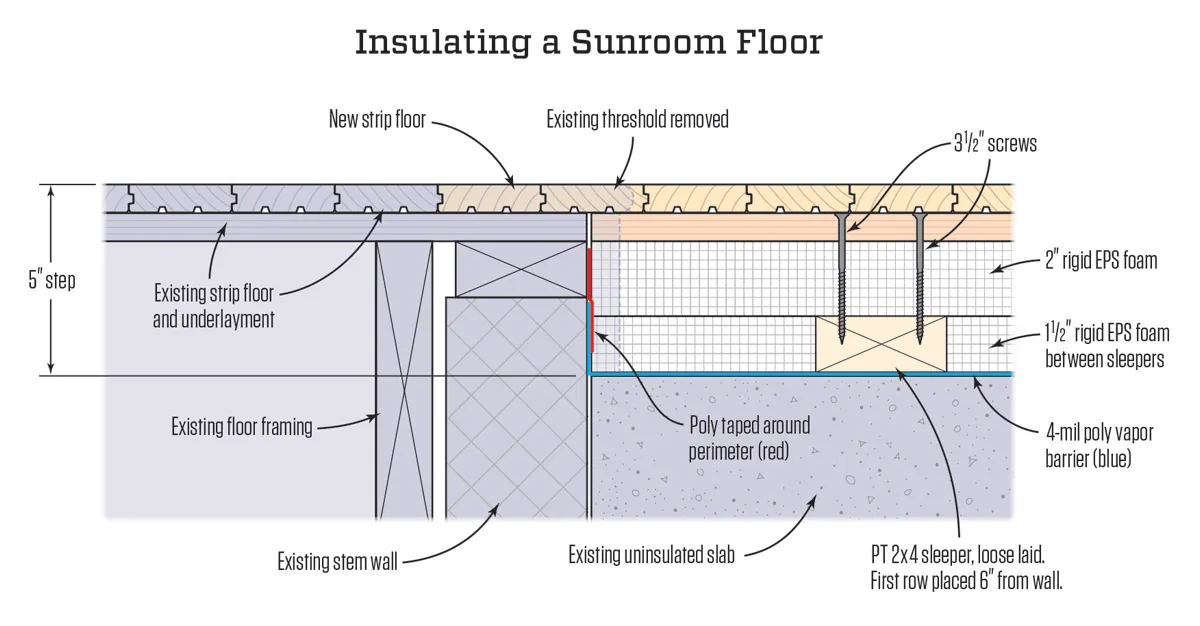
Roll out 6-mil plastic sheeting over the entire floor, overlapping seams by at least 6 inches. Extend the plastic up the walls about 2 inches. Tape all seams and edges with waterproof tape.
The vapor barrier is critical. It stops ground moisture from coming up into your wood and insulation. Don’t skip or skimp on this step.
Step 3: Lay Out Sleepers
Sleepers are usually pressure-treated 2x4s. Lay them flat on the vapor barrier, parallel to each other, spaced 16 inches apart (measured from center to center). Leave a 1/2-inch gap at walls for expansion. For extra insulation, use 2x4s on edge instead of flat.
At doorways or heavy traffic areas, add extra sleepers for support. Around posts or pipes, cut sleepers to fit.
Check your layout with a tape measure and chalk lines before fixing anything to the floor.
Step 4: Level The Sleepers
Use a long level to check that each sleeper is perfectly flat. If the concrete is uneven, use shims (plastic or treated wood) under low spots. Do not use regular wood shims—they can rot if damp.
Securing the sleepers is important. Drill through the wood into the concrete with a masonry bit. Insert concrete screws or anchors every 24-32 inches. This keeps the floor solid and prevents movement.
Non-obvious insight: Always stagger the sleeper joints in different rows to avoid weak spots.
Step 5: Add Insulation Between Sleepers
Cut rigid foam board to fit snugly between the sleepers. Use a utility knife for clean edges. Push the foam all the way down, with no gaps. This blocks cold and stops condensation.
For extra insulation, some people add a layer of foam over the top of the sleepers before installing plywood, but this adds height and may affect stability.
Step 6: Install The Subfloor
Place 3/4-inch tongue-and-groove plywood or OSB panels over the sleepers. Stagger the joints so they do not line up with the sleepers below. Leave a 1/4-inch gap at walls for expansion.
Secure the panels to the sleepers using screws (not nails) every 8 inches along the edges and every 12 inches in the field. Sink screw heads just below the surface.
Pro Tip: Use construction adhesive between plywood and sleepers to reduce squeaks.
Step 7: Seal The Edges
Seal around the room’s edges with spray foam or caulk. This keeps moisture and air from getting under the floor. Check for gaps around pipes or posts, and seal them too.
Step 8: Ready For Finished Flooring
Let the subfloor sit for 24 hours to adjust to room temperature and humidity. Now you can install your finished flooring—hardwood, laminate, carpet, or tile—following the manufacturer’s instructions.
Practical Examples And Data
Let’s look at a practical example: A 20×20 foot basement room (400 square feet).
- Materials estimate:
- 20 pieces of 2x4x12’ pressure-treated lumber for sleepers
- 13 sheets of 4×8’ plywood (3/4-inch)
- 8 sheets of 4×8’ rigid foam (1.5-inch thick)
- 1 roll of 6-mil plastic (10×100’)
- 3 boxes of concrete screws
- 1 gallon of construction adhesive
Total material cost (as of 2024): Around $1,900–$2,500, depending on location and quality.
Time estimate: Two people can complete the framing and subfloor in 2-3 days for a room this size.
Non-obvious insight: If you plan radiant heating (electric or water), install it before the insulation and subfloor. This step is easier during construction than after.

Credit: www.youtube.com
Mistakes To Avoid
Even experienced builders make errors. Here are some common mistakes and how to avoid them:
- Skipping the vapor barrier: This leads to rot, mold, and ruined flooring.
- Not checking for level: An uneven subfloor causes squeaks and cracks tiles or wood above.
- Using untreated wood: Only pressure-treated lumber should touch concrete, to prevent rot.
- Forgetting edge gaps: Wood expands and contracts. Without space at walls, floors can buckle.
- Not sealing edges: This lets moisture in and defeats your insulation.
- Over-tightening screws: This can crack plywood or strip anchors in concrete.
- Ignoring ceiling height: Check local codes—don’t finish a room only to find it’s now too short to pass inspection.
Moisture And Raised Floors: What You Need To Know
Moisture is the number one enemy of raised floors over concrete. Even if your slab seems dry, moisture can rise over time. Here’s how to stay safe:
- Use a moisture meter to test the slab before and after installing the vapor barrier.
- If your basement floods, consider a sump pump or perimeter drain before building.
- Never install carpet directly over a raised floor in a damp basement—mold can grow unseen.
- For high-moisture areas, consider plastic subfloor panels or a hybrid system for better airflow.
Here’s a quick comparison of vapor barrier and insulation types:
| Material | Moisture Resistance | Cost | R-Value (per inch) |
|---|---|---|---|
| 6-mil Polyethylene | Excellent | Low | 0 (no insulation) |
| Rigid Foam Board | Very Good | Medium-High | R-5 to R-7 |
| Fiberglass Batts | Poor (absorbs water) | Low | R-3 to R-4 |
Rigid foam is your best bet for a raised floor. Fiberglass batts are not recommended because they soak up moisture and lose insulation value.
Finishing Touches And Flooring Choices
Once your raised floor is solid, you have many options for finished flooring. Each type has its own needs and advantages.
- Hardwood: Warm, classic look. Needs a very flat, dry subfloor. Use an underlayment for sound and moisture.
- Laminate: Easy to install, resists scratches and moisture. Needs foam or cork underlayment.
- Carpet: Soft and quiet. Needs a dry, well-sealed subfloor and mold-resistant pad.
- Vinyl or Tile: Good for high-moisture areas. Use only if subfloor is perfectly flat and sealed.
Pro Tip: Always follow the flooring manufacturer’s instructions. Some warranties are void if you install over a non-approved subfloor.
Cost Comparison: Diy Vs. Hiring A Pro
How much can you save by building a raised floor yourself? Here’s a typical cost breakdown for a 400 sq. ft. room:
| Item | DIY Cost | Professional Cost |
|---|---|---|
| Materials | $1,900 | $1,900 |
| Labor | $0 | $2,500–$3,500 |
| Total | $1,900 | $4,400–$5,400 |
DIY saves you thousands, but only if you have time and basic carpentry skills. For complex rooms or if you want a warranty, hiring a pro makes sense.
Maintenance And Long-term Care
A well-built raised floor needs little maintenance, but regular checks keep it in good shape:
- Inspect for moisture every spring and fall. Check for damp smells or discoloration.
- Fix small squeaks with extra screws or construction adhesive.
- Keep the area dry. Use a dehumidifier in basements.
- For heavy furniture, use pads to prevent dents in the subfloor.
Advanced Tips For A Better Raised Floor
- Add soundproofing: A layer of sound-dampening mat or insulation between sleepers reduces noise in multi-story homes.
- Access panels: For plumbing or wiring, build removable sections into your floor.
- Perimeter drainage: In very damp basements, add a shallow drainage channel before the vapor barrier.
- Use a laser level: For large rooms, this tool keeps your sleepers perfectly flat and prevents future problems.
- Check for radon: In some areas, a radon mitigation system is smart before sealing your floor.

Credit: www.youtube.com
When Not To Build A Raised Floor
While raised floors are great in most cases, sometimes they’re a bad idea:
- If your slab is actively leaking or has standing water, fix drainage first.
- In very low ceiling basements, even 2 inches can make the space unusable.
- If you need full accessibility (wheelchairs), a raised floor can create tricky transitions.
Always fix serious water issues before starting. A raised floor should solve problems, not hide them.
Where To Find More Help
For more technical details, building codes, and moisture testing, visit the U.S. Department of Energy’s Energy Saver guide to basement insulation.
Credit: www.jlconline.com
Frequently Asked Questions
What Is The Best Material For Sleepers Over A Concrete Slab?
Pressure-treated lumber is the best choice. It resists rot and insects when in contact with concrete. Never use untreated wood, as it can absorb moisture and decay.
How Thick Should The Subfloor Be?
Use 3/4-inch (19mm) tongue-and-groove plywood or OSB for most raised floors. Thinner panels can flex or squeak, especially under heavy furniture.
Can I Install A Raised Floor Over A Cracked Slab?
Yes, but first repair large cracks with concrete patch. Minor cracks are not a problem if you use a vapor barrier and rigid insulation. For major structural issues, consult a professional before proceeding.
How Do I Prevent Mold Under My Raised Floor?
The most important steps are to use a vapor barrier, seal all seams, and keep the area dry. Use a dehumidifier in basements, and check for leaks or condensation every year.
Is A Raised Floor A Good Diy Project For Beginners?
If you’re comfortable with basic tools and measuring, a sleeper system is a manageable DIY project. Start with a small room. Modular subfloor panels make the job even easier.
Building a raised floor over concrete slab is a smart investment in comfort and value. With careful planning and the right materials, you’ll enjoy a warmer, quieter, and more attractive space for years to come.