
Rubber flooring is gaining popularity in homes, gyms, schools, and commercial spaces. People choose rubber floors for their comfort, durability, and easy maintenance. Whether you want a safe gym surface, a water-resistant basement floor, or a stylish kitchen option, rubber flooring is a strong choice. If you are planning a DIY project or want to understand the installation process before hiring a pro, this guide will walk you through every step. You will learn how to prepare your space, select the best materials, install with confidence, and finish your floor for years of use.
Understanding Rubber Flooring
Rubber flooring comes in several forms, including tiles, rolls, and mats. Each type fits different needs and installation methods.
- Rubber tiles: Easy to handle, great for DIY. They usually have interlocking edges, which means you don’t need glue. These are perfect for spaces where you may want to replace just a single piece in the future, such as a home gym or playroom. The interlocking design also helps keep them stable.
- Rubber rolls: Good for large, open areas. Rolls make seams less visible but are heavier and harder to move. Rolls often come in large sizes, sometimes 25 to 50 feet long, which can cover a wide area with minimal seams, making them ideal for commercial gyms or large basements.
- Rubber mats: Perfect for smaller spaces or high-impact zones, like under gym equipment. Some mats are designed for portable use, so you can move them as needed, making them a flexible choice for renters or for spot protection.
Rubber floors are made from either natural rubber or recycled rubber. Recycled rubber is more common and eco-friendly. This type is often made from old car tires, reducing landfill waste and supporting sustainability. Natural rubber often costs more and is softer underfoot, offering a bit more comfort, but it is less resistant to oils and some chemicals.
Key Benefits Of Rubber Flooring
Rubber flooring offers several advantages over traditional surfaces:
- Shock Absorption: Softens foot impact, reducing injury risk. This is especially important in gyms or play areas where falls are common.
- Slip Resistance: Provides grip, even when wet. This makes rubber a safer choice for bathrooms, kitchens, or entryways where water may be present.
- Noise Reduction: Absorbs sound, making spaces quieter. This is helpful in apartments, upstairs rooms, or offices where noise can be a problem.
- Water Resistance: Does not rot or warp from moisture. Unlike wood or carpet, rubber doesn’t absorb water, so mold and mildew are less likely.
- Low Maintenance: Easy to clean with simple tools. Most spills can be wiped up quickly, and dirt doesn’t stick as easily as with other floors.
- Durability: Withstands heavy use and resists stains. Rubber is tough and can handle weights, high heels, or rolling chairs.
Many gyms, schools, and hospitals choose rubber for these reasons. Homeowners appreciate its comfort and safety, especially for children and pets. Another benefit is that rubber flooring can help insulate a room, keeping it a bit warmer underfoot, which is nice in basements or colder climates.
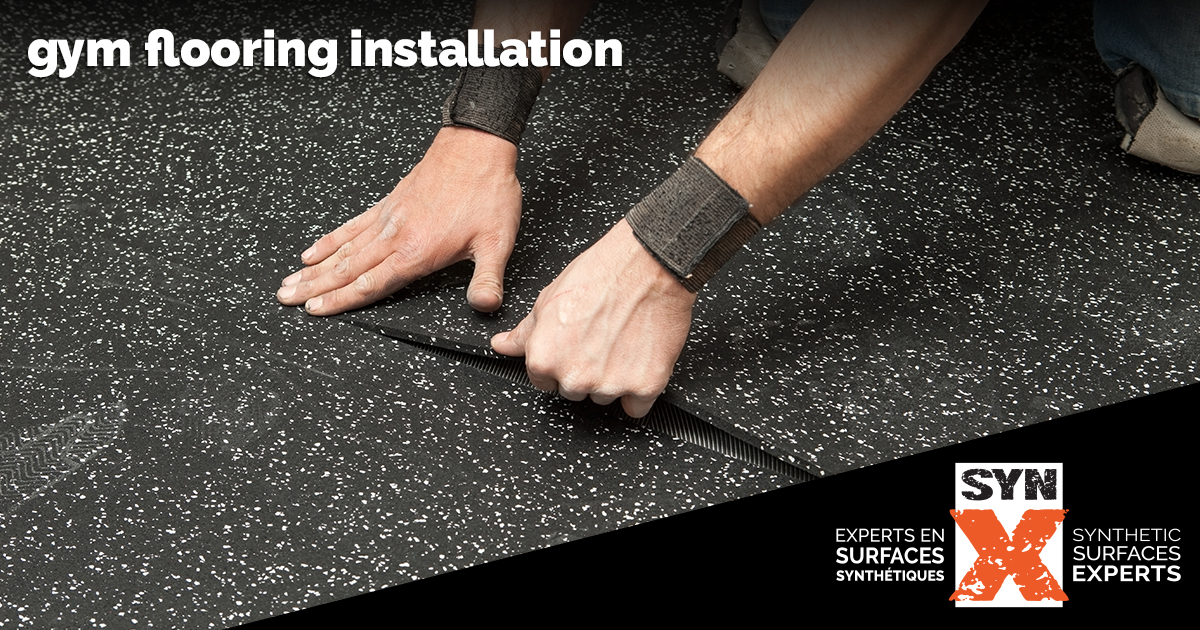
Credit: syntheticexperts.com
Planning Your Rubber Flooring Project
Good planning makes installation smoother and helps you avoid costly mistakes. Taking extra time in this phase can save you hours of frustration later.
Measuring Your Space
Start by measuring the length and width of your room. Multiply these numbers to get the total square footage. Always buy 5–10% extra material for mistakes or future repairs. Having spare material is also useful if you need to patch or expand your floor in the future.
For example, a room that is 15 feet by 12 feet needs:
15 Ft × 12 Ft = 180 Sq Ft
Buy at least 189–198 sq ft to allow for trimming.
If your room has nooks or closets, measure each section separately and add them together. It’s wise to sketch a simple floor plan and write down all measurements before ordering.
Choosing The Right Rubber Flooring
Consider these factors when picking your material:
- Thickness: Thicker floors (8mm or more) are better for gyms and high-traffic areas. Thinner (4–6mm) works for home or office use. For weight rooms, 10mm or even 12mm is recommended to absorb heavy impacts.
- Surface Texture: Smooth for easy cleaning, or textured for grip. Textured surfaces are safer in wet zones, but smooth is better for rolling chairs or cleaning.
- Color and Style: Solid black is cheapest, while flecked or custom colors cost more. Some brands offer color flecks that hide dirt, which is handy in busy spaces.
- Form: Tiles for easy installation and repairs; rolls for seamless look. If you expect to move equipment often or want flexibility, tiles are usually better.
When choosing, think about how you’ll use the space and what look you prefer. Ask for samples if possible, as colors and textures can look different in person.
Comparing Rubber Flooring Types
Here is a quick comparison to help you choose:
| Type | Best Use | Pros | Cons |
|---|---|---|---|
| Tiles | Small to medium rooms, DIY projects | Easy to install, replace, and transport | More seams, can shift if not locked |
| Rolls | Large, open spaces | Few seams, professional look | Heavy, harder to cut and install |
| Mats | Specific zones (gyms, play areas) | Portable, no installation needed | Not for full-room coverage |
When in doubt, talk to a flooring supplier or visit a showroom. They can help you choose the best option for your space and needs.
Tools And Materials Needed
Before you start, gather all the tools and materials. Missing tools can slow you down or lead to mistakes. Having everything on hand also keeps your workspace safer.
Tools
- Tape measure
- Utility knife with sharp blades
- Straightedge or T-square
- Chalk line or pencil
- Heavy-duty scissors (for some tiles)
- Rubber mallet
- Shop vacuum or broom
- Notched trowel (if using adhesive)
- Knee pads (for comfort)
- Roller (for rolled rubber)
- Gloves (to protect hands from rough edges)
- Carpenter’s square (helpful for perfect corners)
Materials
- Rubber tiles, rolls, or mats (with extra for mistakes)
- Double-sided tape or adhesive (if required)
- Floor patch or leveling compound (if needed)
- Seam sealer (optional, for rolls)
- Transition strips (where rubber meets other floors)
- Plastic sheeting (for moisture tests on concrete)
- Cleaning rags
For larger jobs, consider renting a 100-pound floor roller. This helps press down rubber rolls evenly and makes seams less visible.
Preparing The Subfloor
Preparation is often the most important—and overlooked—step. A bad subfloor leads to poor results, bumps, or loose tiles. Taking the time to inspect and fix your subfloor can add years to your flooring’s life.
Types Of Subfloors
Rubber flooring can be installed over:
- Concrete: Most common and ideal. Must be clean and dry. Cracks larger than a quarter-inch should be filled before installing rubber.
- Wood: Use only if the wood is solid and level. Plywood subfloors should be at least 3/4-inch thick for best results.
- Vinyl or tile: Possible if the surface is flat and well-attached. Any loose tiles should be fixed or removed.
Never install rubber directly over carpet or uneven surfaces. The soft base will cause the rubber to shift, bounce, and possibly tear.
Cleaning And Leveling
- Remove old flooring: Take up carpet, padding, and tacks. For glued-down flooring, use a scraper to remove all residue.
- Clean thoroughly: Sweep and vacuum all dust, dirt, and debris. Even small particles can cause bumps under rubber tiles.
- Check for moisture: Concrete must be dry. Tape a plastic sheet to the floor for 24 hours; if moisture appears, wait or fix the problem. Persistent moisture can cause adhesive to fail and may lead to mildew.
- Level the floor: Fill dips or cracks with floor patch. Sand down high spots. A long straightedge will help you spot uneven areas.
A flat, dry subfloor is key to a long-lasting floor. If you skip this, you may see seams or tiles shifting after a few months.
Subfloor Preparation Table
Here’s how to prepare different subfloors:
| Subfloor | Preparation Steps | Common Issues |
|---|---|---|
| Concrete | Clean, check for moisture, level | Moisture, cracks |
| Wood | Secure boards, sand flat, check for rot | Squeaks, movement |
| Vinyl/Tile | Make sure tiles are solid, fill gaps | Loose tiles, uneven grout |
If you find big problems (like rotting wood or major cracks), fix them before moving forward. Rubber flooring can hide small flaws, but not major ones.
Acclimating Rubber Flooring
Rubber flooring needs to adjust to your room’s temperature and humidity. This prevents shrinking or expanding after installation.
- Unbox and lay out the rubber flooring in the room for at least 24–48 hours. Lay tiles flat, and unroll rolls completely so they relax.
- Keep the room at normal living temperature (65–75°F).
- Avoid extreme cold or heat.
Skipping this step can cause gaps or buckling later. If you install rubber straight out of a cold truck, you might see shrinking after it warms up.
Laying Out Your Floor Plan
Before cutting or gluing, plan your layout.
- Dry lay the tiles or rolls: Place them on the floor without adhesive to see how they fit. This helps you avoid surprises, like tiny slivers at the wall.
- Start from the center: For best results, begin in the middle and work out to the walls. This keeps cuts even at both sides.
- Check for seams: Stagger tiles so seams do not line up, which adds strength and looks better. This also helps the floor lock together more firmly.
- Plan edges and cuts: Leave a small gap (about 1/8 inch) at walls for expansion. Mark tricky corners or obstacles now.
Taking time here saves headaches later. Some installers even snap chalk lines to keep everything perfectly straight.
Installing Rubber Tiles
Rubber tiles are the easiest for most DIYers. Here’s how to install them step by step.
Step 1: Mark Your Starting Point
- Find the center of the room using a chalk line or tape measure.
- Mark straight guidelines on the floor. This helps you keep tiles perfectly square as you work.
Step 2: Dry Lay The First Row
- Place the first row of tiles along the guideline.
- Interlock the edges tightly, using a rubber mallet if needed. Make sure tabs fit completely, or you’ll see gaps later.
Step 3: Continue Laying Tiles
- Add more tiles, working out from the center.
- Stagger seams for a brick-like pattern. This locks tiles together and hides seams.
- Press tiles down firmly.
If you see a gap, gently tap tiles together with your mallet. Don’t force them, or you could bend the edges.
Step 4: Cutting Edge Tiles
- Measure the gap at the wall.
- Mark the tile where it needs cutting.
- Place a straightedge and score with a utility knife.
- Snap or cut through the tile.
Tip: Cutting thick rubber is tough. Change blades often and use firm pressure. For very thick tiles, score several times from both sides.
Step 5: Securing The Tiles
- Most interlocking tiles stay in place by weight and friction.
- In high-traffic areas or larger rooms, use double-sided tape or adhesive at the edges. This prevents tiles from shifting over time.
Step 6: Installing Transition Strips
- Where rubber meets other floors, use a transition strip to avoid tripping and finish the look. These strips also keep edges from peeling up.
If you ever need to remove a tile for repair, just unlock it and replace.
Installing Rubber Rolls
Rubber rolls give a seamless look but are heavier and trickier to install.
Step 1: Unroll And Relax
- Unroll the material and let it relax for 24 hours to remove curling. This step is essential for a flat finish.
Step 2: Dry Fit The Roll
- Place the first roll along a straight wall.
- Trim the end to fit, if needed. Use a straightedge for clean lines.
Step 3: Apply Adhesive (if Needed)
- For permanent installation, spread adhesive with a notched trowel.
- Work in small sections, so glue does not dry out.
- Lay the roll into the glue, pressing down as you go.
Always read the adhesive instructions. Some need open time (waiting a few minutes before laying the rubber), others do not.
Step 4: Rolling And Seaming
- Use a floor roller to press out air bubbles.
- Butt the next roll tightly to the first. Use seam sealer if the manufacturer recommends it.
Try to align rolls so color flecks match for a cleaner look.
Step 5: Trimming Edges
- Use a straightedge and utility knife to cut the roll at walls.
- Leave a small gap for expansion.
Non-obvious insight: Always roll seams with a heavy roller to prevent future curling. Some beginners skip this and regret it later. For best results, roll each seam at least twice.
Installing Rubber Mats
Rubber mats are the simplest to install. Just lay them where needed. For larger mats, use double-sided tape to keep them from moving.
If mats shift after use, try cleaning the floor underneath or using more tape. Some mats have textured backs that grip better.
Using Adhesives And Tapes
Not all rubber flooring requires glue, but in busy or wet areas, adhesive may be necessary.
- Double-sided tape: Good for small spaces or temporary installs. Easy to remove later.
- Full-spread adhesive: For permanent, high-traffic, or commercial spaces.
Common mistake: Using too little adhesive causes corners to lift. Always follow the manufacturer’s coverage guidelines.
If you’re unsure, test a small area first. It’s easier to add more adhesive than to clean up a mess.
Dealing With Obstructions
Rooms are rarely perfect squares. You’ll need to cut around:
- Doorways: Notch tiles or rolls to fit under door frames. If possible, remove the door temporarily to make work easier.
- Pipes and vents: Cut a small slit, then a hole, and fit the rubber around the pipe. Seal gaps with silicone if you’re worried about spills.
- Columns: Trace the column base onto the tile, then cut to fit. Check the fit before trimming.
Tip: Make a paper template before cutting rubber for tricky shapes. This saves material and helps you get a perfect fit.

Credit: www.youtube.com
Cleaning Up After Installation
Once your new floor is in place:
- Remove all scraps and packaging.
- Sweep or vacuum the surface.
- Wipe with a damp mop (do not flood with water).
- Open windows to air out any adhesive smells.
Some rubber floors have a “new tire” smell. This fades in a week or two. Good ventilation helps. You can also mop with a little vinegar and water to speed up odor removal.
First 24 Hours: What To Expect
- Avoid heavy traffic or moving furniture for 24–48 hours if you used adhesive.
- Check all seams and edges.
- If you see curling, use weights overnight.
Rubber floors settle quickly and become ready to use within a day or two. It’s normal for new floors to shift slightly as they adjust.
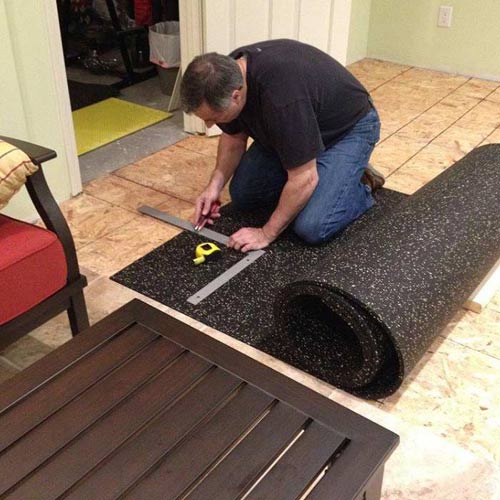
Credit: www.greatmats.com
Maintenance Tips For Long Life
Rubber flooring is low-maintenance but needs care for the best look.
- Sweep or vacuum regularly: Dirt and grit can scratch the surface.
- Damp mop weekly: Use mild soap and water, not harsh chemicals. Avoid products with oil, as they can make the floor slippery.
- Wipe up spills fast: While rubber is water-resistant, standing water can seep under seams.
- Avoid dragging furniture: Lift, do not slide, to prevent gouges.
- Check seams and edges: Press down loose spots as needed.
For deep cleaning, use a soft brush and gentle cleaner. Do not use bleach or strong solvents, as they can damage or discolor rubber.
Cost Of Installing Rubber Flooring
Rubber flooring is affordable compared to many options, but prices vary.
| Type | Average Cost (per sq ft) | DIY-Friendly | Professional Install Cost |
|---|---|---|---|
| Tiles | $2 – $7 | Yes | $2 – $5 extra |
| Rolls | $1.50 – $4 | Somewhat | $2 – $4 extra |
| Mats | $40 – $100 each | Yes | Usually not needed |
Extra costs can include adhesives, transition strips, and tools. If hiring a pro, expect to pay about $2–$5 per square foot for labor.
Buying in bulk usually lowers the price per square foot. For custom colors or logos, expect to pay more. Always ask for a full quote, including shipping and installation extras.
Common Mistakes And How To Avoid Them
- Skipping subfloor prep: Leads to bumps, soft spots, or poor adhesion.
- Not acclimating material: Causes gapping or buckling.
- Improper cuts: Always measure twice, cut once.
- Too little adhesive: Edges or seams may lift.
- Not staggering seams: Makes weak spots and looks unprofessional.
- Forgetting expansion gaps: Rubber expands and contracts; tight fits can buckle.
Non-obvious insight: If installing over concrete, never skip a moisture test. Even “dry” basements can develop leaks that ruin floors.
Another mistake is choosing the wrong thickness for your needs. For example, using thin tiles in a weight room can lead to damage or dents.
When To Hire A Professional
DIY rubber flooring is possible for most people. But consider hiring a pro if:
- The area is very large (over 500 sq ft).
- You want a seamless, glued-down roll.
- The subfloor is badly damaged and needs repair.
- You have complex layouts with many cuts.
Professionals have special tools and can finish the job faster, with a perfect look. They can also help with moisture barriers or soundproofing layers if your project needs them.
Environmental Impact And Recycling
Most rubber flooring uses recycled car tires, keeping millions of pounds out of landfills. Old rubber floors can also be recycled again. If this matters to you, look for GreenGuard or LEED-certified products.
Recycled rubber is a greener choice than many plastics or vinyls, and some brands use up to 90% post-consumer material. At the end of its life, rubber can be ground up and used for playgrounds, sports tracks, or even new flooring.
For more info on recycling, see the Rubber Recycling Wikipedia page.
Finishing Touches: Making Your Floor Look Great
- Add baseboards or quarter-round to cover gaps at walls. This hides expansion spaces and gives a neat edge.
- Use transition strips at doorways or where rubber meets tile, wood, or carpet. These also protect the edges from wear.
- Consider custom logos or color flecks for gyms or playrooms. Some companies can add graphics for a personalized touch.
These details give your space a finished, professional look. Even simple touches, like matching the floor color to your room, can make a big difference.
Frequently Asked Questions
How Long Does Rubber Flooring Last?
Most rubber floors last 10–20 years, even with heavy use. High-quality material and good care can stretch this to 30 years or more. Some brands offer warranties of up to 15 years.
Is Rubber Flooring Safe For Kids And Pets?
Yes, rubber is soft, slip-resistant, and absorbs shock. Choose low-VOC products for the safest indoor air quality. Always check for certifications if you’re sensitive to chemicals.
Can Rubber Flooring Go In Kitchens And Bathrooms?
Rubber is water-resistant and works well in these areas. Just be sure seams are tight and mop up spills quickly. Use a bath mat in showers or wet zones for extra safety.
Does Rubber Flooring Smell?
New rubber sometimes has a strong odor, like tires. This fades in days or weeks with good airflow. Choose low-odor brands if you are sensitive. Mopping with mild soap can also help.
How Do You Fix Damaged Rubber Flooring?
Small cuts or burns can be patched with special kits. For tiles, just swap out the damaged piece. For rolls, cut out the bad spot and glue in a patch. Always keep a few extra tiles or a small piece of your roll for future repairs.
Installing rubber flooring is a smart investment in comfort, safety, and style. With good planning, the right tools, and attention to detail, you can enjoy a beautiful, long-lasting floor that is easy to clean and care for. Whether you do it yourself or hire a pro, you’ll enjoy the benefits for many years.