
If you use a gas stove every day, you know the familiar sound: a sharp “click-click-click” as you turn the knob to light a burner. But what if one day, you turn the knob and nothing happens? No click, no spark, no flame. This problem is both common and frustrating. Gas stoves are reliable, but sometimes the ignition system stops working, leaving you with a silent burner and no way to cook. Understanding why your gas stove is not clicking can help you fix the issue quickly and safely.
Many people worry that a gas stove that won’t click means a big repair bill or a dangerous leak. Most of the time, though, the cause is simple and can be solved at home. In this guide, you’ll learn every possible reason why your gas stove is not clicking, how to check each part, and what you can do to get your stove working again.
Whether you love to cook or just need to make dinner fast, these tips will help you avoid stress and keep your kitchen safe.
How Gas Stove Ignition Systems Work
Before you can fix the problem, it helps to know how the ignition system on a gas stove works. When you turn the burner knob, you are doing two things: opening the gas valve and sending power to the igniter. The igniter makes a spark by clicking. This spark lights the gas, and a blue flame appears.
Key parts of the ignition system:
- Burner knob: Controls gas flow and sends power to the igniter.
- Igniter switch: Sends electricity to the igniter.
- Igniter (spark electrode): Makes the clicking sound and spark.
- Spark module: Gives power to the igniter.
- Wiring: Connects all the parts.
- Gas supply: Provides fuel for the flame.
If any of these parts fail or get dirty, your stove may stop clicking, and the burner won’t light. Next, let’s explore why this happens.
Common Reasons Your Gas Stove Is Not Clicking
Many things can stop your gas stove from clicking. The cause can be something simple like a loose burner cap or something more complex like a broken spark module. Here are the most common reasons, explained in detail.
1. Power Supply Problem
Your gas stove’s igniter needs electricity. If there’s no power, the igniter won’t click. This is easy to overlook since the stove uses gas, not electricity, to make flames. But the clicking sound comes from an electric spark.
What to check:
- Is the stove plugged in?
- Did a circuit breaker trip?
- Is the outlet working (test with another device)?
If you find a power issue, fix it first. Sometimes, a simple reset solves everything.
2. Faulty Or Loose Igniter Switch
The igniter switch is under the burner knob. When you turn the knob, the switch sends a signal to the spark module to create a spark. If the switch is broken or disconnected, you won’t hear any clicking.
Signs of a bad igniter switch:
- No clicking sound on any burner
- Knob feels loose or wobbly
This part can wear out over time, especially in busy kitchens.
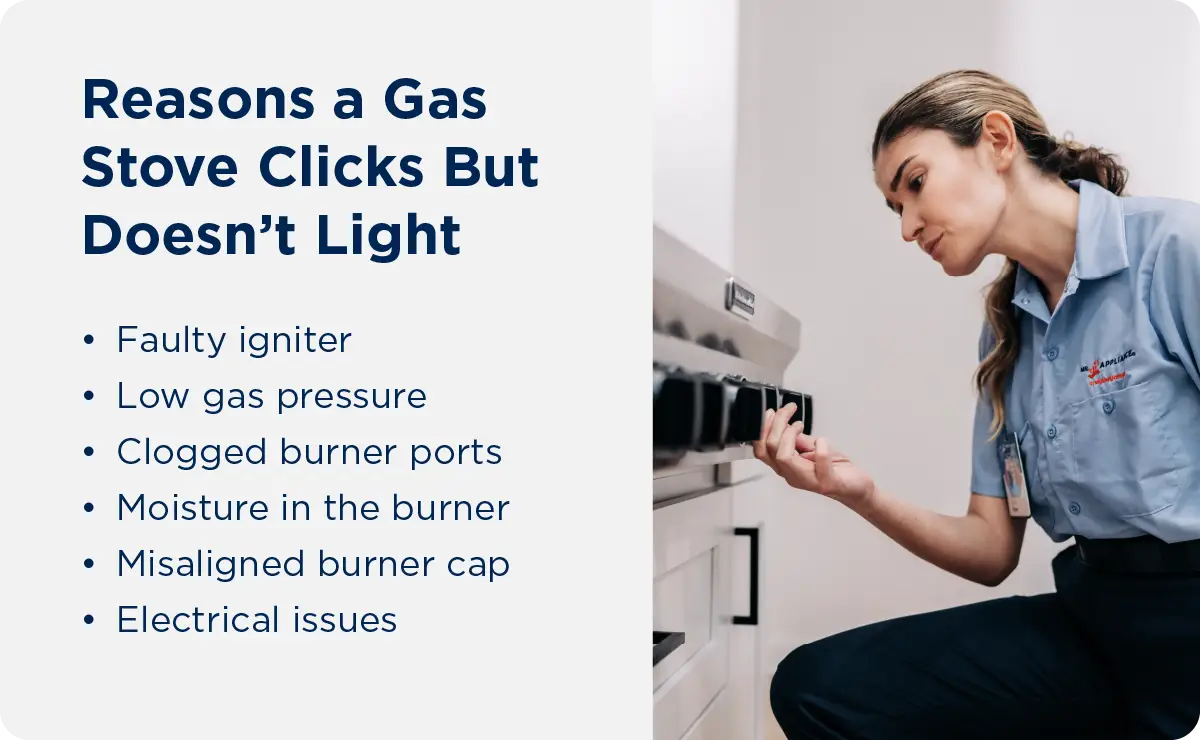
3. Dirty Or Wet Igniter
Food spills and grease can cover the igniter, stopping the spark. Water from cleaning can also cause trouble. If the igniter is dirty or wet, it won’t click or make a weak sound.
How to check:
- Look for any food, oil, or water near the igniter.
- Gently clean with a dry cloth or old toothbrush.
- Let wet igniters dry for a few hours before trying again.
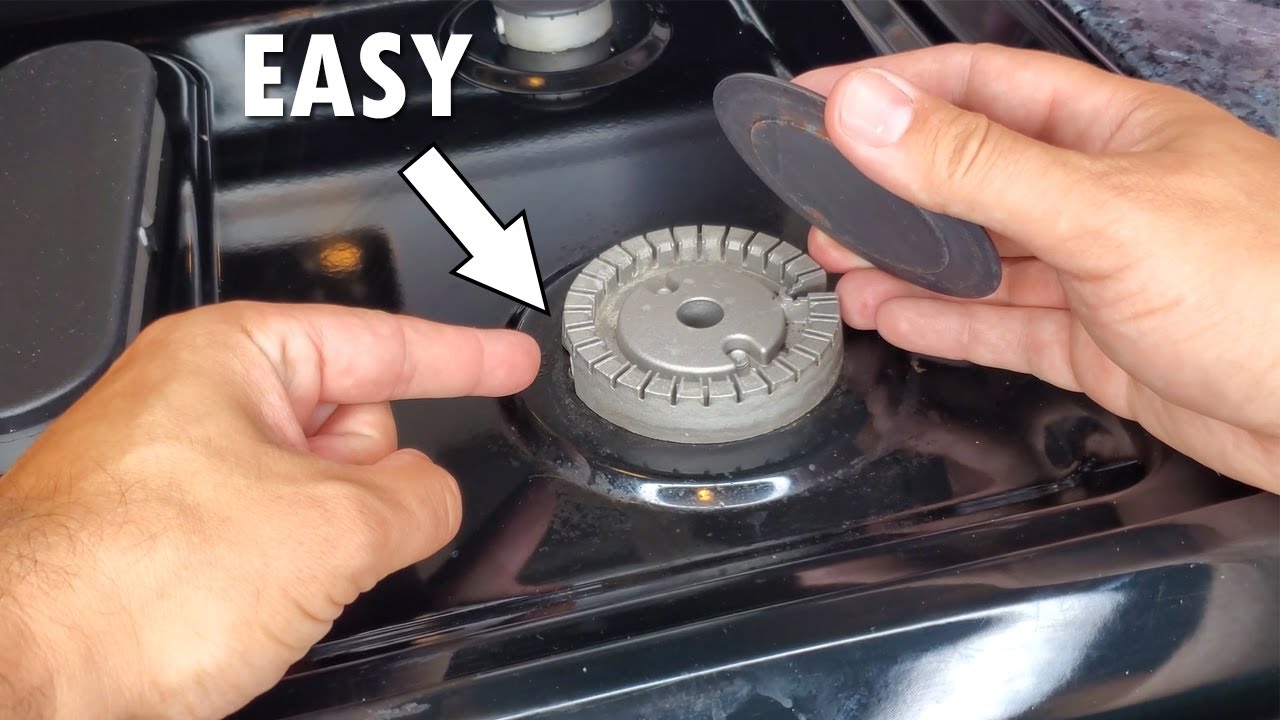
4. Misaligned Or Loose Burner Cap
The burner cap must sit flat and centered. If it’s not in place, the igniter won’t work properly, and you may not hear any clicking.
How to check:
- Remove the burner cap and replace it, making sure it sits flat.
- Try turning the burner knob again.
Many people miss this simple fix.
5. Broken Spark Electrode
The spark electrode is a small part that makes the spark. If it’s cracked or broken, you won’t hear a click or see a spark.
How to check:
- Look for visible cracks or chips.
- The tip should be close (2-4 mm) to the burner.
If the electrode is damaged, it needs replacing.
6. Faulty Spark Module
The spark module powers the igniter. If this part fails, none of the burners will click.
Signs of spark module failure:
- No clicking on any burner
- Other electrical parts (like oven light) work fine
Testing or replacing a spark module may require a professional.
7. Faulty Wiring Or Connections
Loose, burned, or broken wires can stop the click. Over time, heat and use can damage the wires inside your stove.
What to check:
- Inspect for visible signs of damage or disconnect.
- If comfortable, check under the cooktop for loose wires.
Be careful: unplug the stove before touching any wires.
8. Control Board Or Timer Issue
Some modern stoves have an electronic control board or timer. If these fail, they can block power to the igniter.
Signs of a control board problem:
- Display is blank or shows an error.
- Multiple functions stop working.
This repair can be expensive and often needs a technician.
9. Tripped Safety Features
Some stoves have child safety locks or other features that can stop ignition. Make sure all safety features are off.
How to check:
- Look for lock symbols or warning lights.
- Read your stove’s manual for safety features.
10. Gas Supply Problem
If the gas valve is closed, there’s no need for the igniter to click. But sometimes, the stove won’t click if it senses no gas.
How to check:
- Make sure the main gas valve is open.
- Check that other gas appliances (like heaters or ovens) are working.
Never force open a stuck gas valve.
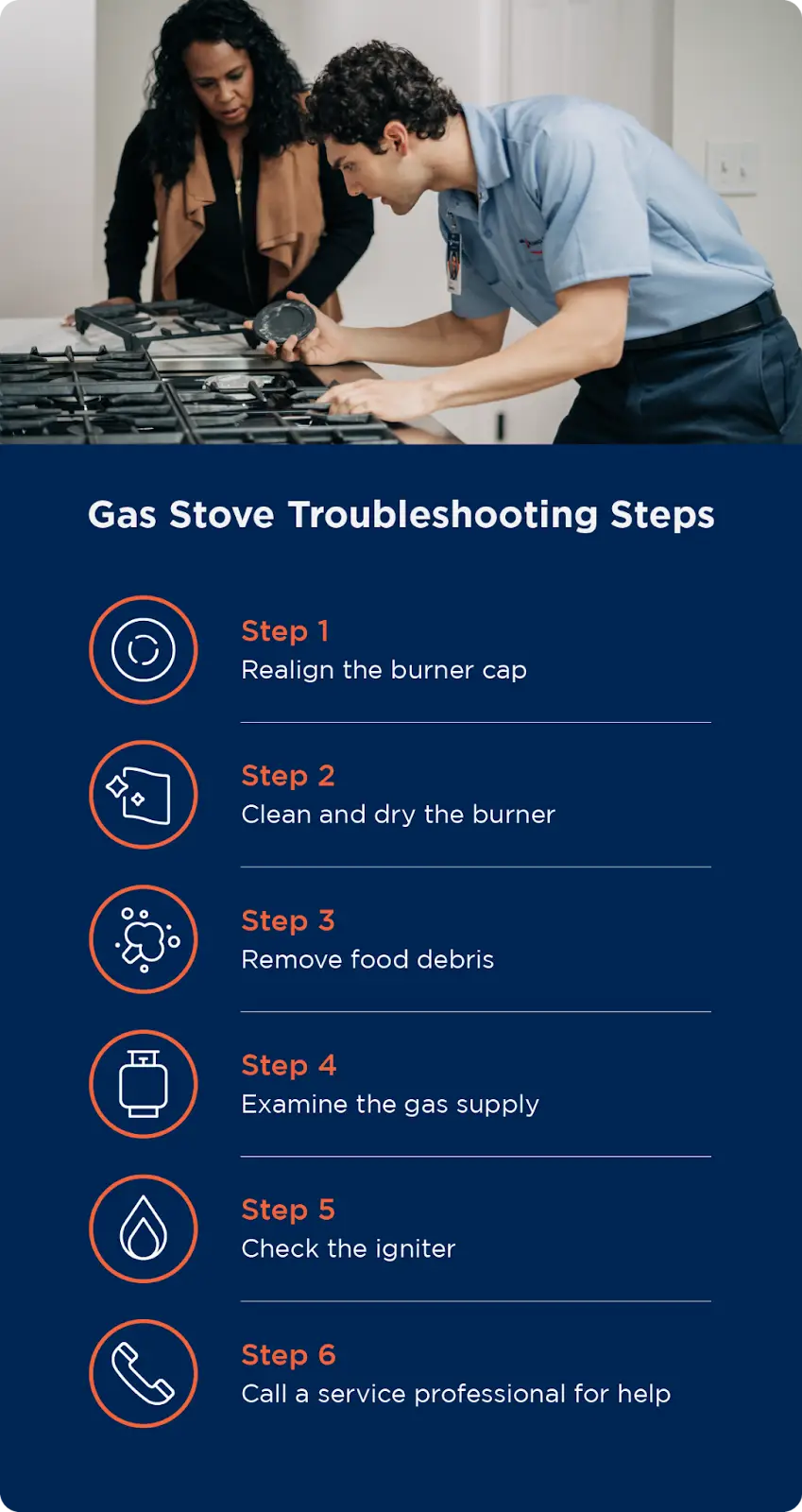
Step-by-step Guide To Diagnosing The Problem
Now that you know the possible causes, let’s walk through how to find out why your gas stove is not clicking.
Step 1: Check The Power Source
- Plug another device into the same outlet to make sure it works.
- Check your home’s circuit breaker.
- If the stove has a fuse, replace it if it’s blown.
Step 2: Test All Burners
- Try each burner one by one.
- If some click and others don’t, the problem is likely with a single igniter or switch.
- If none click, check the power, spark module, or wiring.
Step 3: Inspect And Clean The Igniter
- Remove the burner cap and look at the igniter.
- Clean off any food, grease, or debris.
- Let the igniter dry completely if wet.
Step 4: Reposition The Burner Cap
- Make sure the cap is centered and flat.
- Try lighting the burner again.
Step 5: Check The Igniter Switch And Wiring
- If you’re comfortable, unplug the stove and check for loose wires.
- Look for any broken or burned connections.
Step 6: Test The Spark Electrode
- Inspect for cracks or damage.
- The tip should be close to the burner.
Step 7: Consider Professional Help
- If you’ve tried all the above and still have no clicking, call a professional.
- Internal parts like the spark module or control board may need special tools.
Data Table: Common Causes Vs. Symptoms
Here’s a helpful comparison to match symptoms with possible causes.
| Symptom | Possible Cause | DIY Fix? |
|---|---|---|
| No click on any burner | Power, spark module, wiring | Check outlet, reset breaker |
| Some burners click, some don’t | Igniter switch, electrode, burner cap | Clean, reposition cap, replace electrode |
| Click but no spark | Dirty/wet igniter, electrode damage | Clean, dry, replace if needed |
| Clicking stops after cleaning | Wet igniter | Let it dry fully |
| Display error, no click | Control board | Professional repair |
Credit: www.mrappliance.com
Preventing Future Ignition Problems
Many ignition problems can be avoided with simple maintenance. Here’s how to keep your gas stove working smoothly.
1. Clean Burners Regularly
Food and grease are the biggest enemies of gas stove ignition. Clean the burners, caps, and igniter tips at least once a week. Use a soft brush and avoid using too much water.
2. Dry After Cleaning
Moisture can short out the igniter. Always dry the cooktop and burners completely before using the stove.
3. Check Burner Caps
After cleaning, make sure each burner cap is flat and centered. Misaligned caps are a common problem.
4. Avoid Harsh Chemicals
Some cleaning products can damage wires and igniters. Stick to mild soap and water, and avoid getting cleaner inside the burner holes.
5. Inspect Wires Annually
Once a year, check the wires under the cooktop (if accessible). Look for wear, burns, or animal damage. Replace any damaged wires to prevent future problems.
Table: Maintenance Tasks And Frequency
Here’s a simple schedule to keep your stove in top shape.
| Task | How Often | Why It Matters |
|---|---|---|
| Clean burner caps and igniter | Weekly | Prevents food and grease buildup |
| Inspect and dry after cleaning | Every use | Stops wet igniter problems |
| Check wires under cooktop | Yearly | Finds damage before it causes failure |
| Test all burners | Monthly | Catches problems early |
When To Call A Professional
Some problems are best handled by experts. Here’s when you should call for help:
- You smell gas but the burners aren’t lighting.
- You’ve checked power, caps, and cleaning but still get no click.
- You see burned wires or suspect a faulty spark module.
- The stove has error codes or control board problems.
Don’t take risks with gas or electricity. If you’re unsure, get professional help.
Hidden Insights And Advanced Tips
The Surprising Role Of Humidity
Many people don’t realize that high humidity can affect gas stove ignition. If you live in a humid climate, moisture may collect inside the cooktop, especially in summer or after mopping floors. Leaving the stove open to air or using a hair dryer (on low) can help dry internal parts.
Surges And Power Blips
Short power outages or surges can confuse modern stoves with electronic controls. Unplugging the stove for a minute and plugging it back in can reset the electronics and restore normal clicking.
Burner Ports Matter
Even if the igniter works, clogged burner ports (the small holes where gas comes out) can affect ignition. Use a pin or paperclip to gently clean out these holes. Don’t use toothpicks, which can break off and make things worse.
Not All Stoves Click The Same Way
Some high-end stoves have sealed burners or different ignition systems. If your stove uses a hot surface igniter (no click, just a glowing rod), troubleshooting is different. Check your manual for your model’s system.
Never Ignore A Gas Smell
If you ever smell gas and the stove won’t light or click, stop immediately. Open windows, leave the house, and call your gas company. Never try to repair a stove when you smell gas.
Real-world Example: Fixing A Silent Stove
Let’s look at an example. Maria, a home cook, found her gas stove not clicking after cleaning. She checked power and saw that the oven light worked. She removed the burner caps, saw water around one igniter, and let it air dry for several hours.
After this, her stove clicked and lit as normal.
Later, her friend had a similar problem, but the stove would not click at all. They found the plug had come loose behind the stove during cleaning. Plugging it back in solved the problem. These real-life stories show that sometimes the fix is simple and quick.
Product Lifespan: How Long Do Ignition Systems Last?
Most gas stove igniters last between 5-10 years with normal use. Heavy cooking, frequent cleaning, or poor maintenance can shorten this time. Spark modules and igniter switches can last even longer but may need replacing after a decade or more.
If you find yourself replacing igniters often, check your cleaning habits and make sure you’re not using too much water or harsh chemicals.
Credit: www.youtube.com
Table: Typical Lifespans Of Gas Stove Parts
| Part | Average Lifespan | Replacement Cost (USD) |
|---|---|---|
| Igniter | 5-10 years | $15-$50 |
| Spark Module | 8-15 years | $40-$100 |
| Igniter Switch | 5-10 years | $10-$35 |
| Control Board | 10-15 years | $80-$250 |
Safety First: What Not To Do
- Don’t use a lighter or match if you smell gas.
- Never force open or break parts to “fix” the stove.
- Don’t ignore warning lights or error codes.
- Avoid touching wires if you don’t know electrical safety basics.
Credit: www.mrappliance.com
Choosing Replacement Parts
When replacing stove parts, always use the correct model number. Buying random parts can cause more problems. Buy from official sources or trusted retailers. If you need help, ask for your stove’s model and serial number.
You can find official replacement guides on manufacturer websites or trusted resources like Consumer Reports.
Frequently Asked Questions
What Should I Do If My Gas Stove Won’t Click After Cleaning?
First, let the stove dry completely. Sometimes water gets into the igniter after cleaning. Wait several hours, then try again. Make sure burner caps are in place and check for leftover cleaning products. If it still won’t click, check your power outlet.
Can I Use My Stove If The Igniter Is Not Clicking?
If the igniter doesn’t click, don’t use matches or lighters until you know there’s no gas leak. It’s safer to fix the igniter first or call a professional. Never use the stove if you smell gas.
Is It Safe To Repair A Gas Stove Igniter Myself?
Simple tasks like cleaning or repositioning burner caps are safe. For wiring or internal parts, unplug the stove first. If you’re unsure or see damaged wires, call a professional. Safety always comes first.
Why Do Only Some Burners Stop Clicking?
Each burner usually has its own igniter and switch. If only one burner won’t click, the problem is often with that burner’s igniter, switch, or cap. Clean and check that burner first.
How Much Does It Cost To Fix A Gas Stove That Won’t Click?
Costs depend on the part. Cleaning and simple fixes are free. Replacing an igniter costs $15-$50. Spark modules or control boards cost more, sometimes up to $250 with labor. Always get a quote before agreeing to repairs.
If your gas stove is not clicking, don’t panic. Most problems have simple solutions. Start with the basics: power, cleaning, and burner caps. If you need help, call a professional and always put safety first. With the right steps, your stove will be back to clicking—and cooking—in no time.