
Why Do Metal Handles Of Pans Get Hot
Cooking is a daily activity for millions of people. Almost everyone who steps into a kitchen has touched a hot pan handle at least once and felt the surprise sting. But have you ever wondered why metal handles of pans get hot? This question might seem simple, but the answer connects to science, engineering, and even kitchen safety. Understanding this topic can help you cook smarter, avoid burns, and choose better cookware for your needs. Let’s explore the real reasons metal handles heat up, the role of different metals, how handle design makes a difference, and what you can do to protect your hands.
The Science Of Heat Transfer In Cooking
To know why metal handles get hot, you first need to understand how heat moves. In the kitchen, heat travels from your stove or oven to the pan, and then to the food. But heat doesn’t just stop at the bottom of the pan; it keeps moving.
There are three main ways heat moves:
- Conduction – Heat moves through a solid material, like metal.
- Convection – Heat moves through liquids or gases, like boiling water or hot air.
- Radiation – Heat travels as energy waves, like sunlight.
Conduction is the main reason pan handles heat up. Metals are excellent conductors, which means heat energy passes through them easily. When you place a pan on the stove, the bottom heats up first. The metal molecules vibrate and transfer energy to neighboring molecules, so the heat moves from the hot bottom up through the sides and into the handle.
A simple example: If you stir soup with a metal spoon, the spoon quickly gets hot. The same thing happens with pan handles.
Why Metal Conducts Heat So Well
Metals have free electrons that move easily. These electrons carry heat energy rapidly from one part of the metal to another. That’s why the metal handle of your pan doesn’t stay cool for long, even if the flame is only under the pan’s base.
Here’s a visual comparison of how well different materials conduct heat:
| Material | Thermal Conductivity (W/m·K) | Common Use in Cookware |
|---|---|---|
| Copper | 390 | High-end pans |
| Aluminum | 237 | Budget pans |
| Stainless Steel | 16 | Most common handles |
| Cast Iron | 55 | Skillets and Dutch ovens |
| Wood | 0.1 | Rare for handles |
| Plastic | 0.2 | Handle covers |
As you can see, metal handles—especially those made from copper and aluminum—transfer heat very quickly. Stainless steel is slower, but it still gets hot after a few minutes on the stove.
How Pan Design Influences Handle Temperature
You might have noticed that not all pan handles get hot at the same speed. Some stay cool longer, while others heat up fast. This is not just because of the metal, but also the design of the pan.
Handle Length And Shape
A longer handle means heat has to travel a greater distance to reach your hand. So, longer handles often stay cooler, at least for a while. Thick handles with more surface area can also lose heat to the air faster, making them feel cooler.
Attachment Points
How the handle connects to the pan matters too. Handles that are welded or riveted directly to the hot part of the pan will heat up faster. Some pans have a small “neck” or a narrow connection, which slows down heat transfer.
Use Of Insulating Materials
Some manufacturers add rings or “heat breaks” made from less conductive material (like silicone or plastic) between the pan and the handle. This helps keep the handle cooler.
Real-life Example
Professional frying pans often have long, thin handles. These are designed to stay cooler during short cooking times. Home pans may have shorter, thicker handles, which can get hot quickly if left on the stove.
The Role Of Different Metals In Handle Heating
Not all metals behave the same way in the kitchen. Let’s break down the most common metals used in pan handles and how they affect heat:
Stainless Steel
Stainless steel is popular for handles because it is strong, doesn’t rust, and looks good. It conducts heat more slowly than copper or aluminum, but it still gets hot if you cook for more than a few minutes. Many high-quality pans use hollow stainless-steel handles to slow down heat transfer.
Aluminum
Aluminum is an excellent conductor. If your pan has an aluminum handle, expect it to heat up very quickly. These are less common for handles because they can burn your hand easily.
Cast Iron
Cast iron handles get hot, but not as fast as aluminum. The entire pan, including the handle, will eventually reach the same temperature. Cast iron retains heat well, so even after you remove it from the stove, the handle stays hot for a long time.
Copper
Copper handles are rare because copper is expensive and very effective at transferring heat. If you find a pan with a copper handle, it will get hot almost instantly.
Mixed Materials
Some pans use a mix of metals for better performance. For example, a pan might have a stainless-steel handle with an aluminum core for strength and moderate heat transfer.
Here’s another comparison for clarity:
| Handle Metal | Heats Up Fast? | Stays Hot Long? | Common in Pans? |
|---|---|---|---|
| Stainless Steel | Moderate | Yes | Very Common |
| Aluminum | Very Fast | No | Less Common |
| Cast Iron | Slow | Yes | Common |
| Copper | Very Fast | No | Rare |
Why Don’t All Handles Get Hot Equally?
It’s important to know that not every metal handle gets hot at the same rate or to the same temperature. Several factors affect how quickly a handle heats up:
- Type of Metal: As discussed, some metals are faster conductors than others.
- Pan Size: Larger pans distribute heat differently. A small skillet might heat the handle faster than a big pot.
- Stove Type: Gas stoves can heat handles faster because flames can lick up the sides. Electric and induction stoves are more focused on the pan’s base.
- Cooking Time: The longer the pan is on the heat, the hotter the handle will get.
- Handle Position: If the handle is positioned over another burner, it will get hot from direct heat.
A common beginner mistake is assuming a metal handle will always stay cool if the flame is only under the pan’s base. In reality, heat spreads quickly through metal, and even a short cooking session can make the handle too hot to touch.

Credit: www.reddit.com
The Influence Of Stove Type On Handle Temperature
The kind of stove you use also affects how hot a pan handle gets. Here’s how:
Gas Stove
With a gas stove, flames can sometimes reach around the sides of the pan and heat the handle directly. This is why metal handles often get hot faster on gas stoves. Also, the open flame can make the kitchen hotter overall, which means handles heat up even more.
Electric Stove
Electric stoves heat the pan more evenly at the base. Handles usually stay cooler longer, but after several minutes, they will still heat up because of conduction.
Induction Stove
Induction stoves use electromagnetic energy to heat the pan directly, not the air or the stove surface. This means less heat escapes to the handle, but it can still get hot due to conduction, especially if you cook for a long time.
Here’s a quick comparison for clarity:
| Stove Type | Direct Handle Heating? | Handle Gets Hot Fast? |
|---|---|---|
| Gas | Yes (from flame) | Yes |
| Electric | No | Moderate |
| Induction | No | Slowest |
Safety Risks Of Hot Metal Handles
Touching a hot metal handle can cause burns, pain, and accidents. Many kitchen injuries happen because people forget that handles can get hot or assume that only the pan’s base is dangerous. Burns from pans are among the most common kitchen injuries, especially for home cooks and children.
Some practical risks include:
- Burns: Even a brief touch can cause first- or second-degree burns.
- Dropping Pans: A sudden pain reflex can make you drop a pan, spilling hot food or oil and causing more injuries.
- Fire Hazard: If you drop a hot pan with oil, it can start a fire.
- Contamination: If you rush to treat a burn, you might leave food unattended and risk burning it or starting a fire.

Credit: www.reddit.com
Why Not Use Only Cool Handles?
If metal handles get so hot, why do manufacturers use them? There are several reasons:
Oven-safe Cooking
Metal handles can go directly from stove to oven. Many recipes need you to sear food on the stove, then finish cooking in the oven. Plastic or wooden handles would melt or burn in the oven.
Durability
Metal handles are strong and last longer than many plastic or wood alternatives. They can survive years of cooking, washing, and high heat.
Hygiene
Metal is easy to clean and doesn’t absorb food or bacteria. Wooden handles can crack and harbor germs, and plastic can melt or stain.
Cost And Design
Metal is often cheaper to manufacture in complex shapes and can be attached securely to the pan.
How To Protect Yourself From Hot Metal Handles
Knowing that metal handles get hot is only half the solution. Here’s how you can stay safe in the kitchen:
- Use Oven Mitts or Pot Holders: Always have a thick cloth or silicone mitt nearby. Never touch a metal handle with your bare hand if you’re unsure about its temperature.
- Position Handles Away from Other Burners: Turn handles so they don’t sit above other sources of heat.
- Buy Pans with Heat-Resistant Covers: Some pans come with silicone or plastic covers that can be slipped over the handle.
- Look for Cool-Touch Designs: Many modern pans have handles designed to stay cooler, at least for short cooking times.
- Check Before You Grab: Make it a habit to tap the handle quickly with the back of your hand first. If it’s too hot, use protection.
- Use Removable Handle Covers: These can be bought separately and used only when needed.
Non-obvious tip: Even if a handle feels cool at first, it can get dangerously hot after just a few minutes of cooking—especially if you are cooking at high heat or using a gas stove.
Engineering Tricks To Keep Handles Cool
Cookware engineers use several clever tricks to keep handles cooler:
Hollow Handles
A handle that is hollow inside has less metal for the heat to travel through. Air is a poor conductor, so hollow handles heat up more slowly.
“heat Breaks”
Some pans have a small, non-metallic ring between the pan and handle. This “breaks” the path for heat, keeping the handle cooler.
Angled Handles
Handles that are angled upward or outward are less likely to be heated by rising hot air or flames from a gas stove.
Double-riveted Attachments
A handle connected at two points instead of one can lose more heat to the air, keeping it cooler for longer.
The Role Of Insulation Materials
Some pans use non-metal materials to keep handles cool:
- Silicone: Soft, heat-resistant, and easy to grip. Silicone covers can withstand oven temperatures up to 400°F (204°C).
- Plastic: Cheap and lightweight, but melts in hot ovens.
- Wood: Stays cool but can burn, crack, or harbor bacteria.
For pans used only on the stove, plastic or silicone handles are common. For pans that go into the oven, all-metal handles are almost always used.
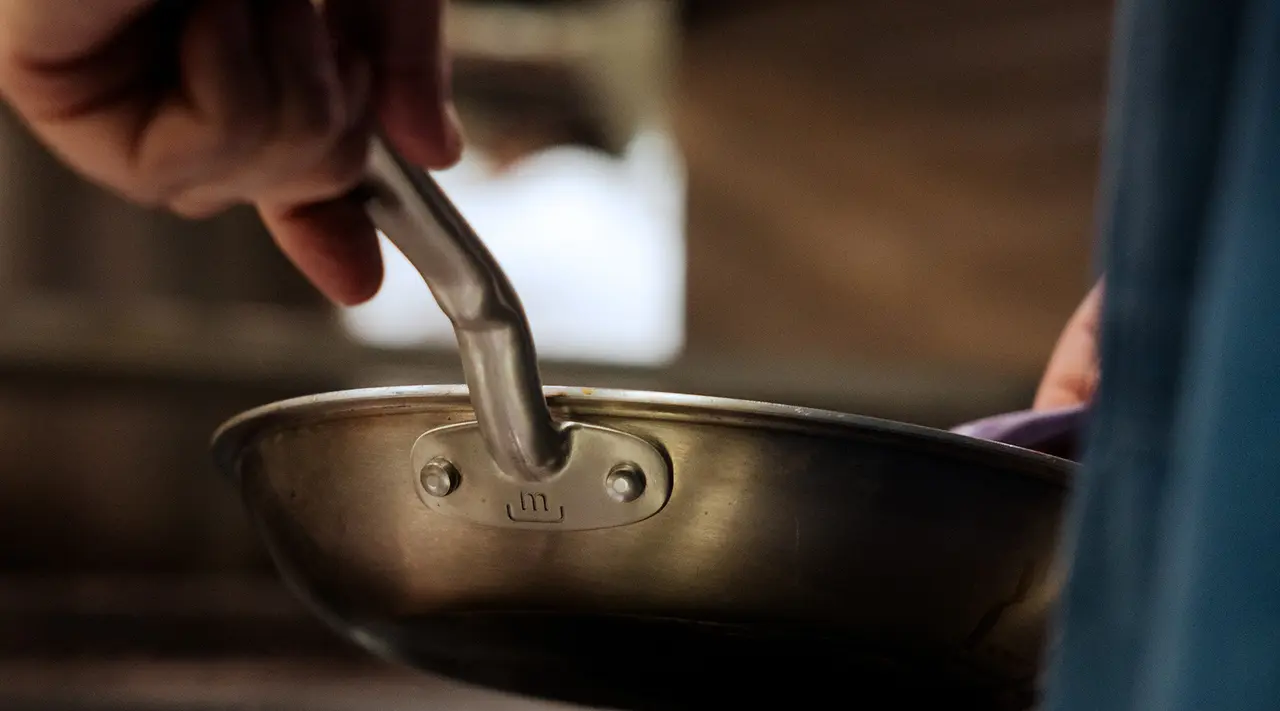
Credit: madeincookware.com
Cultural Differences In Pan Design
If you travel or buy cookware from different countries, you’ll notice that handle design often reflects local cooking habits:
- Asian woks often have metal loop handles. These are designed for quick, high-heat cooking, where the pan is rarely left on the heat long enough for the handles to get hot.
- European sauté pans often have long handles, good for both stove and oven use.
- American frying pans usually have short, thick handles, sometimes with silicone covers.
Non-obvious insight: In professional kitchens, cooks often use towels or cloths to handle pans, so the need for always-cool handles is less important. Home cooks, however, may forget and grab a hot handle by accident.
Common Mistakes Beginners Make
- Assuming Handles Stay Cool: Many people think only the pan’s base gets hot.
- Leaving Pans on the Stove Too Long: The longer the pan sits, the hotter the handle will get—even after the stove is turned off.
- Using Wet Cloths: Never use a wet towel or oven mitt to grab a hot handle. The water will heat up instantly and can cause steam burns.
- Ignoring Handle Position: If you leave the handle over another burner, it will heat up quickly—even if that burner is not on.
How To Choose The Right Pan Handle
When buying a new pan, think about:
- Do you use the oven? If yes, choose all-metal handles.
- Do you cook for a long time? Look for pans with longer or insulated handles.
- Are you accident-prone? Silicone or plastic covers can help.
- Do you use high heat? Stainless steel handles are safer than aluminum.
Read product reviews and choose a handle that fits your cooking style. For more detailed engineering data, you can visit the Wikipedia cookware page.
Myths About Hot Handles
Some myths confuse cooks:
- “Stainless steel handles always stay cool.” False—stainless steel only slows the heat, it doesn’t stop it.
- “Handle color means it’s heatproof.” Not true—color is just for looks.
- “If the handle is hot, the food is burning.” Not always—the handle can get hot even if food is cooking gently.
How Professional Chefs Handle Hot Handles
In restaurant kitchens, cooks handle hot pans all the time. They use towels, special cloths, or double up oven mitts. Some pans have removable silicone sleeves, but most professionals just work quickly and carefully.
A chef’s tip: Always assume the handle is hot. This habit prevents burns, even when you’re busy.
The Future Of Pan Handle Design
New cookware designs try to solve the hot handle problem. Some companies experiment with:
- Ceramic coatings: These can insulate the handle.
- Advanced polymers: Heat-resistant plastics that can handle oven temperatures.
- Detachable handles: Great for storage and oven use.
Smart pans with built-in temperature sensors may one day warn you when the handle is hot, but for now, the safest option is to always be careful.
Frequently Asked Questions
Why Do Some Pans Have Plastic Or Wooden Handles?
Plastic and wood don’t conduct heat as well as metal. Handles made from these materials stay cooler during cooking. However, they can’t go in the oven or handle very high temperatures.
Can I Make A Metal Handle Stay Cool At Home?
You can use a removable silicone cover or wrap a towel around the handle. Some people use thick rubber bands or buy special handle grips. However, always check if these accessories are safe for the oven.
Are All-metal Handles Safe To Use In The Oven?
Yes, all-metal handles can go in the oven. This is one of their main advantages. Just remember they will get very hot—always use oven mitts or a thick towel.
Why Do Professional Chefs Still Use Pans With Metal Handles?
Professional kitchens need pans that go from stove to oven quickly and can be cleaned easily. Metal handles are more durable, hygienic, and versatile, even if they get hot.
What Should I Do If I Burn My Hand On A Hot Handle?
Cool the burn under cold running water for at least 10 minutes. Don’t put ice directly on the burn. If the burn is severe, seek medical help. Keep a first aid kit in your kitchen for emergencies.
Cooking should be enjoyable and safe. Remember, metal handles get hot because of science, not bad design. With a little care and the right tools, you can cook confidently and avoid painful surprises.