
Cooking is a creative journey, but sometimes you don’t have all the ingredients you need. Maybe you ran out of eggs for baking, or you’re cooking for someone with allergies. Perhaps you want to make your favorite dish healthier or more budget-friendly. This is where substitutes for cooking become essential. Knowing the right swaps can save your meal, reduce waste, and even inspire new recipes. But not all substitutes work the same way. Some change the flavor, others the texture. Picking the right one is a skill every home cook should have.
In this guide, you’ll discover practical substitutes for common cooking ingredients. You’ll also learn how and when to use them, with tips to avoid common mistakes. We’ll cover dairy, eggs, oils, flours, sweeteners, thickening agents, and more. Whether you want to cook for special diets or just need a quick fix, this article gives you a complete toolkit for kitchen substitutions.
Why Use Substitutes In Cooking
Substitutes are more than just emergency fixes. They offer flexibility and open new possibilities in the kitchen.
- Dietary restrictions: Many people can’t eat certain foods due to allergies, intolerances, or health reasons. Substitutes help include everyone at the table.
- Convenience: Running out of an ingredient is common. Substitutes let you finish a recipe without last-minute shopping.
- Cost and availability: Some ingredients are expensive or hard to find. Substitutes make recipes more accessible.
- Nutrition and preferences: Swapping ingredients can make meals healthier, vegan, or just suited to your taste.
But using substitutes well takes some knowledge. Some swaps are simple (like lemon juice for vinegar), while others need careful handling to avoid ruining the dish.
Dairy Substitutes
Dairy is common in many recipes, but not everyone can or wants to use it. Here’s how to replace milk, cream, butter, cheese, and yogurt.
Milk Substitutes
When you need milk for baking or cooking, several options work well. The best choice depends on the recipe.
- Plant-based milks: Almond, soy, oat, and coconut milk can usually replace cow’s milk 1:1. Unsweetened versions are best for savory dishes.
- Evaporated milk: Mix with equal parts water to replace regular milk in recipes.
- Powdered milk: Combine with water as directed to recreate liquid milk.
- Water with a little oil: For baking, water plus a teaspoon of oil can mimic milk’s moisture, though the flavor may be blander.
Insider tip: Not all plant-based milks work in custards or sauces, as some may curdle when heated. Soy and oat milk are more stable than almond milk for cooking.
Butter Substitutes
Butter adds flavor and structure, but it’s high in saturated fat and not vegan-friendly. Here are practical swaps:
- Margarine: Use in equal amounts for most baking and cooking.
- Coconut oil: Replace butter 1:1; adds a mild coconut taste.
- Vegetable oil: Use ¾ cup oil for every 1 cup butter in baking.
- Applesauce: For cakes and muffins, use ½ cup unsweetened applesauce for every 1 cup butter for a lower-fat result.
- Greek yogurt: In baking, swap half the butter with Greek yogurt to keep moisture.
Tip beginners miss: Butter adds flavor and helps with browning. When replacing it, consider adding a pinch of salt or a splash of vanilla for flavor.
Cream Substitutes
Heavy cream is used for sauces, soups, and desserts. You can make your own or use alternatives.
- Milk + butter: Mix ¾ cup milk with ¼ cup melted butter to replace 1 cup heavy cream.
- Coconut cream: Works well in desserts and curries; has a coconut flavor.
- Evaporated milk: Good for sauces, but not for whipping.
- Silken tofu: Blend until smooth to use in creamy soups or vegan desserts.
Cheese Substitutes
Cheese gives dishes flavor and texture. Here’s how to swap it out:
- Nutritional yeast: Adds cheesy flavor to sauces and pasta. Use 2 tablespoons to replace ¼ cup grated cheese.
- Vegan cheese: Store-bought options melt and stretch like dairy cheese.
- Tofu: For ricotta, mash firm tofu with lemon juice and salt.
- Cashew cream: Blend soaked cashews with water for creamy sauces.
Yogurt Substitutes
Yogurt is often used for tang or creaminess.
- Sour cream: Use in equal amounts.
- Buttermilk: Works in baking; add a teaspoon of lemon juice to milk for a quick fix.
- Coconut yogurt: Good for dairy-free recipes.
- Blended silken tofu: For vegan recipes, blend until smooth.
Extra insight: Some yogurt substitutes change the thickness of a sauce or batter. Adjust the liquid in your recipe as needed.
:max_bytes(150000):strip_icc()/0816_BakingSubs_Chart_23update_2-8d365c3da9a24a6499a65f3c51b8a1a8.jpg)
Credit: www.realsimple.com
Egg Substitutes
Eggs are vital in baking, as they bind, leaven, and add moisture. But allergies, vegan diets, or running out can all make you look for alternatives.
Common Egg Replacements
- Applesauce: Use ¼ cup unsweetened applesauce for 1 egg in cakes and muffins.
- Flaxseed meal: Mix 1 tablespoon ground flaxseed with 3 tablespoons water. Let sit for 5 minutes to thicken.
- Chia seeds: Same as flaxseed—1 tablespoon chia seeds with 3 tablespoons water.
- Mashed banana: ¼ cup mashed banana replaces 1 egg, but it adds flavor.
- Commercial egg replacers: Brands like Ener-G or Bob’s Red Mill offer powder mixes. Follow package instructions.
Baker’s secret: For recipes needing eggs for structure (like meringue), aquafaba (the liquid from canned chickpeas) can be whipped to stiff peaks.
When Not To Substitute Eggs
Eggs play a unique role in some recipes, like soufflés or delicate custards. Substitutes might change the texture or fail to set. For these, it’s better to find egg-free recipes designed for substitutes.
Oil And Fat Substitutes
Fats add richness and moisture, but sometimes you need to lower calories or replace what you’re missing.
Cooking Oil Substitutes
- Butter or margarine: Melted, can replace oil in baking.
- Applesauce or mashed banana: Use in equal amounts for cakes and muffins.
- Greek yogurt: Use half the amount to replace oil in baking, adds protein.
- Broth or water: For sautéing, use broth instead of oil to cut calories.
Shortening Substitutes
Shortening is common in pie crusts and cookies.
- Butter: Swap 1:1 for most recipes, but crusts may be less flaky.
- Coconut oil: Use solid coconut oil in equal amounts for pie crusts.
- Lard: Traditional and works well in savory recipes.
Tip: Shortening has a high melting point, giving baked goods a special texture. If you substitute, chill your dough well for similar results.
Lard Substitutes
Lard is rare in modern kitchens but common in old recipes.
- Butter or margarine: Use in equal amounts.
- Vegetable shortening: Classic substitute.
- Coconut oil: Adds a subtle flavor but works well.
Flour Substitutes
Flour is the backbone of many recipes, but gluten-free options and other flours can replace it with planning.
All-purpose Flour Swaps
- Whole wheat flour: Use ¾ cup for every 1 cup all-purpose. Add a bit more liquid.
- Oat flour: Good for pancakes, use 1:1. Make at home by blending oats.
- Almond flour: Adds moisture and richness. Best for cookies, not bread.
- Coconut flour: Very absorbent; use ¼ the amount and add extra eggs or liquid.
- Gluten-free blends: Store-bought blends often swap 1:1.
Self-rising Flour
If you need self-rising flour but only have regular flour, add 1½ teaspoons baking powder and ¼ teaspoon salt per cup of all-purpose flour.
Baking insight: Not all flour substitutes rise the same. For gluten-free baking, xanthan gum or extra eggs may be needed for structure.
Cornstarch Substitutes
Cornstarch thickens sauces and soups. Try these swaps:
- Arrowroot powder: Use in equal amounts.
- Potato starch: Swap 1:1.
- Tapioca starch: Use 2 tablespoons for every 1 tablespoon cornstarch.
- All-purpose flour: Use 2 tablespoons flour for every 1 tablespoon cornstarch, but cook longer to remove the floury taste.
Sweetener Substitutes
Sugar is everywhere, but alternatives can cut calories, lower glycemic index, or fit special diets.
White Sugar Substitutes
- Honey: Use ¾ cup honey for 1 cup sugar, reduce other liquids by ¼ cup.
- Maple syrup: Use ¾ cup for 1 cup sugar; adds a unique flavor.
- Agave nectar: Swap ⅔ cup for 1 cup sugar.
- Stevia or monk fruit: Use as directed; they’re much sweeter than sugar.
Beginner warning: Liquid sweeteners change the moisture of your batter. You might need to adjust flour or baking time.
Brown Sugar Substitutes
If you run out of brown sugar:
- White sugar + molasses: Mix 1 cup sugar with 1 tablespoon molasses.
- Coconut sugar: Use in equal amounts.
Powdered Sugar Substitutes
Powdered sugar is needed for frosting and glazes.
- Blended granulated sugar: Blend regular sugar with a bit of cornstarch until fine.
- Dry milk powder: For dusting, use dry milk powder as a low-sugar option.

Credit: www.howtocook.recipes
Salt And Seasoning Substitutes
Salt and seasonings build flavor, but sometimes you need to cut back or try new flavors.
Salt Substitutes
- Herbs and spices: Basil, oregano, thyme, and cumin add flavor without sodium.
- Citrus juice or zest: Lemon or lime can brighten dishes without salt.
- Vinegar: A splash of vinegar can make food taste less bland.
- Low-sodium salt: Potassium chloride-based blends can replace regular salt.
Health note: If you have kidney problems, check with a doctor before using potassium-based salt substitutes.
Soy Sauce Substitutes
For stir-fries and marinades:
- Tamari: Gluten-free and tastes similar.
- Coconut aminos: Lower in sodium and soy-free.
- Worcestershire sauce: Adds depth, but not as salty.
Bouillon And Stock Substitutes
If you run out of chicken or beef stock:
- Vegetable stock: Works in almost any recipe.
- Water + herbs: Simmer water with garlic, onion, and herbs for a quick broth.
- Soy sauce + water: Adds umami to soups and sauces.
Baking Powder And Baking Soda Substitutes
Leavening agents help baked goods rise. Substitutes are possible if you measure carefully.
Baking Powder Substitutes
Mix together:
- 1 teaspoon baking soda
- 2 teaspoons cream of tartar
This replaces 1 tablespoon baking powder.
Baking Soda Substitutes
Baking soda is alkaline. If you run out, you can use:
- 3 teaspoons baking powder for every 1 teaspoon baking soda (but reduce other acidic ingredients).
Important: Substitutes may change the taste and color of your baked goods.
Vinegar And Acid Substitutes
Acids add brightness and help with leavening.
Vinegar Swaps
- Lemon juice: Equal parts for white or apple cider vinegar.
- Lime juice: Similar effect, but with a different flavor.
- White wine: Use in salad dressings and sauces.
- Yogurt or buttermilk: For baking, swap 1:1.
Lemon Juice Substitutes
- Lime juice: Closest in taste.
- Vinegar: Use a bit less, as it’s stronger.
- White wine: For sauces and marinades.
Thickening And Binding Agents
Sauces, soups, and desserts often need thickening or binding. Here are your best options.
Arrowroot And Tapioca Alternatives
- Cornstarch: Most common thickener.
- Potato starch: Great for clear sauces.
- Flour: Use twice as much as cornstarch.
Gelatin Substitutes
For setting desserts:
- Agar-agar: Plant-based, works 1:1 with gelatin.
- Pectin: Good for jams and jellies.
- Cornstarch: For puddings, not for setting firm desserts.
Breadcrumb Substitutes
Breadcrumbs are used for coating or binding.
- Crushed crackers or cereal: Use in equal amounts.
- Rolled oats: Good for meatloaf or burgers.
- Almond meal: For gluten-free options.
Fresh And Dried Ingredient Substitutes
Sometimes, you need to swap between fresh and dried ingredients.
- Herbs: 1 tablespoon fresh = 1 teaspoon dried.
- Garlic: 1 clove = ¼ teaspoon garlic powder.
- Onion: 1 small onion = 1 tablespoon onion powder.
Pro tip: Dried herbs are stronger, so use less. Add them early in cooking for best flavor.
Alcohol Substitutes In Cooking
Alcohol adds depth to sauces and desserts, but not everyone uses it.
Wine Substitutes
- Grape or apple juice: Use in equal amounts for red or white wine.
- Broth: Adds body to sauces.
- Vinegar + water: Mix 1 tablespoon vinegar with water to make 1 cup.
Beer Substitutes
- Chicken or vegetable stock: Use for soups and stews.
- Ginger ale or apple cider: For batters and bread.
Extra insight: Alcohol substitutes may not give the same complexity, but they work for most recipes.
Nut And Seed Substitutes
Allergies and preferences can mean skipping nuts and seeds.
- Sunflower seeds: Use instead of nuts in baking.
- Roasted chickpeas: Crunchy and nutty; good for salads.
- Toasted oats or coconut flakes: For granola or bars.
Caution: Always check for cross-contamination if cooking for someone with severe allergies.
Table: Comparing Common Substitutes For Milk, Eggs, And Flour
Here’s a quick look at the most popular swaps:
| Ingredient | Common Substitute | Ratio | Best Used For |
|---|---|---|---|
| Milk | Almond/Soy/Oat Milk | 1:1 | Baking, Cooking |
| Egg | Flaxseed + Water | 1 tbsp flax + 3 tbsp water = 1 egg | Cookies, Cakes |
| Flour | Oat Flour | 1:1 | Pancakes, Muffins |
Table: Sweetener Substitution Guide
This table shows how to swap common sweeteners:
| Original Sweetener | Substitute | Ratio | Notes |
|---|---|---|---|
| White Sugar | Honey | 3/4 cup honey for 1 cup sugar | Reduce other liquids by 1/4 cup |
| Brown Sugar | White Sugar + Molasses | 1 cup sugar + 1 tbsp molasses | Mix thoroughly |
| Powdered Sugar | Blended Granulated Sugar | 1:1 | Add 1 tbsp cornstarch per cup |
Table: Thickeners And Their Substitutes
Choose the right thickener with this guide:
| Thickener | Substitute | Ratio | Best For |
|---|---|---|---|
| Cornstarch | Arrowroot Powder | 1:1 | Clear Sauces |
| Gelatin | Agar-Agar | 1:1 | Jellies, Desserts |
| Breadcrumbs | Rolled Oats | 1:1 | Meatloaf, Burgers |
Special Diet Substitutes
Cooking for special diets means extra care with substitutions.
Gluten-free
- Use almond flour, coconut flour, or certified gluten-free blends instead of wheat flour.
- Cornstarch, arrowroot, and potato starch are safe thickeners.
Vegan
- Plant-based milks and vegan cheese for dairy.
- Flax eggs or commercial replacers for eggs.
- Agar-agar for gelatin.
Low-carb Or Keto
- Almond flour and coconut flour for baking.
- Stevia or monk fruit for sweetening.
Low-sodium
- Use herbs, spices, and citrus instead of salt.
- Choose low-sodium broths and sauces.
Common Mistakes When Using Substitutes
Even experienced cooks can make mistakes with substitutes. Watch out for these:
- Ignoring ratios: Some substitutes are more concentrated or have more moisture. Always check the recommended ratio.
- Forgetting flavor changes: Coconut oil and bananas add flavor. Test a small batch if you’re unsure.
- Not adjusting liquids: Honey, applesauce, or liquid sweeteners need you to reduce other liquids.
- Skipping structure: Gluten-free and egg-free recipes may need binders like xanthan gum or flaxseed.
- Not considering allergies: If swapping nuts or seeds, check for new allergens.
Pro insight: Start with tried-and-tested recipes when using multiple substitutes. Small changes are easier to manage.
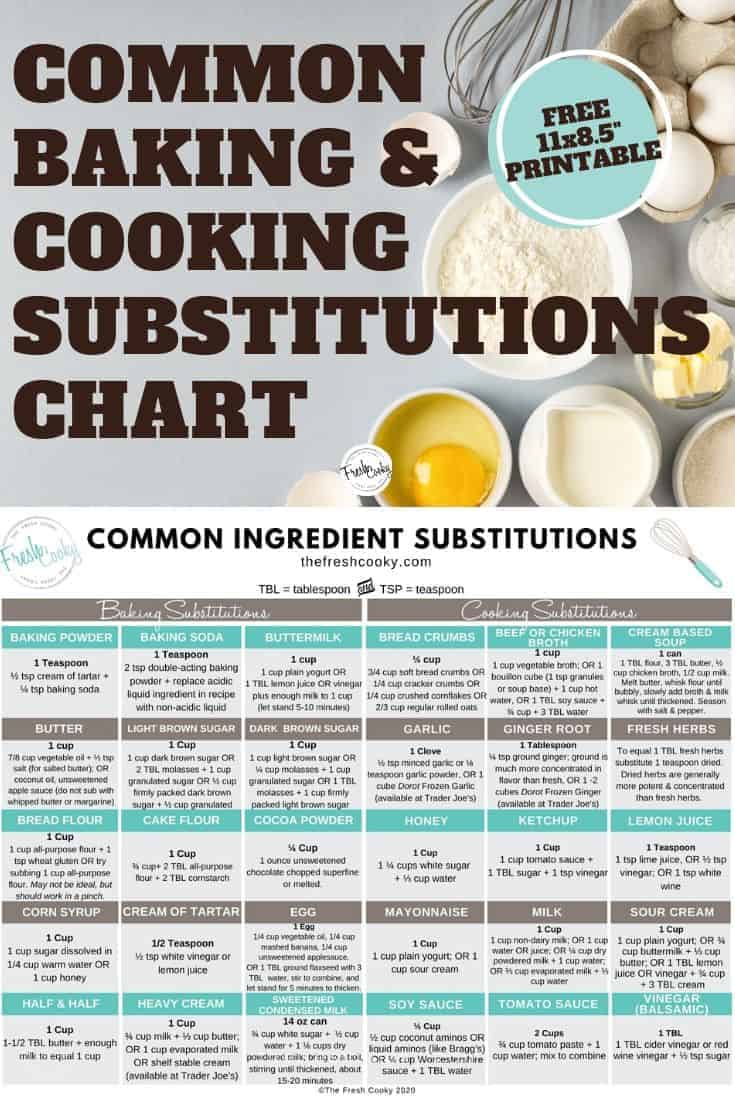
Credit: www.thefreshcooky.com
Practical Examples Of Successful Substitutions
Here are real-life swaps that work well:
- Making pancakes with oat flour instead of wheat flour for a gluten-free breakfast.
- Using applesauce in chocolate cake to cut fat and keep moisture.
- Swapping Greek yogurt for sour cream in dips for extra protein.
- Replacing egg with a flaxseed mixture in brownies for vegan treats.
- Using coconut milk in curries instead of cream for a dairy-free alternative.
Where To Learn More
For more detailed substitution charts and science behind ingredients, visit the Wikipedia page on food substitution. It’s a great resource for cooks wanting deeper understanding.
Frequently Asked Questions
What Is The Best Substitute For Eggs In Baking?
The best substitute depends on the recipe. For most cakes and cookies, flaxseed meal mixed with water works well. If you want a neutral taste, try unsweetened applesauce. For recipes needing whipped egg whites, use aquafaba (chickpea water).
Can I Use Any Plant Milk Instead Of Regular Milk?
Most plant milks like soy, almond, or oat milk can replace dairy milk in baking and cooking. Use unsweetened versions for savory dishes. Note that coconut milk adds a coconut flavor and is richer, so it’s best for desserts and curries.
How Do I Make Homemade Buttermilk If I Don’t Have Any?
Mix 1 cup of milk (dairy or plant-based) with 1 tablespoon of lemon juice or white vinegar. Let it sit for 5-10 minutes. It will curdle and thicken, creating a quick buttermilk substitute for pancakes, muffins, or fried chicken.
What’s A Good Substitute For Cornstarch To Thicken Sauces?
Arrowroot powder and potato starch are the best substitutes and can be used in equal amounts. All-purpose flour can also work, but you’ll need twice as much and must cook the sauce longer to remove the raw taste.
Are There Any Substitutes That Work For Gluten-free And Vegan Diets?
Yes, for baking, use almond flour or oat flour for gluten-free needs, and flax eggs for vegan binding. For dairy, choose plant-based milks and vegan cheese. For thickening, use arrowroot or potato starch. Always check labels for cross-contamination if allergies are a concern.
Using substitutes for cooking is a skill that grows with practice. With the right knowledge, you can cook confidently, even when you’re missing an ingredient or cooking for a special diet. The kitchen becomes more flexible, creative, and welcoming to everyone.