
Trimming bifold doors might sound like a simple task, but it’s one that requires care and a step-by-step approach. Whether you’re updating your closet, laundry room, or pantry, making bifold doors fit perfectly can make a big difference in how your space looks and works.
Many people find that off-the-shelf bifold doors are a bit too tall, too wide, or uneven for their door openings, especially in older homes where frames aren’t always square. If your bifold doors rub the floor, won’t close smoothly, or just don’t seem right, trimming them is often the best solution.
You don’t need to be a professional carpenter to trim bifold doors, but you do need patience and the right information. This guide walks you through the whole process—from understanding why trimming is needed, to the tools you’ll need, safety tips, measuring, marking, cutting, finishing, and reinstalling.
You’ll also learn how to avoid common mistakes that can ruin a door or waste your time. With clear steps and practical advice, you can confidently tackle this project and make your bifold doors fit like they were custom-made.
Why Trim Bifold Doors?
Many homes use bifold doors for closets, laundry areas, and pantries because they save space and are easy to install. But not all door openings are standard. Sometimes, the floor is uneven, the frame is slightly off, or your new flooring is thicker than before. These issues can make your bifold doors drag, scrape, or not close all the way.
Here are the most common reasons people need to trim bifold doors:
- Uneven floors – Especially in older homes, floors may slope or have high spots, causing the door to rub.
- Non-standard door openings – If the opening is shorter or narrower than usual, the doors won’t fit right out of the box.
- Thicker flooring – Adding carpet, tile, or laminate can reduce the height of the opening.
- Warped or damaged door edges – Sometimes edges are chipped or swollen and need to be straightened.
- Custom look – For a seamless fit, trimming is sometimes needed, even in new construction.
A well-trimmed bifold door works smoothly, looks professional, and adds to the room’s appeal.
Tools And Materials You’ll Need
Getting the right tools and materials makes the job easier, safer, and ensures a clean result. Here’s what you should gather before starting:
- Tape measure – For accurate measurements.
- Pencil – For marking cut lines.
- Straight edge or ruler – To guide your marks.
- Circular saw or hand saw – For cutting the door.
- Fine-tooth saw blade – Gives a cleaner cut, important for painted or veneered surfaces.
- Clamps – Hold the door steady while cutting.
- Masking tape or painter’s tape – Reduces splintering on the cut edge.
- Sandpaper (120–220 grit) – Smooths rough edges after cutting.
- Wood sealer or paint – Protects the new cut edge.
- Screwdriver – For removing hardware.
- Drill (optional) – If you need to move pivot hardware.
- Drop cloth – Protects the floor from dust and scratches.
- Hearing and eye protection – For safety while cutting.
If you don’t have a circular saw, a sharp hand saw will work for small trims, but it takes more time and care.
Safety First: Essential Precautions
Trimming bifold doors means working with tools that can cause injury if not handled correctly. Before you begin, keep these safety tips in mind:
- Wear safety glasses to protect your eyes from sawdust and splinters.
- Use hearing protection when working with power tools.
- Work in a well-ventilated area to avoid breathing dust.
- Secure the door on a flat surface before cutting. Unstable work surfaces can lead to mistakes or injuries.
- Keep your hands away from the blade at all times.
- Unplug power tools when changing blades or making adjustments.
Never rush through a cut. Take time to set up and check your measurements before you begin.
Removing Bifold Doors For Trimming
Before trimming, you need to take the bifold doors out of the frame. This step is often overlooked, but it’s much easier and safer to trim a door on a stable surface than while it’s hanging.
How To Remove Bifold Doors
- Open the door fully so you can see the pivot pins at the top and bottom.
- Lift the door up to release the bottom pivot pin from its bracket. You may need to push the door up or use a flathead screwdriver to help.
- Angle the door out toward you, then lower it to free the top pivot pin.
- Lay the door flat on a workbench or sturdy surface.
Take note of which side is the top and bottom, especially if you need to trim only one edge. A simple sticky note or pencil mark helps you remember.
Measuring And Marking For The Cut
A precise cut starts with accurate measuring and careful marking. This step often determines whether your door will fit perfectly or need more work.
Measuring Door Height
- Measure the door opening height at both sides and the center. Floors are not always level.
- Subtract the clearance you want above the floor. Most doors need at least 1/2 inch (13 mm) clearance for carpet, or 1/4 inch (6 mm) for hard floors.
- Measure the current door height and compare it to your ideal height. The difference is the amount you need to trim.
- Never trim more than necessary. Most bifold doors allow for only 1 to 2 inches of trimming, especially at the bottom.
Marking The Cut Line
- Use a straight edge to draw the cut line across the door.
- Mark both the front and back for accuracy.
- Use masking tape along the cut line to help reduce splintering.
If you need to trim from the top, remember that many bifold doors have a hardware pivot at the top. You may need to move this after trimming.
Where To Trim: Top, Bottom, Or Sides?
Not all bifold doors are made the same. Some can only be trimmed from the bottom, while others allow trimming at both top and bottom, or even the sides.
Manufacturer’s Limits
Most bifold doors have a solid wood or engineered wood strip at the edges. This is what gives the edge strength and holds screws for hardware. If you cut too much and remove this strip, the door may become weak or impossible to reattach hardware.
- Bottom trim – Safe for most doors, but check how much can be removed.
- Top trim – Possible if you also move the pivot hardware.
- Side trim – Only if the manufacturer allows. Usually, side trims are very limited.
Check the manufacturer’s instructions or website for specific limits. If you can’t find them, the safe rule is never trim more than 1 inch from any edge.
Example: Typical Trimming Allowances
| Door Type | Top Trim Max | Bottom Trim Max | Side Trim Max |
|---|---|---|---|
| Hollow Core (Pine) | 3/4 inch | 1 inch | 1/4 inch |
| Solid Core (MDF) | 1 inch | 1-1/2 inch | 1/2 inch |
| Veneer/Composite | 1/2 inch | 3/4 inch | Not recommended |
If you need to trim more than these limits, consider replacing the door or consulting a carpenter.
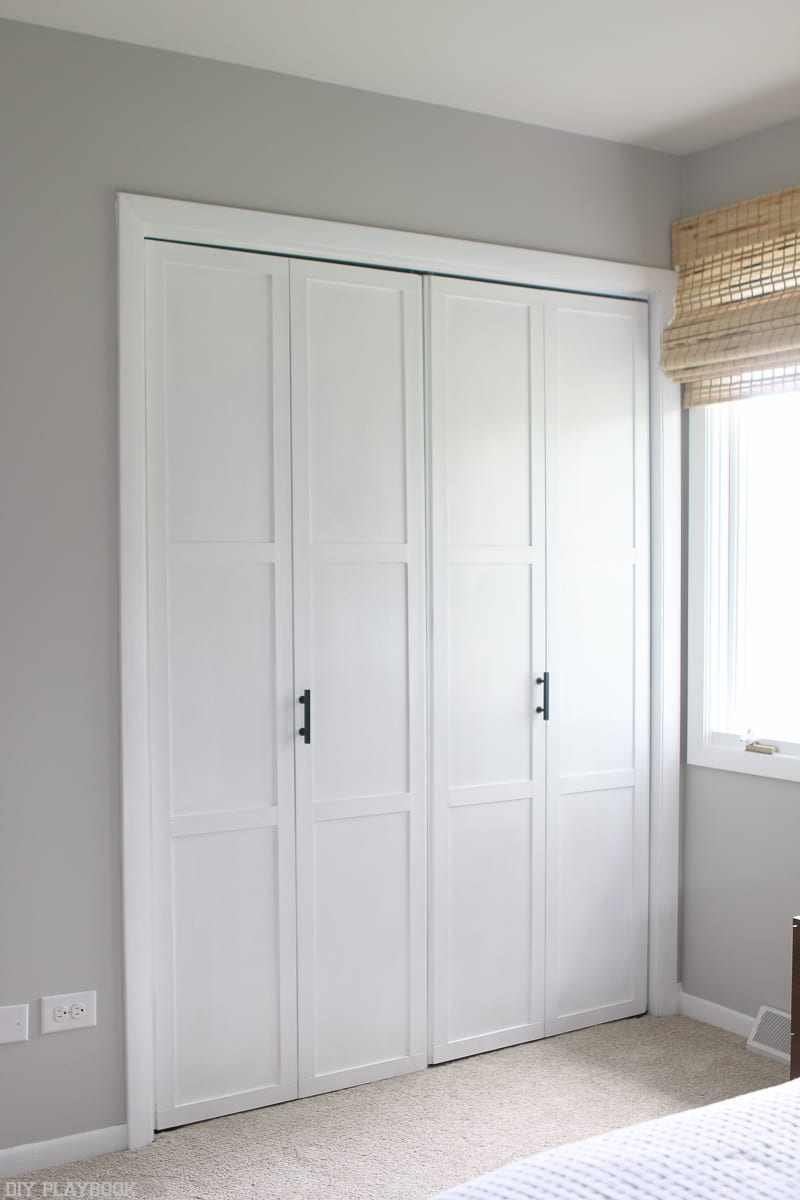
Credit: thediyplaybook.com
Cutting The Door: Techniques And Tips
With marks made, it’s time to cut. This is the most crucial part of the process, and small mistakes can cause chipping, splinters, or uneven edges.
Using A Circular Saw
- Set the door on a stable surface, supported near the cut to prevent bending.
- Clamp a straight edge or board to guide your saw.
- Use a fine-tooth blade for a clean cut.
- Cut slowly and steadily. Don’t force the saw.
- If using masking tape, cut through the tape to reduce splinters.
- Always cut with the finished side down to minimize visible chipping.
Using A Hand Saw
- Useful for small trims or if you lack power tools.
- Mark your line on both sides for accuracy.
- Saw slowly to avoid splintering, using a back-and-forth motion.
- Support the door close to the cut so it doesn’t wobble.
Sanding The Edge
After cutting, the edge will likely be rough.
- Use 120–220 grit sandpaper to smooth the edge.
- Sand with the grain for a cleaner look.
- Remove all dust before sealing or painting.
Sealing And Painting The Cut Edge
Once you trim the door, the cut edge is raw wood. This can absorb moisture, swell, or warp if not sealed, especially in humid rooms like bathrooms or laundry areas.
How To Seal The Edge
- Use a wood sealer, primer, or paint that matches your door.
- Apply with a small brush, covering all bare wood.
- Let it dry fully before reinstalling.
For painted doors, touch up with matching paint. For natural wood doors, use a compatible clear sealer.
Sealing the edge is essential for durability. Skipping this step is a common beginner mistake and can void the door’s warranty.

Credit: dreamdesigndiy.com
Reinstalling The Bifold Door
After trimming and finishing, it’s time to put the door back. This step is usually quick, but a few checks will help you avoid problems.
- Reattach hardware if you removed any for cutting.
- Insert the top pivot pin into the track first.
- Align the bottom pin with the floor bracket and lower the door into place.
- Test the door for smooth opening and closing.
- Adjust the pivot brackets if the door is not level or doesn’t close properly.
If you trimmed from the top and had to move the pivot hardware, use a drill to create a new hole for the pin.
Adjusting After Trimming
Even after careful trimming, small adjustments are often needed to make the door hang perfectly.
Common Adjustments
- Height adjustment: Most bifold doors have a threaded bottom pivot pin. Turn it to raise or lower the door slightly.
- Side-to-side adjustment: Loosen the top bracket and slide the pin left or right.
- Track lubrication: A drop of silicone spray can help the door glide quietly.
If the door still rubs after trimming, check the frame for high spots or use a level to confirm the door is straight.
Trimming Bifold Door Width
Most people trim the height, but sometimes you need to make the door narrower to fit a small opening. This job requires extra care because the sides often have less solid wood for hardware.
Steps To Trim Door Width
- Remove the door and lay flat.
- Mark the cut line as described above.
- Use a circular saw with a fine blade and masking tape.
- Sand the edge and seal as before.
- Move any edge hardware (hinges, handles) if needed.
If you remove too much, the edge may be hollow. You can glue in a strip of wood (known as a “lipping”) to strengthen the new edge.
Comparing Height And Width Trims
| Aspect | Height Trim | Width Trim |
|---|---|---|
| Difficulty | Easy to moderate | Moderate to hard |
| Risk of damaging door | Low (within limits) | Higher (less solid wood at edge) |
| Hardware relocation needed? | Usually not | Often yes |
| Common reason | New flooring, uneven floor | Non-standard opening |
Special Tips For Different Door Types
Not all bifold doors are made from the same material. Knowing your door’s construction helps you trim it safely.
Hollow-core Bifold Doors
- Lightweight and affordable.
- Only solid at edges; avoid deep cuts.
- Use gentle pressure to avoid crushing.
Solid-core (mdf Or Wood) Doors
- Heavier and sturdier.
- Easier to trim on all edges.
- Wear a mask when sanding MDF due to fine dust.
Veneer Or Composite Doors
- Thin veneer over composite core.
- Tape edges before cutting to reduce chipping.
- Seal edges quickly to prevent swelling.
If you’re unsure about your door type, remove a small piece of hardware and check the exposed wood.
Common Mistakes To Avoid
Even experienced DIYers can make errors when trimming bifold doors. Here are mistakes to watch out for:
- Trimming too much – Measure twice, cut once. Removing too much cannot be fixed.
- Not sealing the edge – Unsealed wood swells and warps.
- Ignoring hardware position – Cutting through pivot holes or hinges means you’ll need to re-drill new holes.
- Cutting with a dull blade – Causes splintering and rough edges.
- Not supporting the door during cutting – Leads to an uneven cut or damage.
- Skipping safety gear – Eye and ear protection are a must.
Avoiding these errors means less frustration and a better-looking result.
Real-world Example: Trimming For New Flooring
Let’s look at a practical situation. You’ve installed thick new carpet, and now your bifold closet doors drag or won’t close.
Steps taken:
- Measured the new floor-to-frame distance: 79 inches.
- Original door height: 80 inches.
- Desired clearance: 3/4 inch.
- Total to trim: 1-3/4 inches.
Because this is within the manufacturer’s 2-inch bottom trim limit, the job is straightforward. Mark, tape, cut with a circular saw, sand, seal, and reinstall. The result is a door that works smoothly over the new carpet.
When To Call A Professional
Some trimming jobs are best left to experts:
- If you need to trim more than the recommended amount.
- If your door is expensive or antique.
- If you lack the necessary tools or workspace.
- If you’re not comfortable using power tools.
A professional carpenter can usually trim and refit a bifold door for $50–$150, depending on the complexity.
Cost And Time Considerations
Most DIYers can trim a bifold door in 1–2 hours, including removal, cutting, sanding, sealing, and reinstalling. The main costs are:
- Tools (if you need to buy): $40–$150
- Materials (tape, sealer, sandpaper): $10–$20
Compared to replacing a door ($80–$300), trimming is usually the smarter and more affordable option.

Credit: www.youtube.com
Environmental And Warranty Issues
Trimming a bifold door can affect the warranty. Most manufacturers allow only limited trimming and require that you seal all cut edges. If you’re concerned about the warranty, check the paperwork or contact the manufacturer before starting.
Disposing of cut-off wood should be done responsibly. Some community recycling centers accept small wood pieces, but painted or composite wood may need to go in general waste.
Comparison: Diy Vs Professional Trimming
Here’s how doing it yourself compares to hiring a pro:
| Aspect | DIY | Professional |
|---|---|---|
| Cost | Low (just tools/materials) | Higher ($50–$150/door) |
| Time | 1–2 hours/door | Usually 1 hour/door |
| Skill needed | Basic to moderate | Expert |
| Warranty risk | Higher (if mistakes made) | Usually covered |
| Result quality | Good with care | Professional finish |
Non-obvious Insights For Perfect Results
Many guides skip small but important tips that can make your project go smoother:
- Let the door acclimate – If your home is humid or very dry, let the door sit in the room for 24–48 hours before trimming. This prevents warping later.
- Check hardware alignment – Before reinstalling, test fit all hardware on the cut edge. Sometimes, screws need to be moved slightly to ensure a secure fit.
- Pre-finish the edge – If you plan to paint the door soon, apply primer and the first coat before reinstalling. This saves time and mess.
- Use a vacuum while sanding – Reduces dust and cleanup, especially with MDF doors.
Frequently Asked Questions
How Much Can You Trim Off A Bifold Door?
Most bifold doors allow you to trim 1 to 2 inches from the bottom and sometimes up to 1 inch from the top. Always check the manufacturer’s instructions. Trimming more than this can weaken the door and make it hard to attach hardware.
Can You Trim A Hollow Core Bifold Door?
Yes, but with caution. Hollow core doors have a solid edge strip, usually about 1 inch thick. Never cut past this strip, or you’ll expose the hollow part, making the door weak. You may need to glue in a new strip of wood if you cut too much.
What If The Cut Edge Is Rough Or Splintered?
If the edge is rough, sand it with 120–220 grit sandpaper until smooth. For chipped veneer, apply wood filler and sand again before sealing or painting. Masking tape along the cut line can help prevent splinters.
Do You Need Special Tools To Trim Bifold Doors?
You don’t need professional tools, but a circular saw with a fine blade, clamps, sandpaper, and a straight edge make the job easier and neater. For small trims, a sharp hand saw works, but cutting must be slow and careful.
Will Trimming Void My Door’s Warranty?
It can, especially if you trim more than recommended or don’t seal the cut edge. Always check your warranty paperwork or the manufacturer’s website, such as this page from Jeld-Wen, before starting.
Making your bifold doors fit perfectly is a satisfying DIY project. With careful measuring, the right tools, and patience, you can achieve a professional look and smooth function for years to come. If you ever feel unsure, it’s smart to ask an expert or check with the manufacturer.
Good preparation and attention to detail are the keys to success.