
Cleaning a burnt glass pan can feel impossible. The dark stains stick stubbornly, and regular dish soap barely makes a difference. If you’ve ever left rice cooking a little too long, or forgot about a bubbling sauce, you know the frustration of seeing your glass pan covered in black, baked-on mess.
Glass cookware is popular because it looks clean, cooks evenly, and doesn’t react with food. But when glass gets burnt, people worry about scratches, cracks, or even permanent stains.
Here’s good news: even badly burnt glass pans can be restored if you use the right methods and some patience. In this guide, you’ll learn step-by-step solutions, from quick fixes to deep cleaning strategies. You’ll also discover what not to do, and why small mistakes can make a big difference. Whether you use your glass pans every day or just for special occasions, these tips will help you keep your cookware sparkling and safe for every meal.
Understanding Burnt Glass Pans
Glass pans are made from tempered borosilicate glass or soda-lime glass. These materials resist heat and are less likely to break in the oven or microwave. However, glass can get stained or burnt when food sugars, oils, and proteins carbonize on the surface. This burnt layer is not just ugly; it can make food stick more in the future and even create odors.
Many people worry that burnt marks mean the pan is ruined. But glass is non-porous—burnt stains usually sit on the surface. With the right approach, you can remove them without damaging the glass.
Burns can happen from:
- Cooking at very high heat
- Letting liquids evaporate completely
- Sugar or sauce spills in the oven
Why glass pans need special care: Unlike metal, glass scratches easily. Using harsh scrubbing pads can create tiny cracks or dull the surface. Some commercial oven cleaners can also damage or cloud the glass. That’s why it’s important to use methods that are strong on stains but gentle on glass.
Essential Tools And Supplies
Before you start cleaning, gather the right tools. Here’s what you’ll need for most methods:
- Baking soda – a gentle, effective abrasive
- White vinegar – helps break down burnt residue
- Dish soap – for basic cleaning and degreasing
- Non-scratch scrubber – like a sponge or nylon pad
- Plastic scraper – for lifting thick burnt spots
- Hydrogen peroxide – for deep stains
- Lemon juice – a natural acid that fights stains
- Oven mitts – to handle hot pans safely
- Boiling water – helps soften burnt layers
- Soft cloths – for wiping and polishing
Avoid using steel wool, razor blades, or harsh chemical cleaners. These can scratch or permanently damage glass. If you’re unsure about a tool, test it on a small, hidden area first.
Quick Cleaning: For Light Burns
Not all burns are severe. Sometimes, a quick cleaning can remove light brown marks before they turn black.
Step 1: Let the pan cool completely. Sudden temperature changes can crack glass.
Step 2: Rinse with warm water to remove loose bits.
Step 3: Squeeze a few drops of dish soap into the pan.
Step 4: Use a soft sponge to scrub in circles. Don’t press too hard.
Step 5: Rinse and dry. Repeat if needed.
If the pan still looks stained, move on to a deeper cleaning method.
The Baking Soda And Vinegar Method
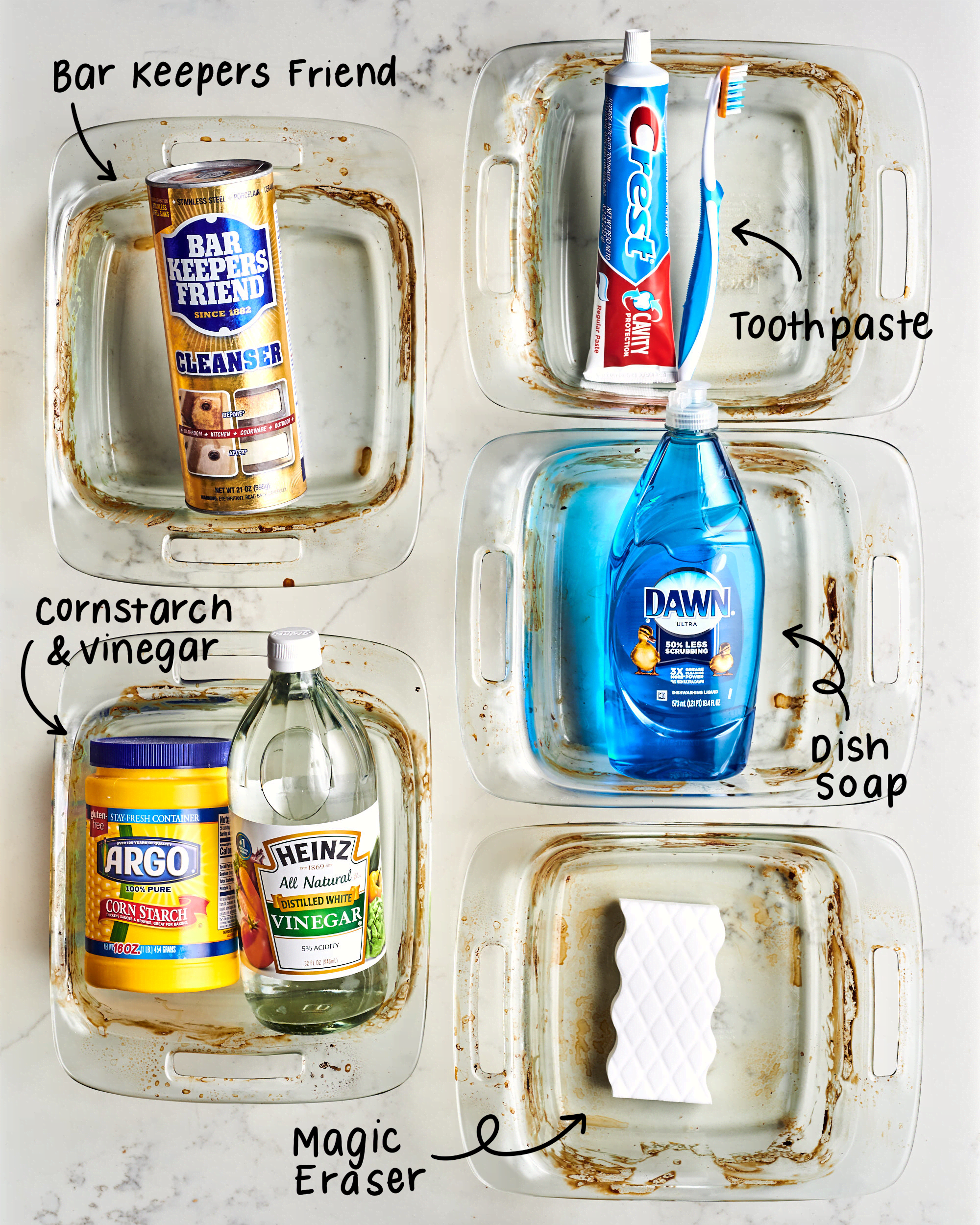
This classic technique works for most burnt glass pans. Baking soda is a gentle abrasive, while vinegar cuts through burnt food and grease.
How to use:
- Sprinkle a thick layer of baking soda over the burnt area.
- Pour enough white vinegar to wet the baking soda. It will fizz—this helps loosen the burn.
- Let the mixture sit for 15–30 minutes. For tough stains, wait longer.
- Use a non-scratch scrubber to gently scrub the area. Work in circles.
- Rinse with warm water.
- Dry with a soft cloth.
For stubborn spots, repeat the process or leave the baking soda and vinegar on overnight.
Why This Works
Baking soda’s mild abrasiveness lifts stains without scratching. Vinegar’s acidity dissolves carbonized food. The fizz also helps lift burnt bits.
Pro tip: If you have a really tough stain, place the pan in the oven at 200°F (93°C) for 10 minutes after applying the paste. The heat can help the mixture work deeper. Be sure to let the pan cool before scrubbing.
Credit: www.thekitchn.com
Boiling Water And Dish Soap Soak
This is a safe, simple way to soften burnt food before you scrub. It’s especially useful for pans with thick, sticky messes.
How to soak:
- Fill the pan with hot tap water. Add a few squirts of dish soap.
- Place the pan on the stove and heat gently until the water is just below boiling (never boil dry).
- Let it simmer for 10–20 minutes.
- Remove the pan carefully (use oven mitts).
- Let it cool, then pour out most of the water.
- Use a plastic scraper or non-scratch sponge to lift burnt spots.
If the stains remain, repeat or try adding a few tablespoons of baking soda to the water before heating.
When To Use This Method
This approach is best when the burnt layer is thick or sticky, but not fully carbonized (blackened). The combination of heat and soap dissolves fats and sugars, making them easier to remove.
Hydrogen Peroxide Deep Clean
Hydrogen peroxide is a stronger cleaning solution for really stubborn burnt stains. It breaks down organic material without scratching.
Warning: Only use 3% household hydrogen peroxide. Avoid using on colored or decorated glass pans, as it can bleach colors.
How to use:
- Pour enough hydrogen peroxide into the pan to cover the burnt area.
- Add a tablespoon of baking soda. The mixture will fizz.
- Let it sit for at least 1 hour, or up to overnight for deep burns.
- Scrub gently with a non-scratch pad.
- Rinse very well with water and wash with dish soap.
Hydrogen peroxide is safe to use in kitchens, but always rinse well before using the pan again. This method can restore even badly burnt pans.
Lemon And Salt Scrub
If you prefer natural cleaning, lemon and salt can be effective. The salt acts as a gentle abrasive, while lemon juice’s acid breaks up stains.
Steps:
- Cut a fresh lemon in half.
- Sprinkle a thick layer of coarse salt (kosher or sea salt) onto the burnt area.
- Use the lemon half to scrub the salt around the pan, squeezing gently to release juice.
- Let the mixture sit for 15–20 minutes.
- Rinse and check the results.
This method also removes odors and leaves a fresh scent. It’s best for mild to moderate stains.
Commercial Glass Cookware Cleaners
There are cleaners made for glass cookware, such as Bar Keepers Friend or Bon Ami. These products are safe for glass and can save time.
How to use:
- Wet the pan with warm water.
- Sprinkle the cleaner on the burnt area.
- Use a damp, non-scratch sponge to scrub.
- Rinse very well.
Always read the instructions and avoid any products with bleach or ammonia, which can damage glass or leave residue.
Non-obvious insight: Some cleaners work better if you let them sit for 5–10 minutes before scrubbing. This gives the cleaning agents time to break down burnt food.

Credit: thehappyhousewife.com
The Power Of Time: Overnight Soaking
Patience can be your best tool. If you’re busy or the stain is severe, try soaking the pan overnight.
How to soak:
- Fill the pan with hot water and a generous amount of dish soap.
- Cover the pan with a lid or wrap it in plastic to prevent evaporation.
- Leave it overnight (8–12 hours).
- In the morning, use a non-scratch scrubber to clean away loosened stains.
For extra cleaning power, add a quarter cup of baking soda before soaking.
Comparing Cleaning Methods
To help you choose the best method for your situation, here’s a comparison of effectiveness, safety, and cost:
| Cleaning Method | Effectiveness | Glass Safety | Cost | Time Needed |
|---|---|---|---|---|
| Baking Soda & Vinegar | High | Very Safe | Low | 30–60 min |
| Boiling Water & Soap | Medium | Very Safe | Low | 20–40 min |
| Hydrogen Peroxide | Very High | Safe* | Medium | 1–8 hrs |
| Lemon & Salt | Medium | Very Safe | Low | 20–40 min |
| Commercial Cleaner | High | Very Safe | Medium | 15–30 min |
*Hydrogen peroxide is generally safe but can affect colored or decorated glass.
What Not To Do When Cleaning Burnt Glass
It’s easy to make mistakes when you’re frustrated with burnt stains. Here’s what to avoid:
- Don’t use metal pads or steel wool. They scratch glass and leave permanent marks.
- Never use oven cleaner. These products are too strong for glass pans and can cause etching or clouding.
- Avoid sharp tools. Razor blades or knives can chip or crack the glass.
- Don’t cool a hot pan with cold water. This can cause the glass to shatter due to thermal shock.
- Don’t use bleach. It doesn’t remove burns and can damage the pan.
- Don’t stack wet pans. Dry them first to avoid water spots or stuck-on residue.
Non-obvious tip: Even small scratches can make glass more likely to break in the future, especially in the oven. Always use gentle tools, no matter how tough the stain looks.
Tips To Prevent Burns In Glass Pans
Prevention is easier than cleaning. Here are practical ways to keep your glass pans looking new:
- Use moderate heat. Glass heats evenly, so high temperatures are rarely needed.
- Preheat the oven. Don’t put cold glass into a hot oven; temperature shocks can cause cracks.
- Add liquid to the pan. When roasting or baking, a little water or broth prevents burning.
- Stir food regularly. This stops sugars and proteins from settling and burning.
- Clean pans soon after use. The longer burnt food sits, the harder it is to remove.
- Line pans with parchment paper or foil for sticky foods.
- Check oven temperature accuracy. Many ovens run hotter than the setting.
Data point: According to a survey by the Cookware Manufacturers Association, over 70% of glass pan users experience burnt stains at least once a year. Most cases are due to forgotten food or sudden temperature changes.
Repairing And Restoring Cloudy Glass
Sometimes, after cleaning, glass pans look cloudy or dull. This is often caused by:
- Hard water deposits (minerals)
- Micro-scratches from abrasive tools
- Residue from detergents
To restore clarity:
- Soak the pan in a 1: 1 mix of vinegar and water for 1 hour.
- Scrub gently with a soft sponge and rinse well.
- For deep cloudiness, apply a paste of baking soda and water, rub gently, then rinse.
Pro tip: Always dry glass with a lint-free cloth. Air drying can leave spots and streaks.
When To Replace A Glass Pan
Most burnt stains can be removed, but sometimes it’s better to retire a pan. Replace your glass pan if:
- It has deep scratches or cracks
- The surface feels rough or pitted
- The glass is chipped at the edges
Cooking with damaged glass is risky. It can shatter during heating or cooling. When in doubt, replace the pan for safety.
How To Store Clean Glass Pans
Proper storage prevents scratches and keeps your pans ready to use.
- Stack pans with soft cloth or paper towels in between.
- Store lids separately to avoid pressure on glass edges.
- Don’t overcrowd cabinets. Give each pan enough space to prevent chipping.
If you use your glass pans often, keeping them in a visible spot encourages regular cleaning and care.
Advanced Cleaning: The Dishwasher Myth
Many glass pans are labeled “dishwasher safe. ” But dishwashers often don’t remove burnt stains and can make them worse by baking them on at high heat.
Insight: For burnt glass pans, hand cleaning is always better. Use the dishwasher only for light cleaning or after stains are already removed.
If you do use a dishwasher:
- Place pans away from metal items to avoid scratches.
- Use a gentle cycle and air dry immediately.
Real Examples: Success Stories
Many home cooks share stories of rescuing burnt glass pans. Here are two real-world examples:
Case 1: Maria left a glass baking dish in the oven overnight. The next day, the bottom was black. She soaked it in baking soda and vinegar overnight, then scrubbed gently. Most stains came off. For the toughest spots, she used hydrogen peroxide. Her pan looked almost new.
Case 2: Tom burnt caramel in a Pyrex dish. After trying lemon and salt, the pan was cleaner but still stained. He then used a commercial cleaner, waited 15 minutes, and scrubbed again. The stain finally disappeared, and the glass stayed clear.
Lesson: Sometimes, a combination of methods works best. Be patient, and don’t give up after the first try.
Environmental Considerations
Most methods described here use simple, safe ingredients. Baking soda, vinegar, and lemon are biodegradable and safe for drains. Hydrogen peroxide breaks down into water and oxygen.
If you use commercial cleaners, choose phosphate-free products to reduce environmental impact. Always dispose of cleaning water responsibly.
For more on eco-friendly cleaning, see EPA’s Safer Choice Program.
Comparing Glass Pans To Other Cookware
How do glass pans compare to metal or ceramic when it comes to burnt stains? Here’s a quick look:
| Cookware Type | Stain Resistance | Ease of Cleaning | Scratch Risk |
|---|---|---|---|
| Glass | Medium | Medium | High |
| Stainless Steel | High | Medium | Low |
| Ceramic | Medium | High | Medium |
| Nonstick | Very High | Very High | Low |
Key takeaway: Glass pans are more likely to show burnt stains than nonstick or stainless steel. However, with proper care, they last for years and stay looking good.
Frequently Asked Questions
How Can I Remove Really Stubborn Black Stains From Glass Pans?
For deep black stains, use a combination of hydrogen peroxide and baking soda. Pour enough hydrogen peroxide to cover the stain, add baking soda, and let it fizz for several hours. Scrub gently with a non-scratch pad. If needed, repeat the process or let the mixture sit overnight.
Is It Safe To Use A Glass Pan With Small Scratches?
Small scratches can become weak points in the glass. While light scratches may not cause immediate problems, avoid using the pan for high-temperature cooking or in the oven. If scratches are deep, or if you see cracks, replace the pan to avoid breakage.
Can I Use Bleach Or Oven Cleaner On Burnt Glass Pans?
No, avoid bleach and oven cleaners. Bleach can damage the glass surface and is not effective on burnt food. Oven cleaners are too harsh and can cause clouding or etching. Stick with baking soda, vinegar, or commercial glass cookware cleaners.
Will Cleaning Methods Work On Pyrex And Other Branded Glass Pans?
Yes, Pyrex and other high-quality glass pans can be cleaned with the methods described. Always check the manufacturer’s instructions and avoid harsh abrasives or chemicals. For colored or printed designs, avoid hydrogen peroxide, as it can fade decorations.
How Do I Avoid Glass Pans Getting Burnt In The First Place?
Always use moderate heat, add enough liquid when cooking, stir food regularly, and preheat the oven before placing the pan inside. Clean pans soon after use to prevent stains from setting. Using parchment paper or foil for sticky foods also helps prevent burns.
Cleaning a burnt glass pan takes time and the right approach, but it’s almost always possible. With gentle tools, smart methods, and a bit of patience, your glass pans can stay beautiful and safe for years of delicious meals.

Credit: www.youtube.com