
When you bake at home, you probably grab the first pan you see and start mixing. But have you ever wondered why some recipes mention using a shallow baking pan while others call for a deep pan? It’s not just a small detail—your choice can change the taste, texture, and even look of your baked food. For new and experienced bakers, knowing when to use a shallow or deep pan is a secret to better results. This article will help you understand the real differences, give you practical tips, and clear up common mistakes about shallow vs deep baking pans.
What Is A Shallow Baking Pan?
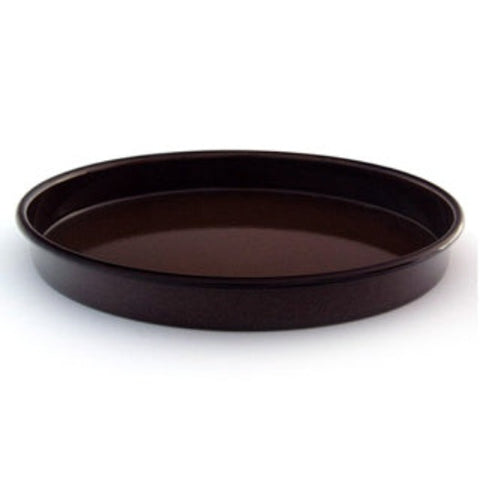
A shallow baking pan has short sides, usually 1 to 2 inches tall. Think of a cookie sheet, a jelly roll pan, or a classic brownie pan. These pans are wide and flat, so food spreads out and cooks fast. They’re often used for cookies, bars, sheet cakes, and roasting vegetables.
Shallow pans come in different materials like aluminum, stainless steel, and non-stick finishes. Their main job is to let heat reach the food quickly and evenly. Because the food is closer to the oven’s heat and not stacked high, it browns and crisps better.
Some common examples of shallow pans:
- Sheet pan (18 x 13 inches, 1 inch high)
- Brownie pan (8 x 8 inches, 2 inches high)
- Jelly roll pan (15 x 10 inches, 1 inch high)
These pans are easy to store and clean, and you can use them for many recipes. One mistake beginners make is using them for thick cakes or casseroles—they won’t cook evenly or may spill over.
What Is A Deep Baking Pan?
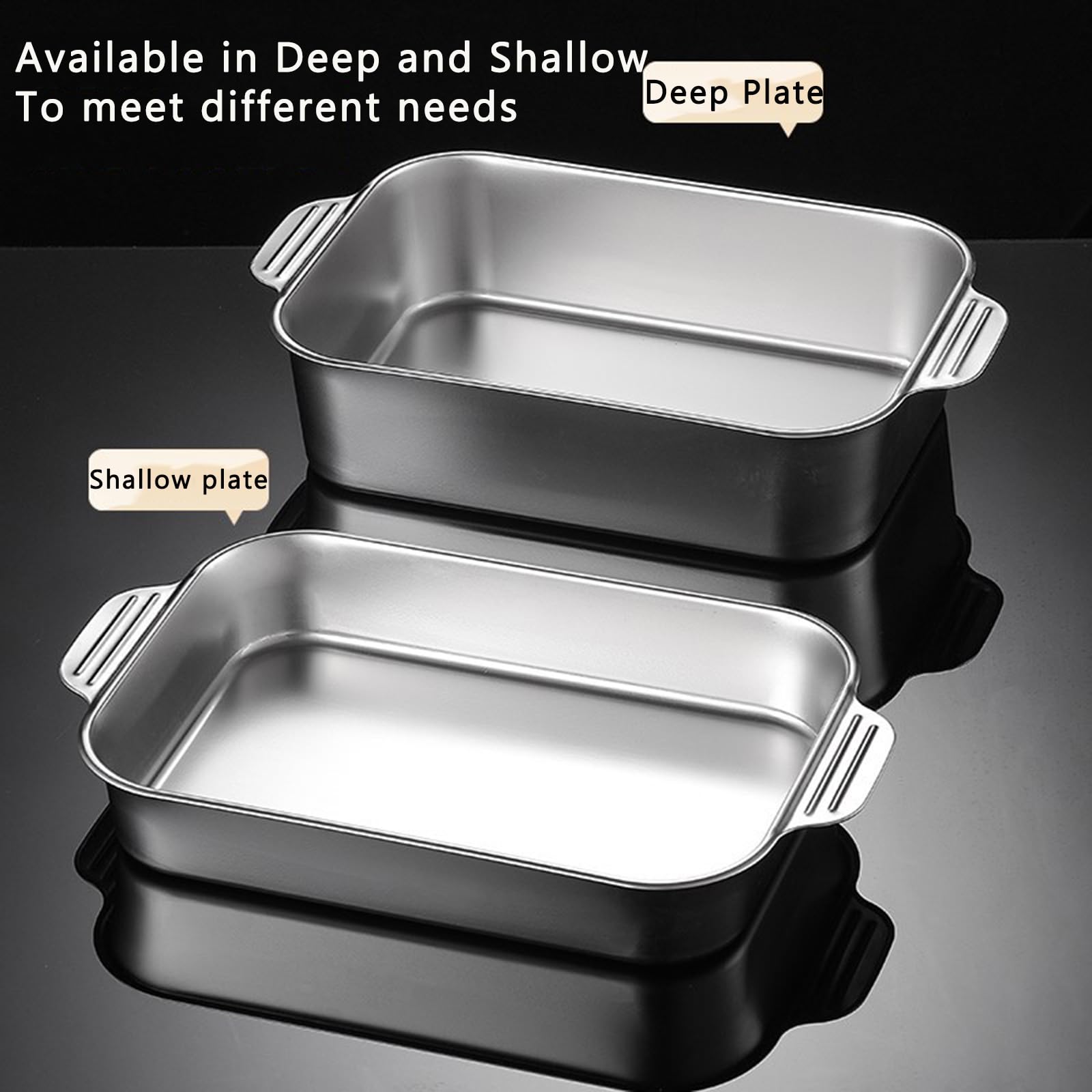
A deep baking pan has tall sides, usually 2.5 inches or more. Classic examples are loaf pans, round cake pans for layered cakes, and lasagna dishes. These pans are designed for recipes with a lot of batter or ingredients stacked in layers.
Deep pans hold more volume and are perfect for foods that need time to rise or bake through the center, like bread, cheesecakes, or deep-dish pies. They often have straight sides, which help with tall cakes or multi-layered desserts.
Common deep pan types include:
- Loaf pan (9 x 5 inches, 3 inches high)
- Round cake pan (8 or 9 inches diameter, 2.5-3 inches high)
- Casserole dish (various sizes, usually 2.5 inches high or more)
Deep pans are heavier and take up more space, but they’re essential when you need structure and height in your baking.
Key Differences: Shallow Vs Deep Baking Pans
Understanding the real differences helps you pick the right pan for your recipe. Here’s a side-by-side look:
| Feature | Shallow Pan | Deep Pan |
|---|---|---|
| Side Height | 1-2 inches | 2.5 inches or more |
| Heat Distribution | Faster and even | Slower, center cooks last |
| Common Uses | Cookies, bars, sheet cakes | Breads, cheesecakes, casseroles |
| Portion Size | Thin, wide servings | Tall, thick servings |
| Browning | More surface browning | Less browning, moister center |
| Oven Time | Shorter | Longer |
Most beginners think you can swap one for the other, but your cookies may burn in a deep pan, or your bread may spill over in a shallow pan. The right choice means better flavor and texture.
How Pan Depth Affects Baking
The depth of your pan changes how heat moves through your food. With shallow pans, the heat quickly reaches the center, giving you crisp edges and even color. This is why cookies and roasted vegetables taste so good—they have lots of surface area.
In deep pans, heat takes longer to reach the middle. That’s why you get a moist, soft crumb in bread, or a creamy center in cheesecake. But there’s a risk: the outside can overbake while the inside is still raw if you’re not careful.
A real-world example: If you bake a cake batter in a shallow pan, it may dry out. In a deep pan, the same batter becomes soft and fluffy but needs a longer bake and lower oven temperature.
Common Recipes And Their Best Pan Types
Here are popular recipes and the pan depth that works best:
- Cookies: Always use a shallow sheet pan. The dough spreads, and you get crispy edges.
- Brownies: Shallow pans give you chewy, fudgy brownies. Deep pans may leave the center raw.
- Layer Cakes: Deep round pans are best. They allow the cake to rise tall for slicing layers.
- Bread Loaf: Needs a deep loaf pan to support the rise and bake through.
- Lasagna: Deep casserole dish. Layers stack up and cook slowly.
- Sheet Cake: Shallow pan. Bakes quickly and evenly for thin, soft cake.
- Roasted Veggies: Shallow pan helps veggies brown, not steam.
- Cheesecake: Deep springform or round pan. Holds thick batter.
- Casseroles: Deep dish for even cooking and bubbling sauce.
- Pizza: Thin crust on a shallow pan; deep-dish pizza in a tall pan.
Picking the right pan isn’t just about size—it’s about how your food cooks and tastes in the end.
Material Matters: Shallow Vs Deep Pan Materials
Not all pans are made the same. The material affects how heat moves and how easy they are to clean. Here’s a comparison:
| Material | Shallow Pan Pros | Deep Pan Pros |
|---|---|---|
| Aluminum | Lightweight, heats evenly | Great for cakes, resists warping |
| Stainless Steel | Durable, easy to clean | Holds shape for heavy batters |
| Glass | Rare for shallow pans | Good for casseroles, see inside |
| Ceramic | Not common | Retains heat, stylish for serving |
| Non-stick | Easy release for cookies | Helps with cakes, less mess |
For shallow pans, choose aluminum or non-stick for best browning. For deep pans, glass and ceramic are popular for casseroles, but metal pans work best for cakes and breads.
How To Choose The Right Pan For Your Recipe
Sometimes, a recipe only says “baking pan” with no details. Here’s how to decide:
- Check the batter or dough height. If it’s a thin layer, use a shallow pan. If it needs to rise, use deep.
- Look for keywords: “Sheet,” “bar,” or “cookie” often means shallow. “Loaf,” “cake,” or “casserole” usually means deep.
- Think about texture. Want crisp and browned? Shallow. Want soft and moist? Deep.
- Read the oven time. Shorter times usually mean shallow pans, longer for deep.
- Volume matters. Deep pans can hold more batter without overflowing.
A common mistake: Using a deep pan for cookies. The sides block air, so they won’t crisp and may stay raw in the middle.
Pan Size And Volume: Why Depth Matters
Every pan has two measurements: surface area and depth. Many people only check the length and width, but the depth changes the total volume.
For example, a 9 x 13-inch pan:
- 1-inch high holds about 8 cups (shallow)
- 2.5 inches high holds about 15 cups (deep)
If you use a deep pan for a shallow recipe, the food may be too thin, dry out, or burn. If you use a shallow pan for a deep recipe, it may overflow.
When changing pans, use this rule: Fill the pan only 2/3 full. This gives room for rising and avoids spills.
Effects On Cooking Time And Temperature
The pan’s depth changes how long and how hot you bake. Shallow pans cook fast, so recipes often use higher oven temps (375–425°F). Deep pans need lower temps (325–350°F) to bake through without burning the edges.
Here’s what happens if you don’t adjust:
- Deep batter in a shallow pan: May brown too quickly, leaving the inside raw.
- Thin layer in a deep pan: May dry out and shrink.
If you switch pan depths, change the baking time. Add 5–10 minutes for deep pans, or check early for shallow pans.
Browning And Crust: What Pan Depth Does
Shallow pans give you more browning—the Maillard reaction—because food is exposed to more heat and air. That’s why cookies, roasted potatoes, and sheet cakes have golden edges.
Deep pans, with high sides, block some heat. The food stays moist but browns less on the sides and bottom. This is perfect for soft breads, rich cakes, or saucy casseroles.
If you want more crust on your baked food, spread it in a shallow pan. If you want a soft, tender result, use a deep pan.
Cleaning And Storing: Which Pan Is Easier?
Shallow pans are easier to clean—less surface, fewer corners, and you can fit them in the dishwasher easily. They also stack well in cabinets.
Deep pans, especially glass or ceramic, can be heavy and have sticky corners. Casseroles and cheesy dishes often leave baked-on residue. Use parchment paper or spray for easier cleanup.
When storing, stack shallow pans by size. Deep pans take more space, but some are designed to nest together.
Cost And Durability: Shallow Vs Deep Pans
Most shallow pans cost less than deep pans because they use less material. A basic aluminum sheet pan is inexpensive and lasts for years. Deep pans, especially for special cakes or ceramic casseroles, can be pricier.
But don’t buy the cheapest pan you find. Thin, low-quality pans warp in the oven and cook unevenly. Invest in one or two solid shallow pans and a good deep pan for best results.
Deep pans with non-stick finishes wear out faster, especially if you use metal utensils. Glass and ceramic can crack if dropped or moved from hot to cold quickly.
Special Pan Types And Their Best Uses
Some pans don’t fit neatly into the “shallow” or “deep” categories. Here are a few:
- Springform pan: Deep, with a removable side for cheesecakes.
- Bundt pan: Deep, with a hole in the center for even baking.
- Tart pan: Shallow, with a fluted edge for tarts and quiches.
- Rimmed baking sheet: Shallow, useful for roasting meats and veggies.
Understanding these special pans helps you pick the right tool for any recipe.
When You Can Substitute: Shallow For Deep, And Vice Versa
Sometimes you don’t own the exact pan a recipe calls for. Can you swap shallow for deep? Sometimes, with these tips:
- For bars or brownies: If you use a deep pan, check for doneness in the center—it may need 5–10 more minutes.
- For cakes: A shallow pan will give you a thin cake. Lower the oven temp by 25°F and check early.
- For casseroles: If you use a shallow pan, don’t overfill. Keep layers thin, or it may spill.
- For cookies: Never use a deep pan—the sides block air and change the texture.
Always adjust the oven time and temp when you change pans. And remember, the food may look different but still taste great.

Credit: mezehub.com
Common Mistakes With Pan Depth
Many new bakers make these errors:
- Ignoring pan size: Thinking any pan will do. This affects cooking time and texture.
- Filling pans too full: Batter spills over in the oven, making a mess.
- Not adjusting oven time: Deep pans need more time, shallow pans less.
- Using glass instead of metal: Glass heats slower; add 5–10 minutes.
- Skipping parchment or spray: Deep pans are harder to clean if you forget.
Avoid these mistakes for better results and less stress.
Shallow And Deep Pans For Healthy Cooking
If you want healthier meals, pan depth makes a difference. Shallow pans let fat drain away from food, so roasted meats and vegetables are less greasy. Deep pans hold more sauce and liquid—great for baked pastas, but they soak up more oil.
For less fat:
- Use shallow pans for roasting.
- Line with parchment to prevent sticking.
- Use racks inside shallow pans for air flow.
For comfort foods:
- Use deep pans for casseroles, lasagna, or bread pudding.
Credit: www.parthenonfoods.com
Pan Depth And Portion Control
Shallow pans make it easier to cut even, smaller pieces—perfect for parties or meal prep. Deep pans create thicker, richer portions, which may be harder to serve in small amounts.
If you’re watching calories, bake in a shallow pan and cut smaller pieces. For celebrations, a deep cake or casserole looks impressive and feeds a crowd.
Real-world Example: Brownies In Different Pans
Let’s say you bake a batch of brownies. In a shallow 9 x 13-inch pan, they’re thin, chewy, and have crispy edges. In a deep 8 x 8-inch pan, the same batter makes thick, soft brownies with a gooey center.
Which is better? It depends on what you like. But if you use the wrong pan, you may need to adjust the oven time by 10–20 minutes, and the texture will change completely.
Credit: www.amazon.com
Bakeware Trends: What’s Popular Today?
Home bakers are buying more shallow sheet pans for meal prep and roasting. They’re easy to use for cookies, one-pan dinners, and even pizza. Deep pans are still loved for special desserts like cakes, cheesecakes, and casseroles.
Non-stick finishes are popular, but some bakers prefer classic aluminum for even browning. Glass and ceramic deep pans are stylish and go from oven to table for serving.
How To Care For Your Pans
To make your pans last:
- Hand wash non-stick pans to protect the coating.
- Avoid metal utensils in non-stick pans.
- Don’t soak metal pans—dry them to prevent rust.
- Let glass cool before washing to avoid cracks.
- Stack carefully—don’t scratch surfaces.
Good care means better baking for years.
When To Replace Your Pan
Even the best pans wear out. Replace your pan if:
- The non-stick coating peels or flakes.
- Metal pans warp and don’t sit flat.
- Glass pans have chips or cracks.
- Food always sticks, even with spray.
A good pan is an investment in better, safer baking.
Shallow Vs Deep Pans For Air Fryers And Toaster Ovens
With air fryers and toaster ovens, shallow pans work best. They let hot air move around the food for crispness. Deep pans block air and may cook unevenly in these small ovens.
If you love air frying, invest in a sturdy shallow pan that fits your appliance. For toaster ovens, shallow pans are safer and cook faster.
Kids And Beginner Bakers: Which Pan Is Easier?
For children or new bakers, start with shallow pans. They’re lighter, less likely to spill, and give quick, satisfying results. Cookies, bars, and roasted veggies are great first recipes.
Deep pans are better for experienced bakers ready to try bread, layer cakes, or big casseroles.
Shallow Vs Deep Baking Pans: Quick Reference
Need a fast answer? Here’s a summary:
| Recipe | Best Pan Depth |
|---|---|
| Cookies | Shallow |
| Bread | Deep |
| Sheet Cake | Shallow |
| Lasagna | Deep |
| Roasted Veggies | Shallow |
| Cheesecake | Deep |
| Casserole | Deep |
| Pizza | Shallow or Deep (depends on style) |
Non-obvious Insights Most Beginners Miss
- Pan color matters. Dark pans absorb more heat, so food browns faster. Light pans reflect heat for softer results.
- Oven rack position. Using the top rack with a shallow pan increases browning. Deep pans on the lower rack bake more evenly.
- Pan warping is more common in shallow pans, especially if you add cold food to a hot pan. Let the pan warm up gradually.
Expert Tips For Better Results
- Line pans with parchment for easy removal and cleanup.
- Rotate pans halfway through baking for even results.
- Don’t overfill deep pans—leave space for rising.
- Preheat the oven fully before baking for best texture.
If you want to explore more about bakeware science, see this Wikipedia article on bakeware.
Frequently Asked Questions
Why Do Recipes Say Not To Use A Glass Pan Instead Of Metal?
Glass pans heat up slower than metal, so food may take longer to cook. Glass also holds heat, which can overcook edges after removing from the oven. Metal pans bake evenly and release food better for most recipes.
Can I Use A Deep Pan For Cookies If I Don’t Have A Sheet Pan?
It’s not recommended. Deep pans block air circulation, so cookies won’t spread or brown well. They may also bake unevenly. If you must, use a shallow roasting pan and space cookies out.
How Do I Adjust Baking Time If I Change Pan Depth?
If you use a deeper pan, add 5–15 minutes and lower the oven temperature by 25°F. For a shallower pan, check for doneness early—5–10 minutes less than the recipe says.
Is Pan Depth Important For Savory Dishes Like Lasagna?
Yes. Lasagna and casseroles need deep pans to hold layers and sauce. A shallow pan will overflow and cook unevenly, leaving dry edges.
Why Do My Cakes Sink In The Center When Using A Deep Pan?
Cakes sink when the center bakes slower than the edges. This happens more in deep pans. Lower the oven temperature, bake longer, and check with a toothpick to avoid raw batter in the middle.
Choosing between shallow vs deep baking pans is more than just following a recipe. It’s about understanding how your tools change your food. The right pan gives you better taste, texture, and confidence in the kitchen. With this guide, you’re ready to pick the perfect pan for every baking adventure.