
Baking bread at home is both an art and a science. If you dream of making the perfect baguette—crisp, golden, and airy—you’ve likely come across two popular tools: the baguette pan and the baking stone. Each one promises a better crust and rise, but which is right for you? Whether you’re a casual home baker or a passionate bread enthusiast, understanding these tools can transform your baking results. Let’s explore the strengths, weaknesses, and hidden details of both, so you can bake baguettes that rival any French bakery.
What Is A Baguette Pan?
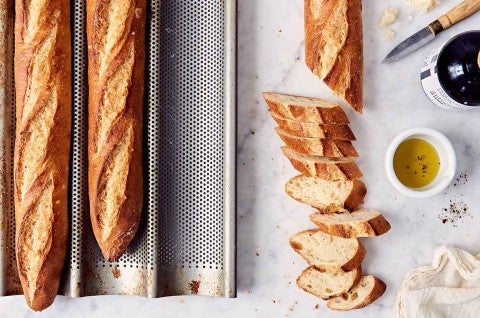
A baguette pan is a metal tray with long, narrow grooves shaped to cradle dough during baking. Usually made from perforated aluminum or steel, it helps support the baguette’s shape as it rises in the oven. The small holes allow hot air to circulate, aiming for an even crust.
How A Baguette Pan Works
When you place dough in the grooves, the pan keeps it from spreading out, so you get the classic slim, rounded baguette form. The pan’s perforations let steam and heat touch the bottom of the bread, which encourages a crisp crust.
Some pans are nonstick, making it easy to remove finished loaves.
Main Types Of Baguette Pans
- Single-trough pans: Designed for one baguette at a time.
- Double/triple pans: Hold two or three baguettes, ideal for batch baking.
- Nonstick vs. uncoated: Nonstick pans release bread more easily but may need gentle cleaning.
Baguette pans are lightweight, easy to clean, and fit in most ovens. However, their shape is fixed—you can only make baguette-style loaves.
What Is A Baking Stone?
A baking stone (often called a pizza stone) is a thick, flat slab made from ceramic, cordierite, or sometimes unglazed clay. You preheat it in the oven, then bake dough directly on its surface. The stone stores heat and releases it slowly, mimicking a stone hearth oven.
How A Baking Stone Works
The stone absorbs heat and radiates it evenly across the dough, helping the bread rise quickly and develop a good crust. It also pulls moisture from the dough’s surface, which helps create a crisp bottom. Baking stones come in various shapes and sizes, but a rectangle or large oval works best for baguettes.
Varieties Of Baking Stones
- Cordierite stones: Handle high heat, less likely to crack.
- Ceramic stones: Good heat retention, but more fragile.
- Baking steels: Not technically a stone, but a heavy steel slab that stores even more heat for extra oven spring.
Baking stones aren’t shaped, so you form the dough yourself. They’re heavier and need more care, but they’re flexible for many types of bread and pizza.
Key Differences At A Glance
To see how each tool stacks up, here’s a side-by-side look:
| Feature | Baguette Pan | Baking Stone |
|---|---|---|
| Shape Support | Excellent | None |
| Crust Texture | Good (with steam) | Excellent |
| Heat Retention | Low | High |
| Versatility | Low | High |
| Ease of Use | Very Easy | Moderate |
| Cleaning | Easy | Challenging |
Baking Technique: Step-by-step Comparison
Let’s walk through how each tool shapes your baking process.
Using A Baguette Pan
- Shape the dough: After the first rise, form your dough into long, thin loaves.
- Place in pan: Lay each loaf in a groove. The pan supports its shape.
- Second rise: Let dough rise in the pan.
- Score and bake: Slash the tops with a sharp blade. Bake in a preheated oven, ideally with steam.
- Remove and cool: Loaves come out easily and are uniform.
Using A Baking Stone
- Shape the dough: Form dough into baguette shapes by hand.
- Second rise: Let loaves proof on a floured cloth (couche) or parchment.
- Preheat stone: Heat the oven with the stone inside for at least 30–45 minutes.
- Transfer and score: Move loaves to the hot stone (often with a peel). Slash tops.
- Bake with steam: Add steam to the oven for the first 10 minutes.
- Cool on rack: Remove bread for cooling.
Non-obvious insight: Transferring dough to a hot stone is tricky. Many beginners use too much flour or tear the dough, which can ruin the shape and texture.
Credit: www.kingarthurbaking.com
Pros And Cons: Baguette Pan
Advantages
- Consistent shape: Every loaf is straight and even.
- Beginner-friendly: Easy to handle; no special tools needed.
- Less mess: No floury peel or cloths to clean.
- Works in small ovens: Most pans fit even in countertop ovens.
Disadvantages
- Crust quality: Crust is good, but rarely as crisp or blistered as stone-baked.
- Limited use: Only works for baguette-style loaves.
- Perforations can clog: If dough is too wet, holes may get blocked.
Pro tip: For best results, bake with a tray of hot water in the oven to create steam. This improves crust even on a pan.
Pros And Cons: Baking Stone
Advantages
- Superior crust: Delivers that classic, blistered, chewy baguette crust.
- Artisan look: More rustic, open crumb and oven spring.
- Versatile: Great for pizza, boules, flatbreads, and more.
- Durable: Stones last for years with proper care.
Disadvantages
- No shape support: Dough can spread or flatten if not handled carefully.
- Requires skill: Transferring dough to the stone is challenging.
- Preheat time: Needs at least 30 minutes to get hot.
- Heavy and fragile: Stones can break if dropped or heated unevenly.
Non-obvious insight: Not all stones are equal. Cordierite is less likely to crack, but some cheap ceramic stones can break after a few uses.
Which Makes A Better Baguette?
Crust And Texture
A baking stone usually wins for crust. The high, even heat from below helps bread “spring” quickly in the oven, forming a crisp, golden, and sometimes slightly blistered crust. This is the signature of a classic French baguette.
A baguette pan makes a good crust, especially with steam, but it’s usually thinner and less crunchy. The bottom will be crisp, but the sides may be softer due to less direct heat.
Shape And Appearance
The baguette pan keeps loaves neat and uniform. If you want every baguette to look the same, it’s the best choice. The baking stone gives a more rustic appearance, with some loaves turning out a bit uneven, especially if you’re new to hand-shaping.
Oven Spring And Crumb
Because the baking stone stores so much heat, you get a better “oven spring”—the quick rise as bread starts baking. This leads to a more open, airy crumb (the holes inside the bread). The pan gives decent oven spring, but not as dramatic.
Versatility
A baking stone is a true multi-tasker. You can use it for pizzas, pita bread, sourdough, and more. The baguette pan is designed for one job: baguettes or similar long loaves.
Choosing The Right Tool For You
Not sure which is best for your kitchen? Consider these factors:
1. Skill Level
- Beginner: Baguette pan is easier—less handling, fewer chances to ruin the loaf.
- Experienced baker: Baking stone offers more challenge and better results.
2. Kitchen Equipment
- Small oven: Most baguette pans fit easily. Some stones may be too large.
- No peel or couche: Pans are fine. Baking stones work best with extra tools.
3. Desired Bread Style
- Uniform, pretty loaves: Go with the pan.
- Rustic, artisan bread: Baking stone delivers the look and texture.
4. Cleaning And Storage
- Easy cleanup: Pans are simple—soap and water.
- Stones: Need to be scraped clean, not washed with soap, and stored carefully.
5. Budget
- Baguette pan: Usually costs $15–$30.
- Baking stone: $30–$70 for quality cordierite or ceramic.
:max_bytes(150000):strip_icc()/pizza-stone-testing-winners-misc-shot-wdickey-239-88811824eccd4064a61ea10a4013ec95.jpg)
Credit: www.seriouseats.com
Real-world Examples
Let’s see what happens in a typical home kitchen:
- Sarah is a new baker with a small oven. She buys a nonstick baguette pan and is thrilled with the shape and ease. Her crust is good, not great, but she’s happy.
- Mark has been baking for years. He uses a cordierite stone and a wooden peel. His baguettes have a crackling crust but sometimes turn out a bit uneven if he hurries the shaping.
- Lina uses both: She starts with a pan, then moves to a stone as she gains skill, using the pan for quick weekday baguettes and the stone for weekend baking.
Common Mistakes To Avoid
- Skipping the preheat: Baking stones must be fully heated, or bread will stick and bake unevenly.
- Wet dough in pan: Too much moisture can clog pan holes and create a gummy bottom.
- No steam: Both tools need steam in the oven for the first 10–15 minutes to get a good crust.
- Using soap on stone: Baking stones absorb flavors—just scrape them clean.
- Forgetting to slash loaves: Proper scoring lets bread expand without tearing.
Extra advice: If you struggle with transferring dough to a stone, try using parchment paper under your baguette. Slide the whole thing onto the stone. Remove the paper after 10 minutes.
Care And Maintenance
Baguette Pan
- Wash by hand: Nonstick pans scratch easily. Avoid metal utensils.
- Dry thoroughly: Prevent rust, especially on steel pans.
- Check perforations: Clean holes with a brush if dough sticks.
Baking Stone
- No soap: Wipe with a damp cloth or scrape off bits with a bench scraper.
- Dry before use: Avoid thermal shock—never put a cold stone in a hot oven.
- Store flat: Stones can break if dropped or knocked.
Advanced Baking Tips
- Use a baking steel: For even more heat, some bakers switch to a steel slab. It gives bread an amazing oven spring and crust, but is much heavier.
- Layered baking: Try starting bread in a pan, then finish on a stone for extra crust (if you have both).
- Homemade steam: Place a metal pan in the oven as you preheat. Pour a cup of boiling water in when bread goes in. This creates bakery-style steam.
Table: Quick Comparison—which Tool Fits You?
Here’s a summary to help choose:
| Category | Baguette Pan | Baking Stone |
|---|---|---|
| Best For | Beginners, neat loaves | Experienced bakers, artisan style |
| Crust Quality | Good | Excellent |
| Shape Control | High | Low |
| Price Range | $15-$30 | $30-$70 |
| Cleaning | Easy | Moderate |
| Durability | High | High (if not dropped) |
| Other Uses | Few | Many |
How To Get The Most From Each Tool
Baguette Pan
- Use parchment: For very sticky dough, line the pan to prevent sticking.
- Preheat pan: Some bakers preheat the pan for a few minutes before adding dough—this can help with crust.
- Try different doughs: Not just for white baguettes; whole wheat and rye can work too.
Baking Stone
- Heat long enough: 45 minutes is best for thick stones.
- Use a peel: Practice sliding dough off a wooden or metal peel. Rice flour helps prevent sticking.
- Don’t overload: Leave space between loaves for heat circulation.
Which Tool Do Professional Bakers Use?
In French bakeries, baguettes are often baked in large steam-injected ovens on stone decks. At home, a baking stone comes closest to this setup. However, some small bakeries and many home bakers use specialized pans for consistency.
Professionals use both, depending on the bread type, volume, and desired results. For the classic baguette, the stone or steel is the gold standard, but pans are common for daily production.
Environmental Impact
- Baguette pans are lightweight and usually last many years. Aluminum and steel are recyclable.
- Baking stones can last a lifetime if not dropped, but ceramic production uses more energy. If a stone breaks, it’s not recyclable, but can be used in the garden as mulch or drainage.

Credit: wheatbeat.com
Where To Buy
- Baguette pans: Found at most kitchen stores and online. Look for heavy-duty, perforated models.
- Baking stones: Specialty kitchen shops, online retailers, or even hardware stores (for unglazed quarry tiles).
For more on baking stones and their use, see the Wikipedia page on baking stones.
Frequently Asked Questions
What Size Baguette Pan Or Baking Stone Should I Buy?
For home ovens, a pan or stone about 14–16 inches long fits most standard ovens. Make sure your pan has enough grooves for the number of loaves you want to bake. For stones, bigger is better, but check your oven’s dimensions before buying.
Can I Use Both A Baguette Pan And A Baking Stone At The Same Time?
Yes, you can place the baguette pan on top of a preheated baking stone. This boosts the heat from below and can improve crust, but it isn’t required. Just be careful with timing and don’t over-crowd the oven.
Why Does My Bread Stick To The Pan Or Stone?
Sticky dough, not enough flour, or not preheating the stone can cause sticking. Use parchment paper for sticky dough, or dust the pan and stone with flour or cornmeal. Don’t use oil on a stone—it can smoke.
How Do I Add Steam To My Oven For A Better Crust?
Place a metal pan on the oven floor while preheating. Pour in hot water as you add the bread. You can also spray the oven walls with water, but be careful with glass doors. Steam is key for a crisp, shiny crust.
Is A Baking Steel Better Than A Baking Stone?
A baking steel gets hotter and releases heat faster than stone, which can lead to bigger oven spring and darker crust. However, it is heavier and more expensive. For baguettes, both work well, but steel may scorch the bottom if you’re not careful.
Final Thoughts
Choosing between a baguette pan and a baking stone depends on your goals, kitchen setup, and confidence. The pan is perfect for beginners and those who want tidy, reliable loaves with minimal fuss. The stone is for bakers chasing the full artisan experience—a crisp, chewy crust and rustic shape that feels straight from Paris.
No matter which you choose, practice makes all the difference. Start simple, learn your tools, and soon you’ll pull golden, crackling baguettes from your oven that amaze family and friends. Happy baking!