
Splitting a bedroom into two separate spaces is a practical solution for many families and homeowners. Maybe your children are growing and want more privacy, or you need a home office and a guest room. Sometimes, you want to add value to your house by creating more bedrooms.
Whatever your reason, dividing a bedroom can be a smart way to make your home work better for you, but it’s not a simple task. It takes careful planning, understanding of your space, and a clear vision of the results.
People often think splitting a bedroom is just about putting up a wall. In reality, it’s about much more: privacy, natural light, storage, safety, and even legal rules. You need to know where to start, what materials to use, and how to avoid common mistakes. If you get it right, you can create two comfortable, usable rooms from a single space.
This guide will show you everything you need to know about how to split a bedroom into two. We’ll cover design ideas, step-by-step instructions, costs, practical tips, and even what not to do. By the end, you’ll feel confident about making the right choices for your home.
Should You Split A Bedroom? Key Things To Consider
Before you begin, take time to think about why you want to divide the space. Ask yourself:
- What will each room be used for?
- Who will use them, and do they need privacy?
- How permanent do you want the change to be?
- Will splitting the room follow building codes and legal rules in your city?
- How will the new layout affect light, airflow, and access?
Not every bedroom is a good candidate for splitting. For example, if the room is very small (less than 150 square feet), dividing it might make both spaces cramped and uncomfortable. You also need to check if your city or town requires a minimum bedroom size or a window in each room.
Pro tip: Sometimes, people forget to check for things like electrical outlets, heating vents, or smoke detectors. Moving or adding these can cost more than you expect. Before you make any decisions, walk through the room and look for these details.
Measuring And Planning: The Foundation Of Success
A good plan starts with accurate measurements and a clear drawing of your space. Take a tape measure and note:
- The total length and width of the room
- Window and door locations
- Closets, radiators, or built-in shelves
- Electrical outlets, light switches, and vents
Draw a simple floor plan on paper. Mark everything, even if you think it’s not important. This will help you see what’s possible and avoid expensive mistakes later.
Common Layout Options
There are several ways to divide a bedroom. The main options include:
- Permanent Wall: Build a full wall to create two rooms.
- Temporary Divider: Use a bookshelf, curtain, or sliding panel.
- Partial Wall: Build a wall that doesn’t reach the ceiling.
- Sliding or Folding Door: Install a door that opens to divide or connect spaces.
Which is best depends on your needs, budget, and how permanent you want the change to be.
Example Layouts
Let’s compare two common layouts:
| Layout Type | Pros | Cons |
|---|---|---|
| Permanent Wall | Maximum privacy Feels like two real rooms Adds value to home | Expensive Hard to undo Needs permits |
| Temporary Divider | Easy and cheap Flexible No permits needed | Less privacy Noise and light pass through |
Understanding Building Codes And Legal Issues
One of the most overlooked steps is checking the legal side. Many cities have rules about bedrooms. For example, a legal bedroom might need:
- At least one window for emergency escape
- A certain minimum size (usually 70-80 square feet)
- A closet (sometimes required)
- Heat and electrical outlets
If you ignore these rules, you might have problems selling your house later or even face fines. Before you build anything permanent, call your local building office to ask about permits and rules. They can tell you what’s allowed in your area.
Non-obvious insight: Some building codes also set rules for sound insulation between bedrooms, especially in multi-family homes. If you don’t add enough soundproofing, you might not pass inspection or might have unhappy family members.
Choosing The Right Materials And Tools
The materials you choose affect cost, appearance, and how easy the job will be. Here are common options:
- Drywall (gypsum board): Used for permanent walls. Good for soundproofing and painting.
- Wood studs: The frame for a new wall.
- Sliding doors or panels: For flexible spaces.
- Bookshelves or storage units: Double as dividers and storage.
- Curtains: Fast and cheap, but low privacy.
- Glass partitions: Let light through but block noise.
Material Comparison
Here’s a simple comparison of material choices:
| Material | Cost | Privacy | Easy to Remove? |
|---|---|---|---|
| Drywall | $$ | High | No |
| Bookshelf | $ | Medium | Yes |
| Curtain | $ | Low | Yes |
| Glass Partition | $$$ | Medium-High | No |
Practical tip: If you want to keep the cost low, consider using a mix of materials. For example, a bookshelf with a curtain behind it can add privacy and storage.
Step-by-step Guide: Splitting A Bedroom Into Two
Now let’s walk through the process step by step, from simple solutions to a full construction project.
Step 1: Define Your Goal And Budget
Decide what you want to achieve. Is privacy most important? Or do you need more storage? Set a clear budget. Simple dividers can cost less than $100, while building a new wall could cost $1,000 or more, especially if you hire a contractor.
Step 2: Design Your Layout
Draw your plan, mark doors, windows, and closets. Make sure each room will have enough space for a bed, at least one window, and walking space. Think about where you’ll put new doors or openings.
Beginner mistake: People often forget about how the new rooms will get natural light. Try not to block windows with new walls. If one space will not have a window, consider using glass panels or doors to share light.
Step 3: Choose Your Divider Type
Your main options are:
- Temporary solution: Bookshelves, curtains, folding screens.
- Semi-permanent: Sliding doors, glass partitions, partial walls.
- Permanent wall: Full wall with door.
How To Choose
- For renters or short-term needs, use temporary dividers.
- For long-term or to add home value, build a permanent wall.
Step 4: Prepare The Room
Clear the space. Move furniture, rugs, and anything on the walls. If you’re building, cover the floor with drop cloths to protect it.
Safety note: If you’re cutting or drilling, wear safety glasses and a mask.
Step 5: Build Or Install The Divider
Option A: Using A Bookshelf Or Curtain
- Place a tall bookshelf across the room.
- Secure it to the wall for safety.
- Hang a curtain rod from the ceiling behind the shelf for extra privacy.
Option B: Installing A Sliding Door Or Partition
- Buy a sliding door kit.
- Follow instructions to install the track on the ceiling.
- Make sure the door reaches from wall to wall for best privacy.
Option C: Building A Permanent Wall
This is the most complex method. You may need a permit. Here’s a simplified process:
- Mark the wall location on the floor, ceiling, and walls.
- Install the bottom and top plates (horizontal wood pieces) using screws.
- Attach vertical studs every 16 inches.
- Add a door frame where needed.
- Screw drywall to both sides of the frame.
- Tape, mud, and sand the joints.
- Paint the new wall.
- Install baseboards and trim.
Non-obvious insight: If you add a wall, think about electrical needs. You may need to add new outlets or move switches. This usually requires an electrician.
Step 6: Finish And Decorate
Once your divider is in place, add finishing touches:
- Paint or wallpaper the new wall.
- Hang art or shelves for decoration.
- Add rugs or curtains to make each space feel cozy.
Pro tip: Use mirrors to reflect light and make each room feel bigger.
Maximizing Light And Ventilation
One challenge when dividing a bedroom is keeping both spaces bright and comfortable. Here’s how to avoid dark, stuffy rooms:
- Use glass or acrylic dividers if possible.
- Place the divider so each room has a window, if you can.
- Add extra lighting, like wall sconces or LED strips.
- Use light-colored paint to reflect light.
- Install a fan or vent if one area feels stuffy.
Beginner mistake: Many people forget about airflow. If you block a vent or window, one side might get too hot or cold. Check your heating and cooling before finishing the project.
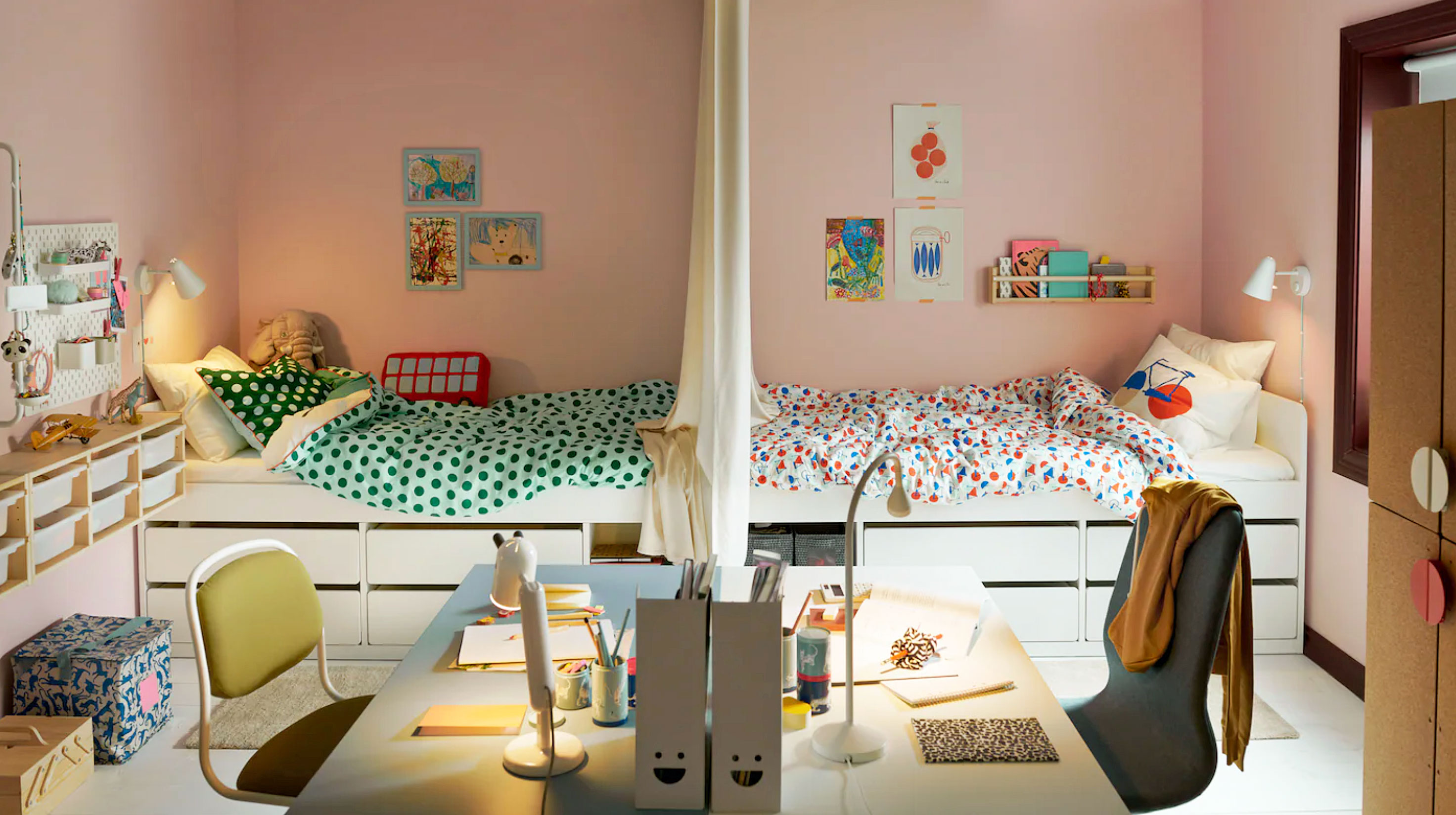
Credit: www.homesandgardens.com
Storage Solutions For Small Spaces
Dividing a room often means less storage space. Try these ideas:
- Use the divider as a bookshelf or closet.
- Add wall shelves above beds or desks.
- Choose furniture with built-in storage (like beds with drawers).
- Use under-bed boxes or baskets.
- Hang hooks on walls or doors.
Non-obvious insight: Vertical storage (using the full height of walls) can double your space without making the room feel crowded.
Soundproofing Tips
If privacy is important, soundproofing matters. Standard drywall blocks some noise, but for best results:
- Add insulation (like fiberglass batts) inside the new wall.
- Use thicker drywall or soundproof panels.
- Seal all gaps with acoustic caulk.
- Install solid-core doors instead of hollow ones.
Soundproofing isn’t just for sleeping. It also helps if one room is for work or study.
Cost Breakdown: How Much Does It Cost To Split A Bedroom?
Costs can vary a lot based on your method, materials, and if you hire professionals. Here’s an estimated range for common options:
| Method | DIY Cost | Pro Labor Cost | Total Cost Range |
|---|---|---|---|
| Bookshelf Divider | $100-$300 | $0 | $100-$300 |
| Curtain/Track | $50-$150 | $0 | $50-$150 |
| Sliding Door | $300-$700 | $200-$500 | $500-$1,200 |
| Permanent Wall | $600-$1,200 | $1,000-$2,500 | $1,600-$3,700 |
Note: Costs can be higher in cities or if you need electrical work or permits.
Mistakes To Avoid When Splitting A Bedroom
Even with a good plan, it’s easy to make mistakes. Here are some to avoid:
- Ignoring building codes: This can cause legal trouble or lower your home’s value.
- Blocking natural light: Makes rooms dark and unwelcoming.
- Not planning for storage: Can make rooms messy and hard to use.
- Choosing the wrong divider: Too short, too thin, or not stable.
- Not thinking about noise: Thin dividers won’t give enough privacy.
- Underestimating costs: Small jobs can become expensive if you need pro help.
- Forgetting about heating and cooling: One room can end up too hot or cold.
- Skipping permits: Can delay the project or force you to undo work.
Pro tip: Always talk to a local contractor or your city’s building office before starting, especially for permanent changes.
Creative Divider Ideas For Style And Function
You don’t have to use a boring wall. Here are some stylish options:
- Barn doors: Slide open for a flexible space.
- Frosted glass: Offers privacy but lets light through.
- Plant walls: Use tall plants for a green, natural divider.
- Loft beds: Raise one bed to create space for a desk or sofa below, dividing the room vertically.
- Movable partitions: Fold away when you want a bigger space.
Many of these options can be found at home improvement stores or made with DIY skills.
How To Make Each Room Feel Complete
After dividing, each space should feel like a real room, not just a piece of a bigger one. Here’s how:
- Paint each room a different color for its own identity.
- Add a rug and curtains to soften the look.
- Use individual lighting for each space.
- Personalize with art, photos, or decor.
- Make sure each room has a comfortable place to sit or sleep.
Non-obvious insight: If the new rooms share a door, try adding a small entryway or “mudroom” area with hooks or shelves. This helps each space feel more private and separate.
Safety Considerations
Safety is sometimes forgotten but is very important, especially if children will use the new spaces.
- Make sure both rooms have smoke detectors.
- Don’t block emergency exits or windows.
- Check that all outlets and switches work.
- Avoid using heavy dividers that could tip over.
If you add a wall or move electrical wiring, always follow local codes or hire a licensed electrician.
When To Call A Professional
Some jobs are too complex or risky for DIY. Call a pro if:
- You need to move electrical outlets, switches, or lights.
- You’re building a wall that connects to plumbing or heating.
- Your city requires a permit and inspection.
- The project feels overwhelming or unsafe.
A contractor or architect can also help you design a layout that adds the most value to your home.
Does Splitting A Bedroom Add Value To Your Home?
Adding a bedroom can increase your home’s value, especially if you go from two to three bedrooms. However, the change must meet all legal requirements to count as a real bedroom when you sell.
According to the National Association of Realtors, adding a bedroom can increase home value by 10% or more, depending on your location. But if the rooms are too small or lack windows, buyers may see them as less valuable.
Pro tip: If you may sell your home soon, talk to a real estate agent before starting. They can tell you what buyers in your area expect.
Real-life Examples
- Family with two children: Used a bookshelf and curtain divider to give each child a private sleeping area. Cost was under $200 and took a weekend.
- Home office split: Built a glass partition to create an office on one side and a guest room on the other. Cost was about $1,500 with professional help.
- Rental property: Added a permanent wall and closet, creating an extra bedroom. Increased rental income by $150/month.
These examples show that you can find a solution for almost any budget or need.
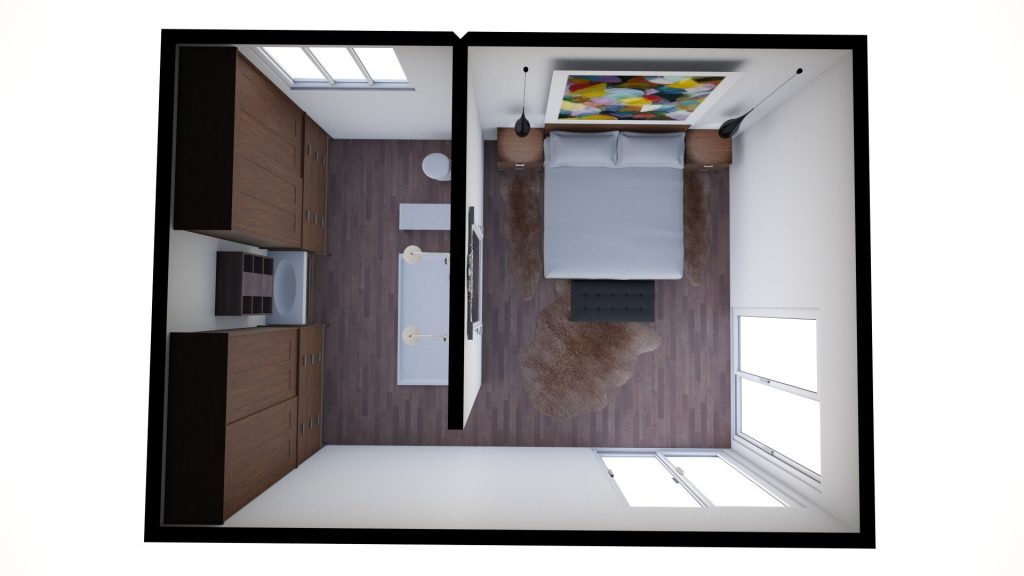
Credit: design-tips.floorplanner.com
Resources And Where To Learn More
If you want to check building codes, the official International Code Council website is a reliable source: International Code Council.
You can also visit local hardware stores for advice and materials, or watch online tutorials for step-by-step guides.
Frequently Asked Questions
What Is The Cheapest Way To Split A Bedroom?
The cheapest method is using a curtain divider or a tall bookshelf. Curtains are fast and cost $50–$150. Bookshelves are about $100–$300. Both options require little or no tools and are easy to remove later.
Do I Need A Permit To Split A Bedroom?
Usually, you need a permit if you build a permanent wall, move electrical wiring, or change the room’s size. Temporary dividers (like curtains or bookshelves) do not need permits. Always check with your local building office before starting.
How Small Can Each Room Be After Splitting?
Most cities require bedrooms to be at least 70–80 square feet. Each room must also have a window and a door. Rooms smaller than this may not be legal as bedrooms, which can affect resale value.
How Do I Add Privacy If I Can’t Build A Wall?
Try using soundproof curtains, folding screens, or bookshelves with storage bins. Adding a rug and heavy drapes can also help block sound and make each area feel more private.
Will Splitting A Bedroom Hurt My Home’s Value?
If done well and following building codes, splitting a bedroom can add value, especially if it creates an extra legal bedroom. But if the new rooms are small, dark, or unfinished, buyers may see it as a negative. Always think about future buyers when planning.
Creating two rooms from one is a smart way to adapt your home for changing needs. With the right plan and attention to detail, you can gain privacy, flexibility, and even increase your home’s value. Take your time, do your research, and don’t be afraid to get professional help for the best results.

Credit: www.the-sun.com