
Roaches are not just unpleasant guests in our homes—they leave behind clear signs of their presence. One of the most alarming discoveries is roach poop on your walls. Besides being unsightly, these droppings can pose health risks. If you’ve spotted small, dark smears or specks, it’s crucial to act fast. Cleaning roach poop off walls may feel overwhelming, but with the right steps and knowledge, you can restore your home’s cleanliness and safety. This guide will walk you through everything you need to know, from understanding what you’re dealing with to effective cleaning methods and prevention strategies.
Why Roach Poop On Walls Is A Serious Issue
Roach droppings are more than just a dirty mark. They carry bacteria, allergens, and sometimes even parasites. When left on walls, these droppings can:
- Trigger asthma or allergy symptoms, especially in children and sensitive adults.
- Spread harmful bacteria like Salmonella and E. coli.
- Stain walls, making them difficult to clean if neglected.
Many people are surprised that even dried roach poop remains hazardous. Microscopic particles can become airborne when disturbed, entering the air you breathe. That’s why cleaning these spots is not just about appearance—it’s about protecting your health.
One fact that’s often overlooked is how persistent these health risks are. Even after the droppings have dried out, the allergens can stick to walls and surfaces for months. Every time you brush against a contaminated wall or try to sweep away old stains, you risk sending particles into the air, where they can be inhaled.
For families with babies or people with weak immune systems, this risk is even greater. It’s also important to know that the smell of roach droppings can attract more roaches, creating a cycle that’s hard to break.
Identifying Roach Poop On Walls
Before you start cleaning, you need to be sure what you’re dealing with. Roach poop is often confused with other stains or insect droppings. Here’s what to look for:
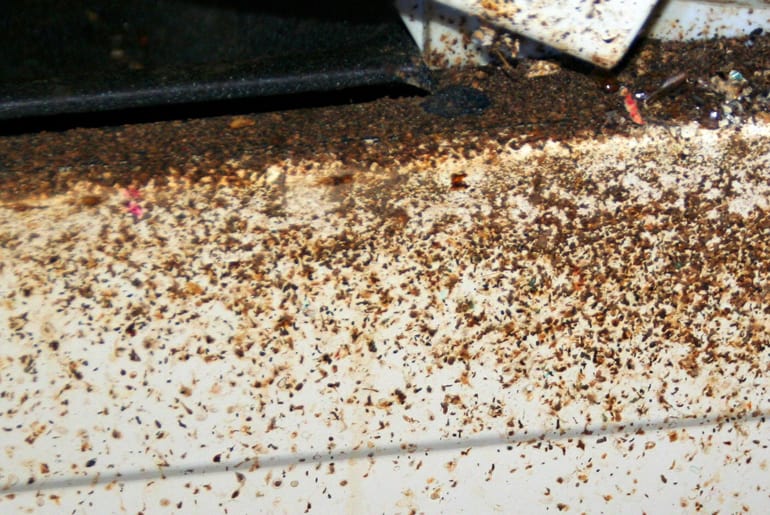
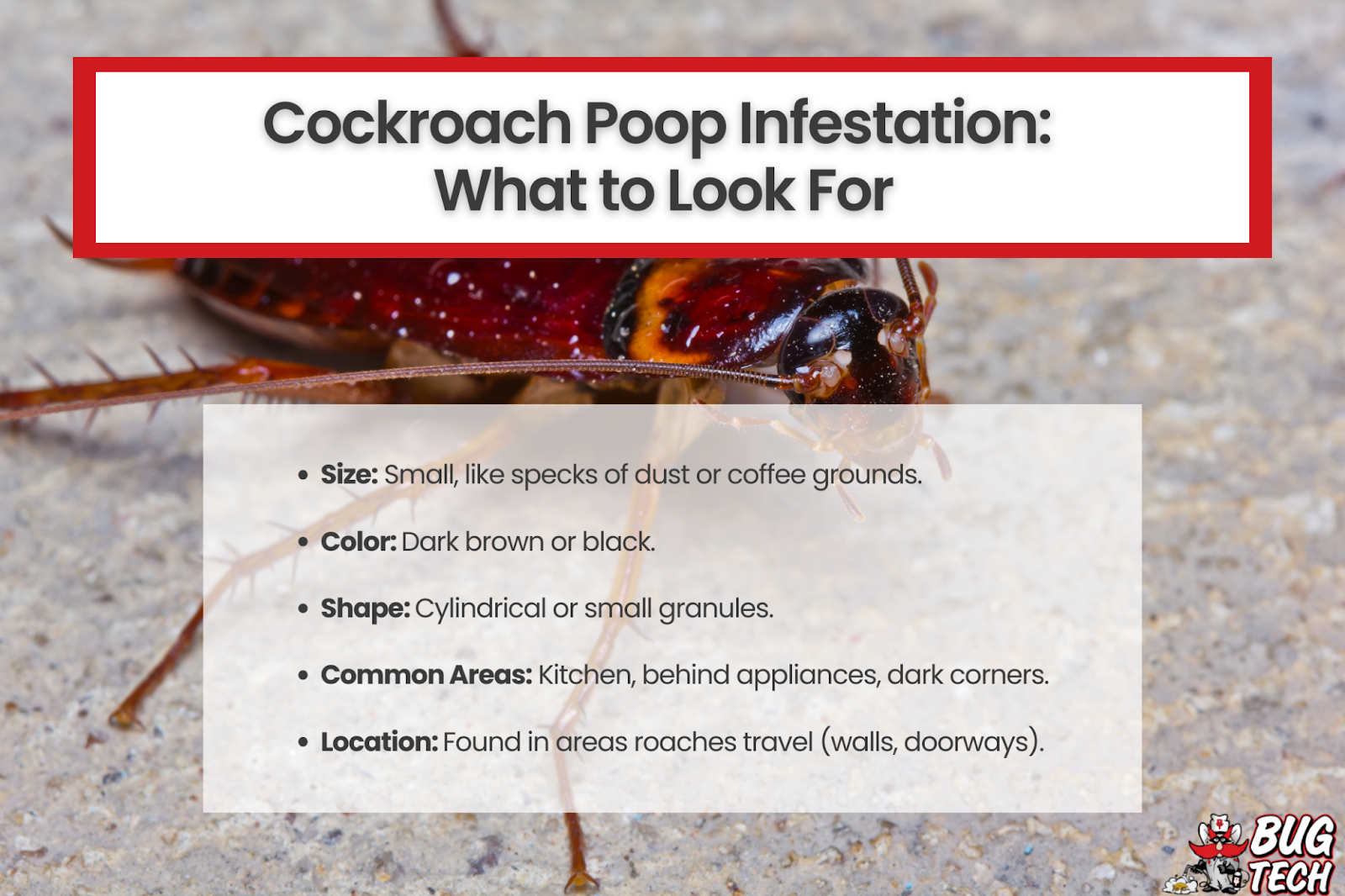
- Appearance: Small, dark brown or black specks, usually less than 2 mm wide and 1-2 mm long. They may resemble ground pepper, coffee grounds, or smears.
- Texture: When fresh, it’s moist; older droppings are dry, hard, and may leave a stain.
- Location: Often found along wall corners, behind appliances, near food sources, or places with high moisture.
Another subtle sign is the pattern of the droppings. Roaches tend to leave their waste in clusters, especially along baseboards, near electrical outlets, or in hidden cracks. If you spot a line of dark specks leading into a gap or behind a cabinet, it’s often a “roach highway,” pointing directly to their hiding spot.
Unlike other pests, roaches don’t often travel far from their food and water, so their droppings are usually close to their nests.
Comparison: Roach Poop Vs. Other Common Wall Stains
Here’s a quick way to compare roach droppings with other possible stains:
| Type | Size | Color | Typical Location |
|---|---|---|---|
| Roach Poop | 1-2 mm | Dark brown/black | Corners, behind appliances |
| Mouse Droppings | 3-6 mm | Dark brown | Floor edges, cupboards |
| Mold Spots | Varies | Black/green | High moisture walls |
| Food Stains | Varies | Brown/yellow | Kitchen walls |
If you’re still unsure, try carefully scraping a speck with a toothpick. Roach droppings are hard and grainy, while mold is often soft or powdery, and food stains can feel sticky or oily.
Credit: cockroachfacts.com
Preparing To Clean Roach Poop Off Walls
Jumping straight into cleaning without preparation is a common mistake. Roach droppings can be hazardous, so take these steps first:
Gather The Right Supplies
You’ll need:
- Disposable gloves
- Face mask
- Paper towels or disposable cloths
- Soft sponge
- Mild detergent or dish soap
- Baking soda (optional)
- White vinegar
- Disinfectant spray
- Bucket of warm water
- Stain remover (for stubborn marks)
- Trash bag
Do not use the same sponge or cloth for other cleaning jobs—roach droppings can spread bacteria.
If your wall is painted in a special finish or covered with delicate wallpaper, you might want to buy a cleaner made for that surface. For bigger stains, a small scrub brush with soft bristles can help reach into textured walls without damaging them.
Safety First
Always wear gloves and a mask. Cleaning roach poop can release fine particles into the air. If you have asthma or allergies, consider having someone else do the cleaning.
Don’t forget eye protection if you’re working above your head, like cleaning near the ceiling. Tiny flecks can fall and irritate your eyes.
Ventilate The Area
Open windows or use fans to keep air moving. This helps reduce the risk of inhaling particles and speeds up drying time.
If you’re cleaning a small space like a pantry or closet, leave the door open and use a portable fan. Good airflow isn’t just for your health—it helps stop the damp smell that sometimes lingers after cleaning.
Step-by-step Guide: How To Clean Roach Poop Off Walls
Let’s break down the cleaning process into clear steps. Following this order will help you clean effectively and avoid spreading contaminants.
1. Remove Loose Droppings
Put on gloves and a mask. Gently pick up any loose, dry droppings with a paper towel. Avoid rubbing, as this can smear the stain or release particles. Dispose of the towel immediately in a sealed trash bag.
For clusters in corners or textured walls, use a soft-bristled brush to gently loosen the droppings before picking them up. Never use a vacuum without a HEPA filter, as it can blow contaminated dust into the air.
2. Clean The Surface
Mix a few drops of mild dish soap in a bucket of warm water. Dip a soft sponge in the solution, wring out excess water, and gently wipe the stained area. Use a dabbing motion rather than scrubbing to avoid damaging paint or wallpaper.
- For painted walls: Avoid harsh chemicals or abrasive sponges, as these can strip the paint.
- For wallpaper: Use minimal water. Too much moisture can make the wallpaper peel.
If your wall is especially dirty, change the water and sponge often to avoid spreading germs. For textured or rough walls, a soft toothbrush can help get into grooves without harming the finish.
3. Treat Stains
If a dark mark remains, try one of these:
- Baking soda paste: Mix baking soda with a little water to form a paste. Apply gently, leave for 5–10 minutes, then wipe away.
- White vinegar solution: Mix equal parts white vinegar and water. Dab the stain with a cloth, let sit for a few minutes, then wipe clean.
Always test any cleaner on a small, hidden area first to avoid discoloration.
For very old stains, you may need to repeat this process more than once. If the stain is on glossy paint, try using a microfiber cloth instead of a sponge for less abrasion.
4. Disinfect The Area
Once the stain is gone, spray the area lightly with a disinfectant. Let it air dry. This kills any remaining germs.
If you used multiple cleaning tools, dispose of or wash them separately from regular laundry.
Using a disinfectant that is safe for your wall type is important. Some products are too strong and can leave a residue or damage finishes. If you’re unsure, dilute the disinfectant as directed on the label.
5. Dry And Inspect
Let the wall dry completely. Check for any remaining stains or odors. If you see persistent stains, you may need a specialty wall cleaner or repainting.
If the area still smells musty after cleaning and drying, try wiping again with diluted vinegar or setting a bowl of baking soda nearby overnight.
Example: Cleaning Painted Wall With Roach Poop
Suppose you find several small, dark stains behind your refrigerator. After removing loose droppings, you clean the spots with soapy water and a sponge. One stubborn mark remains, so you apply baking soda paste. After wiping, you disinfect the area and let it dry.
The wall looks clean, with no lasting odor.
A helpful tip: If stains are in a hard-to-reach spot, like behind pipes or under cabinets, use a sponge attached to a long handle or a cotton swab for better precision.
What To Do If Stains Won’t Come Off
Sometimes, roach poop can permanently stain paint or wallpaper, especially if it’s been there a long time. Here are your options:
- Use a commercial stain remover designed for walls. Always read instructions carefully.
- If stains persist, consider repainting the area. Use a stain-blocking primer first.
- For wallpaper, replacing the affected section may be the only way to remove the mark fully.
In some cases, especially with porous surfaces like unsealed drywall or certain wallpapers, stains can seep deep and resist all cleaning attempts. If you’re planning to repaint, make sure the wall is completely dry and free of cleaning chemicals before applying primer or paint.
Comparing Cleaning Methods For Roach Poop
Some methods work better on certain wall types. Here’s a comparison:
| Cleaning Method | Best For | Risks | Effectiveness |
|---|---|---|---|
| Soapy water & sponge | Most painted walls | Possible paint fading if overused | High |
| Baking soda paste | Stubborn stains, non-glossy paint | Abrasive; test first | Medium-High |
| White vinegar | Light stains, odor removal | Can dull some paints | Medium |
| Commercial stain remover | Old, set-in stains | May discolor paint/wallpaper | Varies |
It’s worth noting that for painted walls with a glossy or semi-gloss finish, cleaning is usually easier, while flat or matte paints tend to absorb stains more deeply. Always check your wall type before choosing a method.
Common Mistakes To Avoid When Cleaning Roach Poop
Many people make errors that can spread contaminants or damage walls. Here’s what you should avoid:
- Skipping gloves or mask: Always protect your skin and lungs.
- Using too much water: This can cause wallpaper to peel or paint to bubble.
- Scrubbing aggressively: Scratches paint and spreads germs.
- Reusing cleaning cloths: Can transfer bacteria to other surfaces.
- Forgetting to disinfect: Cleaning is not enough—killing germs is essential.
- Ignoring hidden areas: Roaches often poop in hard-to-see spots; check behind appliances and furniture.
Another mistake is not letting the wall dry completely before repainting or applying new wallpaper. Moisture trapped inside the wall can lead to mold or new stains later.
How To Prevent Roach Poop From Returning
Cleaning is only half the battle. Roach droppings mean you have an active infestation. Here’s how to keep them from coming back:
1. Eliminate Roach Food Sources
- Keep food sealed in airtight containers.
- Clean crumbs and spills immediately.
- Avoid leaving pet food out overnight.
Roaches are excellent at finding even tiny crumbs, so sweep floors and wipe surfaces regularly, especially in the kitchen and dining areas.
2. Remove Water Sources
Roaches need moisture. Fix leaks under sinks, dry bathroom surfaces, and don’t leave water standing in dishes.
Even small drips in laundry rooms or condensation on pipes can attract roaches. Use a towel to dry sinks and tubs after use.
3. Seal Entry Points
Close gaps around pipes, windows, and doors. Use caulk or weatherstripping where needed.
Don’t forget to check areas where cables or wires enter your home. Roaches can squeeze through surprisingly small spaces.
4. Declutter And Deep Clean
Roaches hide in clutter. Remove old boxes, stacks of papers, and unneeded items, especially in kitchens and bathrooms.
Regularly move appliances and furniture to vacuum behind and underneath. Pay special attention to closets, utility rooms, and garages.
5. Use Baits And Traps
Set out roach baits or sticky traps where droppings were found. Monitor regularly and replace as needed.
Place traps in dark, warm corners or under sinks—places roaches love to hide. Check them weekly to track your progress.
6. Call A Professional
If roach poop keeps appearing after cleaning, it’s time to contact a pest control expert. They can find and treat the source.
Professionals can also give advice on what might be attracting roaches in your specific home, which can save time and frustration.

Credit: www.youtube.com
Health Risks Linked To Roach Poop
Many people underestimate the health dangers of roach droppings. Here’s what you need to know:
- Asthma and allergies: Roach droppings, shed skin, and saliva are strong indoor allergens. Studies show children exposed to these are more likely to develop asthma.
- Bacterial infections: Roach feces can contain bacteria that cause diarrhea, vomiting, or even more severe illnesses if ingested or inhaled.
- Worsening respiratory issues: Fine droppings can become airborne, especially during cleaning.
For more on the health impact of cockroach infestations, see this CDC resource.
Another risk is that roach droppings can contaminate food if left unchecked in kitchens or pantries. Even after cleaning, microscopic residue can linger, so always clean surfaces where food is stored or prepared very carefully.
How To Know If You Have A Roach Infestation
Spotting roach poop is usually a sign of more roaches hiding nearby. Check for these other clues:
- Musty odor: Roaches give off a distinctive, oily smell.
- Egg cases (oothecae): Brown, capsule-shaped eggs in cracks or behind furniture.
- Shed skins: Roaches molt several times as they grow.
- Live or dead roaches: Most are active at night.
If you see any of these, address the infestation immediately.
You might also notice grease marks along walls or baseboards, especially in areas where roaches travel often. These marks can combine with droppings, making the stains even harder to identify and clean.
Special Cases: Cleaning Different Wall Surfaces
Some wall types need extra care. Here’s how to approach each:
Painted Drywall
- Use mild soap and water.
- Avoid excessive moisture.
- Dry thoroughly to prevent water damage.
If your wall has a matte finish, use a soft cloth instead of a sponge to avoid leaving streaks.
Wallpaper
- Dab, don’t rub.
- Use minimal water or a specific wallpaper cleaner.
- For stubborn stains, replacement may be the only option.
If the wallpaper is patterned, be gentle to avoid fading or lifting the print.
Tile Or Laminate
- Soap and water are usually enough.
- Disinfect thoroughly; tiles are less likely to stain.
For grout lines, use a soft brush and a little baking soda for stubborn spots.
Wooden Walls
- Use a barely damp cloth with mild soap.
- Dry quickly to avoid warping or discoloration.
- Apply wood polish if finish looks dull.
If the wood is unfinished, avoid any water-based cleaner and stick to dry wiping as much as possible.
Textured Walls
- Use a soft brush to get into grooves.
- Avoid abrasive cleaners that can damage texture.
For deep grooves, a cotton swab or soft toothbrush can help clean without ruining the surface.
Dealing With Roach Poop Odor
Sometimes, the smell lingers even after the droppings are gone. Here’s how to tackle it:
- Open windows for fresh air.
- Use baking soda or activated charcoal near the affected area to absorb odors.
- Wipe walls with diluted white vinegar.
- For strong odors, repainting with a sealing primer may be needed.
For carpets or soft furnishings near stained walls, sprinkle baking soda, let it sit, then vacuum to help remove trapped smells.
How Often Should You Clean Roach Poop?
Frequency depends on your situation:
- Active infestation: Clean as soon as droppings are found; check daily.
- After treatment: Clean weekly for a month to catch any missed spots.
- No new signs: Monthly checks in known problem areas.
Regular cleaning helps you spot new activity before it gets worse.
Checking hidden places, like behind refrigerators or inside cupboards, should become part of your monthly routine, especially if you live in an area where roaches are common.
Professional Cleaning Vs. Diy
Is it ever worth hiring a professional? Here’s a side-by-side look:
| Factor | DIY Cleaning | Professional Service |
|---|---|---|
| Cost | Low (mainly supplies) | High (service fees) |
| Effectiveness | Good for small areas | Better for heavy stains/large areas |
| Safety | Requires careful handling | Professionals use safety gear |
| Time | Varies by area size | Usually faster |
For most homeowners, DIY is enough for small stains and limited droppings. Choose a professional if the area is large, stains are severe, or you have health concerns.
Professionals also have access to industrial cleaners and protective equipment that can remove deep-set stains or odors more effectively than standard supplies.
Two Insights Beginners Overlook
- Hidden droppings matter: Many beginners only clean visible poop, missing what’s behind appliances or inside cupboards. Roaches love dark, hidden places. Always check these spots.
- Prevention is as important as cleaning: Even perfect cleaning won’t solve the problem if you don’t address the infestation. Cleaning without pest control leads to a cycle of recurring mess.
A third point to consider is that roach poop can attract more pests. The smell not only signals other roaches, but sometimes draws in ants or other insects looking for food. Thorough removal and prevention are your best defense.
What If You Have Pets Or Kids?
Extra care is needed if children or pets live in the home:
- Use non-toxic cleaners when possible.
- Block off the cleaned area until it’s fully dry.
- Store all cleaning supplies out of reach.
- Pay special attention to play areas, as kids are more likely to touch walls.
If you use any chemical sprays, read the labels carefully and ventilate the area well before allowing children or pets to return. Consider using natural options like vinegar for areas within reach of little hands or paws.
When To Seek Medical Advice
If someone in your home develops symptoms like coughing, sneezing, skin rash, or stomach upset after a roach infestation, see a doctor. Mention your recent exposure to roach droppings. Some allergic reactions can become severe if left untreated.
Watch for signs like wheezing, persistent headaches, or sudden skin irritation—these could mean your body is reacting to allergens or bacteria from the droppings.
Frequently Asked Questions
What Does Roach Poop Look Like On Walls?
Roach poop appears as small, dark brown or black specks, smears, or lines. It often looks like ground pepper or coffee grounds and is usually found in clusters, especially near food sources, corners, or behind appliances.
Is Roach Poop Dangerous To Touch Or Breathe?
Yes. Roach droppings can carry bacteria, allergens, and even parasites. Touching or breathing in particles can trigger allergies, asthma, or illness, especially in children and sensitive adults. Always wear gloves and a mask when cleaning.
Can Roach Poop Stains Be Permanent?
Some stains, especially on porous walls or wallpaper, can be very hard to remove if left for a long time. In these cases, you may need to repaint or replace the wall covering after cleaning and disinfecting.
How Can I Keep Roaches From Pooping On My Walls Again?
Clean up food and water sources, seal cracks and gaps, declutter, and use traps or baits. If you still see droppings, contact a professional pest control service to treat the infestation.
What Should I Do If I Find Roach Poop In A Rental Property?
Notify your landlord or property manager immediately. Document the evidence with photos and ask for professional pest control. Clean up the droppings, but the owner is usually responsible for treating infestations.
Cleaning roach poop off walls is not just about making your home look better—it’s about health and safety. If you act quickly, use the right methods, and take steps to prevent re-infestation, you can tackle this unpleasant problem with confidence. Remember, the most important lesson is not just cleaning the mess, but ensuring roaches have no reason to return. When in doubt, don’t hesitate to get professional help for peace of mind.
Credit: www.bettercallbugtech.com