
Reupholstering an antique settee is more than just a DIY project—it’s a way to preserve history, add personal style, and bring new life to a cherished piece. Many people feel nervous about tackling such a delicate task, but with careful planning and the right steps, you can transform a worn settee into a beautiful centerpiece for your home.
The process involves more than simply replacing fabric; it requires respect for the craftsmanship, an understanding of materials, and attention to details that set antiques apart from modern furniture. Whether you’ve inherited a family heirloom or found a charming settee at a flea market, learning how to reupholster it is a skill that combines patience, creativity, and a touch of courage.
This guide will walk you through every stage, from preparation to finishing touches. You’ll discover how to choose suitable fabrics, protect valuable details, and use the right tools. Along the way, you’ll also find expert tips and solutions to common problems beginners often overlook.
By the end, you’ll feel confident to handle your project and appreciate the unique satisfaction that comes from restoring a piece of history with your own hands.
Understanding Your Antique Settee
Before you even touch a staple remover or fabric, it’s essential to know what makes your settee “antique. ” Typically, an antique settee is over 100 years old, often built with solid wood frames, hand-tied springs, and natural stuffing like horsehair or cotton.
These features make antiques both valuable and fragile.
Take time to inspect the frame, legs, and carvings. Check for signs of woodworm, cracks, or weak joints. If you see loose parts, gentle repairs may be needed before you start reupholstering. Use a flashlight to look for old labels or maker’s marks, which can help date your settee and influence your restoration choices. For example, a Victorian settee might have curved lines and floral carvings, while an Edwardian piece could look more geometric.
Remember, each antique has its story. Document what you find with photos before you start. This not only helps you remember how to reassemble the settee, but also preserves its history.
Gathering Tools And Materials
Having the right tools and materials makes reupholstery much smoother. Here’s a detailed overview of what you’ll need for a successful project.
Essential Tools
- Staple remover or tack puller: For removing old staples and tacks.
- Flathead and Phillips screwdrivers: To take apart removable parts.
- Pliers: For pulling out stubborn fasteners.
- Hammer and rubber mallet: To secure or gently tap frames.
- Upholstery stapler and staples: For attaching new fabric.
- Scissors or fabric shears: For cutting fabric cleanly.
- Measuring tape: To calculate fabric amounts accurately.
- Upholstery needles and thread: For hand-sewing sections.
- Webbing stretcher: If your settee has webbing underneath.
- Dust mask and gloves: For safety.
Materials
- Upholstery fabric: Sturdy and suitable for antiques.
- Batting (cotton, wool, or polyester): For a soft, smooth finish.
- Upholstery foam: For seat or arm padding, if needed.
- Webbing and tacks: If structural support is needed.
- Trim, piping, or decorative nails: For a classic look.
- Spray adhesive: To hold batting in place.
- Dust cover fabric (cambric): For the underside.
Comparing Fabric Types
Choosing the right fabric matters for both style and durability. Here’s a quick comparison of popular options:
| Fabric Type | Durability | Appearance | Ease of Cleaning |
|---|---|---|---|
| Cotton Blend | Medium | Classic, soft patterns | Easy |
| Linen | Medium-High | Natural, textured | Moderate |
| Velvet | High | Luxurious, rich colors | Challenging |
| Leather | Very High | Timeless, vintage | Easy |
| Microfiber | High | Modern, smooth | Very easy |
Non-obvious insight: Antique settees often need fabric that “breathes” to avoid trapping moisture, which can damage old wood or stuffing. Avoid plastic-backed or synthetic-only fabrics.

Credit: uniquelyyoursormine.com
Planning And Preparing
A successful reupholstery starts with careful planning. Never rush this step.
- Take photos from every angle. These will guide you during reassembly and help keep track of original details.
- Label each piece as you remove it—fabric, padding, tacks, and trims. Use small bags or envelopes for loose parts.
- Measure all surfaces—seat, back, arms, and sides. Add 20% extra fabric to allow for errors, pattern matching, and seams.
- Check for repairs. Tighten loose screws or glue wobbly joints before moving forward.
- Set up a clean workspace. Lay down a drop cloth to protect your floor and the settee.
It’s easy to underestimate the time needed. Depending on the settee’s complexity, plan for 2–3 weekends.
Removing Old Upholstery
Many beginners make mistakes here by pulling too quickly or skipping documentation. The goal is to uncover each layer carefully.
- Start underneath. Remove the dust cover to see how the fabric is attached.
- Remove tacks, staples, or decorative nails using the staple remover and pliers. Work slowly to avoid damaging the wood.
- Save original fabric pieces. These make excellent templates for cutting new fabric.
- Keep all springs, webbing, and padding unless they’re damaged. Antique stuffing often includes horsehair or straw, which can be reused if clean.
- Take notes on how layers are built up. Some settees have unique shapes or hand-tied springs that need extra care.
Pro tip: If you find fragile or crumbling fabric, photograph each step. This will help you match the original look later.
Assessing And Repairing The Frame
After stripping away the old upholstery, you’ll see the true condition of the settee’s frame.
Common Issues
- Loose joints: Use wood glue and clamps to secure.
- Cracked wood: Fill small cracks with wood filler. For large breaks, consult a furniture restorer.
- Missing or weak webbing: Replace with new jute or synthetic webbing, stretching tightly with a webbing stretcher.
- Squeaky springs: Oil or retie as needed. Antique springs are often hand-tied in an eight-way pattern for comfort.
Repairing Vs. Replacing
Whenever possible, repair rather than replace original parts. This keeps the settee’s value and authenticity. However, if a section is too damaged, use wood of similar type and age for patches.
Non-obvious insight: Sometimes, old frames have hidden repairs or modifications. Look for mismatched wood grains or modern nails—these reveal past fixes.
Replacing Webbing And Springs
The support system under the seat is critical for comfort and durability.
Webbing
If the webbing is saggy or broken, cut it away and replace with new jute webbing. Attach one end with tacks or staples, stretch tightly, and tack the other end. Crisscross the webbing for even support.
Springs
Check for broken or detached springs. Retie using strong upholstery twine. For hand-tied springs, use the eight-way tie method: this distributes weight evenly and preserves the “springy” feel.
Padding
Old stuffing can be reused if clean. If it’s moldy or flattened, replace with new cotton, wool, or high-density foam. Layer padding evenly for a smooth seat.
Cutting And Attaching New Fabric
This is where your settee begins to look fresh again.
- Lay original fabric pieces on top of the new fabric. Pin them in place and cut carefully, keeping the grain and pattern direction consistent.
- Cut all pieces before attaching. This prevents running out of fabric mid-project.
- Dry fit each piece on the settee before stapling. Adjust as needed for a perfect fit.
Attaching Fabric
- Start with the seat. Stretch fabric smoothly and staple at the center of each side. Work toward the corners, pulling taut but not too tight.
- Next, cover the back and arms, following the same technique.
- Fold and tuck corners for neatness. Antique settees often have rounded or scrolled arms—use small pleats to fit curves smoothly.
- Trim excess fabric after stapling, leaving about 1/2 inch margin to prevent fraying.
Pro tip: Use a staple every 1–2 inches for strength, but avoid over-stapling, which can damage the wood.
Rebuilding The Padding And Batting
Proper padding creates both comfort and a polished look.
- Layer batting evenly over springs, webbing, and frame. Secure with spray adhesive or hand-stitching if needed.
- Replace foam if old padding is hard or lumpy. Modern high-density foam adds comfort without changing the settee’s shape.
- Smooth out all lumps and bumps before adding the final fabric layer. Irregular padding will show through, especially with thinner fabrics.
If your settee originally used natural materials (like horsehair), you can sometimes find reclaimed or replica materials from upholstery suppliers.

Credit: www.reddit.com
Adding Decorative Details
Antique settees often feature piping, braid, or decorative nails. These details add elegance and hide staple lines.
Piping
- Make or buy matching piping. Sew piping into fabric strips for a custom look.
- Attach piping along seams with a hot glue gun or small upholstery tacks.
Decorative Nails
- Mark positions evenly with chalk before attaching.
- Tap gently with a hammer to avoid splitting wood.
Comparing Trims
Here’s a look at popular trims for antique settees:
| Trim Type | Style | Best For |
|---|---|---|
| Piping | Classic, neat | Edges, seams |
| Braid | Decorative, textured | Covering staples |
| Decorative nails | Traditional, elegant | Arm fronts, borders |
| Fringe | Victorian, ornate | Base of seat |
Pro tip: For curved arms or backs, use flexible gimp braid—it bends without wrinkling.
Reattaching The Dust Cover
A dust cover (cambric) protects the bottom of the settee and gives a clean, finished look. Cut a piece slightly larger than the underside, tuck under the edges, and staple in place. This also helps keep out dust and insects.
Final Assembly And Inspection
Put all pieces back together. Double-check that all screws are tight and decorative elements are secure. If you removed legs or arms, make sure they’re properly aligned and stable. Give the settee a gentle shake to test for sturdiness.
Non-obvious insight: Let the settee rest for a day before use. This allows any adhesives to cure and padding to settle.
Cleaning And Caring For Your Restored Settee
A newly reupholstered antique needs special care to stay beautiful.
- Vacuum regularly with a brush attachment to remove dust.
- Spot-clean stains with a mild upholstery cleaner—test on a hidden area first.
- Avoid direct sunlight, which can fade fabric and dry out wood.
- Keep humidity stable to prevent wood from swelling or shrinking.
- Rotate cushions if removable, to wear evenly.
If you used a natural fiber fabric, consider applying a fabric protector spray for extra stain resistance.
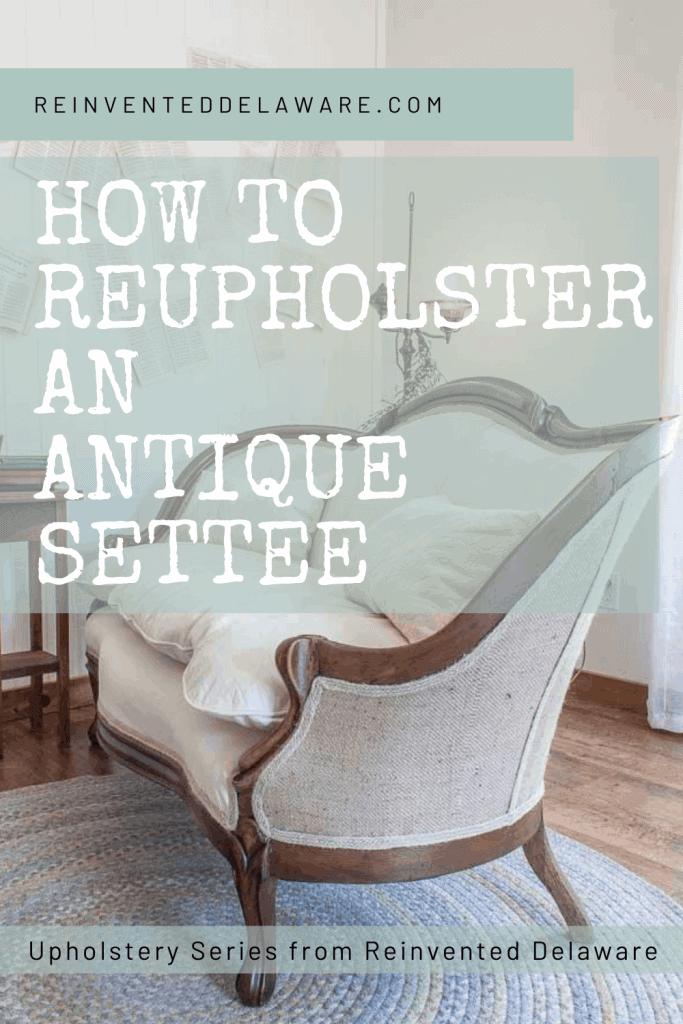
Credit: www.reinventeddelaware.com
When To Call A Professional
Some antique settees are too rare or valuable for DIY reupholstering. If your settee has hand-painted details, delicate inlay, or severe frame damage, consult a professional restorer. They have the tools and experience to preserve the settee’s value and ensure safe restoration.
Cost Comparison: Diy Vs. Professional Reupholstery
It’s helpful to know the cost difference between doing it yourself and hiring a pro.
| Expense | DIY | Professional |
|---|---|---|
| Fabric & Materials | $100–$300 | $100–$300 |
| Tools | $50–$150 | Included |
| Labor | Free (your time) | $500–$1,500 |
| Total | $150–$450 | $600–$1,800 |
Professional work is pricier but may be worth it for rare antiques or if you lack time. DIY saves money and gives you a personal connection to the piece.
Common Mistakes To Avoid
Even careful DIYers make errors. Here’s what to watch for:
- Skipping repairs. Weak frames or saggy springs ruin your work.
- Measuring fabric incorrectly. Always double-check measurements and allow for seams.
- Over-tightening fabric. This can tear old wood or warp the shape.
- Ignoring pattern direction. Make sure stripes or prints line up across sections.
- Using the wrong staples or tacks. Use shorter staples for thin wood, longer for thicker frames.
- Forgetting about fire safety. Some modern foams and fabrics are fire-retardant—important if your settee will be in a busy home.
Pro tip: Practice attaching fabric on a scrap board before working on the settee. This builds confidence and helps you master staple spacing and tension.
Adding Modern Comfort (without Sacrificing Style)
If you want more comfort, small upgrades can help while still looking authentic.
- Layer thin foam under fabric for extra support.
- Use a blend of natural and synthetic batting—natural for authenticity, synthetic for resilience.
- Add removable cushions in matching or complementary fabric. They’re easy to clean and protect the original seat.
Preserving Value And History
Reupholstering an antique settee is both a craft and a responsibility. If you want to maintain resale or historical value:
- Keep as many original materials as possible.
- Avoid harsh modern glues or fasteners that can’t be reversed.
- Document all changes with photos and a written record.
For more about antique furniture care, visit the Metropolitan Museum of Art’s guide.
Frequently Asked Questions
How Much Fabric Do I Need To Reupholster An Antique Settee?
Most antique settees need between 6 and 10 yards of fabric, depending on their size and shape. Always measure each section and add at least 20% extra for seams, mistakes, and pattern matching.
Can I Reuse Old Padding Or Stuffing?
If the old padding is clean and not moldy or crumbly, you can reuse it. Horsehair and cotton last many years if dry. Replace anything that smells musty, is flattened, or looks damaged.
What’s The Best Way To Match New Fabric To An Old Style?
Choose traditional patterns and colors—like damask, velvet, or floral prints—that fit your settee’s era. Bring a piece of the old fabric to a fabric store for help. Avoid overly modern or synthetic fabrics for best results.
Do I Need Special Tools For Antique Furniture?
A few special tools help a lot: an upholstery staple remover, webbing stretcher, and curved upholstery needles. Ordinary tools like pliers, hammers, and screwdrivers are also needed, but proper upholstery tools make the job easier and reduce the risk of damage.
Is It Worth Reupholstering An Old Settee?
If the frame is strong and the piece has sentimental or historical value, it’s usually worth reupholstering. You’ll save money compared to buying new, and you’ll keep a unique piece with character. For rare antiques or if unsure, consult a professional for advice.
Bringing an antique settee back to life is a rewarding journey. With careful steps, respect for history, and a bit of creativity, you can enjoy a comfortable, stylish, and meaningful piece for years to come.