
Repairing a cane chair can feel like bringing a piece of history back to life. These chairs, known for their lightness and airy look, have been loved for centuries. But with time, their woven seats or backs might sag, break, or even fall apart.
Some people quickly think about throwing them away. But in reality, you can restore a cane chair and make it strong and beautiful again—even if you are not a professional furniture restorer.
This guide will show you how to repair different types of cane damage, what tools and materials you need, and the steps involved in the process. Whether your chair has a small tear or needs a complete recaning, you’ll learn how to handle each problem with confidence.
There are also tips to help you avoid mistakes that could cost you more time and money.
Many beginners are surprised to learn that cane repair is not only possible at home but can be quite enjoyable. With patience and the right steps, even a damaged cane chair can become a centerpiece in your living room again.
Let’s explore everything you need to know to repair your cane chair the right way.
Understanding Cane Chairs: Types And Construction
Before you start repairing, it’s important to know what kind of cane chair you have. Not all cane is the same, and the repair method depends on the chair’s construction.
What Is Cane?
Cane is the peeled-off outer bark of the rattan vine, a plant that grows in tropical regions. The most common cane used in furniture is called rattan cane, which is flexible yet strong. It is woven into seats and backs of chairs in different patterns.
Main Types Of Cane Chairs
There are three main types of cane chair construction:
1. Hand-woven Cane (traditional Hand Caning)
This style has holes drilled around the seat’s edge. The cane is hand-woven through these holes in patterns like the classic six-way pattern.
2. Sheet Cane (pre-woven Cane)
Here, a sheet of cane, made in a factory, is pressed into a groove on the chair and held with a spline (a thin strip of wood).
3. Fibre Or Paper Cane
Some chairs use a paper-based product that looks like cane but is less durable. It is often woven in a rush pattern.
Knowing your type is important because each needs a different repair method. You can check the underside of your chair for holes (hand-woven), a groove (sheet cane), or twisted, papery material (fiber rush).
Why Do Cane Chairs Break?
Cane wears out over time for several reasons:
- Age and drying out make the cane brittle.
- Heavy use or standing on the seat can break strands.
- Moisture and humidity can weaken the fibers.
- Poor weaving in factory chairs may lead to early failure.
It’s also common for the seat frame or joints to become loose, so you might need to repair the wood as well as the cane.
Tools And Materials Needed For Cane Chair Repair
The right tools and materials are essential for a good result. Here’s what you’ll typically need for each type of repair.
For Hand-woven Cane Repair
- Cane strands (rattan, usually 2.0mm or size to match the original)
- Wooden pegs or golf tees (to hold cane in holes during weaving)
- Awl or thin screwdriver (for cleaning out holes)
- Small scissors or sharp knife
- Bowl of warm water (to soak cane)
- White glue (optional, for knotting ends)
For Sheet Cane (pre-woven) Repair
- Pre-woven cane webbing (match the pattern and width)
- Wooden or plastic wedge (for pressing in webbing)
- Spline (size must fit groove)
- White glue (wood glue)
- Utility knife or chisel
- Awl or thin pick (for cleaning groove)
- Hammer and small block of wood
- Measuring tape
For Fibre Rush Repair
- Fibre rush material (comes in different thicknesses)
- Tack hammer and tacks
- Scissors
- White glue
Additional Supplies
- Sandpaper
- Furniture polish or finish
- Clamps (if frame is loose)
- Rags
Some beginners miss the importance of soaking cane before weaving. Dry cane will crack and be hard to work with. Also, using the wrong size of cane or spline can make the repair fail early.

Credit: www.youtube.com
Assessing The Damage: What Needs Repair?
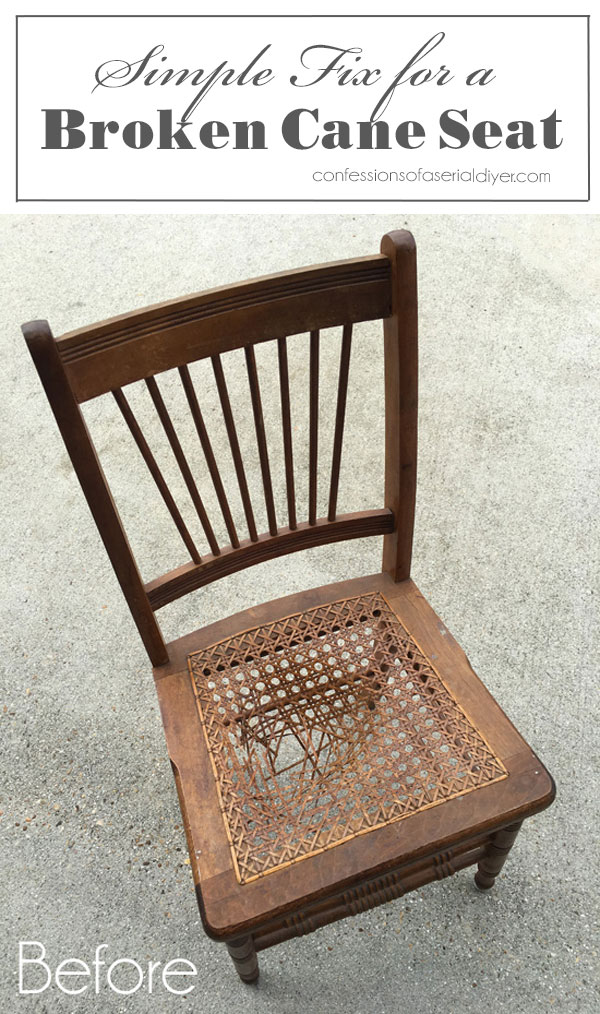
Before you start, inspect your chair closely. Is it just a single strand that has broken? Is the whole seat sagging? Or is the cane falling out of the groove? You also want to check if the wooden frame is loose, cracked, or split.
If the wood is damaged, fix that first—cane won’t hold if the frame is weak.
Common Types Of Damage
- One or two broken strands: Small repairs possible.
- Several broken strands: Reweaving a section may work.
- Widespread breakage or sagging: Full recaning needed.
- Loose spline or cane webbing: Spline replacement.
- Damaged frame or joints: Wood repair required.
Document what you see. Take photos if needed, especially if you want to match the pattern or color later.
How To Repair Hand-woven Cane Seats
Traditional hand-woven cane repair takes patience, but it’s rewarding. Here’s how to do a full recaning.
Step 1: Remove Old Cane
Cut away all the old cane from the holes. Use an awl to poke out bits stuck in the holes. Clean the holes thoroughly—new cane won’t go through if they’re blocked.
Step 2: Soak The Cane
Soak the cane strands in warm water for 30–60 minutes. This makes them flexible and less likely to crack.
Step 3: Start The Weaving
You’ll use a six-way pattern for most chairs. Begin by threading cane front to back, then side to side, following the original pattern.
- Use wooden pegs to hold the ends in place in the holes.
- Keep the cane snug but not too tight—it will shrink as it dries.
Step 4: Add Diagonals
Once straight lines are done, weave the first set of diagonals, then the second set in the opposite direction. This creates the classic hexagonal look.
Step 5: Finish And Tie Off
Tuck the ends of the cane into the holes and trim flush. Use a drop of white glue to hold if needed. Let the seat dry for 24 hours—it will tighten as it dries.
Common Mistakes To Avoid
- Don’t pull too tight: The cane can shrink and pull out or break.
- Don’t skip soaking: Dry cane is brittle.
- Don’t leave glue showing: Only use a tiny amount for knots.
Beginners often forget to check the size of cane—using a thicker or thinner strand than the original can make the seat uncomfortable or weak.
How To Replace Sheet Cane (pre-woven Cane) Seats
Sheet cane repair is faster than hand-woven, but you need to be careful with measurements and gluing.
Step 1: Remove Old Spline And Webbing
Use a utility knife and chisel to cut and lift out the old spline. Be gentle—don’t damage the groove. Soak the spline with warm water if it’s stubborn. Once removed, pull out the old cane sheet.
Step 2: Clean The Groove
Remove glue and cane pieces from the groove with an awl or pick. Sand lightly if needed. The groove must be clean and smooth for the new spline to fit.
Step 3: Cut And Soak New Cane Webbing
Measure the seat opening plus 2 inches extra on each side. Cut the new cane sheet. Soak in warm water for 30 minutes to soften.
Step 4: Fit The Cane And Insert Spline
Lay the wet cane sheet over the seat, centering the pattern. Use a wedge to gently press it into the groove. When even, apply glue in the groove, then press in the new spline with a hammer and block of wood.
Step 5: Trim Excess Cane
Once the glue dries (at least 24 hours), trim excess cane with a sharp knife. Sand the edge for a neat finish.
Common Mistakes To Avoid
- Don’t use dry cane webbing—it will be too stiff.
- Don’t force the spline—it can split the wood.
- Don’t use too little glue—the spline may pop out.
A non-obvious tip: Make sure the pattern lines up with the chair’s front edge for a professional look.
Repairing Fibre Rush Or Paper Cane Seats
Fibre rush seats are often found on older or rustic chairs. Repairing these is different from cane, but you can still do it with patience.
Step 1: Remove Old Rush
Cut away the old rush strands. Use pliers to pull out tacks or staples.
Step 2: Prepare New Fibre Rush
Soak the fiber in water if recommended by the manufacturer.
Step 3: Start Wrapping
Begin at a back corner. Secure the end with a tack under the seat. Wrap the rush in the original pattern, usually a square weave.
Step 4: Finish And Secure
When you finish, tuck the end under and secure with glue or a tack. Let dry fully before using.
Repairing Loose Joints And Frame Damage
A cane seat won’t last if the wooden frame is loose or cracked. Inspect for loose joints, splits, or missing glue.
How To Tighten Loose Joints
- Remove the seat if possible.
- Apply wood glue into the joint.
- Clamp the parts together for several hours.
- Wipe off excess glue before it dries.
Fixing Splits Or Cracks
- For small splits, fill with wood glue and clamp.
- For larger cracks, use a wood filler and sand smooth.
When To Call A Professional
Some cane repairs are better left to experts, especially if:
- The chair is an antique with high value.
- The frame is badly broken.
- You feel unsure about matching a complex pattern.
A professional can also color-match the cane and restore the finish, which is hard to do at home.
How Long Does Cane Chair Repair Take?
A full hand-woven recaning can take 8–12 hours spread over several days (including drying time). Sheet cane can be replaced in 2–3 hours, but you still need drying time for the glue.
Cost Comparison: Diy Vs Professional Repair
Here’s a simple comparison of costs for repairing a standard cane seat:
| Repair Method | DIY Cost | Professional Cost |
|---|---|---|
| Hand-woven cane | $25–$60 (materials only) | $150–$350 per seat |
| Sheet cane | $20–$50 | $100–$200 per seat |
| Fibre rush | $15–$40 | $100–$250 per seat |
DIY is clearly much cheaper, but it requires time and patience. Professionals charge more, especially for antiques or complex patterns.
Choosing The Right Cane And Spline Size
Selecting the right size of cane and spline is crucial. Too big, and the cane won’t fit; too small, and it will be weak.
How To Measure Correctly
- For hand-woven cane, measure the width of the holes and the space between them. Buy cane that matches the original size.
- For spline, measure the groove width and depth with a caliper or ruler.
Many suppliers provide sizing charts. Always buy a little extra cane or webbing in case of mistakes.
Coloring And Finishing The New Cane
Fresh cane is pale yellow, while older cane is honey or brown. You can stain the new cane to match the old, but always test on a scrap first.
- Use water-based wood stains for best results.
- Apply evenly with a brush, then wipe off excess.
- Let dry completely before using the chair.
Never use varnish or oil until the cane is fully dry and tight.
Tips For A Long-lasting Repair
- Don’t stand on cane seats—they are for sitting only.
- Keep cane out of direct sunlight to prevent drying and cracking.
- Dust regularly and use a slightly damp cloth for cleaning.
- Rehydrate old cane by lightly sponging with water every few months.
Common Beginner Questions And Mistakes
Why Is My New Cane Loose After Drying?
Cane shrinks as it dries. If you weave too loosely, the seat will sag. Always keep the strands snug, but not so tight they break.
Can I Repair Just A Few Broken Strands?
Yes, for minor damage. But if many strands are broken, a full recaning is better for strength.
Should I Use Glue To Hold The Cane?
Only a small amount at the ends. Too much glue will make future repairs harder.
Real-life Example: Restoring A Family Heirloom
Consider a wooden rocking chair, handed down for generations, with a badly sagging hand-woven seat. The owner cleaned out the holes, soaked the cane, and spent a weekend patiently weaving a new seat. After drying and applying a light stain, the chair looked almost new.
The repair not only saved money but also preserved family history.
Another example: A sheet cane dining chair with a cracked spline was repaired in an afternoon. The owner learned to carefully match the cane pattern and stain for a perfect blend.
Table: Comparison Of Repair Methods
Here’s a quick comparison of the main repair methods:
| Type | Skill Level | Repair Time | Tools Needed | Durability |
|---|---|---|---|---|
| Hand-woven cane | Intermediate to advanced | 8–12 hours | Awl, pegs, scissors | 15–25 years |
| Sheet cane | Beginner to intermediate | 2–3 hours | Knife, wedge, glue | 8–15 years |
| Fibre rush | Beginner | 3–5 hours | Tack hammer, glue | 8–12 years |
This shows that hand-woven cane is the most durable, but also the most work.

Credit: www.amazon.com
Where To Buy Cane Repair Materials
You can find cane, webbing, and tools at specialty woodworking stores, some online retailers, and craft shops. Always check the pattern and size before ordering. For more details on cane varieties and sources, see the Cane Furniture Wikipedia page.
Caring For Your Repaired Cane Chair
After repair, regular care is important for long life:
- Keep humidity stable—too dry or too wet will damage cane.
- Don’t drag the chair—lift to move.
- Place felt pads under the legs to protect the frame.
If the chair is used daily, check the cane every 6–12 months for wear.
Credit: www.confessionsofaserialdiyer.com
Table: Signs You Need Cane Repair
Here are common signs your chair needs attention:
| Sign | What It Means |
|---|---|
| Sagging seat | Cane is stretched or broken |
| Cracks or splits | Cane or wood is dry or stressed |
| Loose cane ends | Spline or weaving has failed |
| Discoloration | Sun or moisture damage |
| Squeaking joints | Loose frame, needs tightening |
Frequently Asked Questions
How Long Will A Repaired Cane Chair Last?
A well-repaired hand-woven cane seat can last 15–25 years with normal use. Sheet cane usually lasts 8–15 years. Care and regular maintenance will help your chair last longer.
Can I Repair Cane Without Special Tools?
You can do small repairs with basic tools like scissors and glue, but for full recaning, special tools like an awl, pegs, and a wedge make the job easier and the result stronger.
Is It Worth Repairing A Cheap Cane Chair?
If the chair has sentimental or decorative value, yes. But for very cheap, mass-produced chairs, sometimes replacement is a better option. Always compare material and time costs to the price of a new chair.
Can I Stain Or Paint New Cane?
Yes, you can stain or paint cane after it is dry. Stain gives a natural look, while paint covers the pattern. Always test on a small area first.
Where Can I Learn More About Cane Chair Repair?
There are many online tutorials, books, and community workshops. Museums and local craft centers sometimes offer classes. The Rattan and Wicker Furniture Guide is a good online resource for more details.
Repairing a cane chair is not just about saving a seat—it’s about keeping tradition alive. With the right steps, tools, and a bit of patience, you can bring your cane chair back to life and enjoy its beauty and comfort for many more years.