
Placing a rug in your bedroom might seem simple, but small changes in placement can transform the whole space. The right rug can make your room feel cozy, stylish, and even more spacious. But if you lay it down wrong, it can feel awkward or crowded.
Many people buy beautiful rugs but feel disappointed when the result doesn’t look like the magazines. This guide explains how to place a rug in your bedroom for the best look, comfort, and function. If you want your bedroom to feel balanced, inviting, and designer-approved, read on.
Why Bedroom Rug Placement Matters
A rug is more than just a floor covering. It sets the foundation for your room’s style and comfort. In bedrooms, rugs can:
- Add warmth under your feet, especially on cold mornings.
- Reduce noise and echoes for a more peaceful space.
- Anchor your furniture, helping your room feel balanced.
- Add color, pattern, and texture without permanent changes.
Choosing a rug is only half the journey. Placement is just as important as the rug you choose. The wrong size or position can make your room look smaller, cluttered, or unbalanced. The right placement, however, makes your space feel intentional and harmonious.
Key Factors Before You Start
Before you roll out your rug, think about these essential factors:
- Room size and shape: Measure your room to avoid buying a rug that’s too big or too small.
- Bed size: The size of your bed (twin, queen, king, etc.) Will affect the best rug size and placement.
- Other furniture: Dressers, nightstands, benches, and chairs should be considered.
- Traffic flow: Make sure people can move comfortably around the bed and furniture.
- Personal style: Do you prefer a bold statement rug or something subtle?
Tip: Use painter’s tape to outline rug sizes on the floor before buying or moving your rug. This helps you visualize the layout.
The Most Popular Bedroom Rug Placements
There are several ways to place a rug in your bedroom. Each method offers a different look and feel. Let’s explore the most common placements, their pros and cons, and which works best for different room layouts.
1. Rug All The Way Under The Bed
This is a classic and luxurious look. The rug sits completely under the bed and extends on all sides.
Best for: Large bedrooms with king or queen beds.
How to do it:
- The rug should extend at least 18-24 inches beyond the sides and foot of the bed.
- For a king bed, a common rug size is 9×12 feet.
- For a queen bed, 8×10 feet usually works.
Pros:
- Creates a unified look.
- Feels plush underfoot on both sides of the bed.
Cons:
- Requires a large rug, which can be expensive.
- Part of the rug is hidden under the bed.
Example: In a 14×16 foot master bedroom with a king bed, a 9×12 foot rug centered under the bed will cover most of the walking area, making the room feel soft and inviting.
2. Rug Two-thirds Under The Bed
Here, the rug is placed so that about two-thirds is under the bed, starting from the nightstands and extending past the foot.
Best for: Medium to large bedrooms.
How to do it:
- The rug starts a few inches in front of the nightstands.
- Extends out past the foot and sides of the bed.
Pros:
- Saves money since you can use a smaller rug.
- Still provides softness where you step out of bed.
Cons:
- Head of the bed and nightstands are not on the rug.
Example: With a queen bed, a 6×9 foot rug placed two-thirds under creates a layered look, showing more of the rug design.
3. Rug At The Foot Of The Bed
This style puts the rug only at the foot of the bed, not under the nightstands or headboard.
Best for: Small bedrooms or tight budgets.
How to do it:
- Place a small rug (for example, 5×7 feet) horizontally at the foot.
- The rug should be wider than the bed but not as long.
Pros:
- Uses a smaller, less expensive rug.
- Highlights a special rug or design.
Cons:
- No softness under nightstands or where you step out of bed.
Example: For a twin bed in a compact room, a 4×6 foot rug at the foot adds a pop of color and warmth without crowding the space.
4. Runners On Each Side
Instead of one large rug, use two narrow runners on each side of the bed.
Best for: Long, narrow bedrooms or shared rooms.
How to do it:
- Place a runner (for example, 2.5×7 feet) along each side.
- Leave at least 3 inches from the edge of the bed.
Pros:
- Easy to clean and replace.
- Good for rooms with built-in furniture or radiators.
Cons:
- No rug at the foot of the bed.
Example: In a guest room with twin beds, matching runners add symmetry and softness for each person.
5. Layered Rugs For Style
Layering rugs means placing a smaller decorative rug on top of a larger, plain one.
Best for: Adding texture, color, or interest.
How to do it:
- Use a large neutral base rug under the bed.
- Place a colorful or patterned rug at an angle on top, partly under the bed.
Pros:
- Combines style and comfort.
- Lets you use a favorite smaller rug.
Cons:
- Can look messy if not done carefully.
- Extra cost for two rugs.
Example: Lay a 9×12 foot jute rug under the bed, with a 5×8 foot vintage rug layered at the foot for a boho look.
Choosing The Right Rug Size
Selecting the correct rug size is critical. Too small, and your room looks awkward. Too big, and it overwhelms the space. Here’s a handy guide for common bed sizes:
| Bed Size | Recommended Rug Size (Full Coverage) | Recommended Rug Size (Partial Coverage) |
|---|---|---|
| Twin | 6×9 ft | 5×7 ft |
| Full | 8×10 ft | 6×9 ft |
| Queen | 8×10 ft | 6×9 ft |
| King | 9×12 ft | 8×10 ft |
Non-obvious insight: Rug sizes are not one-size-fits-all. Room shape, furniture, and walking space all matter. Always measure before buying.
How To Align Your Rug With Bedroom Furniture
The way your rug interacts with other furniture changes the feel of the room.
- Nightstands: If you want a unified look, place nightstands fully on the rug. If the rug is smaller, keep nightstands off.
- Benches or ottomans: Place these fully on the rug at the foot of the bed for balance.
- Dressers: Usually, dressers are kept off the rug, or only the front legs on, to avoid unevenness.
Practical tip: Make sure the rug does not block closet doors or drawers. Leave about 6-10 inches of floor visible between the rug and the wall for a “border” effect.
Placing Rugs In Different Bedroom Sizes
Not all bedrooms are the same. Here’s how to adjust rug placement for different spaces.
Small Bedrooms
- Use a rug that fits under the lower two-thirds of the bed.
- Or, choose a single runner on one side or at the foot.
- Avoid oversized rugs that touch all four walls.
Medium Bedrooms
- Use a rug that covers the full bed and nightstands, or just the bed.
- Leave at least 8 inches from the rug edge to the wall.
Large Bedrooms
- Go for a full-coverage rug under all main furniture.
- Layer smaller accent rugs for style and extra comfort.
Rug Placement With Different Bed Types
Not all beds are standard. Here’s how to handle unique situations.
Platform Beds
- Choose a rug large enough to peek out on all sides, since platform beds have a low profile.
- Avoid thick, high-pile rugs that make stepping up awkward.
Four-poster Or Canopy Beds
- Use a larger rug that echoes the strong lines of the bed.
- Place the rug fully under the bed and posts for a cohesive look.
Daybeds
- Place a small rug in front of the daybed, or a runner along the open side.
- Avoid placing a rug under the short ends.
Bunk Beds
- Use a single area rug in front of the beds, or runners on each side.
- Make sure the rug is low-pile for safety.
Choosing Rug Shape: Rectangle, Round, Or Runner?
Rectangle rugs are most popular, but sometimes a round or irregular rug works better. Here’s a quick comparison:
| Rug Shape | Best For | Placement Tips |
|---|---|---|
| Rectangle | Most bedrooms | Align with bed frame for symmetry |
| Round | Small rooms, unique layouts | Place under center of bed or in reading nook |
| Runner | Narrow spaces, kids’ rooms | Alongside bed or between twin beds |
Non-obvious insight: Irregular or animal hide rugs can add personality, but are best used as accent pieces, not as the main bedroom rug.
Rug Materials: What To Choose For Bedrooms
The material of your rug affects its comfort, look, and durability. Here’s a guide to common materials:
- Wool: Warm, soft, and durable. Great for bedrooms but can be pricey.
- Cotton: Soft and easy to clean, but less plush.
- Synthetic fibers (polypropylene, nylon): Affordable, easy to clean, and stain-resistant. Good for kids’ rooms.
- Jute or sisal: Natural and textured, but rougher underfoot.
- Silk or viscose: Luxurious and soft, but delicate.
Practical tip: For bedrooms, most people prefer plush, soft rugs. If you have allergies, look for low-pile or hypoallergenic materials.
Color And Pattern: How To Choose For Your Space
Color and pattern make a big impact. A bold rug can be the room’s focal point, while a neutral rug lets other decor stand out.
- Neutral rugs: Make small rooms feel bigger and brighter.
- Dark rugs: Add drama and hide stains but can shrink the sense of space.
- Patterned rugs: Hide dirt and add interest, but can clash with busy bedding.
- Solid rugs: Simple and calming, easy to match with any decor.
Example: In a mostly white bedroom, a navy or emerald rug adds contrast and sophistication.
Pro tip: If you like to change bedding and decor often, choose a neutral rug for more flexibility.
Practical Tips For Laying Your Rug
A few small adjustments can make a big difference:
- Always use a rug pad: This prevents slipping, adds cushion, and extends rug life.
- Align with the bed, not the room walls: The bed should be your main guide.
- Leave space at the edges: 8-18 inches of bare floor shows off your rug and avoids a “wall-to-wall” look.
- Check door clearance: Make sure doors and drawers open easily over the rug.
- Use painter’s tape before rolling out: Test the size and shape first.
Mistakes To Avoid
Many people make these common mistakes when placing a rug in the bedroom:
- Choosing a rug that’s too small. It makes the room feel disconnected.
- Placing the rug too close to the wall. This can look crowded.
- Ignoring furniture layout. Rugs should anchor your main furniture, not float alone.
- Skipping a rug pad. This causes slipping and uneven wear.
- Not considering traffic flow. People should be able to walk easily around the bed.
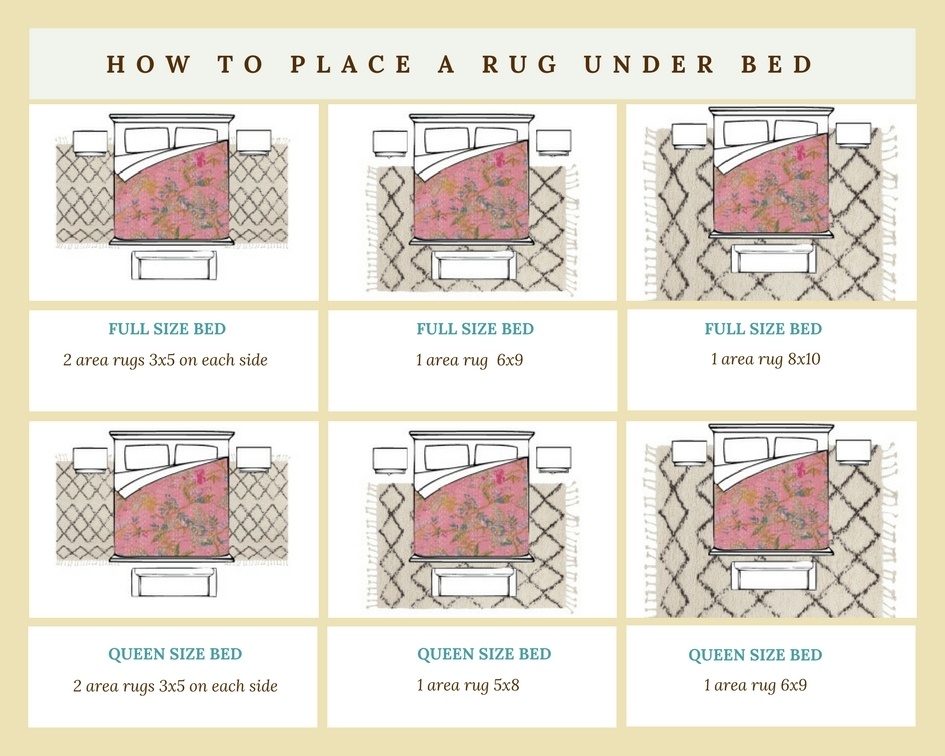
Credit: mydecoratingtips.com
Real-life Examples: Visualizing Rug Placement
Let’s look at three real-world scenarios.
Example 1: Small Guest Room
- Room: 10×12 feet, full bed, one dresser, one nightstand.
- Rug: 6×9 foot, placed two-thirds under the bed.
- Result: Cozy, shows off the hardwood floor border, covers main walking area.
Example 2: Master Bedroom
- Room: 15×18 feet, king bed, two nightstands, bench at foot.
- Rug: 9×12 foot, fully under bed and nightstands.
- Result: Unified, luxurious look, soft underfoot everywhere you step.
Example 3: Kids’ Shared Room
- Room: 12×14 feet, two twin beds, desk between.
- Rug: Two 2.5×7 foot runners along each bed.
- Result: Each child has a soft area, easy to clean, playful colors.
Cleaning And Maintaining Your Bedroom Rug
A bedroom rug can collect dust, dirt, and hair, so care is important:
- Vacuum regularly: At least once a week.
- Spot clean spills: Use a damp cloth and mild soap; avoid soaking.
- Rotate the rug: Every 6-12 months to even out wear.
- Deep clean: Every 12-18 months, or sooner if you have allergies or pets.
- Use a rug pad: Prevents slipping and protects both rug and floor.
Tip: For delicate materials like wool or silk, hire a professional cleaner.
Bedroom Rug Placement: Before And After
Want to see how a rug can transform a space? Here’s a quick comparison.
| Before Rug | After Rug |
|---|---|
| Room feels echoey and cold Furniture floats without a focal point Bare floor around the bed | Space feels warm and inviting Furniture anchored, balanced look Soft underfoot when you get up |
Budgeting For Your Bedroom Rug
Prices can vary from $50 to over $2,000 depending on size and material. Here’s how to budget smartly:
- Small rugs (5×7 ft): $50-$200
- Medium rugs (6×9 or 8×10 ft): $150-$700
- Large rugs (9×12 ft and up): $400-$2,000+
Money-saving tip: Buy during sales or consider washable, synthetic rugs for kids’ rooms.
Non-obvious insight: Spending more on a rug you walk on daily is worth it for comfort and durability, but you can go cheaper for decorative or accent rugs.

Credit: www.castlery.com
Sustainability: Eco-friendly Rug Choices
If you care about the environment, look for rugs made from natural fibers like wool, cotton, or recycled materials. Some brands use eco-friendly dyes or fair-trade practices.
- Check for certifications: Look for labels like GoodWeave, OEKO-TEX, or GOTS.
- Choose handmade over machine-made: Handmade rugs are often more durable and ethical.
For more about eco-friendly rug options, visit Architectural Digest.
Frequently Asked Questions
How Big Should A Rug Be Under A Queen Bed?
For a queen bed, an 8×10 foot rug is ideal for full coverage. If your room is small, a 6×9 foot rug under two-thirds of the bed works well. The rug should extend at least 18 inches beyond the sides and foot of the bed for balance.
Should Nightstands Be On Or Off The Rug?
This depends on your rug size and look you want. With a large rug, place nightstands fully on the rug for a unified look. With a smaller rug, keep them off and start the rug a few inches in front of the nightstands.
Can I Use A Round Rug In The Bedroom?
Yes, a round rug works well in small bedrooms, under a round table, or in a reading nook. For standard beds, rectangle rugs are easier to align, but round rugs can add interest to unique layouts.
What Type Of Rug Is Best For Bedrooms With Allergies?
Look for low-pile rugs made of cotton, synthetic fibers, or hypoallergenic materials. Avoid high-pile or shag rugs, which trap more dust. Vacuum regularly and use a washable rug pad.
How Do I Keep My Bedroom Rug From Slipping?
Always use a rug pad under your rug. Choose one that matches your floor type (hardwood, tile, carpet). This prevents slipping, protects your floor, and adds comfort.
—
A well-placed bedroom rug does more than add style—it changes how you feel when you wake up and walk across your room. Take your time to measure, plan, and visualize. Choose a rug that fits your space, matches your needs, and reflects your personal style.
With careful placement, your rug will be the finishing touch that makes your bedroom feel like a true retreat.
:max_bytes(150000):strip_icc()/organize-bedroom-julie-soefer-1219-168792590d5843cebfeaba38748cbcce.jpg)
Credit: www.marthastewart.com