
Cast iron cookware has a special place in kitchens worldwide. Its heavy weight, rustic look, and unmatched cooking performance attract both professional chefs and home cooks. But if you’ve ever bought a cast iron pan and felt lost about how to care for it, you’re not alone. Many people worry about seasoning and cleaning cast iron—and with good reason. Done right, cast iron lasts for generations; done wrong, it can rust or lose its non-stick magic.
If you want your cast iron to serve you well for years, you need to learn not just the basics, but also the clever tricks and avoid common mistakes. This guide gives you a complete, step-by-step process for seasoning and cleaning cast iron, with tips that even many experienced users miss. You’ll find practical advice, real examples, and clear instructions to make cast iron care simple and rewarding.
Why Cast Iron Needs Special Care
Cast iron is different from stainless steel or nonstick pans. It’s a porous metal, which means it can rust easily if left wet or unprotected. But with proper seasoning, the pan develops a natural, durable coating that both prevents rust and makes it non-stick.
Most new cast iron pans come pre-seasoned these days, but the coating is usually thin. To get the best performance, you should build several layers of seasoning yourself. And to keep your pan working well, cleaning it the right way is just as important.
What Is Seasoning?
Seasoning is the process of creating a thin layer of polymerized oil on the surface of the cast iron. This oil layer forms a protective barrier, prevents rust, and gives the pan its famous non-stick quality.
The seasoning is not a flavoring or spice. It’s a hard, shiny coating formed when oil is heated past its smoke point and bonds to the iron. Over time, as you use and maintain your cast iron, this layer gets thicker and smoother.
Choosing The Right Cast Iron
Not all cast iron pans are created equal. Here’s what to look for when choosing a pan:
- Weight: Cast iron should feel heavy. Lightweight pans may be thin and heat unevenly.
- Surface Texture: Traditional pans have a slightly rough surface, while some brands polish the cooking surface for extra smoothness.
- Pre-seasoned vs Unseasoned: Pre-seasoned pans are easier for beginners, but unseasoned pans let you control the seasoning from scratch.
- Brand Reputation: Companies like Lodge, Le Creuset, and Staub are known for quality.
Comparing Popular Cast Iron Brands
Below is a comparison of some well-known cast iron brands to help you choose:
| Brand | Pre-seasoned | Surface Texture | Price Range | Country of Origin |
|---|---|---|---|---|
| Lodge | Yes | Rough | Low-Mid | USA |
| Le Creuset | No (bare cast iron line) | Smooth | High | France |
| Staub | Yes | Smoother | High | France |
| Victoria | Yes | Medium | Low | Colombia |
The Science Of Seasoning
When oil is heated on cast iron above its smoke point, it undergoes a chemical change called polymerization. This process changes the oil from a liquid into a hard, plastic-like layer that bonds with the pan. Each time you season, you add another thin, protective layer.
Why Multiple Layers Matter
One of the biggest mistakes beginners make is stopping after a single seasoning. Multiple thin layers make the pan smoother, shinier, and more non-stick. Think of it like painting a wall—several thin coats look and perform better than one thick one.
How To Season Cast Iron: Step-by-step
Proper seasoning is the foundation of great cast iron care. Here’s how to do it:
1. Clean The Pan
Before you start, wash the pan with warm water and a small amount of mild dish soap. This is one of the few times soap is recommended. Scrub away any factory residue or rust with a stiff brush or steel wool.
Rinse and dry thoroughly—cast iron must be completely dry before seasoning.
2. Apply Oil
Rub a thin layer of neutral oil (like vegetable, canola, or flaxseed oil) all over the pan—inside, outside, and handle. Too much oil will make the pan sticky, so wipe off any excess with a paper towel.
3. Bake Upside Down
Preheat your oven to 450°F (232°C). Place aluminum foil or a baking sheet on the bottom rack to catch drips. Put the pan upside down on the middle rack. Bake for 1 hour.
4. Cool And Repeat
Let the pan cool in the oven. For best results, repeat the oiling and baking process 2-3 times. Each layer strengthens the seasoning.
5. Maintain With Cooking
The more you use your cast iron, especially for frying or sautéing with oil, the better the seasoning becomes. Cooking bacon, eggs, or pancakes helps build a perfect surface.
Common Mistakes In Seasoning
- Using too much oil: This causes a sticky, uneven coating.
- Skipping the drying step: Water left on the pan can cause rust.
- Not heating hot enough: Oil won’t polymerize below its smoke point.
Best Oils For Seasoning Cast Iron
Not all oils are equal for seasoning. You need an oil with a high smoke point and neutral flavor.
Top Choices
- Flaxseed oil: Forms a hard, durable coating but can be expensive.
- Grapeseed oil: High smoke point and no flavor.
- Canola or vegetable oil: Cheap, widely available, and effective.
Oils To Avoid
- Olive oil: Low smoke point, can get sticky.
- Butter or animal fats: Can burn and leave residue.
Oil Comparison
Here’s a quick look at common seasoning oils:
| Oil | Smoke Point (°F) | Flavor | Cost |
|---|---|---|---|
| Flaxseed | 225 | Neutral | High |
| Canola | 400 | Neutral | Low |
| Grapeseed | 420 | Neutral | Medium |
| Olive | 350 | Strong | Medium |
How To Clean Cast Iron
Cleaning cast iron is simple, but you must do it the right way to keep your seasoning strong.
1. Clean After Every Use
While the pan is still warm (not hot), wipe out food bits with a paper towel or soft cloth. If there’s stuck-on food, rinse with hot water and use a stiff brush or a non-metal scrubber.
2. Skip The Soap (most Of The Time)
Mild soap is safe in small amounts, but frequent use can strip the seasoning. For daily cleaning, hot water is usually enough.
3. Avoid Soaking
Never leave cast iron in water or let it soak. This is one of the fastest ways to cause rust.
4. Dry Thoroughly
Water is cast iron’s enemy. Always dry your pan right away with a towel, then heat it on the stove for a few minutes to remove any last moisture.
5. Oil Lightly
When the pan is dry and still warm, rub a thin layer of oil all over. Wipe off any extra. This protects the seasoning and keeps rust away.
Cleaning Tough Messes
Sometimes, you’ll need extra cleaning power:
- For stubborn food, sprinkle coarse salt in the pan and scrub with a paper towel or cloth. Salt acts as a gentle abrasive.
- For heavy rust, use steel wool, then re-season from scratch.
What Not To Do
Many people are afraid of ruining their cast iron. Here’s what to avoid:
- Don’t put cast iron in the dishwasher.
- Don’t use steel utensils that can scrape the seasoning.
- Don’t use harsh chemicals or oven cleaners.
- Don’t cook acidic foods (like tomatoes, vinegar, or wine) for long periods, especially in new pans. Acid can eat away at the seasoning.
Dealing With Rust
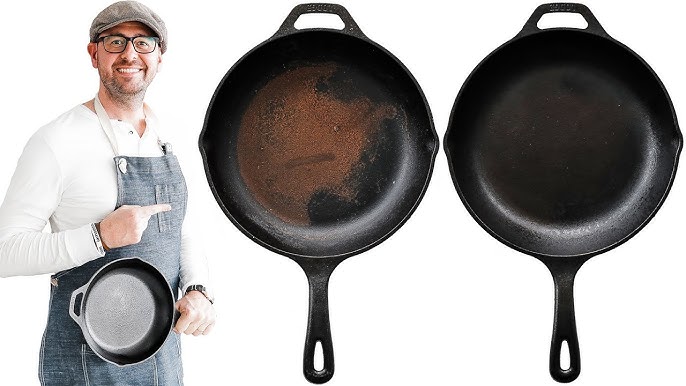
Even with care, rust can happen—especially if the pan is stored damp or in a humid place. Rust looks like orange or brown spots.
How To Remove Rust
- Scrub the rusty area with steel wool or a stiff brush. Remove all the rust until you see bare metal.
- Wash, dry, and re-season the pan using the steps above.
Pro tip: If you catch rust early, you can often save the seasoning and avoid starting over.
Restoring Old Or Neglected Cast Iron
Inherited a rusty old skillet or found a pan at a yard sale? You can bring it back to life.
- Remove all rust and old seasoning with steel wool, a wire brush, or even a dedicated cast iron cleaning tool.
- Wash and dry completely.
- Season as if it were a new pan, applying several thin layers of oil and baking each time.
Some people use electrolysis or oven self-clean cycles for very heavy rust, but these methods are advanced and not necessary for most users.
Cast Iron Vs Other Cookware: Maintenance Differences
Why does cast iron need seasoning when stainless steel or nonstick pans do not? The answer is in the metal structure and how the pans are used.
| Cookware Type | Maintenance Level | Can Rust? | Non-Stick Feature |
|---|---|---|---|
| Cast Iron | High | Yes | Yes (with seasoning) |
| Stainless Steel | Low | No | No |
| Nonstick (Teflon) | Low | No | Yes (coating) |
| Carbon Steel | Medium | Yes | Yes (with seasoning) |
Keeping Cast Iron Non-stick
The non-stick quality of cast iron depends on the seasoning. Unlike Teflon, it’s not a chemical layer—it’s natural and gets better with use.
Tips For Best Non-stick Results
- Always preheat the pan before adding food.
- Use enough oil when cooking.
- Avoid cooking sticky foods (like eggs) until you have a strong seasoning.
- Don’t scrape the surface with metal utensils.
Why Some Pans Lose Their Non-stick
If food starts sticking, it usually means the seasoning is too thin, damaged, or dirty. To fix it, clean the pan well, dry it, and add a fresh seasoning layer.
.jpg?v=1740715283298&options=w_870,h_700)
Credit: www.greenpan.us
How To Store Cast Iron
Proper storage keeps your pan in top shape.
- Store in a dry place. Humidity can cause rust.
- Place a paper towel or cloth between stacked pans to prevent scratching.
- Lightly oil the pan before storing if you live in a humid area.
Cooking With Cast Iron: Special Care
Cast iron holds heat very well, which is great for searing and baking. But it also means you need to use some special care.
- Always preheat slowly. Sudden temperature changes can crack the pan.
- Don’t put a cold pan on a hot burner, or vice versa.
- Use oven mitts—handles get very hot.
:max_bytes(150000):strip_icc()/__opt__aboutcom__coeus__resources__content_migration__serious_eats__seriouseats.com__images__2016__09__20160817-cast-iron-pan-vicky-wasik-3-c56f176298784fef9e60f6cea198e0e4.jpg)
Credit: www.seriouseats.com
Common Myths About Cast Iron
Many myths confuse new cast iron users. Here’s what you need to know:
- Myth: You can’t use soap on cast iron.
Truth: Small amounts of mild soap are safe, especially after new or heavy use. Just rinse well.
- Myth: Cast iron is nonstick right away.
Truth: It takes time and use to build up the best seasoning.
- Myth: You can’t cook acidic foods.
Truth: Acidic foods are fine in well-seasoned pans, but avoid them in new pans or for long cooking.
Advanced Seasoning Techniques
Some users want a glassy-smooth, ultra-durable finish. Here are extra steps you can try:
- Flaxseed oil seasoning: Apply several ultra-thin coats and bake at 500°F (260°C). Flaxseed oil forms a harder, shinier coating.
- Buffing: After each seasoning layer, lightly buff the surface with fine steel wool before the next coat for extra smoothness.
- Blackening: In some Southern US cooking, pans are intentionally blackened with repeated seasoning and high-heat use, making them nearly indestructible.
Mistakes Beginners Often Make
Beyond the basics, here are non-obvious mistakes to avoid:
- Not drying completely: Even a few drops of water can lead to rust overnight.
- Storing with the lid on: Traps moisture and causes rust. Store with the lid off or a paper towel in between.
- Using too much oil: Beginners often think more is better, but excess oil leads to sticky, gummy surfaces.
- Not using the pan enough: Regular cooking is the best way to build and maintain seasoning. Don’t be afraid to use your pan daily.
Seasoning Cast Iron In Different Climates
Humidity and temperature can affect your cast iron care:
- In humid climates, rust forms quickly. Always dry and oil your pan before storing.
- In dry climates, seasoning can flake if it gets too thick. Use thin, even coats.
Environmental Benefits Of Cast Iron
Unlike nonstick pans that wear out and become waste, cast iron can last hundreds of years. There are stories of families passing down skillets for generations. When you invest in cast iron and care for it, you reduce waste and use fewer resources.
When To Re-season Your Pan
You’ll know it’s time to re-season if:
- The pan looks dull or gray instead of shiny black.
- Food sticks more than usual.
- You see rust spots.
For most people, a fresh seasoning every few months, plus regular maintenance, is enough.
Special Cleaning Tools For Cast Iron
Some tools make cleaning easier:
- Chainmail scrubbers: Made of stainless steel, they remove food without harming seasoning.
- Scrapers: Plastic or bamboo scrapers are safe for stubborn bits.
- Dedicated cast iron brushes: Tough bristles clean well without scratching.
Cast Iron For Baking
Cast iron isn’t just for stovetop cooking. You can use it for baking bread, pizza, and even desserts. The seasoning protects the pan in the oven, too.
Baking Tips
- Preheat the pan in the oven before adding dough or batter.
- Use parchment paper for sticky recipes.
- Clean and re-oil after baking, just like after frying.
Cast Iron And Health
Unlike Teflon, cast iron contains no synthetic chemicals. It can even add small amounts of iron to your food, which can be a benefit for people who need more iron in their diet.
Expert Tips For Cast Iron Success
- Use your cast iron often. Regular use makes seasoning better and maintenance easier.
- Don’t panic if you see a bit of rust—just scrub, dry, and re-season.
- Share your pan with friends and family. Well-maintained cast iron can become a family treasure.
Credit: www.youtube.com
Frequently Asked Questions
How Often Should I Season My Cast Iron Pan?
You should do a full seasoning when the pan looks dull, gray, or has rust. For most users, a full seasoning every few months is enough. After each use, a light oiling helps maintain the non-stick layer.
Can I Use Soap To Clean Cast Iron?
Yes, but use a small amount of mild soap only when needed. Soap won’t ruin a well-seasoned pan, but frequent or harsh soap can weaken the seasoning.
What Should I Do If Food Starts Sticking To My Cast Iron?
If food sticks, the seasoning may be too thin or damaged. Scrub the pan clean, dry it well, and add a fresh layer of seasoning in the oven.
Is Rust On Cast Iron Dangerous?
No, rust is not dangerous, but it should be removed because it affects flavor and performance. Scrub off all rust and re-season the pan before using it again.
Where Can I Find More Information About Cast Iron Care?
For more in-depth details and history, visit the Wikipedia page on cast iron cookware.
Cast iron rewards those who care for it well. With the right seasoning and cleaning habits, your pan will deliver perfect meals and last for decades. Don’t be afraid of the process—embrace it, and your cast iron will quickly become your favorite tool in the kitchen.