
Placing a rug under a sectional seems simple, but in reality, it’s a decision that can change the entire look and feel of your living room. The right rug placement not only grounds your furniture but also defines your space, adds comfort, and creates a balanced design.
If you’ve ever felt your room looks “off” despite buying a beautiful rug and a stylish sectional, you’re not alone. Many people make small mistakes that lead to a cluttered or awkward arrangement.
In this guide, you’ll discover the practical steps and expert tips on how to place a rug under a sectional. Whether your goal is to make your room feel larger, cozier, or simply more put-together, you’ll learn exactly how to achieve it.
You’ll also see visual comparisons, get answers to common questions, and avoid mistakes that most beginners make. This approach will help you feel confident as you create a space you love.
Why Rug Placement Matters Under A Sectional
A sectional is often the largest piece of furniture in a living room. It’s the anchor for everything else—tables, chairs, decor, and especially rugs. The rug you choose, and how you place it, can:
- Define the conversation area
- Make the room feel connected
- Soften noise and add comfort underfoot
- Create a sense of balance
But if the rug is too small, too large, or not aligned well, the room can feel cramped or unfinished. This is why rug placement is a design detail you shouldn’t overlook.
Choosing The Right Rug Size
Before you slide a rug under your sectional, you need to get the size right. This decision matters more than the color or pattern, especially with a sectional that covers a lot of floor space.
Standard Rug Sizes For Sectionals
Most common rug sizes for sectionals are:
- 5′ x 8′ (often too small for most sectionals)
- 8′ x 10′
- 9′ x 12′
- 10′ x 14′ (for very large rooms/sectionals)
For a quick visual, compare how each size fits under a standard L-shaped sectional:
| Rug Size | Room Size (ft) | Sectional Fit | Best For |
|---|---|---|---|
| 5′ x 8′ | 10 x 12 | Too small, “floating” look | Small apartments, accent rug |
| 8′ x 10′ | 12 x 16 | Front legs on rug | Most living rooms |
| 9′ x 12′ | 15 x 20 | All legs on rug | Large rooms, open concept |
| 10′ x 14′ | 20 x 25 | Expansive coverage | Very large rooms |
Tip: Always measure your space and your sectional before buying a rug. Mark the corners with masking tape to see how each size will look.
What Beginners Overlook
Many people buy a rug they “like” without thinking about how much floor it should cover. A rug that is too small will make the sectional look oversized and the room feel awkward. A larger rug helps tie everything together and is rarely a mistake.
If you’re unsure, go bigger. It’s better to have more rug than too little, especially if you want all furniture legs on the rug.
How To Position The Rug Under The Sectional
Now that you know the right size, placement is the next key. The goal is to create a balanced conversation zone where the rug, sectional, and any tables work together visually.
Common Rug Placement Options
There are three main ways to place a rug under a sectional:
- All Legs on the Rug: The entire sectional sits on the rug.
- Front Legs Only: Only the front legs of the sectional are on the rug.
- Floating Rug: The rug sits in front of the sectional, not under any legs.
Let’s compare these options visually:
| Placement Style | Visual Effect | Best For | Drawbacks |
|---|---|---|---|
| All Legs on Rug | Unified, anchored look | Large rooms, open layouts | Needs a big rug, can be costly |
| Front Legs Only | Modern, flexible feel | Medium-sized rooms | Less grounding for furniture |
| Floating Rug | Small accent, not connected | Tiny spaces, layering look | Can look awkward, disjointed |
Placing All Legs On The Rug
This is the most “designer-approved” look. The rug extends at least 6 inches beyond the sectional on all sides. This placement:
- Makes the room feel larger and more cohesive
- Allows for a coffee table to be centered on the rug
- Keeps all seating on the same soft surface
However, it requires a larger rug and may not work in small rooms.
Front Legs Only
Here, the rug is large enough for just the front legs of the sectional to rest on it. The back legs sit on the floor. This is a flexible, modern approach that:
- Works in most spaces
- Visually connects the sectional and rug without overwhelming the room
- Leaves more visible flooring around the edges
This method is very popular and works with most 8′ x 10′ or 9′ x 12′ rugs.
Floating Rug
The rug sits in front of the sectional, usually just under the coffee table. While this can work for very small rugs or layered looks, it often makes the room feel disconnected. Use this option only if space is extremely limited.
Aligning The Rug With The Sectional
Always align the rug’s edge with the longest edge of the sectional. If your sectional forms an “L,” the rug should run parallel to the main seating area, not at an angle.
Pro Tip: Don’t let the rug run at a diagonal unless you have a truly angular or modern room. Most living rooms look best with rug edges parallel to walls and furniture.
Steps To Placing The Rug Under A Sectional
You’ve chosen your size and placement. Now, let’s walk through the actual process. This step-by-step method ensures you avoid wrinkling, uneven edges, or safety issues.
1. Clear The Area
Move the sectional, coffee table, and any small furniture out of the way. Sweep or vacuum the floor. A clean surface helps the rug lay flat and prevents dirt from being trapped.
2. Lay Down A Rug Pad
A rug pad is essential for:
- Preventing slipping
- Protecting floors from scratches
- Adding extra cushioning
Cut the rug pad to be 1–2 inches smaller than the rug on all sides.
3. Roll Out The Rug
Unroll the rug, making sure the pattern runs in the direction you want. Smooth out wrinkles by gently pulling the edges.
4. Place The Sectional
Position the sectional on the rug. If you’re doing the “all legs on” method, center the sectional so there’s equal rug space on each exposed side. If you’re using “front legs only,” make sure the front legs are fully on the rug and the back legs are on the floor.
5. Add Coffee Table And Accessories
Place your coffee table in the center of the rug. Add side tables, ottomans, or poufs as desired. Adjust everything so the space feels balanced.
6. Final Checks
Walk around the room and check the edges of the rug. Make sure:
- No corners are curling up
- The rug is not wrinkled under the sectional
- There’s no tripping hazard
If you notice movement, adjust the rug pad or use double-sided rug tape.
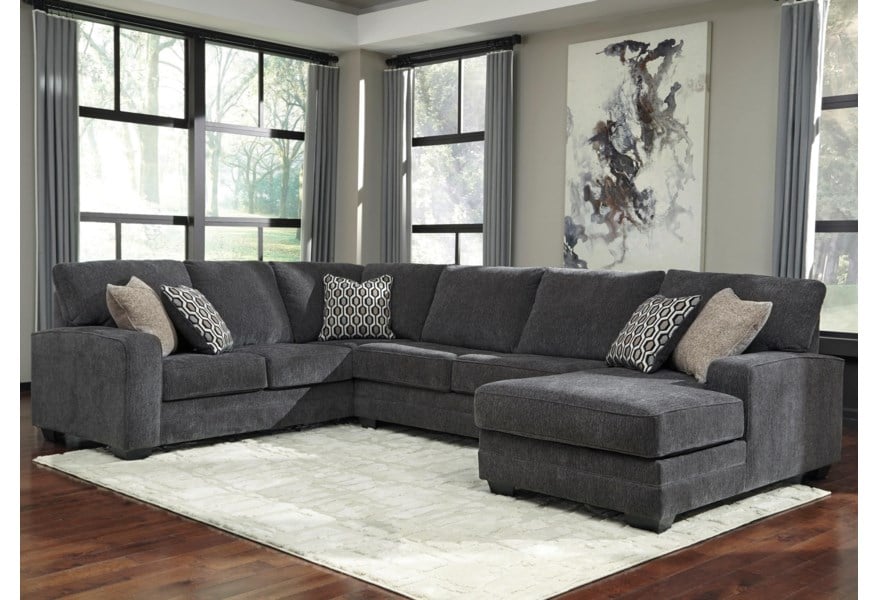
Credit: blog.northeastfactorydirect.com
Matching Rug Shape To Sectional Style
Not every sectional is the same. Some are L-shaped, while others are U-shaped, curved, or modular. The shape of your rug can impact the final look.
L-shaped Sectionals
A standard rectangle rug works best. Align the rug’s longer side with the main seat cushion. The rug should extend at least 6–12 inches past the ends of the sectional.
U-shaped Sectionals
You’ll need a larger rug—usually 9′ x 12′ or bigger. Place the rug so it fills the inside “U” and extends beyond the arms of the sectional. This creates a true conversation zone.
Curved Or Modular Sectionals
A round rug or a large square rug can be a great choice. Round rugs add softness and help balance the straight lines of the furniture. If you use a square rug, make sure it’s large enough to fit under most of the seating area.
Rug Shape Comparison
For quick reference, see how each rug shape works with different sectionals:
| Sectional Shape | Best Rug Shape | Effect |
|---|---|---|
| L-Shaped | Rectangle | Classic, fits most rooms |
| U-Shaped | Large Rectangle | Defines conversation space |
| Curved | Round or Square | Softens lines, modern look |
| Modular | Rectangle or Square | Versatile, can adjust |
Color And Pattern Considerations
Once the size and placement are set, think about color and pattern. The rug should complement your sectional, not compete with it.
Matching With Sectional Color
- If your sectional is a neutral color (gray, beige, cream), you can use a bold or patterned rug to add interest.
- If your sectional is bright or patterned, choose a solid or subtle rug to avoid overwhelming the space.
Patterns And Textures
- Geometric patterns work well with modern sectionals.
- Traditional or oriental rugs add warmth and work with classic spaces.
- Shag or high-pile rugs are cozy but can be harder to clean under large sectionals.
Practical tip: Test a rug swatch with your sectional before committing. Lighting and fabric can change how colors look together.
Non-obvious Insight
Don’t forget about the pile height. A very thick rug can make your sectional wobble or feel unsteady, especially if only the front legs are on the rug. For sectionals, low to medium pile is usually safest.
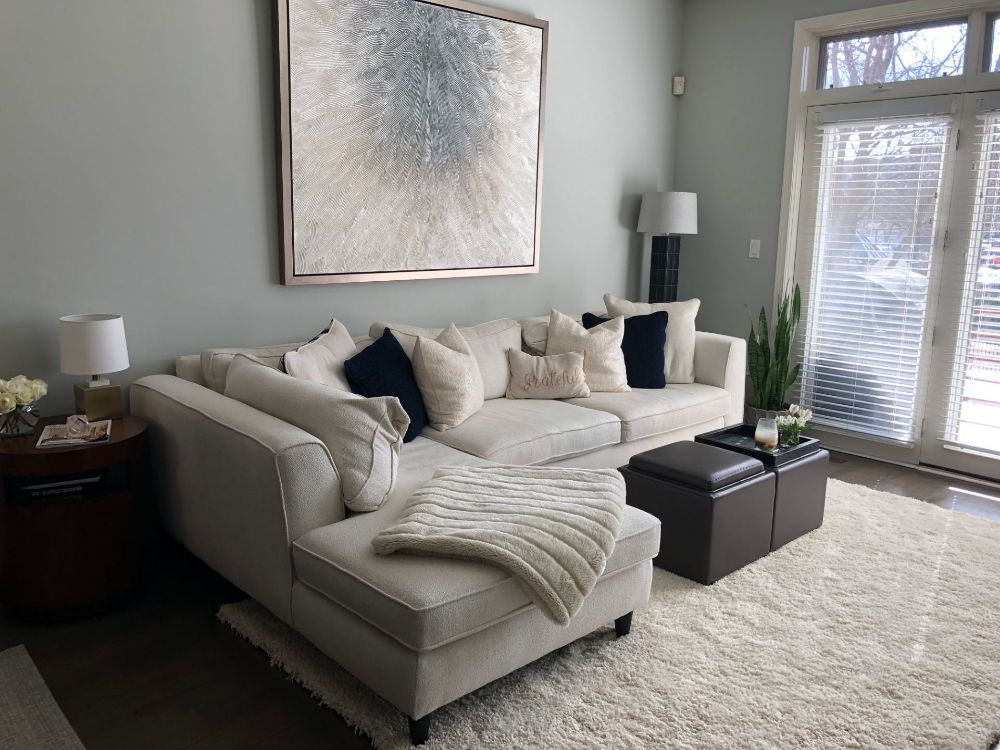
Credit: www.cozyrugs.com
Dealing With Sectional Legs And Rug Edges
One detail many people miss is the position of the sectional’s legs on the rug. If your sectional has short, wide legs, it’s less likely to damage the rug. If the legs are small or pointed, they may dent or stretch the fibers over time.
Tips For Heavy Sectionals
- Use a rug pad with extra cushioning to protect both rug and floor.
- Rotate your rug every 6–12 months to prevent wear in one area.
- For very heavy sectionals, consider furniture coasters under each leg to distribute weight evenly.
Avoiding Rug Curling
Rugs sometimes curl at the edges, especially if they’re new or thin. If you notice curling:
- Use double-sided rug tape on the corners.
- Place heavy books or weights on the edges for a few days.
- Consider a thicker rug pad for stability.
Creating A Layered Look
Layering rugs is a trend that adds texture and interest. You can place a large neutral rug under the sectional, then layer a smaller colorful or patterned rug on top, centered under the coffee table.
How To Layer Rugs
- Start with a large flat-weave or jute rug.
- Add a smaller accent rug on top.
- Align the smaller rug with the sectional for a balanced look.
This is also a clever way to use a favorite rug that might be too small on its own.
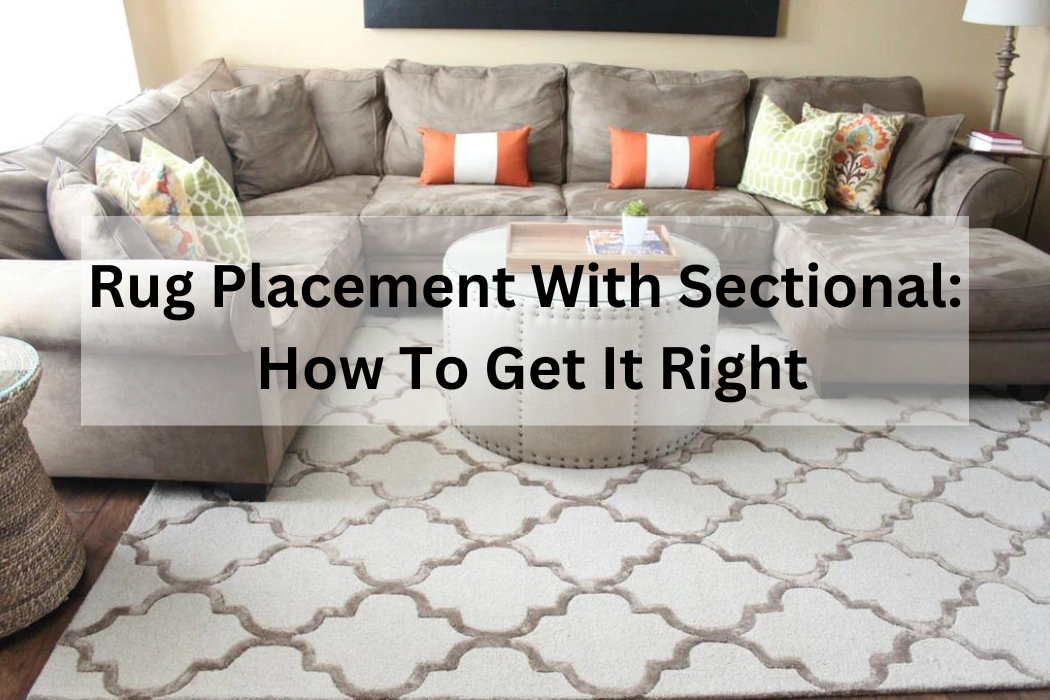
Credit: ruggallery.net
Sectional Placement In Open Concept Spaces
If your living room is part of an open concept space, placing a rug under your sectional can help define the living area. This is especially useful in studios, lofts, or homes where the dining and living areas blend together.
Zoning Your Space
- Use the rug to “frame” the sectional and coffee table.
- Make sure the rug is large enough to create a clear boundary between the living area and the rest of the room.
- Use a contrasting color or pattern to set the living zone apart.
Mistakes To Avoid
- Choosing a Rug That’s Too Small: This is the most common mistake. A small rug makes everything feel disconnected.
- Poor Alignment: If your rug isn’t parallel with the sectional or walls, the room will look off-balance.
- Ignoring Rug Pad: Skipping a rug pad leads to slipping, wrinkling, and less comfort.
- Wrong Shape: A rectangle rug under a curved sectional, or vice versa, can look awkward.
- Overly Thick Rugs: High-pile rugs can cause sectionals to wobble or leave dents.
- Not Considering Traffic Flow: Make sure the rug doesn’t block walkways or doors.
How To Maintain Your Rug And Sectional Area
A rug under a sectional sees a lot of use. Regular maintenance keeps it looking fresh and extends its life.
Cleaning Tips
- Vacuum weekly, including under the sectional.
- Use a rug beater or shake out the rug every few months to remove deep dirt.
- Spot clean spills immediately with mild soap and water.
- For large or expensive rugs, schedule a professional cleaning once a year.
Rotating And Flipping
Rotate your rug every 6–12 months to prevent uneven wear. If the rug is reversible, flip it for a fresh look.
Dealing With Furniture Marks
To remove dents from sectional legs:
- Place ice cubes on the dent, let them melt, then fluff with your fingers.
- Use a hair dryer on low heat to “lift” the fibers.
Special Situations
Placing A Rug Under A Reclining Sectional
If your sectional has reclining seats, make sure the rug extends far enough for the footrests to open without catching on the rug’s edge.
Pet And Kid-friendly Rugs
Choose rugs made from stain-resistant materials like polypropylene. Patterns and darker colors help hide stains and wear.
Allergy Concerns
Low-pile rugs are better for allergy sufferers. Vacuum with a HEPA filter to reduce dust and allergens.
Cost Considerations
Rugs can be expensive, especially in large sizes. Here are some ways to save:
- Look for sales during holiday weekends
- Consider outdoor rugs (often more affordable and durable)
- Layer a smaller, beautiful rug over a cheap, large jute rug
Investing in a quality rug pad also saves money in the long run by protecting floors and extending rug life.
Real-life Examples
- Small Apartment: A 5′ x 8′ rug under the front legs of a compact sectional in a 10 x 12 room creates a cozy seating nook.
- Family Home: A 9′ x 12′ rug fully under a U-shaped sectional defines the living area in an open-concept space.
- Loft: Layering a 10′ x 14′ neutral rug with a smaller patterned rug under the coffee table adds texture and separates the living zone from dining.
When To Consult A Designer
If you have a uniquely shaped room, custom sectional, or valuable flooring, you may want professional advice. Designers can help you choose the right rug size, shape, and placement for tricky layouts.
For more expert tips and photos, you can visit Architectural Digest.
Frequently Asked Questions
What Size Rug Should I Use Under An L-shaped Sectional?
For most L-shaped sectionals, an 8′ x 10′ or 9′ x 12′ rug works best. The rug should extend at least 6 inches beyond each end of the sectional. If your room is large or the sectional is especially big, a 10′ x 14′ rug may be better.
Should All The Sectional Legs Be On The Rug?
It depends on the look you want. All legs on the rug creates a unified, anchored feel and is recommended for larger spaces. Front legs only is a flexible, modern option for smaller rooms. Just avoid having only one side of the sectional on the rug—this feels unbalanced.
Can I Use A Round Rug Under A Sectional?
Yes, a round rug works well with curved sectionals or if you want to soften a space with many straight lines. Make sure the rug is large enough to cover the main seating area, not just the coffee table.
How Do I Keep My Rug From Slipping Or Bunching Under The Sectional?
Use a quality rug pad cut slightly smaller than the rug. For extra security, especially with heavy sectionals, add double-sided rug tape at the corners. Check the rug regularly for shifting and adjust as needed.
What Is The Best Material For A Rug Under A Sectional?
For high-traffic areas, choose a durable, low-pile rug made from materials like wool, nylon, or polypropylene. These are easier to clean and less likely to show wear. Avoid very high-pile (shag) rugs, which can be harder to maintain under heavy furniture.
Placing a rug under a sectional is more than just sliding it into place. With the right size, placement, and a few expert tips, you can transform your living room into a space that looks polished, feels cozy, and stands up to everyday life.
Take your time, measure carefully, and enjoy the process—the results are worth it.