
Measuring for a sliding screen door can seem simple, but it’s easy to make mistakes that lead to a poor fit. A door that’s too small will leave gaps for bugs, while one that’s too large won’t slide smoothly. Many people end up frustrated, buying the wrong size and wasting both time and money.
The good news is you can avoid these problems with the right method and a little attention to detail. This guide will show you exactly how to measure for a sliding screen door, with clear steps and practical tips. Whether you’re replacing an old door or installing one for the first time, you’ll find everything you need to get a perfect fit.
Why Accurate Measurement Matters
A sliding screen door is more than a simple barrier. It protects your home from insects, lets in fresh air, and allows you to enjoy the view outside. But if the door doesn’t fit well, it can create a long list of problems.
Gaps let pests in. A door that’s too tight may get stuck or damage the track. Even small measurement mistakes can cause headaches later.
Many homeowners think screen doors are a “one size fits all” product. In reality, there are many sizes and frame types. Standard sizes exist, but even small differences in your door frame or sliding glass door can change what you need.
Measuring accurately is the only way to ensure your new screen door slides smoothly, seals gaps, and looks good.
Tools And Supplies You’ll Need
Before you start measuring, gather these tools:
- Tape measure (at least 10 feet)
- Notepad and pencil
- Step stool or ladder (if your door is tall)
- Smartphone camera (optional, to take pictures of the door and measurements)
- Flashlight (for dark corners or tracks)
- Helper (optional, but useful for holding the tape measure steady)
Having these items ready makes the job easier and helps avoid mistakes. If you don’t have a helper, you can use masking tape to hold one end of the tape measure while you work.
Understanding Sliding Screen Door Types
Not every sliding door uses the same type of screen door. There are differences in frame thickness, height, width, and the way the screen door fits into the main door track. Here are the main types:
- Standard sliding screen doors – These fit most US homes with regular patio doors.
- Custom or adjustable screen doors – For odd-sized or older door frames.
- Top-hung sliding screen doors – These hang from a rail at the top instead of rolling on the bottom.
- Bottom-rolling sliding screen doors – Most common type, wheels on the bottom track.
Before you measure, look at your door to see which type you have. This affects where and how you measure.
Step-by-step: How To Measure For A Sliding Screen Door
Measuring for a sliding screen door is not just about width and height. You need to check how the screen fits in the frame, where the tracks are, and whether there are any obstacles. Follow these steps to get accurate results.
Step 1: Inspect The Existing Door Frame
Start by closely looking at your sliding glass door and the screen area. Check for these details:
- Is there an existing screen door? If yes, is it a good fit, or are there gaps?
- Are there upper and lower tracks for the screen door?
- Are the tracks straight and clean, or bent and dirty?
- Is the screen door on the inside or outside of the stationary glass panel?
Take note of anything unusual. For example, some older homes have doors that are not perfectly square. If you see any damage or odd shapes, write it down.
Step 2: Measure The Width
The width is the distance from one side of the frame to the other, where the screen door will slide.
- Place the tape measure at the inside edge of the vertical track on one side (where the screen will sit).
- Extend the tape across to the inside edge of the opposite track.
- Measure at three points: Top, middle, and bottom of the opening. Door frames can be slightly wider or narrower at different points.
Write down all three numbers. Use the smallest measurement as your width. This prevents the new door from being too wide to fit at any point.
Example:
Top: 36 1/8”
Middle: 36”
Bottom: 36 1/16”
Use 36” as your width.
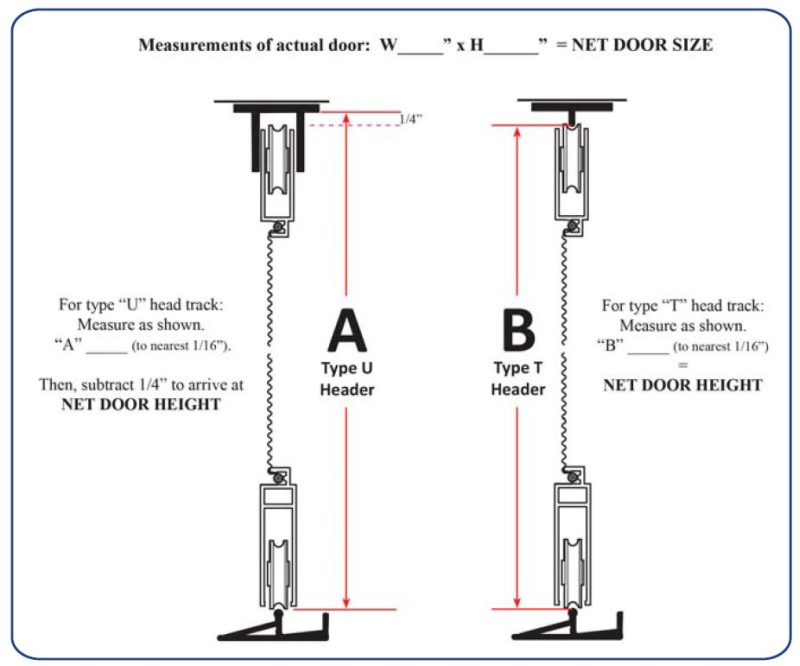
Step 3: Measure The Height
Height can vary, especially if the house has settled or the track is worn.
- Measure from the bottom edge of the top track (where the screen roller sits) to the top edge of the bottom track.
- Do this on the left, center, and right sides of the opening.
- Again, use the smallest measurement.
Tip: If the bottom track is dirty or filled with debris, clean it first. Dirt can make your measurement too short, leading to a door that doesn’t fit later.
Example:
Left: 79 1/2”
Center: 79 3/8”
Right: 79 7/16”
Use 79 3/8” as your height.
Step 4: Check The Track Size
Screen doors use tracks to roll open and closed. Some tracks are wide and deep, others are narrow or shallow. If the track is too wide, the door will wobble. Too narrow, and it won’t fit.
Measure the width and depth of both the top and bottom tracks.
- Track width: Place the tape measure across the opening of the track.
- Track depth: Measure from the top edge of the track down to the bottom.
Write down these numbers. Most screen doors fit tracks about 1/4 to 5/16 inch wide, but always check yours.
Step 5: Note Additional Features
Look for:
- Screen handle location (left or right)
- Lock style (hook, latch, etc.)
- Wheel type (nylon, steel, spring-loaded)
- Any obstructions (trim, weather stripping, etc.)
If you plan to order a custom door, the manufacturer may ask about these features. Photos can help, especially for odd or old doors.
Step 6: Double-check Everything
Mistakes happen most often in measuring. Go through your measurements again, step by step. If you’re unsure, repeat the process or ask someone to check with you.
Pro tip: Write your final numbers in bold on your notepad, and keep the paper until your new door is installed. This makes re-checking easier if there’s a problem later.
Common Measurement Mistakes To Avoid
Many people make small errors that cause big problems later. Here are the most common:
- Only measuring once: It’s easy to misread the tape or write the wrong number.
- Ignoring track depth: This can make your door wobble or jam.
- Measuring old door, not frame: If the old screen door is bent or wrong size, using it will repeat the problem.
- Not measuring at multiple points: Frames are often not perfectly straight.
- Rounding up: Always use the smallest measurement to ensure a proper fit.
Choosing The Right Screen Door
After you measure, you need to decide what type of door to buy. Here’s a quick comparison of common options:
| Type | Pros | Cons |
|---|---|---|
| Standard pre-made | Low cost, quick install | May not fit perfectly |
| Custom-sized | Perfect fit, more options | Higher cost, longer wait |
| Adjustable | Flexible, easy for DIY | Less durable, may not seal tightly |
| Top-hung | Smoother glide, good for uneven floors | Harder to install, higher price |
Measuring For Replacement Vs. New Install
The process is similar, but there are a few differences:
- Replacement: You may be tempted to measure the old screen door. Don’t! Always measure the frame, not the old door. Old screens can be bent or the wrong size.
- New install: Check that you have both upper and lower tracks. If not, you may need to install tracks before ordering a door.
Special Cases: Odd-shaped And Out-of-square Doors
Not all door frames are perfectly square. Older homes often shift over time, making one side higher or wider than the other.
How to handle this:
- Always use the smallest width and height measurement.
- If the difference is more than 1/4 inch, consider having a custom door made.
- For very uneven frames, adjustable screen doors may work, but they don’t seal as well.
Practical insight: Many people ignore small differences, but even 1/8 inch can cause a screen door to stick or leave a gap. Adjusting the rollers can help, but only so much.

Credit: blindandscreen.com
Measuring For Pet Doors Or Special Screens
If you want a pet door in your sliding screen, or a special mesh (like pet-resistant or pollen-reducing), you still measure the same way. The only difference is you need to tell the supplier about the extra feature. Some pet doors need a wider frame or special hardware.
Measuring For Double Sliding Doors
If your patio has two sliding doors (one fixed, one moving), the process is almost the same. Usually, only one side holds the screen door.
- Measure the opening for the screen (not the glass door).
- Check which side the screen will slide on.
- Make sure there is enough space for both doors to move without hitting each other.
Real-life Example: Measuring A Standard Sliding Door
Let’s walk through a real example. Imagine you have a patio door in a typical US home.
- You clean the tracks and check for damage. Everything looks good.
- You measure the width:
Top – 36 1/16”, Middle – 36”, Bottom – 36 1/8”.
Use 36”.
- You measure the height:
Left – 80”, Center – 79 15/16”, Right – 80 1/8”.
Use 79 15/16”.
- You check the track width and depth:
Bottom track is 5/16” wide and 3/16” deep.
- You note the handle will be on the right, and the lock style is a hook.
With these numbers, you can confidently order a 36” x 79 15/16” screen door. If you want a tighter fit, check with the supplier about their manufacturing tolerances—they may suggest rounding down by another 1/16”.
Measuring For Different Brands And Models
Not all screen doors are built the same. Some brands use their own sizing systems. Always check the manufacturer’s measuring instructions before ordering. If the company provides a worksheet or online calculator, use it.
Here’s a quick comparison of two popular brands:
| Brand | Standard Sizes (inches) | Custom Options | Notes |
|---|---|---|---|
| Andersen | 36 x 80, 48 x 80 | Yes | High quality, expensive |
| Pella | 36 x 78, 36 x 80 | Yes | Good value, easier to install |
| Generic Home Store | 36 x 80, 34 x 78 | No | Low cost, basic fit |
If you’re replacing an existing screen door, check the brand label or sticker. This can give you a starting point, but always confirm with your own measurements.
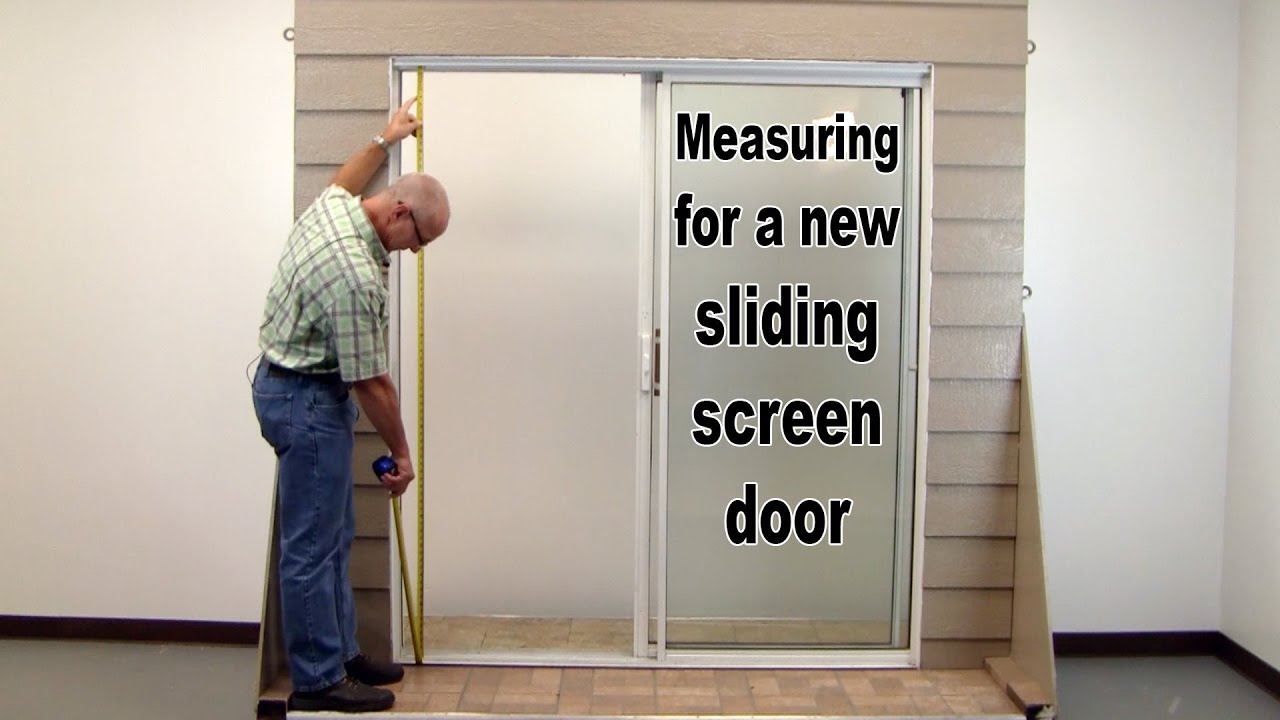
Credit: www.youtube.com
Measuring For Diy Adjustable Screen Doors
Adjustable screen doors are a popular choice for DIYers. These doors have a spring-loaded frame that fits a range of sizes.
- Measure the width and height of your frame.
- Check the adjustable range on the door you plan to buy (for example, fits openings 77” to 81” high).
- Choose a door that fits within your measurements, leaving a little space for easy movement.
Important: Adjustable doors are easier to install but may not seal as tightly as custom or standard doors. They are great for rentals or temporary solutions.
What To Do If Your Frame Is Damaged Or Uneven
If your door frame is bent, rusty, or has missing tracks, you need to repair it before measuring. A damaged frame can make any screen door hard to open or leave large gaps.
- Use a level to check for straightness.
- If the track is bent, gently straighten it with pliers.
- Replace broken tracks before installing a new screen door.
Advanced tip: For very old or custom patio doors, you can have new tracks installed by a contractor. This adds cost but can save you years of frustration.
Measuring Tips That Pros Use
Here are two pro tips that beginners often miss:
- Measure twice, order once. Always double-check your numbers before buying.
- Bring photos to the store. If you’re unsure about handle style, lock, or track, a picture can help salespeople recommend the right door.
Another insight: Don’t trust “standard” sizes. Home builders sometimes use doors that are close but not exact. Always rely on your measurements.
What To Do After Measuring
Once you have your measurements:
- Write down width and height, and keep the numbers safe.
- Decide what type of screen door you want (standard, custom, adjustable).
- Check the track size and any special features.
- Take photos of your door and track.
- Bring your notes and photos to the store or supplier.
- Ask about return policies in case the door doesn’t fit.
Extra: If ordering online, enter your measurements carefully. If you’re unsure, contact customer service for help.
When To Call A Professional
Measuring for a sliding screen door is a DIY project for most people. But if your frame is very old, out of square, or damaged, or if you want a custom high-end door, it may be worth calling a professional.
They can measure, order, and install the door for you, saving time and stress.
How To Install A Sliding Screen Door After Measuring
If you measured carefully, installing your new screen door should be simple. Most screen doors come with instructions, but here’s an overview:
- Remove the old screen door (if there is one). Lift it up and out of the tracks.
- Clean the tracks. Remove dirt and debris.
- Check the fit by placing the new door in the opening.
- Adjust the rollers so the door slides smoothly.
- Install handles and locks as needed.
- Test the door several times to make sure it glides easily and seals tightly.
Tip: If the door sticks, check for track damage or debris. Small adjustments to the rollers can make a big difference.
Example Measurement Worksheet
It’s helpful to use a worksheet to keep your numbers organized. Here’s a sample:
| Measurement | Top | Middle | Bottom | Smallest |
|---|---|---|---|---|
| Width | 36 1/8” | 36” | 36 1/16” | 36” |
| Height | 79 1/2” | 79 3/8” | 79 7/16” | 79 3/8” |
Keep this worksheet with your notes and photos.
Where To Buy Sliding Screen Doors
You can find sliding screen doors at:
- Home improvement stores (Home Depot, Lowe’s, etc.)
- Window and door specialists
- Online retailers (Amazon, Wayfair, etc.)
- Custom manufacturers
For the best fit, custom manufacturers can make a door to your exact measurements. For more about sliding screen doors, you can check the Wikipedia entry on screen doors.
Credit: www.wholesalescreensandglass.com
Frequently Asked Questions
How Do I Know If My Door Is “standard Size”?
Most US patio doors use standard sizes like 36” x 80”, but not all do. The only way to be sure is to measure your frame, not just the old screen door. Standard-size doors can be bought at most hardware stores, but custom sizes are available if yours is different.
What If My Measurements Are Between Two Sizes?
Always choose the smaller size. A slightly smaller door can be adjusted with the rollers, but a larger door won’t fit. If you’re very close between two sizes, check with the supplier about manufacturing tolerances.
Can I Install A Sliding Screen Door Myself?
Yes, most homeowners can install a screen door with basic tools. Make sure you have measured correctly and cleaned the tracks before starting. Installation usually takes less than an hour.
Why Does My Old Screen Door Stick Or Not Slide Well?
Common reasons are dirty tracks, bent frames, or worn-out rollers. Clean the tracks and check for damage. If the frame is bent, it may be easier to replace the door than to repair it.
Do I Need A Custom Door If My Frame Is Not Square?
If your opening is off by more than 1/4 inch from top to bottom or side to side, a custom door will seal better. For small differences, you can usually adjust the rollers to make a standard door fit.
Getting the right fit for your sliding screen door makes your home more comfortable and keeps bugs out. With careful measuring and a little planning, you can enjoy fresh air without worry.