
Installing a rain shower head in your ceiling can transform your bathroom into a luxurious retreat. Many homeowners dream of that soothing, spa-like experience—a gentle, wide spray that covers your whole body. But while the idea sounds simple, the process can be a bit challenging, especially if you’re not familiar with plumbing or ceiling work.
This guide will walk you through everything you need to know, from planning and tools to step-by-step installation and troubleshooting. Whether you’re a confident DIYer or just considering the project, you’ll find clear advice and practical tips to help you succeed.
Why Choose A Rain Shower Head In The Ceiling?
There’s a reason more people are switching to rain shower heads. The wide, gentle water flow feels more relaxing than traditional shower heads. When installed in the ceiling, the effect is even better—it gives you the sensation of standing in a warm rain. This can make your daily shower something to look forward to, not just a routine.
Rain shower heads also add a modern look to your bathroom. They often increase the value of your home, impressing potential buyers or guests. But perhaps the biggest advantage is the even coverage. Instead of a narrow stream, you enjoy water falling gently over your whole body, which is great for rinsing quickly and relaxing your muscles.
What To Consider Before Installation
Before buying a rain shower head, think carefully about your bathroom and your needs. Not all homes or ceilings are ready for this upgrade. Here’s what you should check:
Ceiling Height
A rain shower head works best with enough space overhead. Ideally, your ceiling should be at least 7 to 8 feet high. If it’s lower, the water spray might feel too close, and taller users could find it uncomfortable.
Water Pressure
Rain shower heads require good water pressure to work well. If your home has low pressure, the water may just drip instead of creating a rain-like effect. You can check your water pressure with a simple gauge or ask a plumber.
Ceiling Structure
You’ll need to cut into your ceiling to install the shower arm and connect it to your water line. Check if there are obstacles like beams, vents, or electrical wires where you want to place the shower head. Sometimes, rerouting pipes or wires is needed.
Plumbing Access
Are your water pipes easy to reach above the shower? If not, you may need to open up the ceiling from above or below, which adds to the work. In some cases, hiring a plumber is safer and faster.
Budget
Besides the cost of the rain shower head itself, factor in:
- New plumbing parts or adapters
- Tools you might need to buy or rent
- Repairing or painting the ceiling after installation
- Possible plumber or electrician fees
A careful plan saves money and avoids mid-project surprises.
Tools And Materials You Will Need
Gather everything before you start. Having the right tools at hand makes the job smoother and safer.
Essential tools:
- Adjustable wrench
- Pipe wrench
- Power drill with hole saw or drywall saw
- Screwdrivers (Phillips and flathead)
- Plumber’s tape (Teflon tape)
- Pipe cutter (if new pipes are needed)
- Measuring tape
- Pencil or marker
- Step ladder or sturdy stool
- Bucket or towels (for water leaks)
Materials:
- Ceiling-mounted rain shower head (choose size and style you prefer)
- Ceiling-mount shower arm or drop-ear elbow (fits your shower head and plumbing)
- Pipe fittings (as needed, usually ½-inch NPT)
- Silicone sealant (waterproof)
- New water supply pipe (if extending or rerouting)
- Ceiling patch or paint (for finishing)
- Safety goggles and gloves
Pro tip: Get a shower head kit that includes the arm, flange, and all needed hardware. It saves time searching for compatible parts.
Choosing The Right Rain Shower Head
Not all rain shower heads are created equal. Here’s what to look for when picking yours:
Size And Shape
Rain shower heads range from 8 inches to 20 inches in diameter. A larger head gives more coverage but may need higher water pressure. Round and square shapes are most common; round looks classic, while square feels modern.
Material
Stainless steel and brass are durable and resist rust. Plastic models are cheaper but less sturdy and often look less elegant.
Spray Features
Some rain shower heads offer adjustable spray settings, but many focus on a single, wide spray. Decide what feels best for you.
Finish
Match the finish (chrome, brushed nickel, matte black, etc. ) To your other bathroom fixtures for a unified look.
Water Efficiency
Check for a WaterSense label or flow rate. Some rain shower heads use less water without sacrificing comfort.
Below is a quick comparison of common rain shower head materials:
| Material | Durability | Price Range | Appearance |
|---|---|---|---|
| Stainless Steel | High | $$ | Shiny, modern |
| Brass | Very High | $$$ | Classic, elegant |
| Plastic | Low to Medium | $ | Varied, less premium |
Insider tip: Stainless steel is usually the best choice for a balance of price, look, and long-term performance.

Credit: www.youtube.com
Step-by-step Installation Guide
Now, let’s get to the main part: installing your rain shower head in the ceiling. This process involves several stages. Read through all steps before starting, so you know what to expect.
1. Plan The Shower Head Location
Stand in your shower and look up. The ideal spot is centered above where you stand, far enough from walls to avoid splashing outside the shower area. Use a measuring tape to find the center and mark it with a pencil.
2. Turn Off Water Supply
Find your home’s main water valve and turn it off. This prevents leaks and accidents while working on the pipes. Turn on the old shower to drain any water left in the lines.
3. Prepare The Ceiling
If you’re replacing an old ceiling shower head, unscrew and remove it. For a new installation, use a stud finder to check for beams or wires in your chosen spot. Trace the outline of the shower arm flange on the ceiling with a pencil.
Cut a hole using a hole saw or drywall saw, just big enough for the shower arm and fittings. Wear safety goggles and go slowly to avoid damaging pipes or wires hidden above.
4. Install The Shower Arm Fitting
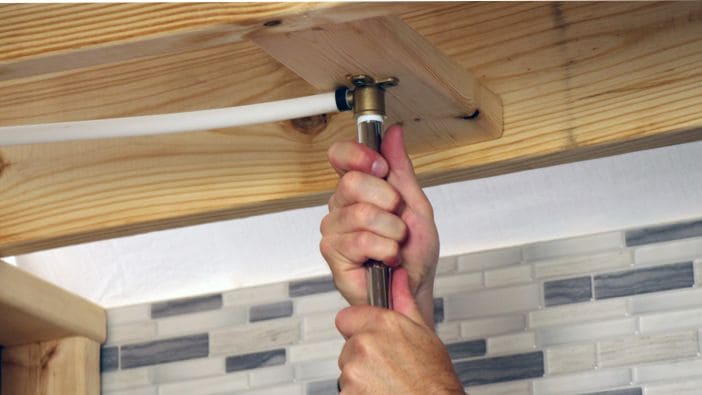
You’ll need a drop-ear elbow or similar fitting that anchors securely to the ceiling framing. This supports the weight of the shower head and keeps it stable.
- Attach the fitting to a ceiling joist or blocking using screws.
- Make sure the opening faces straight down.
- If you’re running new pipes, use copper or PEX piping (depending on your home’s plumbing).
5. Connect The Water Supply Pipe
Carefully connect the new or existing water supply pipe to the drop-ear elbow. Use pipe fittings and plumber’s tape for a tight, leak-free seal.
- Double-check that all connections are secure.
- If extending pipes, cut them to the right length and dry-fit everything before sealing.
Mistake to avoid: Don’t overtighten fittings—this can crack them or strip threads.
6. Seal And Test For Leaks
Before closing up the ceiling, turn the water supply back on briefly and check for leaks around the connections. Place a bucket or towels under the hole just in case.
- If you spot leaks, turn the water off and reseal the threads with more plumber’s tape.
- Once leak-free, turn the water off again and proceed.
7. Mount The Shower Arm And Flange
Slide the ceiling flange (the decorative cover) onto the shower arm. Carefully thread the shower arm into the drop-ear elbow. Hand-tighten, then use a wrench for a snug fit, but don’t overdo it.
- The shower arm should point straight down and feel solid.
- If it wobbles, check the mounting bracket or fitting for tightness.
8. Attach The Rain Shower Head
Wrap the shower arm threads with plumber’s tape. Screw the rain shower head onto the arm by hand. Use a soft cloth or rubber wrench grip to avoid scratching the finish.
- Adjust the angle if the model allows.
- Make sure the head is level for even water flow.
9. Restore Water And Test
Turn the main water supply back on. Slowly open the shower valve and check for leaks at all joints. Watch for drips at the ceiling and around the shower head.
- Let the water run for a minute.
- Observe the spray pattern and coverage—adjust if needed.
10. Patch And Paint The Ceiling
If you had to cut a larger hole or disturb drywall, patch the area with ceiling repair materials. Once dry, repaint to match the rest of the ceiling.
- Let paint cure fully before showering to avoid water stains.
Pro tip: Use a waterproof paint or sealant around the flange for extra protection against moisture.
Advanced Tips For A Pro-level Installation
Even skilled DIYers can miss details that make a big difference in the final result. Here are some advanced tricks for a flawless ceiling rain shower:
- Add a shut-off valve above the ceiling, if possible. This lets you isolate the shower for maintenance without shutting the whole house water.
- Insulate the new pipe if your bathroom ceiling is below an unheated space. This prevents condensation and water hammer noise.
- Choose a swivel ball connector for fine-tuning the shower head angle after installation.
- Seal all holes in the ceiling with waterproof caulk, especially around the arm, to prevent steam or water from entering above.
- If you have very low water pressure, consider a rain shower head designed for low-flow conditions.
Credit: www.lowes.com
Common Mistakes To Avoid
Many homeowners make the same errors when installing a ceiling rain shower head. Avoid these for a smoother project:
- Not checking ceiling structure—drilling into wires or beams can be dangerous and expensive.
- Using the wrong type or size of pipe—always match your home’s existing plumbing.
- Over-tightening connections—leads to cracks and leaks.
- Forgetting to test for leaks before sealing up the ceiling.
- Picking a shower head that’s too large for your water pressure or space.
- Not sealing the ceiling opening—leaves your ceiling vulnerable to moisture damage.
Comparing Overhead And Wall-mounted Rain Shower Heads
You may wonder if a ceiling-mounted rain shower head is worth the extra work compared to a wall-mounted version. Here’s a quick side-by-side comparison:
| Feature | Ceiling-Mounted | Wall-Mounted |
|---|---|---|
| Spray Coverage | Full body, top-down | Angled, partial coverage |
| Installation Difficulty | Higher | Lower |
| Bathroom Style | Modern, luxury | Traditional |
| Maintenance | Ceiling access needed | Easier access |
| Price | $$$ | $$ |
If you want a true rainfall effect and are ready for some extra work, the ceiling mount is the way to go.
How To Maintain Your Ceiling Rain Shower Head
Once installed, a rain shower head needs simple care to keep working beautifully:
- Clean the spray nozzles regularly. Hard water can cause mineral buildup; gently rub the nozzles or soak the head in vinegar.
- Check for leaks at the ceiling and connections every few months.
- Wipe the shower head with a soft cloth to prevent water spots or soap scum.
- If water flow decreases, unscrew the head and rinse out debris.
- Make sure the ceiling flange stays sealed and tight.
Pro tip: Choose a shower head with silicone nozzles for easier cleaning—they resist buildup and can be wiped clean with your fingers.
Real-life Example: Transforming A Small Bathroom
Consider this: Maria wanted to upgrade her small, dated bathroom. She chose a 10-inch stainless steel rain shower head for her ceiling. Her home had good water pressure, but the ceiling was only 7.5 feet high. She installed the shower head near the center, used a short shower arm, and painted the ceiling with waterproof paint.
The result? Her bathroom felt bigger and more modern. The gentle rain spray made her showers more relaxing, and guests commented on the “hotel-like” feel. Maria spent about $250 on parts and a weekend of work. She said the hardest part was patching the ceiling, but the final look was worth it.

Credit: www.youtube.com
Estimated Costs And Time Involved
Installing a ceiling rain shower head can range from a quick DIY job to a complex renovation. Here’s a rough breakdown:
| Task | DIY Time | Cost Estimate |
|---|---|---|
| Shower Head & Arm | 1 hour | $80–$300 |
| Ceiling Prep & Patching | 2–3 hours | $20–$50 |
| Pipe Installation/Extension | 2–4 hours | $50–$150 |
| Professional Labor (if needed) | — | $100–$400 |
Total DIY cost is typically $150–$500. Hiring a plumber adds to the price but is sometimes necessary for complex jobs.
When To Call A Professional
Most people with basic DIY skills can handle a ceiling rain shower head installation. But you should call a licensed plumber if:
- You’re unsure about the location of pipes or wires.
- You need to reroute pipes through multiple joists or floors.
- Your ceiling is concrete or otherwise hard to cut.
- There are signs of leaks, mold, or water damage in the ceiling.
- You don’t feel comfortable working with plumbing or power tools.
Non-obvious insight: Many plumbers will do just the “rough-in” (the piping work), leaving you to finish the visible parts and save money.
Safety And Building Codes
Always follow local building codes. Some areas require permits for plumbing work, especially if you’re adding new pipes or fixtures. Never cut into electrical wires or structural beams. If you find anything unexpected in your ceiling, stop and get expert help.
Important: Wear safety gear and keep children and pets out of the work area.
Eco-friendly Options
Worried about water use? Many rain shower heads have flow restrictors or aerators to save water. Look for the EPA’s WaterSense label, which means the shower head uses 2.0 gallons per minute or less, compared to standard 2.5 GPM models.
For more on water-saving products, check the EPA WaterSense site.
Frequently Asked Questions
What Size Rain Shower Head Is Best For A Ceiling Installation?
The best size depends on your shower’s size and your water pressure. Most people choose a 10–12 inch diameter for a good balance of coverage and pressure. In small showers, 8-inch heads work well. Larger heads (16–20 inches) need higher water flow and may require extra plumbing adjustments.
Can I Install A Rain Shower Head Without Opening Up My Ceiling?
If you already have a ceiling-mounted shower arm and the right plumbing, you can simply swap the old head for a new rain shower head. But for most wall showers, you’ll need to open the ceiling to add or move pipes.
Do Rain Shower Heads Use More Water Than Regular Shower Heads?
Not always. Many rain shower heads are designed to be water-efficient. Check the gallons per minute (GPM) rating—models with the WaterSense label use less water. However, very large rain heads can use more water if not restricted.
Will A Rain Shower Head Work With Low Water Pressure?
Rain shower heads need moderate water pressure to create a true “rainfall” effect. Some models are designed for low pressure and have special nozzles or restrictors removed. If your home has very low pressure, consider a smaller head or a model rated for low flow.
How Do I Clean And Maintain My Ceiling Rain Shower Head?
Clean the nozzles regularly by wiping or soaking in vinegar to remove mineral deposits. Check for leaks at the ceiling and connections every few months. Wipe the head with a soft cloth to keep it shiny and spot-free.
Transforming your shower with a ceiling rain shower head is a rewarding project. With careful planning, the right tools, and attention to detail, you’ll enjoy a luxurious rain-like experience every day—making your bathroom your favorite space in the home.