
Mold under flooring is a hidden problem that can cause serious health and structural issues in homes and buildings. Many people do not realize mold is growing beneath their feet until it becomes a much larger issue. The musty odor, mysterious stains, or warped boards often signal a deeper problem below the surface.
If you suspect or know there is mold under your flooring, you need a clear plan for safe removal and prevention. This guide will help you understand why mold forms under flooring, how to find it, and—most importantly—how to get rid of it for good.
Why Mold Grows Under Flooring
Mold thrives in environments that are damp, dark, and poorly ventilated. Under flooring, these conditions are easy to create, especially if there are leaks or high humidity. Water from spills, plumbing leaks, flooding, or even condensation can seep under floors.
If the moisture is not dried quickly, mold spores in the air find a new home and begin to grow.
Some flooring types, like carpet and laminate, trap moisture easily. Subfloors made of wood or particleboard are also at risk because they absorb water. Once mold starts, it can spread fast. In just 24 to 48 hours, a wet subfloor can become a breeding ground for mold.
A less obvious source of moisture is everyday activities. For example, steam from showers or cooking can raise humidity levels, especially if a room lacks good ventilation. Placing potted plants directly on the floor can also create damp areas underneath.
Even a small crack in a foundation or slab can allow moisture to rise and become trapped under flooring—especially in basements.
Not all homes are equally at risk. Houses in humid climates, or with poor drainage around the foundation, are more likely to have ongoing moisture problems. Homes built on concrete slabs, without a vapor barrier, can also see more mold under flooring.
Recognizing these risk factors early can help you prevent mold before it starts.
The Hidden Dangers Of Mold Under Flooring
Mold under flooring is more than just an inconvenience. It can impact your health and the structure of your home.
- Health Risks: Mold releases spores that float in the air. Breathing these spores can trigger allergies, asthma, and other respiratory issues. Some types of mold, such as black mold (Stachybotrys chartarum), produce toxins that may cause severe health problems. Children, elderly people, and anyone with weakened immune systems are at higher risk. You may notice symptoms like coughing, sneezing, skin rashes, or even headaches and chronic fatigue.
- Structural Damage: Mold eats away at organic material. If it’s growing on wood subfloors or joists, it can weaken them. Over time, this can lead to sagging floors, rot, and even collapse. Sometimes the damage is hidden until the floor feels soft or starts to squeak. By then, repairs can be costly and may require replacing large sections of flooring and support.
- Decreased Home Value: Mold problems are a red flag for buyers. Even after removal, past mold can lower your home’s value if not handled professionally. Home inspectors often check for mold, and a history of mold can make it harder to sell or refinance your home. In some cases, you may have to provide proof of remediation to close a sale.
Credit: www.clearpropertyinspections.com
How To Identify Mold Under Flooring
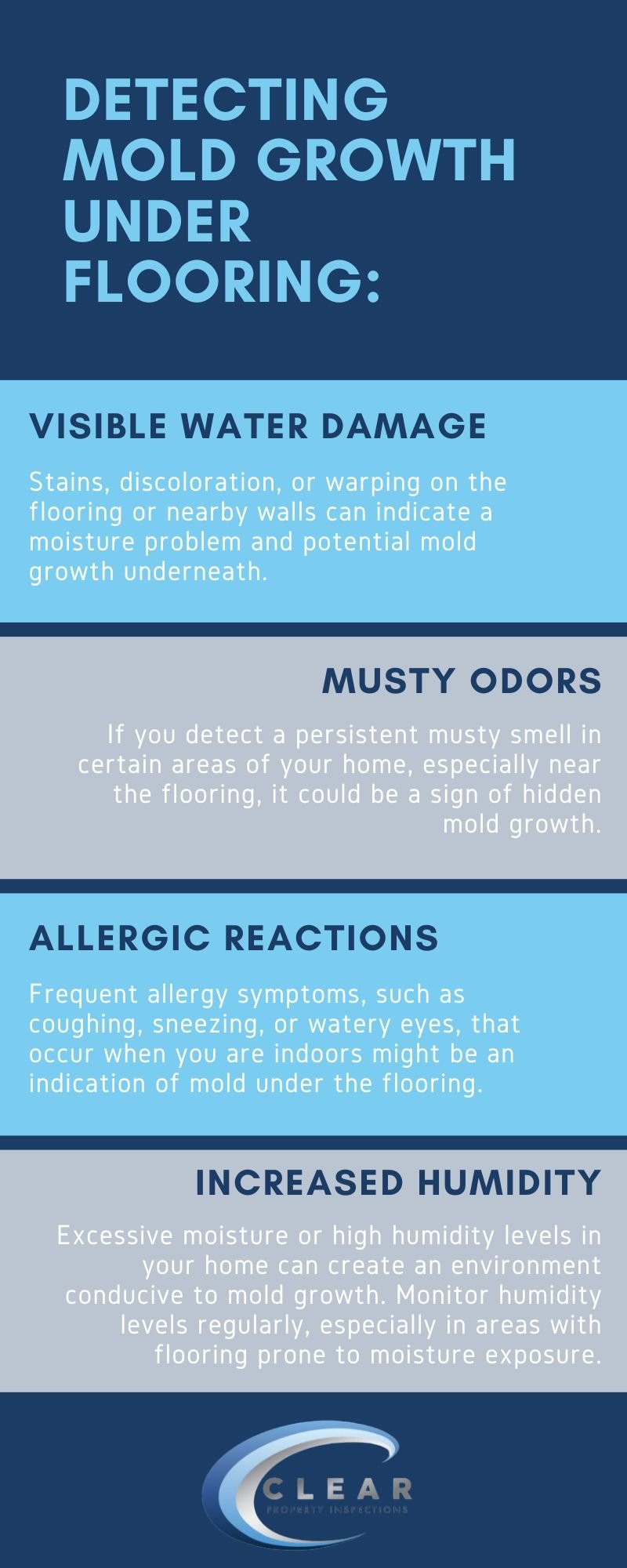
You can’t always see mold under flooring, but there are clear signs that suggest its presence. Being aware of these clues helps you act before the problem gets worse.
Common Signs
- Musty Odor: A persistent, earthy smell is often the first clue. This odor is hard to cover with air fresheners and can be stronger after rain or increased humidity.
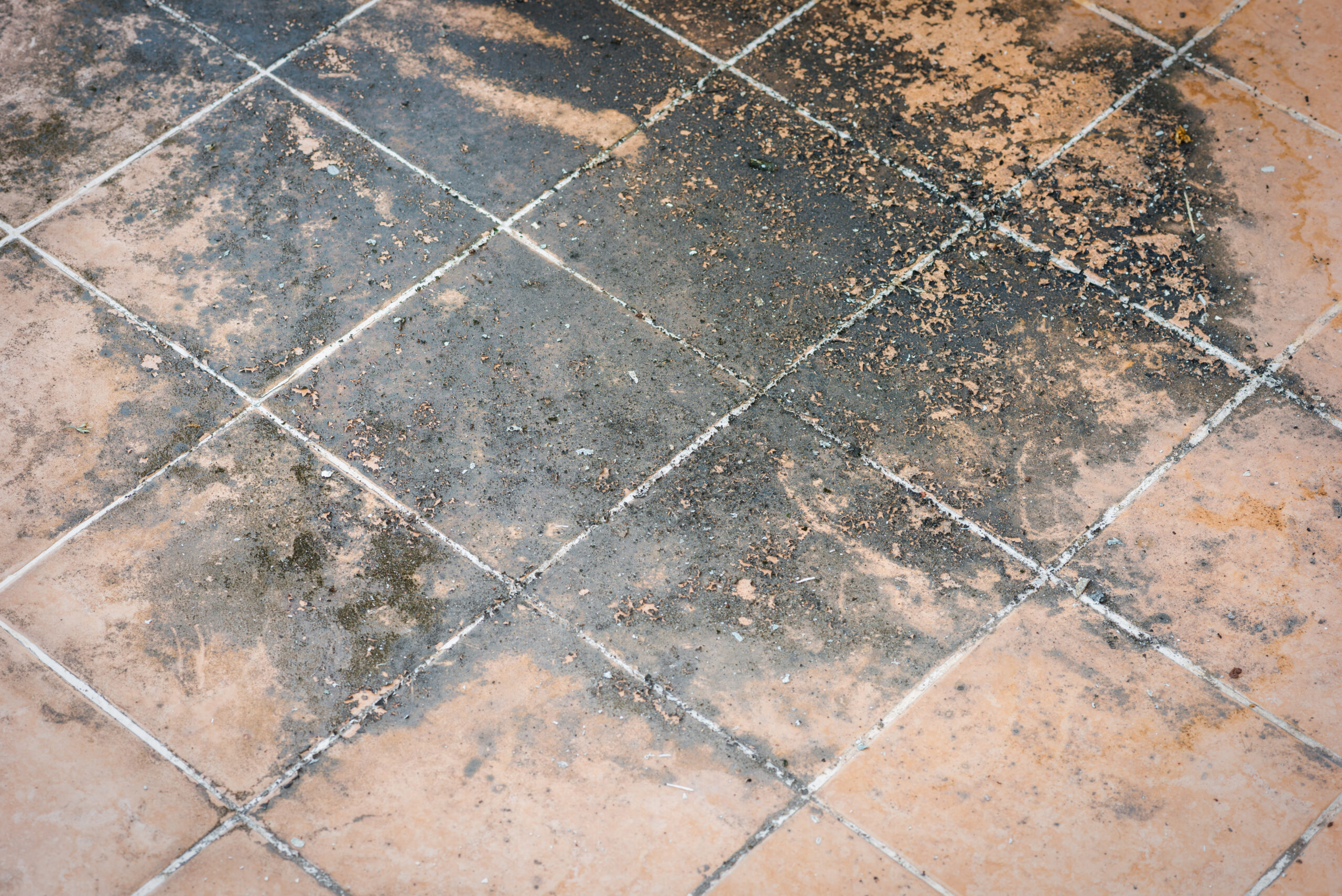
- Discoloration or Stains: Black, green, or white spots appearing at the edges or seams of the floor. Sometimes, you may see yellowish stains or areas that look water-damaged.
- Warped or Buckled Flooring: Wood or laminate that swells, lifts, or bends. Tiles may feel loose or grout lines may darken.
- Soft or Spongy Spots: Areas that feel soft underfoot, especially on wood floors. This softness often means the subfloor is damaged, not just the surface.
- Visible Mold: Sometimes, you may see mold growing along the baseboards or under loose tiles. In severe cases, mold can grow up walls or behind cabinets.
How To Check For Mold
- Lift a Corner: If safe, gently lift a corner of the flooring to inspect underneath. Use caution; do not break the material unless you are ready to replace it.
- Use a Flashlight: Shine a light into any gaps or seams. Mold may look like fine, fuzzy growth or dark patches.
- Moisture Meter: A handheld moisture meter can detect high moisture in subfloors. Readings above 15% suggest a problem.
- Professional Inspection: If you suspect widespread mold, a professional can use thermal imaging and air tests. They can also check behind walls and under large areas without removing all the flooring.
Safety First: Precautions Before Removal
Mold removal can be dangerous. Mold spores can irritate your lungs and skin. Before you start, always take safety seriously.
- Wear Protective Gear: Use an N95 mask or respirator, gloves, goggles, and long sleeves. This keeps spores out of your eyes, nose, and mouth.
- Ventilate the Area: Open windows and use fans to direct air outside. Never blow air into other rooms.
- Seal Off the Area: Use plastic sheeting to block off doors and vents. This prevents spores from spreading. Tape down the edges for a tight seal.
- Turn Off HVAC Systems: Air conditioners or heaters can carry spores to other rooms. Block floor vents if possible.
- Keep Children and Pets Away: Do not allow them near the work area. Mold exposure can be especially harmful to them.
If you have a history of allergies or breathing problems, consider letting someone else handle the removal or hire a professional. Mold spores can remain in the air for hours after disturbance.
Credit: bactronix.com
Tools And Materials You Will Need
Getting rid of mold under flooring requires the right tools. Here are the essentials:
- Pry bar or crowbar
- Utility knife
- Hammer
- Screwdriver
- Shop vacuum (with HEPA filter)
- Buckets and rags
- Stiff brush
- Spray bottle
- Mold remover or white vinegar
- Baking soda
- Plastic sheeting and tape
- Heavy-duty trash bags
- Moisture meter (optional)
- Dehumidifier and fans
For larger jobs, a chisel or oscillating tool may help remove stubborn flooring. Always use a HEPA filter on your vacuum to prevent spores from blowing back into the air. Keep extra trash bags and rags on hand—mold can spread easily during cleanup.
Step-by-step Guide: Removing Mold Under Flooring
Removing mold under flooring is a detailed job. Each step must be done carefully to protect your health and your home.
1. Locate The Source Of Moisture
Before starting any removal, find and fix the cause of the moisture. If you skip this step, the mold will return.
- Check for leaks in pipes, appliances, or roofs. Even a small drip can cause big problems over time.
- Inspect windows and doors for poor seals. Look for condensation or water stains.
- Test humidity in the room; keep it below 60%. Use a hygrometer for accurate readings.
- Fix plumbing or roof leaks and dry out the area completely. If possible, run a dehumidifier for a few days before starting.
Sometimes, moisture comes from outside. Check gutters, downspouts, and landscaping to make sure water drains away from your foundation. In basements, check for cracks in walls or floors.
2. Remove The Affected Flooring
You need to reach the mold to clean it. This often means taking up part or all of the flooring.
- Start at the edge or a corner. Use a utility knife to cut carpet or vinyl.
- Use a pry bar and utility knife to carefully lift the flooring. Take your time to avoid breaking or spreading mold.
- Place all removed material directly into heavy-duty trash bags. Seal the bags as soon as possible.
- Remove baseboards if necessary. Mold often grows behind them.
- Dispose of carpets, padding, or boards that have visible mold. Do not try to clean and reuse heavily affected materials.
Flooring Removal Comparison
Below is a comparison of how different flooring types respond to mold and ease of removal:
| Flooring Type | Resistance to Mold | Ease of Removal | Typical Damage |
|---|---|---|---|
| Carpet | Low | Easy | Stains, odor, spongy feel |
| Laminate | Low-Moderate | Moderate | Swelling, warping |
| Hardwood | Moderate | Challenging | Buckling, rot |
| Tile | High | Hard | Loose tiles, dark grout |
Some floors, like click-together laminate or floating vinyl, are easier to remove and reinstall than nailed or glued materials. For tile, you may need to break tiles and scrape off old adhesive, which can be noisy and messy.
3. Assess The Subfloor And Joists
Once the top flooring is removed, inspect the subfloor and any wood joists.
- Look for dark spots, musty smell, or soft wood. These are signs the mold has penetrated deeper.
- Use a screwdriver to test for rot—press gently to see if wood crumbles.
- If subflooring or joists are soft or crumbling, they may need to be replaced. Mark the affected areas for later removal.
Some subfloors may appear stained but are still structurally sound. In those cases, thorough cleaning and drying may be enough.
4. Remove And Clean Mold From Subfloor
If the subfloor is only slightly affected, you may be able to clean and save it. If the damage is severe, replacement is best.
Cleaning Steps:
- Vacuum: Use a HEPA vacuum to remove loose mold spores and dust. Go slowly and cover all surfaces.
- Apply Mold Remover: Spray commercial mold remover, or use a mix of one part vinegar to one part water. Let it sit for at least 10 minutes. Some products require longer contact time—read the label.
- Scrub: Use a stiff brush to scrub the area. Focus on all visible mold. Scrub in small circles and rinse your brush often.
- Rinse: Wipe with clean water and rags. Dry thoroughly with towels.
- Repeat if Needed: For stubborn mold, sprinkle baking soda on the area, spray with vinegar, let bubble, then scrub again. For porous wood, let the solution soak in before scrubbing.
When To Replace Subfloors
If more than 20% of the subfloor is soft or moldy, or if there’s deep rot, it’s safer to replace the affected sections. Use treated plywood or OSB (oriented strand board) for replacements. Always check that the new wood is dry before installation.
5. Dry The Area Completely
Mold cannot grow if everything stays dry. After cleaning, use fans and dehumidifiers to dry the area for at least 48 hours. Open windows on dry days if possible. Check moisture levels with a meter; wood should have less than 15% moisture before new flooring goes down.
If you skip this step, even a little leftover moisture can let mold come back. In damp climates, consider running a dehumidifier for several days after repairs.
6. Treat The Area With Mold Inhibitor
Before putting the flooring back, spray the cleaned subfloor with a mold inhibitor. These products help stop new mold from growing. Let the inhibitor dry fully according to the product instructions.
Some inhibitors are clear, while others leave a slight film. Choose a product labeled for subfloors. Do not use regular paint or sealers—they won’t stop mold.
7. Replace Flooring
Once the area is completely dry and treated, install new flooring. Consider using mold-resistant materials, especially if the area is prone to moisture (like basements).
If you use carpet, choose synthetic padding with anti-microbial properties. For wood or laminate, a moisture barrier underlayment adds extra protection. Always check that all layers are completely dry before installation.
Comparing Mold Removers
Many products claim to kill mold. Some are more effective than others. Here’s a quick comparison:
| Mold Remover | Active Ingredient | Effectiveness | Cost | Eco-Friendly |
|---|---|---|---|---|
| Commercial Mold Killer | Quaternary ammonium | High | $$ | Low |
| Bleach Solution | Sodium hypochlorite | Medium (on non-porous) | $ | Low |
| White Vinegar | Acetic acid | Medium-High | $ | High |
| Baking Soda | Sodium bicarbonate | Medium | $ | High |
Tip: Bleach only works well on hard, non-porous surfaces. For wood or porous materials, vinegar is more effective and safer.
Some enzyme-based cleaners can also help break down mold on wood or fabric surfaces. Always test cleaners on a small area first. Never mix chemicals—doing so can create dangerous fumes.
When To Call A Professional
Some mold problems are too big or risky to tackle alone. Call a professional mold remediation company if:
- The affected area is larger than 10 square feet (about 3×3 feet).
- Mold has spread to HVAC systems or walls.
- You have health conditions (asthma, allergies, immune issues).
- There is structural damage to subfloors or joists.
- Mold keeps returning after cleaning.
Professionals use special equipment and can guarantee complete removal. They also test air quality to ensure your home is safe.
Professional services often come with a warranty, and they can provide documentation if you need to show proof of remediation to future buyers or your insurance company.
Credit: www.reddit.com
Preventing Mold From Coming Back
Once you remove mold, prevention is key. Here’s how to keep your floors mold-free:
Control Moisture
- Fix leaks immediately: Even small drips can lead to big problems.
- Use dehumidifiers: Keep humidity under 60%, ideally around 40-50%.
- Improve ventilation: Use exhaust fans in bathrooms, kitchens, and laundry areas.
- Insulate pipes: Prevents condensation under floors.
Consider adding a vapor barrier under new flooring, especially in basements or on concrete slabs. In crawl spaces, plastic sheeting on the ground can block moisture from rising.
Choose The Right Flooring
Some flooring materials are better for damp areas. Here’s a quick guide:
| Material | Mold Resistance | Best for |
|---|---|---|
| Vinyl | High | Basements, bathrooms |
| Tile | Very High | Kitchens, bathrooms |
| Engineered wood | Moderate | Living areas |
| Carpet | Low | Dry rooms only |
If you must use carpet, choose low-pile or area rugs you can clean and dry easily. Avoid installing hardwood or laminate directly on concrete without a vapor barrier.
Regular Checks
- Inspect under sinks and around appliances regularly.
- Check for musty smells after heavy rain.
- Look for new stains or warping.
Mark your calendar to check hidden areas every few months—behind furniture, under rugs, and along exterior walls.
Extra Tips Many Beginners Miss
- Don’t cover up the problem: Placing new floors over old mold traps moisture and lets it spread. Always remove and treat first.
- Check subfloor vapor barriers: A missing or damaged vapor barrier lets moisture rise from below. Replace or repair it during installation.
Another detail: if your home has a crawl space, check that it’s dry and well-ventilated. Damp crawl spaces are a common cause of mold under floors.
Health And Legal Considerations
Not everyone realizes that mold issues can have legal and health consequences.
- Landlord/Tenant Laws: In many states, landlords must provide mold-free homes. If you rent and find mold, notify your landlord in writing. Take photos and keep records of all communication.
- Insurance Issues: Home insurance may not cover mold if it’s due to neglect or lack of maintenance. Check your policy and report water damage immediately.
- Medical Documentation: If mold causes health problems, keep records. Some cases may require proof of removal for future home sales.
In some areas, selling a home with known mold issues is illegal without disclosure. If you’re unsure, consult a real estate professional or attorney.
Eco-friendly Mold Removal Choices
Many people are concerned about using harsh chemicals, especially with children or pets at home. Fortunately, natural solutions like white vinegar and baking soda are effective for small jobs. They are safe, inexpensive, and environmentally friendly. However, for severe infestations, professional products may still be necessary.
Hydrogen peroxide (3%) is another safe option for light mold, especially on hard surfaces. Just spray, let it bubble, then wipe clean.
What If Mold Returns?
Even after careful cleaning, mold can come back if moisture returns. If you see signs of mold again:
- Double-check for hidden leaks or condensation. Sometimes, small drips go unnoticed.
- Increase ventilation and use a dehumidifier. Humidity can rise quickly after rain or snow.
- Re-inspect any vapor barriers or insulation. Damaged insulation can let moisture in.
- Consider professional help for persistent problems. Chronic mold is often a sign of a bigger issue, like a plumbing or foundation problem.
If mold keeps returning in the same spot, you may need to open walls or floors to find the true cause.
Frequently Asked Questions
What Causes Mold To Grow Under Flooring?
Mold grows under flooring when moisture gets trapped between the floor covering and the subfloor. This can happen due to leaks, spills, floods, or high humidity. Poor ventilation and lack of sunlight also contribute, creating a perfect environment for mold spores to multiply.
Sometimes, even new floors can develop mold if the subfloor was wet during installation. Always check moisture levels before laying new materials.
Can I Use Bleach To Clean Mold Under Flooring?
Bleach works on hard, non-porous surfaces but is less effective on wood or porous materials. It may not kill all mold roots and can even damage wood. For subfloors, white vinegar or commercial mold removers are safer and more effective options.
Remember, bleach can cause strong fumes. Always ventilate well and never mix it with ammonia or other cleaners.
How Do I Know If I Need To Replace The Subfloor?
If the subfloor is soft, crumbling, or has a musty odor after cleaning, it should be replaced. Also, if more than 20% of the area is affected or if you see deep rot, replacement is the safest choice for structural health.
If you’re unsure, get a professional opinion—structural repairs are not a good place to cut corners.
Is It Safe To Remove Mold Myself, Or Do I Need A Professional?
Small areas (less than 10 square feet) can usually be handled safely with proper gear. Larger infestations, or cases involving HVAC systems or recurring mold, should be addressed by professional mold removal services. They have specialized tools and can ensure your home is safe.
If you experience headaches, dizziness, or breathing problems during removal, stop and get help.
How Can I Prevent Mold From Returning?
Keep moisture levels low by fixing leaks, using dehumidifiers, and improving ventilation. Choose mold-resistant flooring and check under appliances and sinks regularly. Treat subfloors with mold inhibitors before laying new flooring for extra protection.
Check for small leaks after storms or heavy use of water appliances. Early action saves money and hassle.
Getting rid of mold under flooring is not a simple weekend project, but with careful steps, the right tools, and a focus on prevention, you can reclaim your home’s safety and comfort. If in doubt, always seek professional guidance. For more details on mold remediation standards, you can review the official guidelines from the United States Environmental Protection Agency. Taking action now protects your health, your home, and your peace of mind.