
Smoke damage can turn your home upside down. After a fire—even a small one—the lingering odor, black soot, and stains can make your favorite furniture look and smell terrible. You might wonder if it’s even possible to save your sofa, dining table, or mattress.
The good news is, with the right approach, much of your smoke damaged furniture can be cleaned and restored.
This guide will walk you through every step of the cleaning process. You’ll learn how to handle different materials, what products to use, and even when it’s best to call a professional. Along the way, you’ll also discover tips that most beginners miss, so you can avoid common mistakes and get the best results.
By the end, you’ll have a clear, practical plan to bring your furniture back to life.
Understanding Smoke Damage On Furniture
Smoke damage is more than just a bad smell. When something burns, it creates tiny particles called soot that settle on surfaces. These particles are sticky and can deeply penetrate fabrics, wood, leather, and even metal. If not cleaned properly, soot and smoke odors can last for months or even years.
There are two main types of smoke damage:
- Wet smoke – This comes from slow-burning fires with a lot of moisture, like kitchen grease fires. Wet smoke is thick, sticky, and hard to remove.
- Dry smoke – This comes from fast, hot fires. It’s powdery and easier to wipe away, but still can stain and smell.
The type of smoke affects how you clean. For example, wet smoke may require stronger cleaners and more time. Knowing the type helps you choose the right method and avoid spreading stains.
Why Cleaning Smoke Damaged Furniture Is Different
Regular cleaning isn’t enough for smoke damage. Soot can set into materials quickly, making stains harder to remove. Using water or the wrong cleaner can even make things worse by spreading the particles or pushing them deeper. Proper cleaning involves special steps and products to break down soot and neutralize odors.
One thing beginners often overlook is the importance of ventilation. If you don’t air out the room first, the smell can settle back into your clean furniture.
Safety First: Preparing For Cleaning
Before you start, it’s important to protect your health. Soot and smoke residue can cause breathing problems, skin irritation, and allergies. Follow these steps to stay safe:
- Wear gloves: Choose chemical-resistant gloves to protect your hands.
- Use a mask: A mask with a filter (like an N95) keeps you from breathing in particles.
- Eye protection: Safety glasses prevent soot from getting in your eyes.
- Ventilate the area: Open windows and doors. Use fans to blow smoke outside.
- Remove children and pets: Keep them away until cleaning is finished.
If the fire was large or if you see heavy residue, check with your insurance company before moving or cleaning anything. Some policies require professional assessment first.
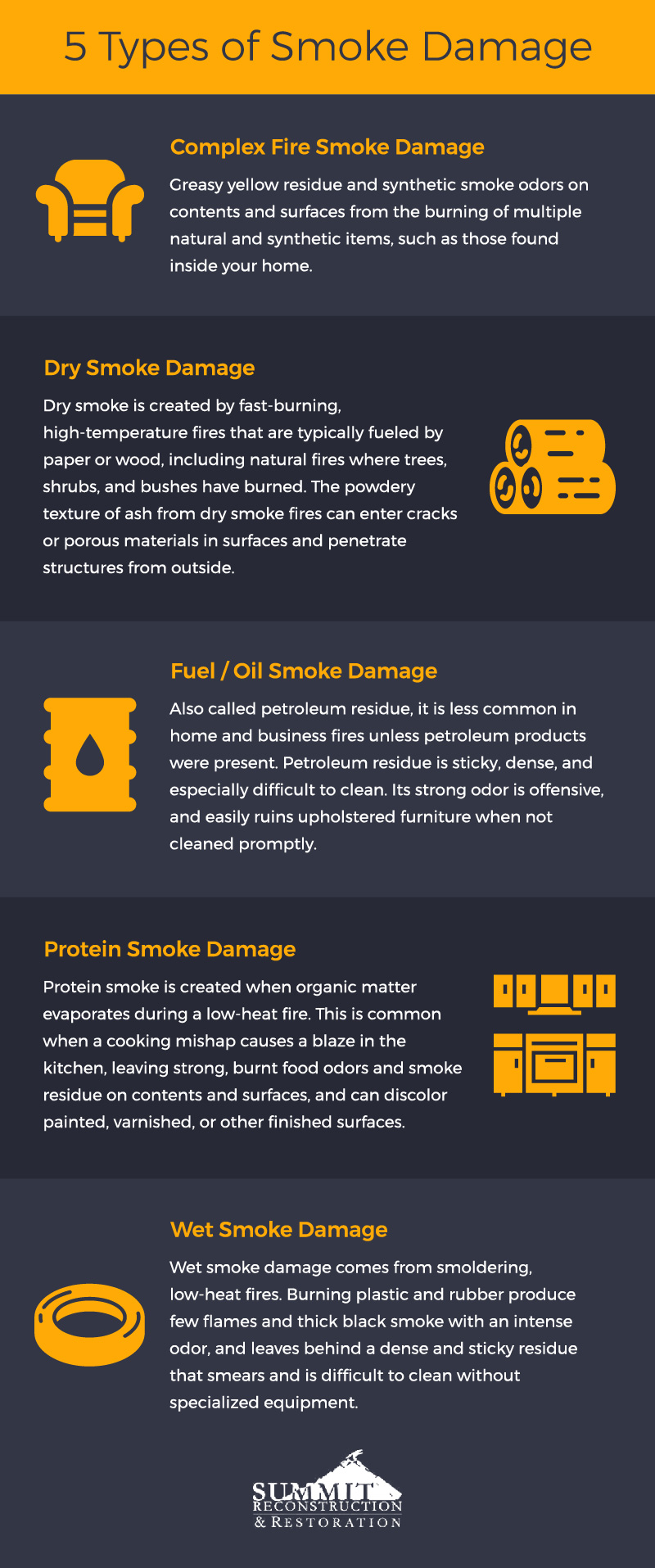
Credit: summitreconstruction.com
Assessing The Damage
Not all smoke damaged furniture can be saved. Before you clean, take a careful look at each piece:
- Check for structural damage: If furniture is burned, warped, or very weak, it may not be safe to use.
- Evaluate material type: Wood, fabric, leather, and metal all react differently to smoke and cleaning.
- Look for deep stains: Soot that has soaked deep into cushions or padding can be hard to remove.
- Smell test: Sometimes, the odor is so strong that cleaning won’t be enough.
If you’re unsure, take a photo and consult a restoration expert. In some cases, replacing the item may be more cost-effective.
Gathering The Right Supplies
Cleaning smoke damage isn’t just about elbow grease—you’ll need the right tools. Here’s what works best for most furniture types:
- Vacuum with HEPA filter: Traps soot particles so they don’t blow back into the air.
- Dry cleaning sponge (chemical sponge): Designed to lift soot without water.
- Mild detergent: For fabrics and washable surfaces.
- White vinegar: Neutralizes odors and cuts through residue.
- Baking soda: Absorbs smells and helps with scrubbing.
- Rubbing alcohol or isopropyl alcohol: Good for hard surfaces.
- Microfiber cloths: Trap soot without scratching.
- Buckets, sponges, and soft brushes: For gentle cleaning.
- Odor neutralizers or enzyme cleaners: Break down smoke molecules.
- Spray bottle: For applying cleaning solutions.
Never use bleach on smoke damaged furniture—it can react with soot and cause permanent stains.
Step-by-step: Cleaning Different Types Of Furniture
Smoke damage affects furniture differently depending on the material. Let’s break down how to clean the most common types.
Fabric And Upholstered Furniture
Couches, chairs, and mattresses are especially vulnerable because their fibers trap soot and odors.
1. Remove Loose Soot
Use a vacuum with a HEPA filter and an upholstery attachment. Do not press hard—hold the nozzle slightly above the surface and let the suction pull soot out. Avoid brushing, as it can rub soot deeper into the fibers.
2. Dry Cleaning Sponge
Wipe the surface with a dry cleaning sponge. Press gently and lift soot away. Rotate to a clean side after each pass. Do not use water at this stage.
3. Washable Covers
If your cushions or covers are removable and labeled as washable, take them off and launder in hot water with a cup of white vinegar added to the wash cycle. Air dry for best results.
4. Deep Cleaning
Mix a solution of mild detergent and warm water. Dampen a microfiber cloth and gently blot (don’t rub) the surface. Work in small sections.
5. Odor Removal
Sprinkle baking soda over the entire piece and let it sit for at least 4 hours, preferably overnight. Vacuum thoroughly.
6. Air Out
Place furniture outdoors or in a well-ventilated room for 1-2 days. Sunlight can help neutralize odors.
Pro Tip
Don’t use scented sprays to mask smoke smell. They can mix with smoke odor and create a worse smell.
Wood Furniture
Wood is porous, so soot can soak in if not cleaned quickly.
1. Dust And Vacuum
Wipe loose soot with a dry microfiber cloth. Use a vacuum with a brush attachment for carvings and cracks.
2. Dry Cleaning Sponge
Gently wipe surfaces with a dry cleaning sponge.
3. Clean With Vinegar Solution
Mix 1 part white vinegar to 4 parts water. Dampen a cloth and wipe the wood. Dry immediately with a clean cloth to prevent water damage.
4. Polish
After cleaning, apply wood polish or a mixture of olive oil and lemon juice to restore shine.
5. Odor Control
Place bowls of baking soda or activated charcoal inside drawers or cabinets to absorb lingering odors.
Pro Tip
Avoid soaking wood. Too much water can warp or crack furniture.
Leather Furniture
Leather is sensitive to chemicals and moisture, so treat it with care.
1. Wipe Down
Use a dry microfiber cloth to wipe away soot. Don’t press too hard.
2. Leather Cleaner
Apply a small amount of leather cleaner to a cloth and test on a hidden area. If safe, clean the rest of the surface.
3. Odor Removal
Wipe with a damp cloth (water only) and dry immediately. For stubborn smells, place the item in a well-ventilated area out of direct sun.
4. Condition
After cleaning, use a leather conditioner to prevent drying and cracking.
Pro Tip
Never use vinegar or harsh chemicals on leather—they can cause permanent damage.
Metal And Glass Furniture
Metal and glass are less likely to absorb odors but can develop a film from smoke.
1. Vacuum
Remove loose soot with a vacuum cleaner.
2. Alcohol Wipe
Mix equal parts rubbing alcohol and water. Wipe surfaces with a cloth.
3. Polish
Use a glass cleaner or metal polish for a streak-free finish.
Pro Tip
Check for rust on metal. If present, treat with a rust remover.
Cleaning Special Items
Some furniture has unique challenges:
Mattresses
Mattresses are tough because they absorb both soot and odor. Vacuum the surface with a HEPA filter. Sprinkle baking soda generously, let sit, then vacuum again. If the smell remains, consider using an enzyme-based cleaner or professional ozone treatment.
Rugs And Carpets
Vacuum thoroughly. Use a carpet shampooer with a smoke odor remover. For area rugs, wash if possible and dry in sunlight.
Antique Furniture
Antiques may need expert care. Test any cleaner on a small area first. Avoid water and harsh chemicals. Consider consulting a professional restorer to avoid lowering the value.

Credit: www.youtube.com
Deep Cleaning Techniques
If basic cleaning isn’t enough, try these advanced methods:
Steam Cleaning
Safe for most fabrics and some wood surfaces. Steam loosens soot and kills odor-causing bacteria. Don’t use on leather or antiques.
Ozone Treatment
Ozone generators can break down smoke molecules inside furniture. These should be used by professionals, as ozone can be harmful if not handled correctly.
Enzyme Cleaners
These products use enzymes to break apart smoke molecules. Spray lightly and allow to air dry.
Comparison: Common Cleaning Techniques
Below is a comparison of three advanced cleaning methods:
| Method | Best For | Effectiveness | Cost | DIY Safe? |
|---|---|---|---|---|
| Steam Cleaning | Fabrics, wood | High | Moderate | Yes |
| Ozone Treatment | All materials | Very High | High | No |
| Enzyme Cleaners | Fabrics, foam | Medium | Low | Yes |
When To Call A Professional
Sometimes, DIY methods aren’t enough. Consider calling a restoration specialist if:
- Furniture is heavily stained or has a strong odor after cleaning.
- There’s deep damage or structural issues.
- The piece is valuable or antique.
- You or your family have respiratory issues.
Professionals use industrial cleaners, ozone machines, and special drying equipment. They can often save items you thought were lost.
Professional Vs Diy: What’s The Difference?
Here’s a quick comparison:
| Aspect | Professional Cleaning | DIY Cleaning |
|---|---|---|
| Equipment | Industrial-grade, ozone, HEPA | Home vacuums, sponges |
| Effectiveness | Very high | Moderate |
| Time | Faster | Slower |
| Cost | High | Low |
| Risk of Damage | Low | Higher (if incorrect methods used) |
Preventing Future Smoke Damage
Once your furniture is clean, you’ll want to protect it from future problems.
- Install smoke detectors: Test monthly and change batteries yearly.
- Keep a fire extinguisher handy in key rooms.
- Avoid smoking indoors: Tobacco smoke can cause similar stains and odors.
- Maintain chimneys and stoves: Clean regularly to prevent smoke buildup.
- Use air purifiers with HEPA filters**: These remove smoke particles from the air.
- Plan escape routes: Know what to do in case of fire to minimize damage.
A surprising tip: Using furniture covers during wildfire season or home renovations can prevent new soot from settling.
Common Mistakes To Avoid
Cleaning smoke damaged furniture isn’t always straightforward. Here’s where people often go wrong:
- Scrubbing soot into fabric: Always blot or vacuum first; scrubbing just spreads the stain.
- Using too much water: Over-wetting can cause mold or warping, especially in wood and upholstery.
- Skipping the odor treatment: Even if furniture looks clean, smoke molecules can linger and return when the weather changes.
- Mixing cleaning products: Some combinations, like vinegar and bleach, release harmful fumes.
- Ignoring ventilation: Odors will return if the area isn’t aired out.
Beginners often don’t realize that speed is critical—the sooner you start cleaning, the better your results will be.
Real-life Example: Restoring A Smoke Damaged Sofa
Let’s look at a practical scenario. After a kitchen fire, a fabric sofa is covered in soot and smells strongly of smoke.
- Vacuum: Use a HEPA vacuum to remove as much loose soot as possible.
- Dry cleaning sponge: Gently wipe the surface, rotating the sponge to avoid re-depositing soot.
- Odor neutralizer: Spray an enzyme-based odor remover, focusing on seams and cushions.
- Baking soda treatment: Sprinkle liberally, let sit overnight, then vacuum.
- Wash covers: If possible, launder cushion covers with detergent and vinegar.
- Dry and air out: Place in sunlight if weather allows.
After two days, the smell is gone and the fabric looks fresh. If odor remains, a professional ozone treatment is the final step.
How Long Does It Take?
Restoring smoke damaged furniture isn’t fast. Here’s a rough idea:
- Light cleaning: 1-2 hours per piece
- Deep cleaning: 1-2 days (including drying and odor removal)
- Professional restoration: 2-5 days, depending on severity
Patience is key. Rushing the process can lead to permanent stains or lingering smells.

Credit: www.youtube.com
Insurance And Documentation
If your smoke damage is from a fire covered by insurance, document everything:
- Take photos before and after cleaning.
- Save receipts for cleaning products and professional services.
- List all damaged items with details on make, model, and value.
This helps with claims and can speed up the process if you need to replace anything.
For more details on how smoke affects homes and furniture, you can check out this resource: EPA: Smoke and Indoor Air Quality.
Frequently Asked Questions
How Can I Tell If My Furniture Is Too Damaged To Save?
If your furniture has burned areas, deep structural cracks, or a smell that won’t go away after cleaning, it may be unsafe or not worth saving. Sometimes, replacing is the better option.
Will The Smoke Smell Ever Go Away Completely?
With the right cleaning steps and odor treatments, most smoke smells can be removed. In some cases, professional ozone treatment is needed for deep odors trapped inside materials.
Can I Use Household Cleaners Like Bleach Or Ammonia?
Avoid bleach and ammonia on smoke damaged furniture. They can react with soot and cause discoloration or permanent damage, especially on fabrics and wood.
Is It Safe To Use My Furniture Right After Cleaning?
Wait until all cleaning solutions have dried and the odor is gone. Make sure the area is well ventilated. For deep cleaning or ozone treatments, follow the professional’s instructions on when it’s safe.
Should I Try To Clean Antiques Or Valuable Items Myself?
If you have antique or high-value furniture, consult a restoration expert before cleaning. Using the wrong products can reduce value or cause irreversible damage.
—
Smoke damaged furniture can look and smell awful, but with the right methods, you can often restore it to its former glory. The key is to act quickly, use proper cleaning techniques, and never underestimate the power of patience and persistence.
If you ever feel overwhelmed, don’t hesitate to seek professional help. With care, your home can feel fresh and welcoming again—free from the reminders of smoke and fire.