
Keeping a commercial kitchen floor clean is not just about looking good—it’s vital for safety, hygiene, and business success. Grease, food bits, and spills collect fast in busy kitchens. If you don’t clean well, floors get slippery and bacteria grow. This can lead to accidents or even failed health inspections. Many business owners know that cleaning matters, but few understand the best way to do it, or how much a spotless floor helps the whole kitchen run better.
Getting floor cleaning right is harder than it seems. Kitchens use different flooring materials, and cleaning needs change depending on traffic, food type, and even the time of day. But with the right system, tools, and habits, you can keep your kitchen floor safe, sanitary, and long-lasting.
This guide will show you how to clean any commercial kitchen floor step by step, what tools to use, and the mistakes to avoid. You’ll also learn how to set up routines that your staff can follow, so your floors stay clean every day—not just after a deep clean.
Why Cleanliness Matters In Commercial Kitchen Floors
A clean floor is not just about health. It’s about running a successful kitchen.
Slip and fall accidents are one of the most common causes of injury in restaurants. According to the National Floor Safety Institute, over 3 million food service workers slip and fall each year. Grease and food on the floor make these accidents much more likely.
There are also health code requirements. Health inspectors often check floors first. Dirty floors can mean fines, bad reviews, or even being shut down for repeat violations.
Finally, a clean floor makes the whole kitchen run better. Staff move faster, there’s less risk of cross-contamination, and you give a better impression during surprise visits or customer tours.
Types Of Commercial Kitchen Floors
Not all kitchen floors are the same. Each material needs a special cleaning approach.
| Floor Material | Main Features | Cleaning Challenges |
|---|---|---|
| Quarry Tile | Slip-resistant, durable, common in kitchens | Holds grease in grout lines, needs scrubbing |
| Epoxy Flooring | Seamless, easy to clean, chemical-resistant | Can be slippery when wet, sensitive to harsh chemicals |
| Vinyl Composition Tile (VCT) | Affordable, smooth surface, many colors | Scratches easily, can lift if soaked |
| Concrete (sealed or unsealed) | Strong, handles heavy equipment | Porous if unsealed, stains easily |
Understanding your floor type helps you pick the right cleaners and methods, and avoid damage.
Essential Equipment And Supplies
Having the right tools is half the battle. Here’s what every commercial kitchen should have for effective floor cleaning:
- Brooms and dustpans: Use angled brooms for corners and heavy-duty brooms for open areas.
- Mops: Flat mops for smooth floors, string mops for textured tiles.
- Buckets with wringers: Two-bucket systems help keep clean and dirty water separate.
- Floor scrubbing machines: For large kitchens or deep cleaning, auto-scrubbers save time.
- Scrub brushes: Handheld and long-handled, for grout lines and stubborn spots.
- Wet/dry vacuum: For picking up excess water and fine particles.
- Non-slip mats: For high-traffic or wet zones.
- Personal protective equipment (PPE): Gloves, non-slip shoes, and goggles for staff.
- High-pressure sprayer: Useful for tough grime and washing away debris.
- Cleaning chemicals: Degreasers, sanitizers, and neutral pH cleaners designed for kitchen floors.
Always check that chemicals are food-safe and approved by health authorities.
Step-by-step Guide: Daily Commercial Kitchen Floor Cleaning
Regular cleaning is the foundation of a safe kitchen. Here’s how to do it right.
1. Clear The Floor
Remove all movable equipment, mats, and trash bins. Sweep up large debris with a broom and dustpan. This makes later cleaning steps easier and more effective.
2. Pre-sweep And Dry Mop
Sweep the entire floor to remove crumbs, dust, and small debris. Use a dry dust mop for larger areas. Pay special attention to corners and under equipment.
3. Spot Clean Spills Immediately
Never let spills sit. Clean them as soon as they happen to prevent stains and slips. Use absorbent towels, then wipe the area with a damp cloth and cleaner.
4. Apply Degreaser
Mix a food-safe degreaser according to the label. Spray or mop it onto greasy areas, especially near fryers and stoves. Let it sit for a few minutes, but don’t let it dry out.
5. Scrub Stubborn Areas
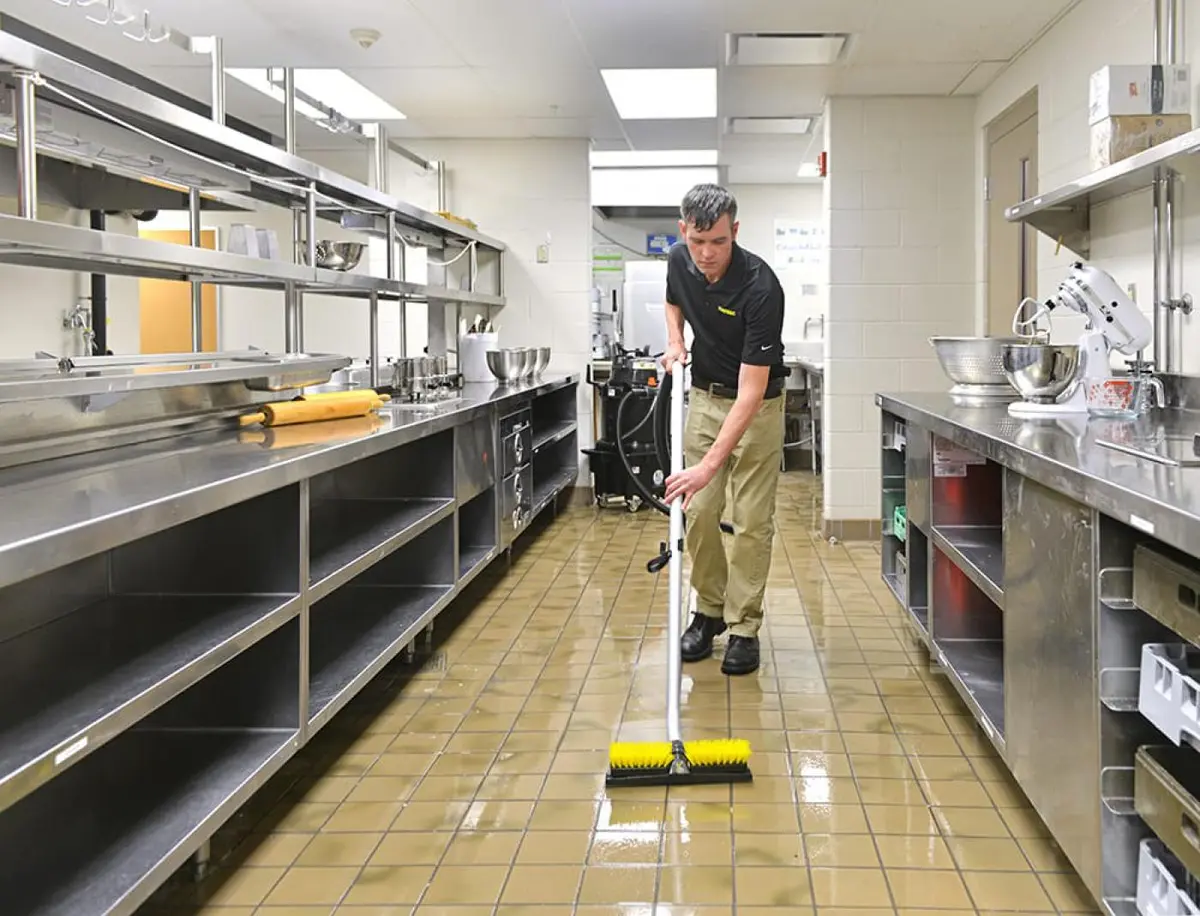
Use a scrub brush or floor machine to work on tough spots. Focus on grout lines and textured tile, where grease hides. For large kitchens, use an auto-scrubber for speed and power.
6. Wet Mop The Floor
Prepare a mop bucket with hot water and a suitable floor cleaner. Mop the floor in sections, rinsing and wringing the mop often to avoid spreading dirt.
7. Rinse Thoroughly
Mop again with clean water to remove any soap or chemical residues. This step is often missed but is critical—residue can make floors sticky and attract more dirt.
8. Dry The Floor
Use a wet/dry vacuum to remove excess water or mop with a dry mop. If possible, use fans to speed up drying. Never leave floors wet—this is a slip hazard.
9. Replace Mats And Equipment
Once the floor is dry, put mats and equipment back in place. Make sure everything is clean before returning it to the kitchen.
Credit: cleanmethod.com
Deep Cleaning: Weekly And Monthly Routines
Daily cleaning is important, but deep cleaning is necessary to remove buildup and reach hidden grime.
Weekly Deep Cleaning
- Move heavy equipment (refrigerators, ovens) to clean underneath and behind.
- Use a floor scrubbing machine with a strong degreaser.
- Scrub grout lines and corners by hand.
- Check for mold or mildew, especially near drains.
Monthly Deep Cleaning
- Strip and reseal floors if needed (for VCT or sealed concrete).
- Schedule professional steam cleaning or power washing.
- Inspect floor drains and clean thoroughly.
- Replace worn-out mats and check for floor damage.
This schedule keeps floors safe, sanitary, and in good condition, which also extends the life of your flooring.
Choosing The Right Cleaning Chemicals
Not all cleaners are created equal. Using the wrong one can leave floors sticky, damage surfaces, or even break health code rules.
| Cleaner Type | Main Use | Best For | Common Mistakes |
|---|---|---|---|
| Degreaser | Breaks down fats and oils | Tile, concrete, epoxy | Using too much, not rinsing after |
| Neutral pH Cleaner | General cleaning, gentle on floors | All floor types | Too weak for heavy grease |
| Disinfectant/Sanitizer | Kills bacteria and viruses | High-risk food prep areas | Not letting it sit long enough |
| Enzyme Cleaner | Breaks down organic stains | Grout, drains | Incompatible with some chemicals |
Always follow the manufacturer’s instructions. Test any new cleaner in a small area first to check for damage or slipperiness.
Setting Up An Effective Cleaning Schedule
A cleaning schedule makes sure nothing is missed and staff know their responsibilities. The best cleaning routines are simple, repeatable, and clearly assigned.
- Daily Tasks: Sweep, mop, spot clean, empty trash, wipe under counters.
- Weekly Tasks: Move and clean under equipment, scrub grout, deep clean drains.
- Monthly Tasks: Strip/wax floors, professional cleaning, inspect for repairs.
Post the schedule in the staff area. Use checklists and have supervisors review completed tasks. Rotate jobs so no one gets tired of the same chore.
Non-obvious insight: Include “transition times” in your schedule—set a few minutes between kitchen shifts for quick spot cleaning. This keeps dirt from building up during busy hours.
Training Staff For Proper Floor Cleaning
Even the best plan fails if staff are not trained. Staff should know:
- How to use each tool and chemical safely
- Why each cleaning step matters (not just how)
- What to do if they find a safety hazard
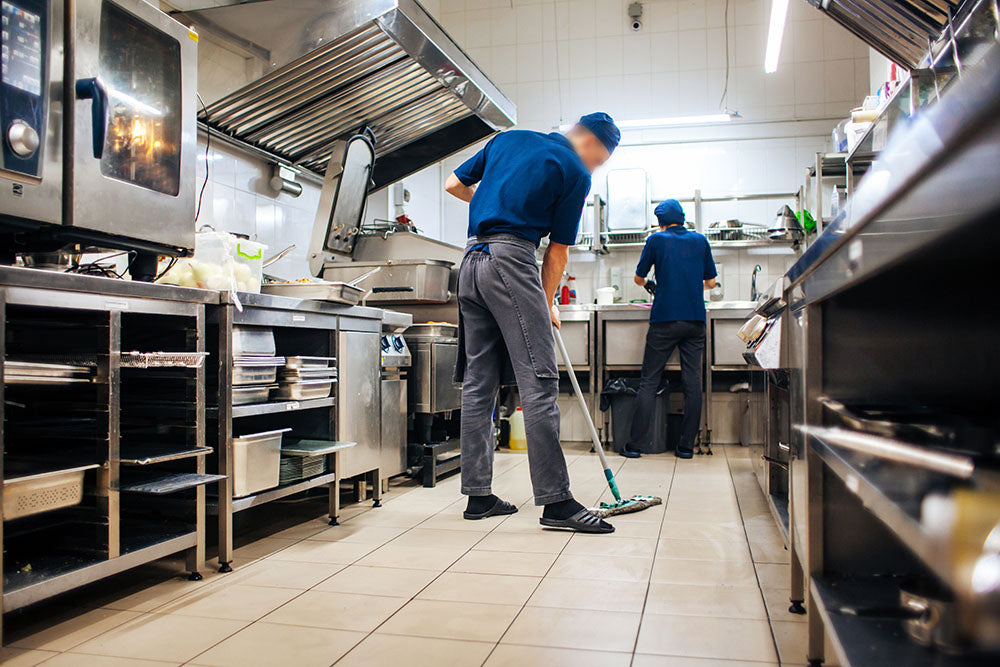
Hold short, regular training sessions. Use live demos—show, don’t just tell. Give clear instructions and encourage questions.
Non-obvious insight: Empower staff to report problems. For example, if they see grout crumbling or a drain clogging, they should let a manager know right away. This prevents small issues from becoming big repairs.
Credit: sheiners.com
Common Mistakes To Avoid
Avoid these mistakes to keep your kitchen safe and clean:
- Skipping rinsing: Soap residue makes floors sticky and more likely to attract dirt.
- Using too much water: Flooding can loosen tiles and damage VCT or unsealed concrete.
- Wrong chemicals: Bleach can damage some floors and make them slippery.
- Not changing mop water: Dirty water spreads grease and bacteria.
- Ignoring corners and under equipment: Grease and bacteria build up fast in hidden spots.
- Not drying floors: Wet floors are the #1 cause of slips in kitchens.
- Not cleaning mats: Mats catch grease and need regular washing.
- Using home cleaning products: Only use commercial, food-safe products—household cleaners may fail health codes.
The Role Of Floor Mats In Cleaning
Mats are a kitchen’s first defense against dirt and grease. Place heavy-duty, non-slip mats near sinks, stoves, and entryways. These mats catch grease and water, reducing what gets on your main floor.
Clean mats daily. Shake out debris, wash with a degreaser, and let them dry fully before replacing. Worn mats should be replaced, as frayed edges create tripping hazards.
Credit: kaivac.com
How To Remove Tough Stains And Grease Buildup
Some stains need extra effort. Here’s how to handle them:
- For grease: Use a high-quality degreaser. Let it soak for several minutes, then scrub with a stiff brush. Rinse thoroughly.
- For food dyes (like tomato): Try an enzyme cleaner or baking soda paste. Scrub gently to avoid damaging the surface.
- For mold/mildew: Use a diluted bleach solution (if safe for your floor type). Rinse well.
- For burned or sticky spots: Use a scraper or putty knife, but avoid scratching the floor.
If stains remain, try a steam cleaner for deep penetration, or consult a professional cleaning service.
Cleaning Floor Drains And Grout Lines
Floor drains are often missed but are critical for sanitation. Remove drain covers weekly, scrub inside with a brush and enzyme cleaner, and rinse with hot water. Do not pour grease down the drain—it will harden and block pipes.
Grout lines need special attention. Use a narrow brush with a strong degreaser. For old or stained grout, use an oxygen bleach powder (not regular bleach) and scrub thoroughly. Reseal grout lines every few months to keep water and bacteria out.
Sustainability In Commercial Kitchen Floor Cleaning
Many kitchens are moving toward eco-friendly cleaning. This means using:
- Biodegradable, non-toxic cleaning products
- Microfiber mops that use less water and chemicals
- High-efficiency auto-scrubbers
Eco-friendly cleaning is safer for staff and reduces pollution. Some green cleaners are now just as effective as traditional chemicals.
For more on sustainable cleaning, the EPA Safer Choice Program is a good resource.
When To Call A Professional Cleaning Service
Sometimes, professional help is best. Call a commercial floor cleaning service when:
- Floors have deep stains that won’t come out
- You need to strip and re-seal/wax the floor
- There is major water damage or mold
- Health inspectors find repeated violations
Professional cleaners have powerful tools and know the right methods for each floor type. Regular professional cleaning (once or twice a year) keeps your floors in top shape.
Practical Tips For Long-lasting Clean Floors
Keeping a kitchen floor clean is easier if you prevent messes in the first place. Here’s how:
- Use splash guards on fryers and sinks.
- Repair leaks quickly to avoid water damage.
- Set up “clean zones” by each entrance with mats and shoe cleaning stations.
- Store chemicals safely away from food and prep areas.
- Schedule cleaning for after peak hours to avoid slips.
- Check for cracks or damage weekly and repair right away.
How Clean Floors Improve Business Performance
Clean floors do more than pass inspections. They:
- Reduce staff injuries and sick days
- Speed up kitchen workflow (no one slipping or tripping)
- Impress health inspectors and customers
- Protect your investment in expensive flooring
A well-maintained floor can last 10-20 years, while a neglected one may need replacing in five.
Frequently Asked Questions
How Often Should Commercial Kitchen Floors Be Cleaned?
Every day, at least once, and spot-cleaned throughout the shift. Deep cleaning should happen weekly, with professional cleaning every few months for best results.
What Is The Best Type Of Mop For A Commercial Kitchen?
Flat microfiber mops are excellent for smooth floors and daily cleaning. For textured tiles or heavy grease, a sturdy string mop or a floor scrubbing machine is better.
Can I Use Bleach To Clean Kitchen Floors?
Bleach can disinfect, but it’s not always safe for all floor types and can make surfaces slippery. Use a food-safe sanitizer recommended for your flooring, and always rinse well after use.
How Do I Prevent Grease Buildup On Kitchen Floors?
Sweep and mop regularly, use floor mats near fryers, and clean spills right away. Choose a high-quality degreaser and train staff to follow cleaning schedules.
Are There Eco-friendly Options For Commercial Kitchen Floor Cleaning?
Yes. Look for biodegradable cleaners, microfiber mops, and high-efficiency machines. These reduce chemical use and water waste without sacrificing cleaning power. The EPA Safer Choice Program lists safe options.
A clean commercial kitchen floor is the foundation of a safe, efficient, and successful food business. With the right habits, tools, and training, you can keep your kitchen spotless, pass every inspection, and protect both your staff and your reputation.
Start today, and make clean floors a daily part of your kitchen culture.