
Cleaning the ceiling around vents is a task many homeowners overlook, yet it has a bigger effect on indoor air quality and the look of your home than you might think. Dust, mold, and grime collect easily in these spots, causing stains and sometimes even health problems.
If you’ve ever noticed dark marks or dust rings around your vents, you’re not alone. These are common, but they don’t have to be permanent. With the right approach, you can keep your ceiling spotless and your air cleaner.
This guide explains everything you need to know to clean the ceiling around vents—step by step, with safety tips, tool choices, and expert advice. It covers different ceiling types, what cleaning products work best, and how to prevent stains from coming back.
You’ll even find answers to common questions and a few smart tips that most beginners miss. By the end, you’ll have the confidence to tackle this job yourself, without causing damage to your ceiling or vent.
Why Dust And Stains Collect Around Ceiling Vents
Ceiling vents move air through your home, but they also draw dust, pet hair, and tiny dirt particles. When your HVAC system runs, these particles stick to the ceiling around the vent. Over time, they mix with humidity or oils in the air, creating visible stains or rings.
This is especially common in kitchens, bathrooms, and rooms with high humidity.
Another problem is “ghosting”—those gray or black lines you see on the ceiling near vents or along framing. Ghosting happens when cold air from the vent meets warm, moist air in the room, causing particles to stick and build up. This effect is stronger in homes with poor insulation or where filters aren’t changed often.
Understanding why this buildup happens is important for choosing the right cleaning method and for preventing future stains.
Safety First: Preparing For Ceiling Cleaning
Before you start cleaning, safety is most important. Working overhead and possibly with chemicals means you need to protect yourself and your home.
- Turn off the HVAC system. Cleaning near vents can release dust into the air. Turning off the system prevents spreading dust throughout your home.
- Gather protective gear. Wear safety goggles, a dust mask, and gloves. If you’re using strong cleaners, open windows for ventilation.
- Lay down drop cloths or old sheets. This protects your floors and furniture from falling dust or drips.
- Use a stable ladder or step stool. Make sure it’s on level ground and tall enough for you to reach the ceiling comfortably.
- Keep a small bucket or container for dirty water and rags nearby so you don’t need to climb up and down.
Tip: If you have allergies or asthma, consider wearing a respirator mask and ask someone else to help.

Credit: tricountyair.com
Essential Tools And Materials For The Job
Having the right tools makes the work easier, faster, and less risky for your ceiling. Here’s what you’ll need:
- Vacuum cleaner with a brush attachment
- Microfiber cloths (soft, lint-free)
- Soft-bristled brush (like a paintbrush or old toothbrush)
- Sponge (non-abrasive)
- Spray bottle (for cleaning solutions)
- Mild all-purpose cleaner or a mix of dish soap and water
- Baking soda (for tough stains)
- White vinegar (for mold or mildew)
- Bucket (for clean and dirty water)
- Step ladder or sturdy step stool
- Protective gloves, goggles, and mask
Optional: For textured ceilings, a dry cleaning sponge (soot sponge) is useful. For painted ceilings, make sure your cleaning products won’t damage the paint.
Here’s a quick comparison of cleaning tools for different ceiling types:
| Ceiling Type | Best Tool | Notes |
|---|---|---|
| Textured (Popcorn) | Dry Cleaning Sponge | Avoid water-based cleaners |
| Painted Drywall | Microfiber Cloth | Use gentle cleaners |
| Plaster | Soft Brush | Test cleaner first |
| Metal Tile | Sponge & Mild Soap | Dry thoroughly |
Step-by-step Guide: How To Clean Ceiling Around Vents
Cleaning the ceiling around vents can be done in a few careful steps. The best method depends on your ceiling material and how dirty it is.
1. Dry Dust Removal
Start by removing loose dust before using any liquid cleaner.
- Attach a brush tool to your vacuum and gently run it around the vent and ceiling. This pulls up dust without spreading it.
- For corners or textured ceilings, use a soft brush or microfiber cloth to pick up dust.
- Don’t forget to wipe the vent cover itself.
Common mistake: Skipping this step. If you use liquid first, dust turns to mud and smears.
2. Cleaning With A Mild Solution
After dry dusting, clean stains or marks that remain.
- Mix a few drops of dish soap in a spray bottle with warm water.
- Lightly spray a microfiber cloth (not the ceiling directly) and gently wipe the stained area.
- Use a circular motion, working from the outside toward the vent to avoid spreading dirt.
For stubborn spots: Sprinkle a little baking soda on the cloth and gently rub the area. Baking soda is a mild abrasive that lifts dirt without scratching.
Example: If you see a greasy mark near a kitchen vent, the soap and baking soda combo usually removes it in a few wipes.
3. Treating Mold Or Mildew
Dark stains around bathroom vents are often mold or mildew. These need special care.
- Mix equal parts white vinegar and water in a spray bottle.
- Dampen a cloth with the solution (do not soak the ceiling).
- Press the cloth against the stain for a few seconds, then gently wipe.
- Dry the area with a clean cloth.
Safety tip: Never mix vinegar with bleach or other cleaners. It can create harmful fumes.
4. Special Care For Textured Ceilings
Textured ceilings (popcorn or stippled) are delicate. Too much water or rubbing can damage them.
- Use a dry cleaning sponge (soot sponge). Gently press and lift—don’t rub.
- If stains remain, use a barely damp sponge and blot, not wipe.
Beginner insight: Many people scrub textured ceilings, causing them to flake. Always test a small area first.
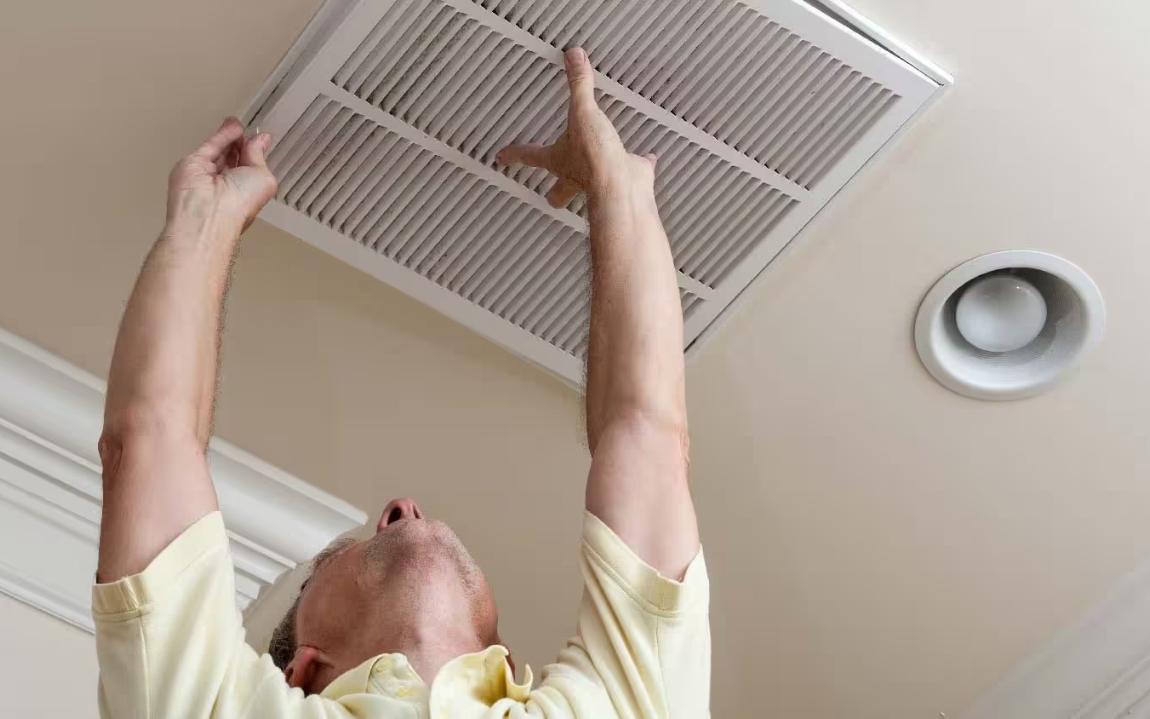
5. Cleaning Vent Covers
While you’re up there, clean the vent covers too.
- Unscrew the vent cover if possible (use a screwdriver).
- Soak it in warm, soapy water for 10–15 minutes.
- Scrub gently with a soft brush, rinse, and let dry completely before reinstalling.
Tip: Mark which way the vent cover faces so you put it back correctly.
6. Final Rinse And Dry
For painted or smooth ceilings, wipe the cleaned area with a cloth dampened with plain water to remove any soap residue. Always dry with a clean towel to prevent water marks.
How To Handle Different Types Of Ceilings
Not all ceilings are the same. Knowing your ceiling type helps you avoid costly mistakes.
Painted Drywall
Most common in homes. Can handle gentle wiping with a damp cloth and mild cleaner. Avoid soaking the area.
Popcorn Or Textured Ceilings
These need dry cleaning methods. Use a dry sponge or vacuum with a soft brush. Never spray liquid directly.
Plaster
Older homes may have plaster ceilings. These can be delicate and may react to moisture. Test any cleaner in a hidden spot.
Metal Or Drop Ceilings
Wipe with a damp sponge and mild soap. Dry well to prevent rust or water spots.
Here’s a summary to match cleaning methods to ceiling types:
| Ceiling Type | Safe Cleaning Method | What to Avoid |
|---|---|---|
| Painted Drywall | Damp Cloth + Mild Cleaner | Excess Water, Abrasives |
| Popcorn | Dry Sponge, Vacuum | Liquid Cleaners |
| Plaster | Soft Brush, Spot Test | Heavy Scrubbing |
| Metal Tile | Damp Sponge, Dry Quickly | Bleach, Abrasive Pads |
Preventing Future Dust And Stains
Once your ceiling is clean, keep it that way with these smart steps:
- Change HVAC filters regularly. Most homes need a new filter every 2–3 months. If you have pets or allergies, change it more often.
- Vacuum and dust vents monthly. This prevents buildup before it becomes a problem.
- Check for air leaks. If you see lots of dust, there may be gaps around the vent. Seal them with caulk or weatherstripping.
- Use a dehumidifier in damp rooms. This lowers humidity and slows mold or mildew growth.
- Choose the right paint. In kitchens or baths, semi-gloss paint is easier to clean and resists stains better than flat paint.
Non-obvious insight: Black rings around vents can also mean your HVAC system needs balancing. If you see fast, repeated buildup, have a professional check your ductwork.
Common Mistakes And How To Avoid Them
Mistakes during cleaning can lead to damage or stains that are harder to remove. Here’s what to watch out for:
- Using too much water. This can cause paint to bubble or even ceiling stains.
- Skipping the dry dust step. Wetting dust makes cleaning much harder and messier.
- Ignoring the vent cover. If you clean only the ceiling, dust will quickly return from the dirty cover.
- Scrubbing textured ceilings. This damages the finish and can create bald spots.
- Forgetting safety. Always use a stable ladder and protect your eyes and lungs.
Beginner insight: Many people use strong cleaners right away. Start with the mildest cleaner possible; harsh chemicals can discolor paint and even weaken plaster or drywall over time.
Troubleshooting: When Stains Won’t Go Away
Sometimes, no matter how much you clean, stains remain. Here’s what to do:
- For yellow or brown stains: These may be from water leaks, not just dust. Check for roof or plumbing issues.
- Gray/black ghosting lines: If these return quickly, it’s likely a ventilation or insulation problem. Improving airflow and insulation can help.
- Persistent mold: If mold returns after cleaning, the humidity may be too high. Use a dehumidifier and check for leaks.
- Peeling paint: This means water or cleaner has damaged the surface. You may need to sand, prime, and repaint.
If repeated cleaning doesn’t solve the problem, it may be time to consult a professional or consider repainting with stain-blocking primer.
Eco-friendly And Sensitive Options
If you prefer eco-friendly cleaning, or have allergies, there are safer options:
- Use a mix of baking soda and water as a gentle scrub.
- White vinegar mixed with water works against mold and mildew.
- For a fresh scent, add a few drops of tea tree oil or lemon juice to your cleaning water.
Always test natural cleaners on a small, hidden area first.
Fact: According to the US Environmental Protection Agency, indoor air quality can be 2–5 times worse than outdoor air, often due to dust and mold. Keeping vents and the surrounding ceiling clean is a simple way to improve your air.
For more information on indoor air quality and safe cleaning, see the EPA Indoor Air Quality Guide.
When To Call A Professional
Some ceiling stains need expert help. Call a pro if you:
- See large water stains that grow over time.
- Notice a musty smell even after cleaning—this may mean hidden mold.
- Have high ceilings or vents that are hard to reach.
- Notice flaking or crumbling ceiling material.
Professionals can test for mold, repair leaks, or repaint damaged areas safely. They also have tools to deep-clean vents and ductwork, which improves indoor air quality.

Credit: ventiques.com
Maintenance Schedule For Clean Ceilings
Staying ahead of dust and stains is easier with a simple schedule:
- Weekly: Dust ceiling vent covers with a microfiber cloth or vacuum.
- Monthly: Inspect the area around vents for early signs of dust or stains.
- Seasonally: Remove vent covers and clean them in soapy water.
- Every 3–6 months: Change HVAC filters and check for air leaks or moisture.
- Annually: Deep clean the ceiling around all vents, especially in kitchens and bathrooms.
Pro tip: Set reminders on your phone or calendar to keep on track.
Cleaning Around Vents In Special Situations
Homes With High Ceilings
Cleaning around vents in high-ceilinged rooms, like entryways or living rooms, can be challenging. Use an extendable duster or a telescoping vacuum attachment. Never stand on furniture—always use the right ladder for your ceiling height.
Homes With Pet Hair Problems
Pet hair clings to vent covers and the surrounding ceiling. Use a vacuum with a HEPA filter to reduce allergens. Wipe vent covers with a dryer sheet to help repel dust and hair after cleaning.
Rental Properties
If you rent, use only mild cleaners so you don’t risk damaging paint or ceiling finishes. Always check your lease or ask your landlord if you’re unsure what’s safe to use.
How To Clean Ceiling Vents In Different Rooms
Some rooms need more frequent cleaning due to higher moisture or dust:
- Kitchens: Grease and smoke mean more buildup. Clean every 1–2 months.
- Bathrooms: High humidity means more mold. Use a vinegar solution monthly.
- Bedrooms/Living Rooms: Dust is the main problem. Vacuum and wipe every 2–3 months.
- Laundry rooms: Lint and moisture collect quickly. Clean with a damp cloth every month.
How Often Should You Clean Ceiling Around Vents?
The answer depends on your home, but here are some guidelines:
- If you have pets, clean every 1–2 months.
- In humid climates or homes with smokers, clean monthly.
- For most homes, every 3–4 months is enough.
Use your eyes: If you see dust rings or stains, it’s time to clean.
Credit: hellamaid.ca
Quick Reference: Cleaning Solutions For Common Problems
Here’s a handy guide for what to use on the most common ceiling vent stains:
| Problem | Solution | Extra Tips |
|---|---|---|
| General Dust | Vacuum + Microfiber Cloth | Dust before using liquid |
| Grease Marks | Dish Soap + Baking Soda | Wipe gently in circles |
| Mold/Mildew | Vinegar + Water | Dry completely after cleaning |
| Pet Hair | Vacuum with HEPA Filter | Wipe with dryer sheet after |
| Ghosting (Black Rings) | Vacuum + Mild Cleaner | Check insulation/ventilation |
Frequently Asked Questions
How Do I Prevent Ceiling Stains From Returning After Cleaning?
Regular dusting, changing HVAC filters, and sealing any gaps around vents are the best ways to prevent stains. Using semi-gloss paint on ceilings in kitchens and bathrooms also helps, since it resists moisture and is easy to clean.
Is It Safe To Use Bleach To Clean Mold Near Vents?
Bleach is not recommended for most ceilings, especially painted or textured ones. It can discolor paint and damage surfaces. White vinegar mixed with water is safer and just as effective for light mold stains.
What Should I Do If My Ceiling Is Stained By A Water Leak?
First, fix the leak. Cleaning alone will not stop stains from coming back. After repairing the source, let the area dry completely, then clean with a mild cleaner. Severe stains may need sealing with a stain-blocking primer and repainting.
Can I Use A Steam Cleaner On Ceiling Stains?
Steam cleaners are not safe for most ceilings. The heat and moisture can damage paint, plaster, or texture. Stick to gentle cleaning solutions and avoid adding extra moisture to the ceiling.
How Can I Tell If A Stain Is Mold Or Just Dirt?
Mold usually looks black or green and may feel slimy or smell musty. Dirt or dust is usually gray or brown and feels dry. If you’re unsure, clean the area with vinegar and monitor if the stain returns quickly—persistent stains could be mold and may need professional attention.
—
A clean ceiling around your vents makes your home look fresher and can even improve air quality. With the right tools, a little time, and the tips in this guide, you can remove dust, stains, and mold safely—without damaging your ceiling.
Remember, regular maintenance is the easiest way to keep stains away. If you ever face stubborn problems, don’t hesitate to ask a professional for help. Cleaner ceilings mean healthier air and a happier home.