
Building a second floor in a metal building is a big decision that can transform how you use your space. Whether you need extra room for storage, office space, or living quarters, adding a second floor can double your usable area without expanding the building’s footprint.
However, this project is more complex than adding shelves or putting up drywall. It requires careful planning, a clear understanding of structural needs, and attention to important details that many beginners miss. If you make the right choices from the start, you can avoid costly mistakes and get the most value from your investment.
This guide explains every step of the process, from planning and design to construction and finishing. You’ll learn how to assess your existing building, choose the right materials, and work with professionals. We’ll also highlight common pitfalls, so you know what to avoid.
Whether you’re a business owner or a homeowner, these insights will help you succeed.
Understanding The Basics Of Metal Buildings
Before you start planning a second floor, you need to understand how metal buildings work. Metal buildings are usually made with a framework of steel columns and beams. The walls and roof are covered with metal panels. This structure is strong and flexible, but it is also very different from wood or concrete buildings.
Metal buildings are popular because they are fast to build, long-lasting, and cost-effective. They are used for warehouses, workshops, garages, and even homes. However, their open, clear-span design means that adding a second floor is not as simple as in a traditional house.
Why Metal Buildings Need Special Consideration
The main challenge is load-bearing. Most metal buildings are designed to support the roof and the weight of the walls. The floor is not usually built to hold another entire level. If you add a second floor without proper support, you risk damaging the structure or even causing a collapse.
Also, metal expands and contracts with temperature changes. Any new floor must be designed to handle movement and avoid cracks or warping. Finally, fire safety, insulation, and sound control are different in metal compared to wood.
Many people overlook these factors. They see empty space above their heads and assume it’s easy to build up. But success depends on a good plan and the right professionals.
Planning Your Second Floor
A successful project starts with careful planning. Rushing into construction can lead to expensive mistakes. Here are the key steps you need to follow.
1. Assess The Existing Structure
First, you must check if your metal building can support a second floor. This means looking at the foundation, the frame, and the spacing of columns and beams.
- If your building has a clear-span design (no columns in the middle), you may need to add new support columns.
- A weak or cracked foundation cannot support extra weight. This is a common problem in older buildings.
- The spacing and size of beams also matter. If they are too far apart or too small, they may bend or fail under extra load.
It’s smart to hire a structural engineer to inspect your building. They can tell you what is possible and suggest any upgrades you need before starting. This will save you money and keep you safe.
2. Define Your Purpose And Load
Not all second floors are the same. Are you building a storage loft, an office, or living space? Each use has different weight and safety requirements.
- Storage areas may only need to hold boxes or light equipment.
- Offices must support desks, chairs, and people walking.
- Living spaces need plumbing, bathrooms, and sometimes kitchens.
You must calculate the live load (weight of people and furniture) and the dead load (weight of the floor itself). Building codes in the US usually require at least 40 pounds per square foot (psf) for living spaces, but storage or heavy machinery may need much more.
3. Set A Realistic Budget
Adding a second floor to a metal building is a major investment. Costs can range from $25 to $100 per square foot, depending on design, location, materials, and labor. Don’t forget to include:
- Structural upgrades
- Permits and inspections
- Electrical, plumbing, and HVAC
- Stairs or elevator
- Finishing (walls, floors, paint)
Unexpected costs are common, especially in older buildings. Add at least 10-20% extra to your budget as a safety net.
4. Check Codes And Permits
Every city or county has building codes that you must follow. These codes set rules for safety, fire, insulation, and accessibility.
- You need a building permit for almost all second-floor additions.
- Some areas have limits on building height or total square footage.
- Fire exits, sprinklers, or extra stairs may be required.
Skipping permits can lead to fines, delays, or even having to tear down your new floor. Always check with your local building department before you start.
Designing The Second Floor
With your plan in place, you can start designing the new space. Good design balances function, style, and safety.
Choosing The Best Layout
Think about how you will use the space. Do you need open storage, private rooms, or a mix? The layout affects everything from lighting to heating.
- Open floor plans work well for storage or workshops.
- Offices may need walls for privacy.
- Living areas require bathrooms, bedrooms, and maybe a kitchen.
Make sure there’s enough room for stairs or an elevator. These take up more space than most people expect. The minimum space for a safe staircase is usually about 3 feet wide and 10-12 feet long.
Planning Support Columns And Beams
The most important part of your design is the support structure. Without enough columns and beams, the floor can sag or collapse.
- Columns are usually placed every 10-20 feet, depending on the size and use.
- Beams carry the load from the floor to the columns.
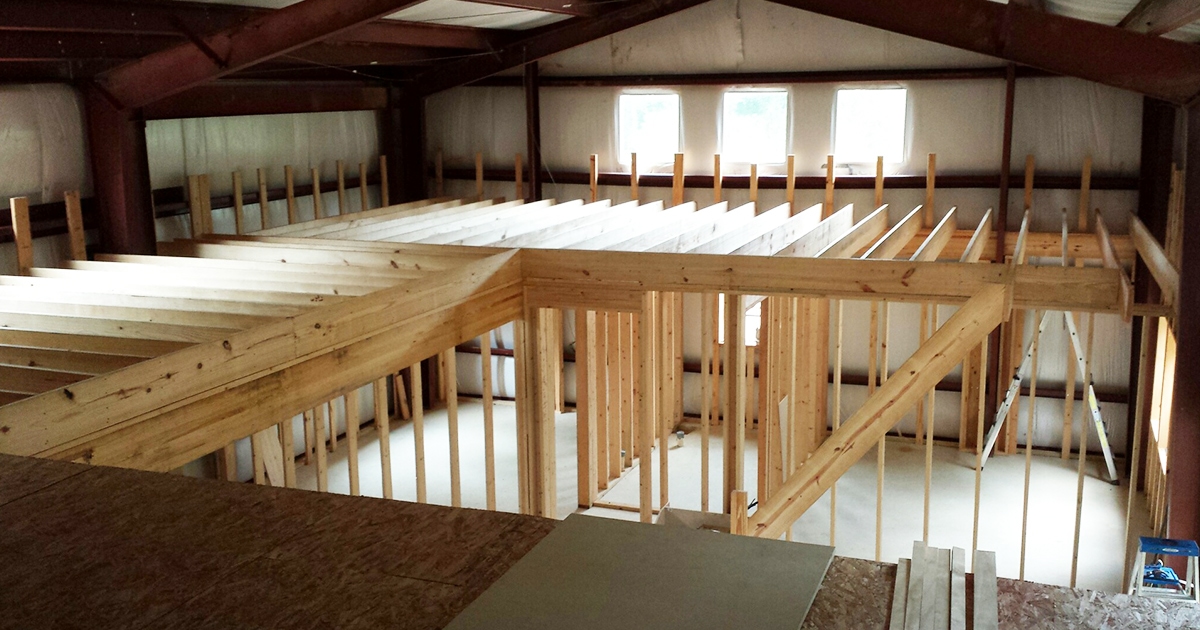
- Joists run between beams and support the floor panels.
Here’s a simple comparison of common support materials:
| Material | Strength | Cost | Span Capability | Fire Resistance |
|---|---|---|---|---|
| Steel | Very High | High | Long Spans (20-40ft) | Excellent |
| Wood (LVL) | Medium-High | Medium | Medium (12-20ft) | Good |
| Concrete | High | Very High | Short-Medium | Excellent |
Steel is usually best for metal buildings because it matches the existing frame and supports large spans. However, in some cases, a mix of steel and engineered wood (like LVL) is used to save money.
Floor Systems And Decking
Your new second floor needs a strong surface to walk on. This is called floor decking. The most common options are:
- Steel bar joists with metal deck and concrete topping (very strong, best for heavy use)
- Wood joists with plywood or OSB (cheaper, lighter, less fire-resistant)
- Composite metal deck with lightweight concrete (good mix of strength and cost)
A key insight: Many beginners choose wood decking to save money, but this can cause sound problems and fire risks in a metal building. Steel and concrete cost more but last longer and are safer.
Insulation, Sound, And Fire Safety
Metal buildings often have poor insulation and let sound travel easily. When adding a floor:
- Add rigid foam insulation or spray foam between floors to keep temperatures comfortable.
- Use sound-deadening mats or special drywall under the floor to reduce noise.
- Local codes may require a fire barrier (like a gypsum ceiling) between floors.
Skipping these steps can make your new space uncomfortable and noisy.
Engineering And Structural Upgrades
Even if your building looks strong, it may need upgrades to handle a second floor. Here’s what to check.
Foundation Reinforcement
If your foundation was not designed for extra weight, it might crack or shift. You may need to:
- Thicken the slab in key areas
- Add footings under new columns
- Use epoxy anchors to attach new steel to old concrete
A structural engineer can calculate exactly what you need. Never guess—mistakes here are expensive to fix later.
Strengthening The Frame
Some buildings need extra bracing or thicker columns to handle the new load. This can include:
- Adding portal frames or moment frames for side-to-side stability
- Using knee braces or cross bracing for extra support
If your building is in an area with earthquakes or high wind, these upgrades are even more important.
Fire Safety Upgrades
A second floor means more people in the building. Local codes may require:
- Two exits from the upper floor (usually stairs or a stair plus a ladder)
- Fire-rated walls and doors
- Sprinkler systems or fire alarms
Don’t assume your old building is up to code. Get a fire safety inspection before you start.

Credit: www.youtube.com
The Construction Process
Once your design is ready and permits are approved, construction can begin. This process usually takes 2-6 months, depending on size and complexity.
Preparing The Site
Clear out the area under the new floor. Move anything that could block workers or machinery. For safety, block off the construction zone from other building users.
Installing Support Columns
Contractors will mark locations for new columns and cut the floor as needed. They dig or drill for new footings, then set steel columns anchored into the concrete.
Columns are leveled and welded or bolted to the existing frame. Engineers check everything before moving to the next step.
Placing Beams And Joists
Next, steel beams are lifted into place on top of the columns. Workers use cranes or lifts for heavy beams. Bolted connections are double-checked for tightness.
Joists are installed between beams, usually 16-24 inches apart. These support the floor decking and must be straight and level.
Installing Floor Decking
The floor surface is laid on top of the joists. For steel and concrete systems, a corrugated metal deck is screwed down, then covered with wire mesh and a thin layer of concrete.
If using wood, plywood sheets are nailed or screwed to the joists. The seams are staggered for strength.
A smart tip: Use self-leveling concrete for smooth floors, especially if you plan to install tile or vinyl.
Building Stairs Or Elevator
A safe, sturdy staircase is essential. It must meet code for width, rise, and run. Most stairs are steel or wood, with handrails and non-slip treads.
If you need an elevator (for accessibility or heavy loads), this is installed at the same time. Elevators require a shaft, extra foundation, and electrical wiring.
Framing Interior Walls
If your new floor has rooms, workers frame interior walls with steel or wood studs. Plumbing and electrical lines are run before walls are closed up.
Sound insulation can be added in walls for privacy.
Electrical, Plumbing, And Hvac
Extra floors need more wiring, lighting, and sometimes new breaker panels. Bathrooms or kitchens require plumbing for water and drains.
Heating and cooling (HVAC) must be sized for the larger space. Many owners add mini-split heat pumps or run new ductwork.
Don’t forget smoke detectors and emergency lights.
Finishing Touches
Finally, walls are covered with drywall or metal panels, floors are finished with carpet, tile, or epoxy, and the space is painted.
Install doors, windows, and trim. Clean up debris and do a final inspection before moving in.
Cost Comparison And Value
Adding a second floor is not cheap, but it’s often more affordable than building new. Here’s a comparison of costs for different approaches:
| Project Type | Cost per Sq. Ft. | Time to Complete | Pros | Cons |
|---|---|---|---|---|
| Second Floor Addition | $25-$100 | 2-6 months | Doubles space, no new land needed | Complex, needs permits/upgrades |
| New Metal Building | $30-$120 | 4-9 months | Custom design, all-new structure | Needs land, more expensive |
| Expanding Outward | $40-$150 | 3-7 months | Easy access, fewer stairs | Uses more property, site limits |
A second floor is usually the best choice if you want to keep your location and avoid buying more land.

Credit: www.garagejournal.com
Common Mistakes And How To Avoid Them
Even smart owners make mistakes when adding a floor. Here are the most common issues and how to avoid them.
Ignoring Structural Limits
Some people skip the engineer and just start building. This is dangerous and often illegal. Always get a structural review first.
Underestimating Costs
Many projects go over budget because of hidden problems—like weak foundations or code upgrades. Plan for extra costs and get detailed quotes.
Poor Sound And Temperature Control
Metal buildings can be noisy and hard to keep warm or cool. Add insulation and soundproofing from the start.
Not Planning For Stairs
Stairs take up lots of space. Don’t try to fit a narrow, steep staircase—it will fail inspection. Plan for a comfortable, code-approved stairway.
Skipping Permits
Building without permits can stop your project and cost you thousands. Always work with local officials.
Choosing The Right Professionals
Building a second floor in a metal building is not a do-it-yourself project. You need experienced professionals.
- Structural engineer: Designs and checks the frame and foundation.
- Architect: Plans the layout and makes sure you meet codes.
- Contractor: Manages construction, hires workers, and orders materials.
- Inspector: Checks work at key points for safety.
Ask for references, check licenses, and get written contracts. Good professionals will explain options and help you stay on budget.
A non-obvious insight: Some contractors specialize in retrofit work (upgrading existing buildings), which is more complex than new construction. Choose a team with this experience.
Maximizing Usability And Future Value
Think beyond today’s needs. A well-designed second floor can boost your building’s value and flexibility.
- Use modular walls or movable partitions for easy changes.
- Add extra outlets and wiring for future technology.
- Plan for accessibility (wider doors, ramps, or an elevator) even if you don’t need them now.
If you ever sell your property, a legal, well-built second floor is a major selling point. Keep all permits, plans, and inspection reports as proof of quality.
Case Example: From Workshop To Two-level Office
Consider a real example: A small business owner wanted to turn his 2,000 sq. ft. metal workshop into a two-story office.
- The original building had a strong steel frame but needed new columns and thicker concrete at column points.
- The owner chose steel beams and a concrete-over-metal deck for strength and low noise.
- The project took four months and cost about $130,000, including all permits and upgrades.
- The second floor added 1,800 sq. Ft. of office space, doubling the usable area without buying new land.
This project shows the value of planning, professional help, and smart material choices.
Credit: gensteel.com
Frequently Asked Questions
How Long Does It Take To Build A Second Floor In A Metal Building?
Most projects take 2 to 6 months from design to move-in. The time depends on the size, complexity, and any required structural upgrades. Permits and weather can also cause delays.
Do I Need To Move Out During Construction?
You might need to move out of part or all of the building while work is happening, especially if the structure is being reinforced or if safety is a concern. For small projects, you may only need to block off certain areas.
Is It Possible To Add A Second Floor To Any Metal Building?
Not always. The existing foundation and frame must be strong enough to support extra weight. Some older or light-duty buildings cannot be upgraded safely. A structural engineer can tell you what is possible.
How Much Does It Cost To Add A Second Floor?
Costs range from $25 to $100 per square foot. The total price depends on the size, location, materials, and upgrades needed. Get quotes from experienced contractors before starting.
What Professionals Do I Need For This Project?
You need a structural engineer, an architect, a licensed contractor, and an inspector. Each professional has a key role in safety and code compliance. Choose a contractor with experience in metal building retrofits.
Building a second floor in a metal building is a big challenge but also a great opportunity. With careful planning, the right team, and attention to detail, you can unlock new space and value in your property. For more technical details, you can read the guidelines from the American Institute of Steel Construction. Make sure every step is done right, and you’ll enjoy the benefits for many years to come.