
Transforming a basement into a bedroom is both a creative and practical project. Many homes have underused basements, often filled with boxes or laundry machines. But with the right planning and work, you can turn that space into a comfortable, private bedroom.
Whether you need an extra room for a growing family, want a guest suite, or plan to rent it out, building a bedroom in the basement adds value and function to your home. This guide walks you through every step, from initial planning to finishing touches.
Along the way, you’ll learn tips most beginners miss and how to avoid common basement renovation mistakes.
Why Build A Bedroom In The Basement?
Using the basement for a bedroom can make a house feel much bigger. It’s a smart way to use space that already exists. Here are a few reasons people choose to do this:
- Extra living space without building an addition
- Increased home value for resale or rental potential
- Privacy for guests or family members
- Flexible use, such as a home office or studio
But before starting, it’s important to know the challenges. Basements are below ground, so they have unique problems like moisture, low light, and sometimes strict building codes. Understanding these issues early helps you create a safe, comfortable bedroom.
Planning Your Basement Bedroom
Proper planning can save you time and money later. It also helps avoid surprises with city rules or building codes.
Check Local Building Codes
Basement bedrooms are not like other rooms. Most cities have strict rules for bedrooms below ground. Common rules include:
- Egress windows: A bedroom must have a window big enough for someone to escape in an emergency.
- Minimum ceiling height: Usually, the ceiling must be at least 7 feet high.
- Ventilation and heating: Basements often need extra vents or heaters.
- Smoke and carbon monoxide detectors: These are usually required by law.
Before you start, call your city’s building department or check their website. Some cities even require a permit for basement work.
Assess The Space
Look at your basement with a critical eye. Ask:
- Is it dry, or are there signs of water leaks?
- Is the ceiling high enough?
- Are there enough exits and natural light?
- Is there enough space for a comfortable bed and storage?
If you find mold, cracks, or a musty smell, fix these before building. Ignoring them can cause bigger problems later.
Plan The Layout
Sketch your ideal bedroom. Think about where the bed, closet, and furniture will go. Mark windows, stairs, and doors. Planning now will help with wiring, lighting, and plumbing later.
Set A Realistic Budget
Basement bedrooms can cost anywhere from $10,000 to $40,000, depending on the work needed. Make a list of what you need to buy or hire out:
- Waterproofing and insulation
- Framing and drywall
- Flooring
- Electrical and plumbing
- Egress window installation
- Painting and finishes
Add 10–20% extra to your budget for unexpected costs. Many people forget about small things like trim, light fixtures, or permits.
Credit: buildingbluebird.com
Waterproofing And Moisture Control
Basements are prone to moisture problems. If you skip this step, you risk mold, smells, and damage to your new bedroom.
Inspect For Water Issues
Walk around after heavy rain. Look for:
- Wet spots on walls or floors
- White powdery stains (efflorescence)
- Peeling paint
- Musty odors
If you see any of these, solve them before you build.
Solutions For Moisture
- Seal cracks and gaps: Use concrete patch or waterproof sealant.
- Install a sump pump: If your basement floods, this is a must.
- Add a vapor barrier: Place thick plastic sheeting behind walls and under floors.
- Improve drainage: Clean gutters and extend downspouts away from your house.
- Use a dehumidifier: This keeps humidity below 60%.
A dry basement is the foundation for a safe, comfortable bedroom.
Framing And Insulation
Now your basement is dry, it’s time to build the walls and make the space warm.
Framing The Walls
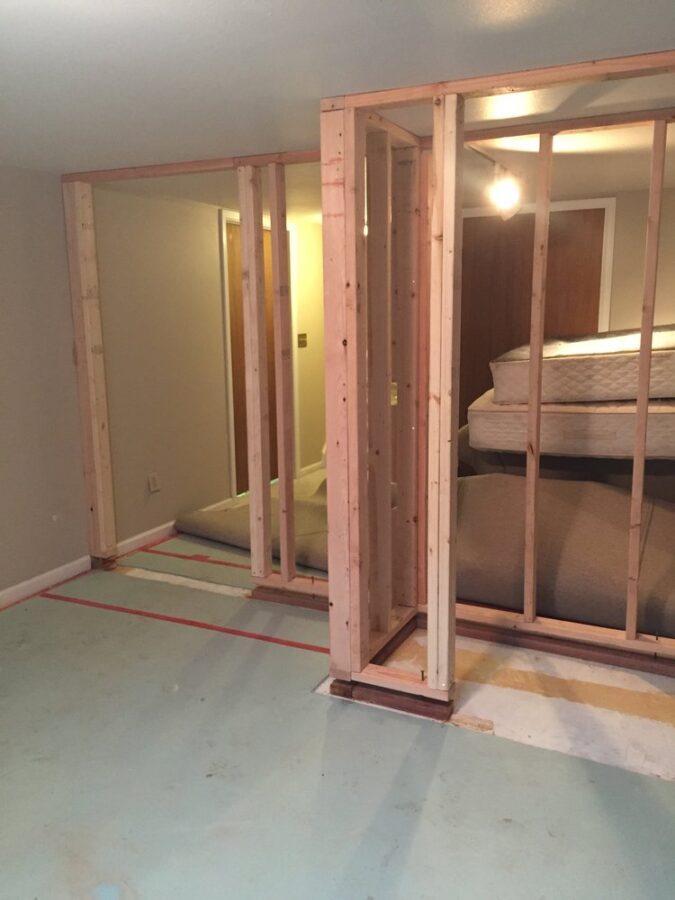
Most basement bedrooms use wood framing for walls. Here’s how:
- Mark your wall layout on the floor
- Use treated lumber for the bottom plate (it touches the concrete)
- Build wall frames and raise them into place
- Attach frames to the floor and ceiling joists
Framing also lets you add electrical wiring and insulation.
Choosing Insulation
Basements lose heat through the ground. Good insulation keeps the room comfortable and saves energy.
Common insulation choices:
- Rigid foam board: Won’t absorb water and fits well against basement walls
- Spray foam: Seals cracks and insulates at the same time
- Fiberglass batts: Use only with a vapor barrier
Insulate both the walls and rim joists (where the floor meets the wall). This makes a big difference in comfort.
Soundproofing Tips
Basement bedrooms can be noisy if footsteps or water pipes are overhead. For extra quiet:
- Add insulation in the ceiling between joists
- Use double drywall or sound-damping drywall
- Wrap noisy pipes with foam sleeves
Most beginners forget about sound, but it’s key for a restful bedroom.
Electrical And Lighting
A basement often needs new outlets, lighting, and maybe even its own circuit. Good lighting makes the space feel open and cheerful.
Plan The Electrical Layout
Decide where you want:
- Outlets near the bed and desk
- Overhead lights and switches
- TV or internet connections
Most codes require outlets every 6–12 feet. Plan for more than you think you need—bedrooms use a lot of devices today.
Types Of Lighting
Basements have little natural light, so layer your lighting for comfort:
- Recessed ceiling lights for general brightness
- Wall sconces or table lamps for soft, cozy light
- Accent lights for art or features
- LED strip lights under beds or shelves for a modern touch
Choose warm white bulbs (2700–3000K) for a relaxing feel.
Electrical Safety
Always hire a licensed electrician for major work. This is not a good place to cut corners. Electrical mistakes can be dangerous and may void your insurance.
Egress Windows And Exits
Safety is the law when it comes to basement bedrooms. Most areas require at least one egress window—a window big enough for someone to climb out during an emergency.
Egress Window Requirements
While codes vary, a typical egress window must:
- Have a minimum opening of 20 inches wide by 24 inches high
- Offer a total opening area of at least 5.7 square feet
- Have the bottom of the window no more than 44 inches off the floor
If your basement walls are below ground, you may need to dig a window well outside. This is a big job but worth it for safety and resale value.
Other Exit Options
If you have a walk-out basement, a door may count as an exit. Always check your local rules. Never use a bedroom in a basement without a proper escape route.
Heating, Cooling, And Ventilation
Basements are often colder and more humid than the rest of the house. To make your bedroom comfortable year-round, focus on heating, cooling, and air flow.
Heating Options
- Extend your home’s HVAC: Add vents from your main system
- Electric baseboard heaters: Simple to install and easy to control
- Radiant floor heating: Very comfortable but more expensive
Cooling Solutions
Basements are cooler in summer, but they can get stuffy. Use:
- Portable air conditioners or ductless mini-split systems
- Ceiling fans to circulate air
Ventilation
Fresh air is important for health, especially in a basement. Options include:
- HRV or ERV systems: These bring in fresh air and remove stale air
- Trickle vents in windows for simple air exchange
- Bathroom-style exhaust fans if humidity is a problem
Never block air vents or windows. Poor ventilation can cause mold and health issues.
Flooring Choices For Basement Bedrooms
Choosing the right flooring is key. Basements need floors that can handle moisture, stay warm, and look nice.
| Flooring Type | Pros | Cons |
|---|---|---|
| Carpet | Warm, soft, noise-reducing | Can trap moisture, may need special pad |
| Vinyl plank | Water-resistant, easy to clean, looks like wood | Can feel cold, needs a flat surface |
| Laminates | Many styles, affordable | Some types can swell if wet |
| Tile | Very durable, water-proof | Feels cold, hard to install |
| Engineered wood | Warmer than tile, real wood look | More expensive, needs moisture barrier |
Tip: Avoid solid hardwood and cheap laminate. These can warp or swell if they get wet.
Subflooring For Comfort
A subfloor lifts your finished floor above the cold concrete. Use moisture-resistant subfloor panels or create your own with treated plywood and foam.

Credit: www.youtube.com
Walls, Ceilings, And Finishes
Once the bones are in place, it’s time for the finishing touches that make your bedroom feel cozy and inviting.
Drywall Installation
Hang drywall on your framed walls and ceiling. Tape, mud, and sand the seams for a smooth finish. Use moisture-resistant drywall (often called “green board”) for extra protection.
Painting
Choose light colors for walls and ceiling—soft whites, pale blues, or light grays. These make the space feel bigger and brighter. Use paints with a mildew-resistant additive for long-lasting results.
Ceiling Options
- Drywall: Clean and seamless, but hard to access pipes or wires later
- Drop ceiling tiles: Easy to install and maintain, but can look less modern
- Wood planks or beams: Add warmth and character
If you want a high-end look, add crown molding or indirect lighting at the ceiling edge.
Closet And Storage Solutions
A bedroom needs storage. Basements can be tricky because of low ceilings or odd shapes, but there are creative ways to add space.
Built-in Closets
A built-in closet gives you a place for clothes, shoes, and storage bins. If space is tight, use sliding doors instead of swinging ones.
Freestanding Wardrobes
If a built-in is not possible, try a wardrobe or armoire. These come in many sizes and can be moved if you change the room layout.
Under-bed Storage
Use drawers or rolling bins under the bed for extra storage. This is perfect for small bedrooms.
Wall Shelves
Floating shelves or wall-mounted cabinets keep clutter off the floor and make the room feel bigger.
Soundproofing And Privacy
Privacy is important in a basement bedroom, especially if people walk upstairs or do laundry nearby.
Soundproofing Tips
- Add insulation in all walls and ceilings
- Use solid-core doors instead of hollow ones
- Seal gaps around doors and windows with weatherstripping
- Place rugs or carpets to absorb sound
Visual Privacy
- Use blackout curtains or shades on windows
- Add a lock to the door if needed
These small touches make the bedroom truly private and comfortable.
Lighting Design For A Cozy Feel
Basement bedrooms need smart lighting to feel welcoming, not like a cave.
Layered Lighting
Use a mix of:
- Overhead lights for general brightness
- Bedside lamps for reading
- Accent lights for art or shelves
Install dimmers so you can adjust the mood. Try LED bulbs for energy savings and long life.
Natural Light
If you have an egress window, keep it clear of heavy blinds. Use sheer curtains to let in daylight but keep privacy.
Decorating And Furnishing Your Basement Bedroom
This is where your style shines. Decorating transforms the basement from plain to personal.
Choose The Right Bed
Measure carefully. Sometimes, a full or queen bed fits better than a king. Low-profile beds look good with lower ceilings.
Furniture Choices
Pick furniture that fits the space:
- Compact dressers
- Wall-mounted desks or shelves
- Folding chairs or ottomans with storage
Avoid oversized pieces—they can make the room feel crowded.
Add Color And Texture
Use colorful bedding, rugs, and throw pillows to brighten the space. Add plants for a fresh look (choose low-light varieties like snake plants or pothos).
Personal Touches
Hang art, family photos, or a mirror to reflect light. Mirrors also make the room look bigger.
Safety And Code Compliance
A bedroom in the basement must be as safe as any room upstairs. This goes beyond egress windows.
Smoke And Co Detectors
Install a smoke detector and a carbon monoxide detector in or near the bedroom. These may be required by law.
Electrical And Fire Safety
- Use only certified electricians
- Do not overload outlets
- Keep space heaters away from bedding
Permits And Inspections
Always get the right permits and schedule inspections as needed. This protects you and your investment.
Cost Breakdown: What To Expect
Basement bedroom projects can have a wide range of costs. Here’s a breakdown of where your money goes:
| Item | Average Cost |
|---|---|
| Waterproofing | $2,000–$6,000 |
| Egress window | $2,500–$5,000 |
| Framing & insulation | $1,500–$4,000 |
| Electrical work | $1,000–$3,000 |
| Flooring | $1,200–$3,000 |
| Drywall & painting | $1,500–$3,500 |
| Closet/storage | $500–$1,500 |
| Heating/cooling | $800–$2,500 |
| Finishes & décor | $500–$2,000 |
Many projects cost around $20,000–$30,000 for a full, code-compliant bedroom with all finishes. Doing some work yourself can save money, but always hire professionals for electrical, plumbing, or major structural changes.
Common Mistakes To Avoid
Even with a great plan, it’s easy to make mistakes when building a basement bedroom. Here are some to watch for:
- Ignoring moisture problems: Always solve leaks and dampness first.
- Skipping permits: Unpermitted work can cause problems when selling or insuring your home.
- Not planning for egress: Without a proper window or exit, the room may not be legal or safe.
- Poor lighting: Basements need more light than you think.
- Cheap flooring: Avoid materials that can’t handle moisture.
- Forgetting ventilation: Stale air and humidity can cause health problems.
- Underestimating costs: Always add extra to your budget for surprises.
- Overcrowding the room: Choose furniture that fits the space.
Many beginners miss the importance of subflooring and soundproofing—these make a big difference in comfort but are often skipped to save money.
Timeline: How Long Will It Take?
Building a bedroom in the basement is not a weekend project. A typical timeline:
- Planning and permits: 2–4 weeks
- Waterproofing and prep: 1–2 weeks
- Framing and rough-ins: 1–2 weeks
- Electrical and plumbing: 1 week
- Drywall and painting: 1–2 weeks
- Flooring and finishes: 1 week
- Closet and decor: 1 week
Most projects take about 6–10 weeks from start to finish, depending on your schedule and whether you hire professionals.
Diy Vs Hiring Professionals
Some homeowners do much of the work themselves. Others hire contractors. Here’s how the options compare:
| Aspect | DIY | Professional |
|---|---|---|
| Cost | Lower, but more time required | Higher, but faster and reliable |
| Quality | Depends on skill | Usually high, meets code |
| Permits | Must handle yourself | Usually included |
| Time | Slower, especially for beginners | Faster, more efficient |
| Safety | Risk of mistakes | Safer, less risk |
If you’re not experienced with electrical, plumbing, or framing, hire out those parts. You can still save money by painting, installing floors, or finishing trim yourself.
Credit: roomfortuesday.com
Two Insights Beginners Often Miss
- Subflooring is more important than you think. It adds warmth, comfort, and protects against small leaks. Skipping it can make the bedroom feel cold and damp—even with nice carpet.
- Air quality matters. Many people focus on looks, but forget fresh air. Adding an HRV/ERV or a good exhaust fan can make the room healthier and more comfortable long-term.
Final Touches: Making The Bedroom Feel Like Home
Once the basics are done, add your personal style. Here are a few ideas:
- Hang soft curtains for privacy
- Add a cozy area rug, even over carpet
- Use smart lighting with phone controls
- Decorate with plants or art
- Keep clutter under control with smart storage
A finished basement bedroom is more than just walls and floors—it’s a space for rest, creativity, and comfort.
A well-designed basement bedroom adds real value to your home. It solves space problems, boosts resale value, and creates a cozy retreat. But the most successful projects start with careful planning, good moisture control, and a focus on safety. Don’t rush—take each step carefully, and your new bedroom will serve you well for years.
Frequently Asked Questions
What Is The Minimum Ceiling Height For A Basement Bedroom?
Most building codes require a minimum ceiling height of 7 feet for basement bedrooms. Some areas allow slightly lower ceilings if the room meets other safety standards. Always check your local rules before starting your project.
Do I Need A Permit To Build A Bedroom In The Basement?
Yes, in most cases, you’ll need a building permit for adding a bedroom in the basement. Permits ensure your work meets safety codes, especially for egress windows, electrical wiring, and fire safety. Failing to get a permit can cause problems when selling or insuring your home.
How Much Does It Cost To Build A Basement Bedroom?
A basement bedroom usually costs $10,000 to $40,000 depending on the size, finishes, and if you hire professionals. Major costs include waterproofing, insulation, egress window, flooring, and electrical work. Saving money by doing some work yourself is possible, but always hire pros for electrical and plumbing.
What Kind Of Flooring Is Best For Basement Bedrooms?
The best flooring for basements is vinyl plank, tile, or engineered wood. These handle moisture better than solid hardwood or cheap laminates. Carpet can work if you use a moisture-resistant pad and control humidity. Always use a subfloor for extra warmth and protection.
Where Can I Find More Information About Building Codes For Basement Bedrooms?
Your local city or county government website is the best place for up-to-date information. For a general overview of building codes, see the National Association of Home Builders.
Building a bedroom in the basement is a big project, but with the right planning and attention to detail, you can create a space that’s safe, comfortable, and adds real value to your home.