
A 9×9 pan is a common size in many kitchens. You see it in recipes for brownies, casseroles, cakes, and more. But when a recipe asks for “2 quarts,” and you only have a 9×9 pan—or vice versa—you might feel confused.
Knowing the quart capacity of your 9×9 pan helps you substitute pans, scale recipes, and avoid messy kitchen disasters. Still, the answer isn’t as simple as it sounds. There are different pan depths, ways to measure, and factors to consider.
Let’s dig deep into how many quarts are in a 9×9 pan, what affects its volume, and how to use this information for better baking and cooking.
Understanding Pan Sizes And Volume
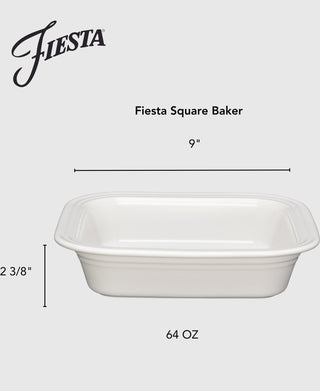
Before you can answer how many quarts are in a 9×9 pan, you need to understand a few basics. A 9×9 pan means it is 9 inches long and 9 inches wide. But volume also depends on the pan’s height (or depth). Not all 9×9 pans are the same height, and that changes how much they can hold.
Volume is usually measured in cubic inches for pans. To convert this to quarts, you need to know both the area and the height.
For example, a standard 9×9 pan is usually 2 inches deep. But some may be 1.5 or even 3 inches deep. That’s why you’ll see different answers online. The depth matters more than you might think. It’s easy to assume that all 9×9 pans will hold the same amount, but the difference between 1.5, 2, and 3 inches deep can mean the difference between a perfect meal and a kitchen mess.
Not only that, but some recipes are written for “shallow” or “deep” pans without saying the exact depth. This is why it’s smart to check your pan’s depth before starting a new recipe.
Calculating The Volume Of A 9×9 Pan
To find the volume of any rectangular pan, multiply the length, width, and height:
Volume = Length x Width x Height
For a 9×9 pan that’s 2 inches deep:
9 inches x 9 inches x 2 inches = 162 cubic inches
But how does this number become quarts? Here’s how:
- 1 quart = 57.75 cubic inches
So, you divide the total cubic inches by 57.75:
162 ÷ 57.75 ≈ 2.8 Quarts
So, a standard 9x9x2 inch pan holds about 2.8 quarts.
It’s worth noting that most recipes round these numbers, so you may see some sources say “a 9×9 pan is 3 quarts. ” But for accuracy, always use the calculated value if you want to avoid overflow or dry food.
If your pan has sloped sides or rounded corners, the real volume may be a little less because you lose some space compared to a perfectly straight-sided pan.

Credit: www.amazon.com
Why Quart Measurement Matters
You might wonder why knowing quarts is useful. Many recipes, especially older or professional ones, give pan sizes in quarts. Some pans are labeled by volume, not just length. If you want to swap pans or scale a recipe, you need to match the volume, not just the shape.
For example, if a casserole recipe calls for a “2-quart baking dish,” you need to know if your 9×9 pan is close enough. Using the wrong size can result in overflow, undercooked food, or dry edges.
Pan volume is especially important when baking cakes, custards, or soufflés. These foods depend on the right thickness to cook evenly. If your pan is too shallow or too deep, the center might stay raw, or the edges may burn.
The 9 Key Factors For Understanding Quarts In A 9×9 Pan
Let’s break down 9 important items that affect or relate to how many quarts are in a 9×9 pan. Each one helps you measure, substitute, or cook more confidently.
1. Standard Depths For 9×9 Pans
Most 9×9 pans are between 1.5 to 3 inches deep. The most common is 2 inches. Here’s how different depths affect the quart measurement:
- 9x9x1.5 inches: 121.5 cubic inches = 2.1 quarts
- 9x9x2 inches: 162 cubic inches = 2.8 quarts
- 9x9x3 inches: 243 cubic inches = 4.2 quarts
As you can see, the quart capacity changes a lot with depth. Always check your pan’s depth before substituting. If your recipe needs a true 2-quart pan, a shallow 9×9 might be closer than a deep one.
| Pan Size | Depth (inches) | Volume (cubic inches) | Quarts |
|---|---|---|---|
| 9×9 | 1.5 | 121.5 | 2.1 |
| 9×9 | 2 | 162 | 2.8 |
| 9×9 | 3 | 243 | 4.2 |
Key Insight: Always measure your pan’s depth before assuming its quart size. If you have a pan with a rolled edge or rim, remember to measure only the inside, not the total outside height.
2. Material Differences: Glass Vs. Metal Vs. Ceramic
A 9×9 pan can be glass, metal, or ceramic. Does the material affect how many quarts it holds? In most cases, the inside dimensions are what matter. However, the thickness of the sides may reduce the actual usable space, especially in ceramic pans.
- Glass pans usually have straight sides and accurate measurements.
- Metal pans sometimes have slightly sloped sides, reducing usable volume.
- Ceramic pans often have thick walls, making the inside dimensions smaller than the outside.
If you want to be exact, measure the inside of your pan, not the outside.
Also, material affects cooking, not just volume. Glass and ceramic retain heat longer than metal, so your food may stay hot or continue to cook after you take it out of the oven. This is especially true for casseroles and baked desserts.
If you switch between materials, check your food for doneness a few minutes early.
Non-Obvious Insight: Some glass and ceramic pans are handmade or vintage, so their sizes can be irregular. Always measure before assuming they match modern standards.
3. Measuring Your Pan Accurately
To know exactly how many quarts your pan holds, measure it yourself. Here’s how:
- Use a ruler or measuring tape. Measure inside edge to inside edge, not the outer rim.
- Measure the length, width, and depth.
- Multiply them to get cubic inches.
- Divide by 57.75 to get quarts.
Or, use water:
- Fill your pan with water, 1 cup at a time. Count the cups, then convert to quarts (1 quart = 4 cups).
Beginner Mistake: Many people measure the outside of the pan or forget the depth, leading to wrong conversions.
Also, don’t forget to dry your pan thoroughly before using it for baking after testing with water.
For a quick test, you can pour water from your pan into a measuring jug to see the volume at a glance.
4. Comparing 9×9 Pan To Other Common Sizes
Sometimes you don’t have a 9×9 pan, or you want to use a different size. Here’s how the 9×9 compares to other popular pans:
| Pan Size | Area (sq in) | Approx Quarts (2″ deep) |
|---|---|---|
| 8×8 | 64 | 2.2 |
| 9×9 | 81 | 2.8 |
| 11×7 | 77 | 2.7 |
| 13×9 | 117 | 3.9 |
| 2-quart round (8″) | 50 | 2.0 |
A 9×9 pan (2 inches deep) is close to an 11×7 pan in volume, and a bit larger than an 8×8 pan. If your recipe is for a 2-quart dish, a standard 9×9 pan will work but might be a little large.
Additional Example: If you have a recipe for a 13×9 pan but only a 9×9, you can fill the 9×9 pan about three-quarters full and use a muffin tin for the rest of the batter.
5. Adapting Recipes For Pan Size
If a recipe calls for a 2-quart dish and you use a 9×9 pan (2.8 quarts), your food may bake faster because it’s spread thinner. Here’s how to adjust:
- Check early: Start checking for doneness 5-10 minutes before the shortest baking time.
- Don’t overfill: If your pan is bigger, don’t fill it to the brim, or it may overflow when baking.
- Adjust proportions: For delicate recipes (like soufflés or flan), use the exact volume for best results.
Non-Obvious Tip: For some recipes, pan shape affects cooking even if the volume is the same. Brownies in a 9×9 pan will be thicker than in a 13×9 pan, affecting texture.
Additional Insight: For cakes or breads, if you use a smaller pan, the batter will be deeper, which can require lowering the oven temperature and baking longer to avoid burning the outside while the inside remains raw.
6. Converting Quarts To Cups, Liters, And Other Units
Sometimes recipes use different units. Here’s how they relate:
- 1 quart = 4 cups
- 1 quart = 32 fluid ounces
- 1 quart = 0.946 liters
If you know your 9×9 pan holds 2. 8 quarts, that’s about 11 cups or almost 2. 7 liters.
If a recipe calls for a “2-liter” dish, your 9×9 pan is a little bigger. For very precise recipes, fill your pan with water to the mark you need, then pour it out and measure.
Useful Tip: If you cook internationally, you may see recipes in liters or milliliters, so keep this conversion handy. Some measuring cups have both cup and milliliter markings, which makes things easier.
7. Shape Differences: Square Vs. Round Vs. Rectangular
A 9×9 pan is square. How does this compare with round or rectangular pans?
- Round pans: An 8-inch round pan holds less than a 9×9 square.
- Rectangular pans: A 13×9 pan holds much more.
For a similar area and volume, a 9×9 pan is closest to a 10-inch round pan or an 11×7 rectangular pan.
Practical Example: If you’re making lasagna and the recipe calls for a 2.5-quart round dish, a 9×9 pan (2 inches deep) will hold a bit more, so you might need to shorten the baking time.
Extra Detail: Some recipes call for round pans because they create a different heat flow in the oven. If you substitute a square for a round pan, always check the food a little early, especially for baked goods.
8. When To Use A 9×9 Pan
A 9×9 pan is perfect for recipes that serve 6 to 8 people. It’s popular for:
- Brownies and bars
- Small casseroles
- Cornbread
- Baked pasta
- Bread pudding
If you have a family of four, a 9×9 pan is often the right size for a weeknight dinner or a dessert with leftovers.
Extra Insight: Some recipes call for a 9×9 pan simply because it gives the best thickness and texture, not just the right volume.
More Examples: A 9×9 pan is often chosen for baked macaroni and cheese, vegetable gratin, or smaller lasagnas. If you want to double a recipe for a crowd, you can usually move up to a 13×9 pan.
9. Mistakes To Avoid When Substituting Pans
Substituting pans by volume sounds simple, but it can lead to mistakes. Here are common errors:
- Ignoring pan depth: Always check the depth, not just the width and length.
- Overfilling: If your pan is too small, the food can overflow and burn.
- Underbaking: A larger pan means thinner food, which bakes faster.
- Changing textures: Swapping a square for a round pan can change how edges and centers cook.
- Using the wrong material: Glass and ceramic heat differently than metal. If you switch, check your food early.
Pro Tip: When in doubt, fill your pan with water and measure, or use a reliable online converter like Cooking Light.
Extra Warning: Don’t forget that dark metal pans cook faster than light-colored or glass pans. If you use a dark pan, reduce the oven temperature by 25°F to prevent burning.
Real-world Examples
Let’s see how these principles work in real recipes.
Example 1: Brownies
A classic brownie recipe might call for an 8×8 pan (2.2 quarts). If you use a 9×9 pan (2.8 quarts), your brownies will be thinner and bake faster. Start checking 10 minutes early.
Extra Tip: If you want thicker brownies, increase the batter by 25% when moving from 8×8 to 9×9.
Example 2: Lasagna
If a recipe asks for a “2-quart casserole,” but you only have a 9×9 pan, you’re safe if your pan is 2 inches deep. If it’s deeper, don’t fill it all the way.
Practical Solution: If you have leftover filling, bake it in a small ramekin or muffin tin for a chef’s snack.
Example 3: Swapping For A 13×9 Pan
A 13×9 pan (2 inches deep) holds about 3. 9 quarts. That’s a lot more than a 9×9 pan (2. 8 quarts). If you double a 9×9 recipe for a party, a 13×9 pan is usually the right choice.
Non-Obvious Detail: If your 13×9 pan is glass or ceramic, the extra mass can hold heat longer, so let your food cool a bit before cutting to avoid crumbling.
How To Measure Your Pan’s Capacity: Step-by-step
If you want to be exact, here’s a simple way:
- Place the empty pan on a flat surface.
- Fill it with water, one cup at a time.
- Count the cups as you go.
- Stop when you reach the top (but not overflowing).
- Divide the total cups by 4 to get quarts.
For example, if it takes 11 cups, your pan is about 2. 75 quarts.
Advanced Tip: For baking, don’t fill a pan more than three-quarters full to avoid overflow.
If you want to avoid spills, especially for soufflés or cakes that rise, fill only halfway.
How Pan Volume Affects Cooking
Using the wrong pan size can change:
- Baking time (thinner food cooks faster)
- Texture (brownies or cakes can be dry at the edges and raw in the center)
- Appearance (edges can be crispier in larger pans)
Non-Obvious Insight: Some recipes (like cheesecakes) are very sensitive to pan volume. Others (like casseroles) are more forgiving. Know which you’re making.
Extra Example: For bread pudding, if you use a bigger pan, the custard will set faster, and the texture will be firmer. In a smaller, deeper pan, it stays softer and creamier.
Using Conversion Tools And Charts
Many websites offer conversion calculators for pan sizes and volumes. They can help you quickly find out if your pan is close enough to the recipe’s needs.
For example, type “pan size conversion” into your search engine, or use a reliable tool like Cooking Light.
But remember: Always measure your own pan if accuracy matters.
Extra Advice: Keep a printed chart of your common pans on your fridge or inside a cabinet door for fast reference.
Credit: fiestafactorydirect.com
Practical Tips For Everyday Cooks
- Keep a measuring tape in your kitchen for quick checks.
- Write down your most-used pans’ capacities and tape it inside a cupboard.
- When in doubt, measure with water.
- Adjust oven times when using a different size pan—shallower pans cook faster.
- Don’t overfill—leave about 1/2 to 1 inch at the top for bubbling foods.
Extra Tip: If you often cook for a crowd or a small group, consider having two or three common pan sizes on hand. This makes it easier to swap or double recipes.
Frequently Asked Questions
How Can I Convert A 9×9 Pan Recipe To A Different Pan Size?
To convert, compare the areas (length x width) and depths. For example, if you want to use an 8×8 pan instead of a 9×9, reduce the recipe by about 20%, or check for doneness early since the food will be thicker.
You can also split the batter or filling between two smaller pans if you don’t have the exact size.
Can I Use A 9×9 Pan Instead Of A 2-quart Casserole Dish?
Usually, yes. A standard 9×9 pan (2 inches deep) holds about 2. 8 quarts, so it’s a bit bigger than 2 quarts. Adjust your recipe to avoid overfilling, and check for doneness early.
Remember, if your pan is deeper, you may need to bake a little longer.
What If My 9×9 Pan Is Glass And My Recipe Calls For Metal?
Glass pans heat differently and may require lower oven temperatures. Reduce your oven temp by 25°F and check for doneness early. Glass also holds heat, so food continues to cook after you remove it from the oven.
Extra Tip: Be careful with sudden temperature changes—never put a cold glass pan into a hot oven, or it could crack.
How Do I Clean A 9×9 Pan Safely?
Use warm soapy water for most pans. For tough stains (especially on glass or ceramic), soak the pan, then scrub with a non-abrasive pad. Avoid metal scouring pads on nonstick or glass surfaces.
For baked-on messes, sprinkle baking soda and let it sit with water overnight before scrubbing.
Is The Quart Measurement The Same For All 9×9 Pans?
No. Quart capacity changes based on the pan’s depth and thickness of the sides. Always measure the inside dimensions and depth for the most accurate result.
If you have an older or handmade pan, sizes may not match modern standards, so double-check before starting your recipe.
Credit: fiestafactorydirect.com
Wrapping Up
Knowing how many quarts are in a 9×9 pan is a small detail that makes a big difference in your cooking and baking results. Most 9×9 pans hold between 2.1 and 4.2 quarts, depending on their depth. The standard 9x9x2 inch pan holds about 2.8 quarts, which is slightly more than a “2-quart” dish, making it a flexible choice for most recipes. Always check the depth, measure your pan if you’re not sure, and adjust recipe times and amounts as needed. This simple knowledge helps you swap pans, avoid messes, and get better results in the kitchen. For more details on pan sizes and conversions, check out reliable resources like Wikipedia. Happy cooking!