
Stainless steel cookware is a favorite in kitchens around the world. It is durable, non-reactive, and looks beautiful for years. But many cooks find that food sometimes sticks to stainless steel pans, especially when they are new. This leads to frustration and wasted food. The answer? Seasoning your stainless steel pots and pans. While most people think of seasoning as something you do with cast iron, stainless steel can also benefit from this process.
Seasoning stainless steel creates a thin, natural non-stick coating on the surface. This reduces sticking and makes cleaning easier. You do not need fancy tools or expensive oils. With the right method, even a beginner can season stainless steel cookware at home.
In this guide, you’ll learn exactly how to season stainless steel pots and pans, why it matters, and how to keep them in top condition for years.
Why Season Stainless Steel Pots And Pans?
Many people ask why stainless steel, which is already non-reactive, needs to be seasoned. The answer lies in the surface of the metal. Brand new stainless steel pans have a smooth, shiny finish. This is great for appearance, but it means food can easily stick, especially proteins like eggs, fish, or chicken. Seasoning creates a micro-thin layer of polymerized oil on the metal. This layer acts as a barrier, filling in tiny pores and rough spots that cause sticking.
Other benefits of seasoning include:
- Easier cleaning: Food residue lifts off more easily after cooking.
- Longer life: The oil barrier protects against water spots and stains.
- Better flavor: Properly seasoned pans let the natural flavor of foods shine, without metallic notes.
- Less oil needed: You can cook with less fat, as the pan is less sticky.
What You Need To Season Stainless Steel
Before you start, gather your materials. Seasoning stainless steel does not require any special or expensive items. Here’s what you need:
- Stainless steel pan or pot (make sure it’s clean and dry)
- High smoke point oil (examples: Grapeseed, canola, sunflower, avocado, or vegetable oil)
- Paper towels or a clean cloth
- Stove or oven (depending on your preferred method)
- Tongs (optional, for safety when handling hot pans)
Choosing The Right Oil
Not all oils are equal for seasoning. The best choice is an oil with a high smoke point—the temperature at which the oil starts to burn and produce smoke. Oils with low smoke points (like butter or extra virgin olive oil) can leave a sticky residue instead of forming a stable coating.
Here is a comparison of common oils for seasoning:
| Oil Type | Smoke Point (°F) | Best For Seasoning? |
|---|---|---|
| Grapeseed Oil | 420 | Yes |
| Canola Oil | 400 | Yes |
| Sunflower Oil | 440 | Yes |
| Avocado Oil | 520 | Excellent |
| Butter | 300 | No |
| Extra Virgin Olive Oil | 350 | No |
Choose an oil that fits your budget and is easily available. Avoid flavored or specialty oils as they can burn and produce unwanted flavors.
How To Season Stainless Steel Pots And Pans: Step-by-step
Seasoning is simple but requires attention to detail for best results. You can season your stainless steel on the stove or in the oven. The stove method is quicker and works well for frying pans and small pots. The oven method is better for large or oddly-shaped cookware.
Step 1: Clean Your Pan
Start with a clean, dry pan. If your pan is new, wash it with hot, soapy water to remove any factory oils or residues. Use a non-abrasive sponge or cloth. Dry it completely with a towel—water can block oil from bonding to the surface.
Step 2: Heat The Pan
Place the pan on the stove over medium heat. Let it heat for 2-3 minutes. This opens the pores of the stainless steel, making it easier for the oil to bond. If you sprinkle a few drops of water in the pan, they should dance and evaporate quickly—this means the pan is ready.
Step 3: Add Oil
Pour a small amount (about 1-2 teaspoons) of your chosen oil into the pan. Use a paper towel or cloth to spread the oil over the entire cooking surface. Don’t forget the sides. The layer should be thin—excess oil can lead to sticky spots.
Step 4: Heat Until Smoking
Leave the oiled pan on medium heat. Watch carefully. The oil will start to shimmer, then lightly smoke. This is the moment when the oil bonds to the metal. Let the pan smoke for 2-3 minutes, moving it gently if needed to heat evenly.
Step 5: Wipe Away Excess Oil
Turn off the heat and let the pan cool until it’s safe to touch, but still warm. Use a clean paper towel to wipe away any extra oil. The surface should look smooth, not greasy.
Step 6: Repeat If Needed
For best results, repeat steps 3-5 two or three times. Each layer builds a stronger, more effective seasoning. After the final round, your pan is ready to use.
Oven Method For Seasoning
For large pots, roasting pans, or if you want to season several pieces at once, the oven method is ideal.
- Preheat your oven to 400°F (204°C).
- Wash and dry your cookware.
- Rub a thin layer of high smoke point oil inside the pan.
- Place the pan upside down on the oven rack (put a sheet of foil under to catch drips).
- Bake for 1 hour.
- Turn off the oven and let the pan cool inside.
- Wipe off any excess oil.
The oven method allows for more even heating and is less messy for deep pots.
How Seasoning Works: The Science Behind It
Seasoning is more than just adding oil. When oil is heated past its smoke point, its molecules change structure. They bond together and to the metal, creating a polymerized coating. This layer is hard, thin, and sticks to the pan, reducing food sticking.
Stainless steel has tiny pores you cannot see. Seasoning fills these pores, so food is less likely to get trapped and burn. The more you use and season your pan, the better the coating becomes.
Tips For Success: Getting The Best Results
Seasoning is simple, but these tips can help you avoid common mistakes and get a better result:
- Use very thin layers of oil. Thick oil will become sticky and uneven.
- Heat is key. The oil must reach the smoke point to bond correctly.
- Don’t rush. Give the oil time to smoke and polymerize fully.
- Re-season regularly. Even a seasoned pan will lose its coating over time, especially after washing with soap or scrubbing.
- Cook with oil. Every time you cook with a little oil, you strengthen the seasoning layer naturally.
- Avoid dishwasher. Dishwashers and harsh soaps can strip seasoning. Hand wash gently when possible.
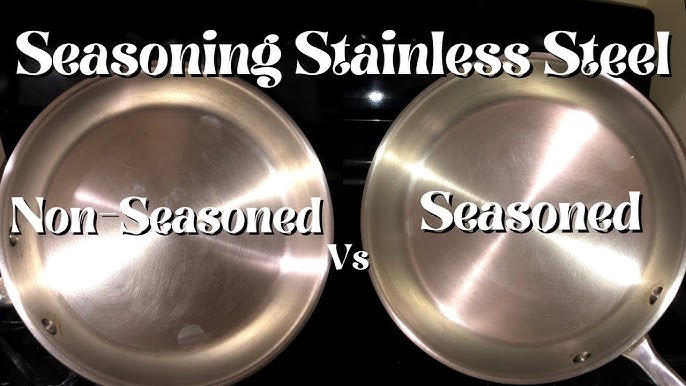
Seasoned Stainless Steel Vs. Non-seasoned: What’s The Difference?
Many people wonder if seasoning really makes a difference. The answer is clear when you compare the two side by side.
| Feature | Seasoned Stainless Steel | Non-Seasoned Stainless Steel |
|---|---|---|
| Food Sticking | Much less | Common, especially with eggs and fish |
| Cleaning | Easier, most food wipes off | Scrubbing often needed |
| Appearance | May darken slightly, but even finish | Shiny but can stain |
| Oil Needed for Cooking | Less required | More required to prevent sticking |
| Durability | Surface protected by oil | More prone to water spots or discoloration |
A well-seasoned stainless steel pan can rival the non-stick qualities of more expensive cookware, but without the chemicals or coatings that wear off over time.

Credit: www.reddit.com
How Often Should You Season Stainless Steel?
There’s no fixed rule for how often to season. It depends on how you use and clean your cookware. As a general guide:
- First time: Season 2-3 times in a row for best results.
- After each deep cleaning: If you use strong soap, scrub, or put the pan in the dishwasher, re-season.
- Every few months: Light seasoning helps maintain the non-stick effect.
- When you notice sticking: If food starts to stick more, it’s time to re-season.
Some cooks season their pans every week, while others do it just a few times a year. Pay attention to how your pan behaves and adjust as needed.
Common Mistakes When Seasoning Stainless Steel
Even experienced cooks make errors when seasoning pans. Here are mistakes to avoid:
- Using too much oil: Thick oil layers become sticky and attract dust.
- Not heating enough: If the oil doesn’t reach smoke point, it won’t bond properly.
- Skipping cleaning: Residue or water on the pan prevents oil from sticking.
- Using flavored or low smoke point oils: This can cause burning, off flavors, or a weak coating.
- Not wiping off excess: Pools of oil can turn gummy.
- Relying on seasoning to fix everything: Even with seasoning, you may need to preheat the pan and use a small amount of oil when cooking.
Understanding these pitfalls helps you get better results and saves time.
Caring For Seasoned Stainless Steel
Once you’ve seasoned your pan, a little care keeps it working well for years. Here’s how to protect your investment:
- Hand wash with warm water after most uses. Mild soap is okay, but avoid harsh scrubbing.
- Dry completely. Water spots can form if the pan is left wet.
- Store in a dry place. Don’t stack with wet or dirty pans.
- Re-season as needed. If you notice dull spots or sticking, a quick seasoning refresh helps.
If your pan develops sticky spots, heat it gently and wipe with a clean paper towel. If needed, scrub gently and repeat seasoning.
How To Cook With A Seasoned Stainless Steel Pan
A seasoned pan works best with the right cooking technique. Here are tips for cooking with seasoned stainless steel:
- Preheat the pan. Place it on the stove over medium heat for 1-2 minutes. The pan should be hot before adding food.
- Add oil after preheating. Swirl a small amount of oil to coat the surface.
- Let food release naturally. Proteins like eggs or fish will stick at first, but release as they finish cooking.
- Avoid using metal utensils. Wooden or silicone spatulas are gentle and help maintain the seasoning layer.
Cooking in a seasoned pan is different from a non-stick pan. With practice, you’ll learn the right timing for flipping and stirring.
Myths And Misunderstandings About Seasoning Stainless Steel
Some common myths can confuse cooks:
- Myth: Only cast iron needs seasoning. In fact, stainless steel also benefits from seasoning, though the process is lighter.
- Myth: Seasoning makes stainless steel non-stick forever. Seasoning helps, but it’s not magic. Good cooking technique and care are still important.
- Myth: All oils work the same. High smoke point oils create a better, more stable seasoning.
- Myth: Seasoning is dangerous. Properly seasoned pans are safe and do not release harmful chemicals.
Understanding the facts helps you avoid mistakes and get better results.
When Not To Season Stainless Steel
There are situations where seasoning is not needed or not helpful:
- If using for boiling or steaming: Water-based cooking does not benefit from seasoning.
- If pan has a non-stick coating: Do not season coated stainless steel; it may damage the surface.
- If you prefer a shiny look: Seasoned pans darken slightly; if appearance matters more than function, you may skip it.
For most everyday cooking, though, seasoning is a smart choice.

Credit: www.youtube.com
How Seasoned Stainless Steel Compares To Other Cookware
You may wonder how seasoned stainless steel stacks up against other cookware types.
| Cookware | Non-stick Ability | Durability | Maintenance | Best For |
|---|---|---|---|---|
| Seasoned Stainless Steel | Good | Very High | Simple, re-season as needed | Everyday cooking |
| Cast Iron | Excellent | Very High | Requires regular seasoning | High-heat searing, slow cooking |
| Non-stick (Teflon) | Excellent | Low to Medium | Gentle washing, no metal utensils | Eggs, pancakes |
| Ceramic | Good | Medium | Hand wash, avoid high heat | Low-oil cooking |
Seasoned stainless steel is a great middle ground: strong, safe, and with good non-stick qualities if cared for properly.
Non-obvious Insights For Better Seasoning
Here are some expert tips that many beginners miss:
- Temperature control is crucial. If your pan gets too hot, the oil can burn and create a sticky, uneven layer. Use medium heat and watch the oil closely.
- Use seasoning as a maintenance routine, not a one-time fix. Even if your pan seems perfect, regular light seasoning after cleaning keeps the surface strong and non-stick.
- Try seasoning after acidic cooking. If you cook tomato sauce or vinegar-based dishes, these acids can strip seasoning. Do a quick re-season afterward.
- Seasoning can reduce discoloration. Over time, stainless steel can develop blue or rainbow stains from heat. Seasoning helps reduce and hide these marks.
- Don’t season the outside. Focus only on the cooking surface. Seasoning the outside can cause smoke and make cleaning harder.
These advanced tips can help your stainless steel cookware perform its best for years.
Credit: www.youtube.com
Frequently Asked Questions
How Do I Know If My Stainless Steel Pan Needs To Be Re-seasoned?
If you notice more food sticking than usual, or if the surface looks dull or blotchy, it’s time to re-season. After washing with strong soap or scrubbing, always check if the non-stick effect is still there.
Can I Season Stainless Steel In The Oven If The Handles Are Plastic?
No. Only use the oven method if your pan and handles are all metal. Plastic handles can melt or release harmful chemicals. For pans with plastic handles, use the stovetop seasoning method instead.
Is It Safe To Cook Acidic Foods In A Seasoned Stainless Steel Pan?
Yes, but be aware that acids like tomato or citrus can wear down the seasoning faster. It’s safe, but you may need to re-season your pan afterward to restore the non-stick layer.
Can I Use Butter Or Olive Oil For Seasoning?
It’s best to avoid butter or extra virgin olive oil for seasoning, as their low smoke point can leave a sticky, uneven layer. Use high smoke point oils like canola, grapeseed, or avocado oil for better results.
Where Can I Learn More About The Science Of Seasoning Cookware?
For a deeper look at the science behind seasoning, see this resource from Wikipedia.
With proper seasoning, your stainless steel pots and pans will become your favorite kitchen tools. They’ll last a lifetime, cook beautifully, and clean up easily. Seasoning is not difficult—just a few steps can upgrade your cooking experience and help you get the best from your cookware for years to come.