
Sealing raw wood is one of those tasks that sounds simple, but gets tricky if you want to keep the natural color. Many people love the look of bare wood—its pale, organic beauty is hard to beat. But as soon as you add a standard sealer, the wood can turn darker, yellow, or look “wet.” This can ruin your project, especially if you’re aiming for a modern, Scandinavian, or minimalist look. If you’ve tried sealing wood only to see it change color, you’re not alone. The good news: it is possible to protect raw wood from stains, scratches, and water without ruining its original appearance.
This guide explains the science behind why wood changes color, explores the best sealers and methods to keep your wood looking as natural as possible, and addresses common mistakes. You’ll also find practical tips, data-backed comparisons, and answers to questions most beginners never think to ask. Let’s dive into the world of invisible wood protection—and learn how to seal without regret.
Why Wood Changes Color When Sealed
Understanding why raw wood shifts color when sealed helps you avoid unwanted surprises. Wood is porous, filled with tiny holes and fibers. When you apply most finishes, they soak in, changing how light reflects off the wood. This can “pop” the grain, but it also brings out deeper yellows, reds, or browns—especially in species like pine, maple, or birch.
Most sealers contain oils or resins. These are designed to enhance durability, but they often have a yellow or amber tint. Even water-based sealers, which are usually clearer than oil-based ones, can sometimes darken the wood a little.
Some woods, like white oak or walnut, handle this change better than others. But pale woods like pine, maple, or birch are most sensitive. If you want to keep that “just sanded” look, you need to be careful with your product choice and application method.
What To Look For In A Colorless Wood Sealer
To seal wood without changing its color, you need to focus on a few key factors:
- Clarity – The sealer should dry completely clear. Any yellow, amber, or milky appearance will change the wood’s tone.
- Non-yellowing – Some finishes look clear at first, but turn yellow over time. Look for formulas labeled “non-yellowing.”
- Low solids content – High solids create a thicker film and can appear cloudy or glossy.
- Matte or flat finish – Gloss or satin finishes may highlight the grain and deepen the color.
The most popular options for this are water-based polyurethanes, acrylic sealers, and specialty products like hard wax oils or waterborne lacquers. Avoid oil-based polyurethanes, varnishes, tung oil, or linseed oil if you want to keep the wood’s raw color.
Best Sealers To Keep Wood Looking Raw
Let’s look at the top products and their performance. Here’s a comparison of the most popular choices for invisible protection:
| Sealer Type | Appearance After Drying | Durability | Yellowing Over Time | Best For |
|---|---|---|---|---|
| Water-based Polyurethane | Very Clear | High | Low | Floors, Furniture |
| Acrylic Sealer | Crystal Clear | Medium | Very Low | Trim, Art, Light Use |
| Hard Wax Oil (White/Raw) | Matte, Slight White Tint | Medium-High | Very Low | Tabletops, Furniture |
| Waterborne Lacquer | Clear to Matte | High | Very Low | Cabinets, Panels |
| Shellac (Dewaxed Blonde) | Slight Amber | Medium | Low | Fine Furniture |
Water-based Polyurethane
This is the most common choice for sealing wood without a color shift. Brands like Varathane and Bona make water-based polys that dry nearly invisible. They’re easy to apply, clean up with water, and are available in matte finishes. However, even the best formulas can cause a tiny darkening—barely noticeable on most woods, but more visible on very pale ones.
Pro tip: Test on a scrap piece first, and look for “Crystal Clear” or “Ultra Clear” on the label.
Acrylic Sealers
Pure acrylic sealers, such as General Finishes High Performance, are another excellent choice. They dry even clearer than polyurethanes, and rarely yellow over time. However, they’re less durable for heavy-use surfaces like kitchen counters or floors. If your wood project is decorative or not handled much, acrylic is a great option.
Hard Wax Oils (raw/white Tint)
Some hard wax oils are designed to keep wood looking as raw as possible. Look for products labeled “raw,” “bare wood,” or “white. ” Brands like Osmo Polyx-Oil Raw and Rubio Monocoat Oil Plus 2C (White) contain a touch of white pigment to counteract yellowing.
These create a soft, matte finish, and feel very natural under the hand.
Insider tip: The white pigment can sometimes look chalky on dark woods. Always test in an inconspicuous spot.
Waterborne Lacquer
Waterborne lacquers are used by cabinetmakers for their super-clear finish and fast drying time. They are harder to apply than polyurethanes, often requiring a sprayer. But if you’re working on a large project and want a completely invisible finish, these are worth considering.
Dewaxed Blonde Shellac
Shellac is an ancient finish, and the “dewaxed blonde” variety is the clearest. It does add a faint amber tone, so it’s less ideal for ultra-pale woods. However, it’s a great barrier coat if you’re doing a multi-layer finish.
Step-by-step: How To Seal Raw Wood Without Changing Color
Now that you know what to use, here’s how to apply your sealer for the best, most invisible result.
1. Sand The Wood Smooth
Start with the right surface. Sand using 120, then 180, and finally 220 grit sandpaper. Always sand with the grain. Remove all dust with a vacuum and tack cloth. Any unevenness or dust will show under a clear finish.
2. Test Your Sealer
Before you touch your main project, apply your chosen sealer to a scrap piece or hidden area. Let it dry fully (at least 4 hours for most water-based finishes) and check the color in natural light. This is the only sure way to avoid surprises.
3. Apply Thin Coats
Use a high-quality synthetic brush, foam brush, or lint-free pad. Apply the sealer in thin, even coats. Thick coats may look cloudy or streaky.
4. Sand Between Coats
Once the first coat is dry, lightly sand with a fine (320 grit) sanding pad. Remove dust before the next coat. This smooths the surface and improves clarity.
5. Repeat For Best Protection
Most projects need 2-3 coats for durability. Always let each coat dry fully before re-coating.
6. Choose The Right Finish Level
For the raw look, choose matte or dead-flat sheens. Avoid gloss or semi-gloss, which create reflections and deepen the wood color.
7. Maintain The Finish
Even “invisible” finishes need care. Wipe spills quickly, avoid harsh cleaners, and re-coat every few years for high-use surfaces.
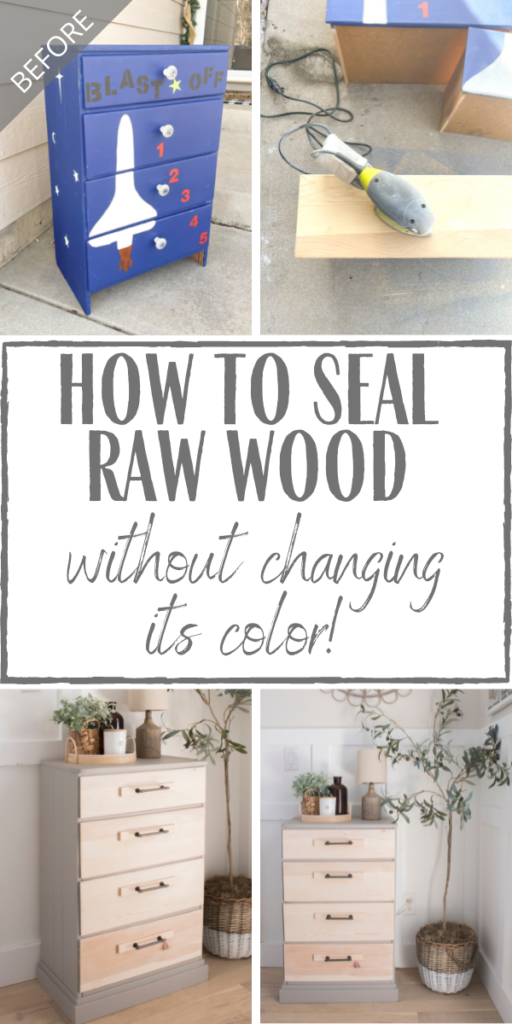
Credit: simplybeautifulbyangela.com
Common Mistakes When Sealing Raw Wood
Many beginners run into problems with invisible finishes. Avoid these pitfalls:
- Skipping the test piece. Even clear finishes can look different on different woods.
- Using oil-based products. These always darken and yellow the wood.
- Too thick coats. This can make the finish look plastic or cloudy.
- Not sanding enough. Un-sanded wood absorbs finish unevenly, creating blotches.
- Wrong cleaning products. Some cleaners leave residues that affect finish clarity.
Advanced Tips For A Truly Invisible Finish
If you want to push your results further, these professional tricks can make your sealed wood almost indistinguishable from raw:
- Mix in a touch of white pigment. Some woodworkers add a drop of white acrylic paint or “whitewash” additive to the first coat of sealer. This neutralizes yellowing, especially on pine or maple.
- Use a sanding sealer first. Water-based sanding sealers create a smooth surface and help the final finish look more natural.
- Buff the final coat. After curing, buff with 0000 steel wool for a true matte look.
- Control the environment. Apply finish at 60–75°F and low humidity to avoid cloudiness.

Credit: www.youtube.com
Real-world Examples: Sealing Different Types Of Wood
Different woods behave differently. Here’s how the main types respond to clear sealing:
| Wood Species | Reaction to Water-Based Sealer | Special Considerations |
|---|---|---|
| Maple | Minimal darkening, may look slightly yellow | Try a white-tinted sealer for best results |
| Pine | Can turn yellow, especially with age | White pigment or acrylic best for pale look |
| Oak (White) | Stays close to raw color | Matte poly or lacquer works well |
| Birch | May blotch or yellow | Use sanding sealer first |
| Walnut | Slight deepening, but grain pops | Test finish, but most clear sealers work |
How Sealer Choice Affects Durability
People sometimes worry that “clear” finishes are less protective. In reality, modern water-based polyurethanes and lacquers are extremely durable—often as much as traditional oil-based finishes.
Here’s how different finishes compare for everyday use:
| Sealer Type | Scratch Resistance | Water Resistance | Maintenance |
|---|---|---|---|
| Water-Based Polyurethane | High | High | Easy, re-coat as needed |
| Acrylic Sealer | Medium | Medium | Re-coat every 2–3 years |
| Hard Wax Oil | Medium-High | Medium | Buff with more oil yearly |
| Waterborne Lacquer | High | High | Professional maintenance |
How To Choose: Deciding What’s Right For Your Project
When choosing a sealer, consider:
- Surface use: Is it a tabletop, floor, art piece, or wall panel?
- Wood species: Some woods need more help to stay pale.
- Application skill: Spraying lacquer is harder than brushing poly.
- Desired sheen: Matte looks more raw; gloss looks more finished.
- Longevity: Do you want to re-coat often, or set it and forget it?
Example: For a modern pine bookshelf, a water-based matte polyurethane or a white-tinted hard wax oil will keep the wood nearly unchanged. For a maple art frame, an acrylic sealer is perfect. For a high-traffic oak floor, stick with commercial-grade waterborne polyurethane.
Cleaning And Caring For Sealed Raw Wood
Once you’ve sealed your wood, keep it looking great by:
- Dusting regularly with a microfiber cloth.
- Wiping spills immediately to prevent water spots.
- Using gentle cleaners—avoid ammonia, bleach, or abrasive pads.
- Re-coating when needed—for high-use areas, add a new coat every 2–3 years.
Insider tip: Don’t use oil soaps or wax on water-based finishes—they can create a sticky layer that traps dirt.
Troubleshooting: Fixing Color Changes After Sealing
Sometimes, even with care, your wood turns out darker or yellower than you hoped. Here’s what you can do:
- If finish is still wet: Wipe off as much as possible, and test a whiter or more matte product.
- If finish is dry: Lightly sand off the top coat, and re-seal with a white-tinted or more matte sealer.
- If color shift is mild: Sometimes buffing with fine steel wool or adding a top coat of matte acrylic can “mute” the color.
In rare cases, you may need to strip and start over. Always do a test spot before committing to your whole project.
Sealing Raw Wood Outdoors: Is It Possible?
Outdoor woods are especially tricky. Most clear outdoor sealers add a slight amber tone, and UV exposure can yellow even the best finishes over time. If you must keep wood pale outside:
- Choose a marine-grade water-based polyurethane or exterior acrylic with UV blockers.
- Re-apply every year or two.
- Consider embracing a “weathered” look if pale color is critical.
For decks and fences, a clear finish will never be as durable as a colored stain. Sometimes, a light gray or white wash is the best compromise.
What About Epoxy And Other Sealers?
Epoxy is very strong and waterproof, but it always deepens the wood color—think “wet wood” effect. It’s not the best choice for invisible protection.
Similarly, penetrating oils (like Danish oil, tung oil, or linseed oil) always darken and yellow the wood. If you want to keep your wood looking raw, stick to water-based or acrylic solutions.
Not-so-obvious Insights Most Beginners Miss
- Even “clear” finishes are not all the same. The formula (acrylic vs polyurethane vs oil) and even the brand can make a big difference. Always check reviews and do a test piece.
- Light affects perception. Wood sealed under warm (yellow) lighting will always look different than in daylight. Check your sample in the same light as its final location.
- Sanding makes a bigger difference than you think. Un-sanded wood absorbs sealer unevenly, causing more dramatic color shifts than the sealer itself.

Credit: www.thenavagepatch.com
Where To Learn More
If you want to dig into the science of wood finishing, check out this excellent resource from Wood Magazine.
Frequently Asked Questions
What Is The Best Product To Seal Wood Without Changing Its Color?
High-quality water-based polyurethane or pure acrylic sealers are the best options. Look for “crystal clear” or “ultra clear” on the label, and choose matte or flat sheens. For an extra-pale effect, try hard wax oils labeled “raw” or “bare wood.”
Will Even The Clearest Sealer Darken My Wood A Little?
Yes, almost all sealers will cause a tiny amount of darkening or yellowing, especially on pale woods like pine or maple. Using a white-tinted or matte sealer can minimize this effect. Always test first before finishing your project.
Can I Use Natural Oils Like Tung Or Linseed Oil For A Raw Look?
No. Natural oils always darken and yellow wood, even if they look clear in the can. They are not suitable for keeping a pale, unfinished look.
How Can I Fix Wood That Turned Yellow After Sealing?
If the finish is still fresh, you can try sanding it back and re-sealing with a white-tinted or more matte product. For dried finishes, you may need to strip off the top coat and start again. Sometimes, adding a matte acrylic top coat can help mute unwanted color.
How Do I Keep Outdoor Wood From Changing Color?
It’s very difficult. Most outdoor sealers add a slight color shift, and UV exposure can yellow the wood over time. Use a water-based sealer with UV blockers, reapply often, and consider a light gray or white stain for best results.
Sealing raw wood without changing its color takes care, the right products, and a bit of testing. But with a steady hand and good advice, you can preserve that pure, natural look—and enjoy your project for years to come.