
A gas stove is a staple in many kitchens because it offers fast, even heating and precise control. But what happens when you turn the knob, hear the familiar hiss of gas, but the burner just won’t light? Even more concerning, you smell gas in the air.
This problem can be worrying and dangerous if not handled correctly. Understanding what’s wrong—and what you should do—is key to keeping your home safe and getting your stove working again.
Many people quickly assume the worst when faced with a gas stove won’t light but smells gas scenario. But while safety is the first priority, this common issue often comes down to a handful of causes that are usually fixable. In this article, you’ll learn what makes a gas stove tick, why burners sometimes refuse to ignite, what the gas smell means, and how to troubleshoot step-by-step. You’ll also discover when it’s time to call a professional, plus safety tips that many overlook.
Let’s break down the facts, solutions, and safety insights—so you can handle a non-lighting, gas-smelling stove with confidence and care.
How A Gas Stove Works: The Basics
To fix a problem, it helps to know how things work. A modern gas stove is a blend of simple mechanics and clever engineering. Here’s what happens when you want to cook:
- Turn the knob: This opens the gas valve, letting gas flow to the burner.
- Ignition: An electric spark (from the igniter) or a pilot light ignites the gas.
- Burner flame: The gas burns, creating the blue flame you cook with.
If anything in this chain fails, your stove won’t light. If gas is still flowing, you’ll smell it—which means you need to act with caution.
A gas stove that smells like gas but won’t light means gas is reaching the burner but not being ignited. This is rarely a “normal” situation and always demands your attention.
Immediate Safety Steps If You Smell Gas
Before you start troubleshooting, safety comes first. Natural gas is flammable and can be dangerous if it builds up in your kitchen. Here’s what to do right away:
- Turn off the stove: Immediately switch all knobs to the off position.
- Do not ignite anything: Avoid matches, lighters, or any source of spark or flame.
- Ventilate: Open windows and doors to let fresh air in and gas out.
- Leave the area if the smell is strong: If you smell a lot of gas, leave your home and call your gas supplier or 911 from outside.
- Don’t use electrical switches: Even flipping a light switch can cause a spark if there’s a lot of gas.
Never ignore a gas smell. Most leaks in kitchens are minor (from a failed ignition), but it’s always better to be cautious.
Common Reasons A Gas Stove Won’t Light But Smells Gas
Several things can go wrong when your gas stove doesn’t light but you smell gas. Let’s look at the most likely causes—and how you can check for them.
1. Igniter Malfunction
Most stoves use an electric igniter to create a spark that lights the gas. If the igniter fails, you’ll get gas but no flame.
- Symptoms: Clicking sound, no ignition, strong gas smell.
- Why it happens: Dirt, grease, or moisture can block the spark. Over time, igniters can also wear out.
2. Blocked Burner Ports
The small holes (ports) in the burner head can clog with food, grease, or cleaning residue.
- Symptoms: Gas flows, but no flame (or uneven flame if it does catch).
- Why it happens: Regular cooking splatters, spills, and infrequent cleaning.
3. Misaligned Burner Cap
Burner caps must sit perfectly on the burner base. If they’re crooked or off-center, gas can’t flow properly.
- Symptoms: No ignition, hissing sound, gas smell.
- Why it happens: Cleaning or moving the cap for any reason and not replacing it exactly.
4. Wet Or Greasy Ignition Parts
If you recently cleaned your stove or spilled food, the igniter or burner might be wet or greasy.
- Symptoms: No spark, clicking sound, visible moisture or residue.
- Why it happens: Overzealous cleaning or kitchen accidents.
5. Faulty Spark Module Or Switch
The spark module powers the igniter. If it’s faulty, the igniter won’t spark, even if everything else is clean.
- Symptoms: No clicking, or clicking but no spark.
- Why it happens: Electrical failure, age, or water damage.
6. Gas Supply Issues
Sometimes, the gas isn’t getting to the burner correctly because of a supply problem.
- Symptoms: Weak or no gas flow, gas smell, none of the burners work.
- Why it happens: Gas line issues, partially closed valve, or problems in the supply line.
7. Air In The Gas Line
If you just installed the stove or had gas service work, air may be trapped in the line.
- Symptoms: Clicking, no light, faint gas smell that clears after a few tries.
- Why it happens: After new installations or repairs.
8. Failed Safety Valves Or Controls
Some stoves have extra safety features that can fail and block ignition.
- Symptoms: No flame, sometimes no gas flow, sometimes a gas smell.
- Why it happens: Faulty parts, age, or power surges.
9. Pilot Light Issues (in Older Stoves)
Older stoves use a small flame called a pilot light to ignite burners.
- Symptoms: No flame at any burner, gas smell.
- Why it happens: Pilot light blown out or dirty.
Troubleshooting Steps: Fixing A Gas Stove That Won’t Light
If the gas smell is faint and you’re sure there’s no leak, you can try these troubleshooting steps. If at any point the smell becomes strong or you feel unsafe, stop and call a professional.
Step 1: Check For Obvious Safety Risks
- Make sure all knobs are off.
- Ventilate the room.
- Do not use any open flame or electricity near the stove until you’re certain there’s no dangerous gas buildup.
Step 2: Inspect The Igniter
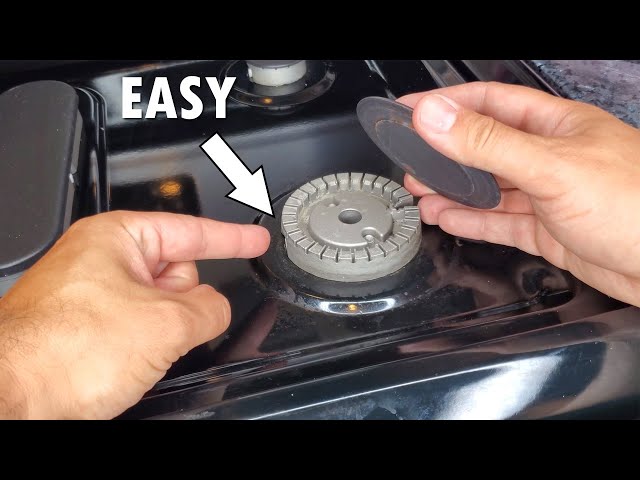
- Remove the burner grate and cap.
- Look for food, grease, or visible debris on the igniter.
- Clean the igniter gently with a soft brush or toothbrush.
- If the igniter is wet, let it dry completely (air dry for several hours).
Step 3: Realign Or Reseat The Burner Cap
- Place the burner cap directly on the base. Make sure it sits flat and snug.
- A misaligned cap can prevent ignition.
Step 4: Clean The Burner Ports
- Use a needle or pin to gently clear each burner port.
- Never use a toothpick (it can break off).
- Wipe away any loose debris with a damp cloth.
Step 5: Try A Different Burner
- Turn on another burner.
- If the other burner works, the issue is likely with the first burner’s parts.
- If none work, the problem is likely with the gas supply or ignition system.
Step 6: Check For Moisture
- After cleaning, wait several hours before trying to light the stove.
- Moisture can short out the igniter.
Step 7: Listen And Observe
- Do you hear clicking when you turn the knob? If not, the spark module or switch may be faulty.
- Do you smell gas immediately? If yes, the gas valve is opening, but the spark isn’t working.
Step 8: Reset The Power
- For electric ignition stoves, unplug the stove for 1 minute, then plug it back in.
- Sometimes a quick reset fixes minor electronic glitches.
Step 9: Test Again
- Turn the knob and try to light the stove.
- If it lights, great—problem solved. If not, and the gas smell continues, stop and call a professional.
Credit: www.youtube.com
Table: Common Causes And Solutions
Sometimes it’s easier to see the causes and solutions side by side. Here’s a quick reference:
| Problem | Symptoms | Quick Fix |
|---|---|---|
| Dirty Igniter | Clicking, no flame, gas smell | Clean igniter and let dry |
| Clogged Burner Ports | No flame, uneven flame, gas smell | Clear ports with pin |
| Misaligned Burner Cap | No ignition, hissing gas sound | Reseat cap properly |
| Wet Ignition Parts | No spark, clicking, visible moisture | Dry all components fully |
| Faulty Spark Module | No clicking, no spark | Call professional |
When To Call A Professional
Some issues are best left to experts. If your troubleshooting doesn’t work, or if you’re unsure, don’t take risks. Call a licensed gas technician if:
- The gas smell is strong and doesn’t clear quickly.
- You suspect a gas leak (smell persists even with all knobs off).
- The igniter or spark module needs replacement.
- The gas line or valve appears damaged.
- You feel unsafe at any point.
Trying to repair gas systems without proper tools and knowledge can lead to accidents. It’s worth paying for peace of mind—and safety.
Credit: wilshirerefrigeration.com
How To Prevent Gas Stove Ignition Problems
Prevention is easier than repair. Here’s how to keep your gas stove in top shape:
- Clean burners regularly: After spills, let the stove cool and wipe away food or grease.
- Check burner caps after cleaning: Always reseat them correctly.
- Avoid harsh chemicals: Use mild soap and water on stove parts.
- Dry everything: After cleaning, let all parts air dry before reassembling.
- Test all burners monthly: Make sure they ignite quickly and evenly.
- Have a pro inspect annually: A yearly checkup can prevent most problems.
Table: Preventive Maintenance Schedule
Keeping your stove healthy isn’t hard. Here’s a maintenance guide for busy cooks:
| Task | How Often | Tips |
|---|---|---|
| Wipe burner area | After each use | Use damp cloth |
| Deep clean burners & caps | Monthly | Remove, soak, and scrub gently |
| Check for clogs | Every 2-3 months | Use a pin to clear ports |
| Professional inspection | Yearly | Look for leaks and worn parts |
Credit: blog.puls.com
Gas Leak Detection: What To Know
A faint gas smell after failed ignition is common. But a strong, lasting gas odor is dangerous. Here’s how to tell the difference—and what to do.
- Faint smell: Usually clears after ventilation and turning off the stove. Caused by unlit gas from one burner.
- Strong smell: Lingers even after turning off all knobs. Could be a serious leak in the line or connection.
Uncommon Insight: If you ever hear a “hissing” sound near the stove (not from the burner), turn off the main gas supply and call for help. This sound often means a leak in the gas line, not just the burner.
Uncommon Insight: New stoves or recently serviced stoves may emit a slight gas smell the first few times they’re used. This is usually air purging from the lines. If the smell persists, it’s not normal.
How Different Stoves Compare
Not all gas stoves are the same. Let’s compare common ignition types and how they affect lighting and troubleshooting.
| Type | Ignition Method | Common Issues | Fix Difficulty |
|---|---|---|---|
| Modern Gas Stove | Electric spark | Dirty igniter, clogged ports | Easy-Moderate |
| Older Gas Stove | Pilot light | Pilot out, dirty burner | Easy-Moderate |
| Commercial Range | Manual or electric | Complex controls | Hard (pro needed) |
What Beginners Often Miss
When dealing with a gas stove that won’t light but smells gas, two key details are often overlooked:
- The importance of drying parts: Many people try to light the stove right after cleaning. If the igniter or burner is damp, it won’t spark, and gas will escape without ignition. Always let parts dry fully before use.
- Checking for misaligned burner caps: Even a slight misalignment can prevent ignition but still release gas. Double-check that all caps sit flat after cleaning or moving them.
Avoid These Common Mistakes
Some mistakes can make problems worse—or even dangerous. Here’s what to avoid:
- Ignoring persistent gas smells: Never assume it will go away. If it lasts more than a minute, act.
- Using matches near a gas smell: This can lead to fire or explosion.
- Forcing parts back into place: Forcing can damage the stove and cause leaks.
- Skipping professional help: Some repairs need special tools and knowledge.
The Role Of Ventilation
Good kitchen ventilation is a safety must. If your kitchen collects gas after failed ignition, strong air flow can clear it quickly. Use an exhaust fan if you have one. Always open windows after a failed ignition until the smell is gone.
Are Gas Stoves Dangerous?
Used correctly, gas stoves are safe and reliable. Most problems come from neglect or improper use. Regular cleaning, careful troubleshooting, and quick action when something seems wrong will keep your kitchen—and family—safe.
For more on natural gas safety, visit the official CPSC Natural Gas Safety Guide.
Frequently Asked Questions
What Should I Do If My Gas Stove Won’t Light But I Smell Gas?
First, turn off all burners and ventilate the room by opening windows and doors. Do not use matches or electrical switches. If the smell is strong or doesn’t go away, leave your home and call your gas supplier or emergency services.
If the smell is faint and clears, check the igniter, burner cap, and ports for dirt or misalignment.
Why Does My Stove Click But Not Light?
A clicking sound means the igniter is trying to spark, but something is stopping ignition. Common causes are dirty igniters, wet parts, or misaligned burner caps. Clean and dry the igniter and cap, and make sure everything is in place.
Can I Use My Gas Stove If I Smell A Little Gas?
No. Even a small gas smell means unburned gas is present. Turn off the stove and ventilate. Check for problems only after the smell is gone. If you’re unsure, call a professional.
How Can I Tell If My Gas Stove Has A Leak?
A persistent gas smell, even when all burners are off, is the main sign of a leak. You may also hear a hissing sound. If you suspect a leak, turn off the main gas supply, leave your home, and call for help.
Is It Safe To Clean The Burners And Igniter Myself?
Yes, as long as the stove is off and cool. Use a soft brush, mild soap, and avoid water on electrical parts. Let everything dry fully before reassembling. Never force parts or use harsh chemicals.
Fixing a gas stove that won’t light but smells gas can be straightforward if you follow the right steps and put safety first. With clear troubleshooting and regular care, you can keep your stove reliable—and your kitchen safe—for years to come.