
When you plan a new kitchen or a renovation, one small question can cause a lot of debate: Does flooring go under kitchen cabinets, or do you install cabinets first and then put in the floor? This might look like a simple detail, but it can change your project’s cost, look, durability, and even future repairs. If you ask a group of contractors or homeowners, you’ll often get split answers. Some say the floor always goes under. Others say you save money and avoid problems if you install cabinets first.
The truth is, there’s no single rule that fits every kitchen. The answer depends on your floor type, the kitchen layout, your budget, and how you want your kitchen to age. Choosing the wrong order can lead to uneven floors, extra costs, or trouble if you ever update your kitchen again.
That’s why it’s important to know how each method works, what experts say, and what common mistakes most people make.
In this guide, we’ll break down the full story. You’ll learn the pros and cons of putting flooring under kitchen cabinets, see how different flooring materials change the answer, compare real-world costs, and get advice on making the right choice for your home.
By the end, you’ll have the facts you need—whether you’re building a dream kitchen or just replacing a worn-out floor.
Why Does The Order Matter?
At first, you might wonder why it makes a difference. But the order of flooring and cabinets affects:
- Appearance: Gaps, height differences, and trim details
- Durability: Water damage, wear spots, and floor movement
- Future changes: Easier or harder to replace flooring later
- Cost: How much material and labor you need
Let’s explore why each of these matters.
Visual Impact
When you lay flooring under cabinets, the floor runs continuously from wall to wall. This clean look means no ugly gaps or unfinished edges. The cabinets sit on top, making the kitchen feel solid and seamless. If you install cabinets first, then flooring, you might see edges that don’t line up or need extra trim to hide the gaps.
Durability And Longevity
Some floors—like hardwood—expand and contract with temperature and humidity. If the floor is trapped under heavy cabinets, it can’t move, which leads to buckling or warping. On the other hand, tile floors are stiff and don’t move much, so it’s often safe to put cabinets on top.
Future Kitchen Renovations
If you ever want to change the cabinets, having flooring under them makes it much easier. You won’t need to cut and patch pieces. But if the floor only goes up to the cabinets, you may need to redo the whole floor if you change the layout.
Cost And Waste
Running flooring under cabinets means you’ll use more material. For a big kitchen, this can cost hundreds of extra dollars. However, some floors can’t handle heavy cabinets on top, so the savings may not be worth it.
Pros And Cons: Flooring Under Cabinets Vs. Around Cabinets
Every method has upsides and downsides. Here’s a closer look at both options.
Flooring Under Cabinets
Benefits:
- Seamless look: The floor covers the whole kitchen, so you can change cabinets later without redoing the floor.
- Easier installation for some floors: Floating floors and click-lock products are simpler to install wall-to-wall.
- No tricky cuts: You don’t need to make as many precise cuts around cabinets.
- Better water protection: Fewer gaps where spills can reach the subfloor.
Drawbacks:
- More material needed: You pay for flooring that will be hidden under cabinets and appliances.
- Weight concerns: Heavy cabinets on floating floors (like laminate or engineered wood) can stop the floor from moving as designed.
- Expansion issues: Some floors (solid hardwood, floating systems) can buckle if trapped.
- Harder to fix water damage: If a leak occurs under cabinets, repairs are more difficult.
Flooring Up To Cabinets (not Underneath)
Benefits:
- Saves money: You only use flooring where it will be seen.
- Protects floating floors: No heavy cabinets to trap and damage the floor.
- Easier repairs: If cabinets or subfloor need repair, less flooring is disturbed.
Drawbacks:
- Difficult cabinet changes: Changing cabinet layout later means patching the floor, which may not match.
- Extra trim work: You may need shoe molding or quarter round to hide gaps.
- Possible unevenness: Appliances like dishwashers might not sit flush if the floor isn’t continuous.
Comparing Flooring Materials: Which Ones Go Under Cabinets?
Not all floors behave the same way. The type of floor you choose often decides the best installation order.
Solid Hardwood
Hardwood is beautiful and lasts for decades, but it expands and contracts with moisture. Most experts say not to install it under cabinets because:
- Cabinets can trap wood, leading to buckling.
- The extra weight can stop the floor from moving naturally.
Tip: Install cabinets first, then lay hardwood up to the edges, leaving a small expansion gap.
Engineered Wood
Engineered wood is more stable than solid hardwood, but floating engineered floors still need to move. Fixed cabinets can cause the same problems as with solid hardwood.
Tip: If you glue or nail the engineered wood, you can go under cabinets. For floating systems, install around cabinets.
Laminate Flooring
Laminate is always a floating floor. The click-lock pieces move as a single “mat,” expanding with humidity.
- Never put cabinets on top of floating laminate. It will trap the floor and cause buckling.
- Some manufacturers’ warranties are void if you do.
Tip: Always install cabinets first, then lay laminate around them.
Luxury Vinyl Plank (lvp)
LVP is popular because it’s waterproof and strong. It comes in glue-down and floating versions.
- For glue-down LVP, you can install flooring under cabinets.
- For floating LVP, install around cabinets to avoid trapping the floor.
Tip: Always check the manufacturer’s instructions before making a decision.
Ceramic Or Porcelain Tile
Tile is hard, stable, and doesn’t expand much. Most pros install tile wall-to-wall before cabinets.
- Tile can handle heavy cabinets on top.
- It makes future cabinet changes easier.
- You’ll use more tile, which adds cost.
Tip: Consider reinforcing the subfloor to support heavy cabinets and tile.
Sheet Vinyl
Sheet vinyl is flexible and thin. You can install it under cabinets, but some people do it afterward to save material.
- If glued down, it’s safe under cabinets.
- Floating or loose-lay vinyl should be installed around cabinets.
Tip: If you ever remove cabinets, you may need to patch the floor.
Bamboo Flooring
Bamboo acts like hardwood. It expands and contracts with moisture, so install it like wood.
- For nail-down or glue-down bamboo, it’s okay to go under cabinets.
- For floating bamboo, install around cabinets.
Concrete Floors
Concrete is usually poured before cabinets. It’s strong and stable.
- Cabinets and appliances can sit anywhere on a finished concrete floor.
- No need to worry about expansion or movement.
Tip: If you stain or seal concrete, do it before installing cabinets.
Cork Flooring
Cork is soft, flexible, and often installed as a floating floor.
- Never install cabinets on top of floating cork.
- Fixed cabinets can go on glue-down cork tiles.
Tip: Cork dents easily under heavy cabinets, so plan accordingly.
Natural Stone Tile
Stone tile (like granite or marble) is heavy and rigid.
- Install it under cabinets for a continuous look.
- Make sure the subfloor is strong enough for both the tile and cabinets.
Table: Flooring Types And Recommended Installation Order
Below is a quick look at flooring types and whether they should go under cabinets.
| Flooring Type | Install Under Cabinets? | Notes |
|---|---|---|
| Solid Hardwood | No | Expansion issues; install around cabinets |
| Engineered Wood | Sometimes | Depends on method (floating = no, glued/nail = yes) |
| Laminate | No | Floating floor; must expand/move |
| LVP (glue-down) | Yes | Stable under cabinets |
| LVP (floating) | No | Expansion issues |
| Tile (ceramic/porcelain) | Yes | Most common method |
| Sheet Vinyl (glue-down) | Yes | Flexible, safe for under cabinets |
| Concrete | Yes | Poured before cabinets |
| Cork (floating) | No | Expansion concerns |
| Natural Stone | Yes | Heavy, needs strong subfloor |
Cost Comparison: Flooring Under Vs. Around Kitchen Cabinets
How much does the order affect your budget? The answer depends on your kitchen size and floor price.
Material Cost
If your kitchen is 200 square feet, but cabinets and appliances cover 50 square feet, you could save:
- $3 per sq. Ft. flooring x 50 sq. Ft. = $150
- $7 per sq. Ft. tile x 50 sq. Ft. = $350
Multiply this by higher-end flooring or larger kitchens, and the savings add up.
Labor Cost
- Tile: Installing under cabinets can make the process faster for pros, but more expensive for DIY (more cutting, more waste).
- Laminate: Installing around cabinets takes more time, as you have to make many cuts.
Appliance And Cabinet Adjustments
- If the floor is higher, you may need to adjust cabinet or appliance height.
- Standard dishwasher openings are about 34 inches. If the floor is thick and installed after cabinets, your dishwasher may not fit.
Table: Example Cost Differences
Here’s a sample breakdown for a 200 sq. Ft. kitchen.
| Flooring Type | Material Cost (Under Cabinets) | Material Cost (Around Cabinets) | Potential Savings |
|---|---|---|---|
| Laminate ($3/sq. ft.) | $600 | $450 | $150 |
| Tile ($7/sq. ft.) | $1,400 | $1,050 | $350 |
| LVP ($4/sq. ft.) | $800 | $600 | $200 |
Note: These are rough estimates. Labor, trim, and waste may add to the total cost.
Step-by-step: Installing Flooring Under Or Around Cabinets
If you want to do the work yourself or want to know what to expect from a contractor, here’s how each method works.
Installing Flooring Under Cabinets
- Finish the subfloor: Make sure it’s flat and dry. Fix any squeaks or dips.
- Lay out the floor: Mark walls, doorways, and the kitchen layout.
- Install flooring wall-to-wall: Follow the manufacturer’s instructions for your flooring type.
- Protect finished floor: Cover with cardboard or drop cloths.
- Install cabinets on top: Use shims to keep cabinets level.
- Finish with trim: Add baseboards or quarter round as needed.
Tip: If you’re worried about water leaks, seal all seams near sinks and dishwashers.
Installing Flooring Around Cabinets
- Install cabinets first: Make sure they are level and firmly attached.
- Mark cabinet edges: Draw lines on the floor for where the cabinets end.
- Install flooring up to cabinets: Leave a small gap (about 1/4 inch) for expansion if needed.
- Cut flooring to fit: Use a jigsaw or oscillating tool for detailed cuts.
- Add trim: Cover expansion gaps with shoe molding or toe kick.
Tip: For appliances, make sure the floor is continuous in those spaces for easy removal later.
How Do Contractors Decide?
Most contractors follow these rules:
- Tile, stone, or glued-down vinyl: Floor goes under cabinets.
- Floating floors (laminate, floating wood): Cabinets go first, then floor.
- Solid hardwood: Usually install cabinets first, but sometimes run flooring a few inches under for future flexibility.
Some contractors try to save money by using less flooring, but this can backfire if the cabinets ever change. Others prefer a continuous floor because it’s faster to install and looks neater.
Non-obvious insight: Many homeowners don’t realize that the order can affect appliance height. If the floor is thick and installed after cabinets, you might not have enough space under your countertop for a dishwasher or slide-in range.

Credit: www.reddit.com
Real-world Examples
Example 1: Tile Floor, Full Kitchen Remodel
Anna remodeled her kitchen with porcelain tile. Her contractor laid tile wall-to-wall before installing cabinets. Five years later, she replaced her lower cabinets and kept the same floor. The new cabinets fit perfectly with no gaps or patching needed.
Example 2: Floating Laminate, Appliance Trouble
Ben installed floating laminate after his cabinets were in place. His dishwasher sat on the subfloor, lower than the rest of the appliances. When the dishwasher broke, the new model was taller and didn’t fit under the counter without removing the countertop or flooring.
He had to cut away some flooring, which caused an ugly gap.
Example 3: Solid Hardwood, Expansion Problems
Carlos had solid hardwood installed wall-to-wall. After a few months, the floor buckled near the cabinets because it couldn’t expand freely. The repair was costly, and he learned that cabinets should have gone in first.
What Building Codes And Manufacturers Say
No national building code in the US says you must install flooring under or around cabinets. However, manufacturers often give clear instructions:
- Laminate and floating floor makers: Never install under cabinets.
- Tile and glued vinyl makers: Okay to install under cabinets.
Always check the warranty details. If you install the floor incorrectly, you can void the warranty—something many homeowners overlook.

Credit: diy.stackexchange.com
Appliance Tips And Hidden Details
Dishwashers
- If flooring is installed after cabinets, make sure the dishwasher opening is tall enough.
- Some dishwashers need to be removed for repairs. If the floor is higher than the cabinet base, removal can be difficult.
Ranges And Refrigerators
- Freestanding appliances need the floor under them for easy movement and replacement.
- Built-in appliances can be installed after the floor, but check for clearance.
Toe Kicks And Trim
- If you install the floor after cabinets, you may need toe kick extensions or quarter round trim to hide gaps.
- For floating floors, never nail trim into the floor itself; attach it to the cabinet base.
Non-obvious insight: Some people forget that fridges and stoves need a flat, even surface. If the floor only goes up to cabinets, appliances can tilt or wobble.
Common Mistakes To Avoid
- Ignoring manufacturer’s guidelines: This is the top reason for failed floors and lost warranties.
- Forgetting about future changes: If you may upgrade your kitchen, plan for flexibility now.
- Not leveling the subfloor: Uneven floors cause gaps and crooked cabinets.
- Skipping moisture barriers: In kitchens, water protection is critical, especially under sinks and dishwashers.
- Not considering appliance height: Floor thickness affects how appliances fit.
Making The Best Choice For Your Kitchen
How do you decide what’s right for your kitchen? Here are some key questions:
- What type of flooring are you using? This is usually the most important factor.
- Will you remodel again? If so, flooring under cabinets may be best.
- Is budget a top concern? Installing around cabinets saves money, but may cost more later.
- Are you using floating floors? Always install cabinets first, then flooring.
- Do you want a perfect, seamless look? Install under cabinets.
- Are you hiring a pro? Ask if their method follows manufacturer and warranty rules.
Table: Quick Decision Guide
Here’s a summary to help you decide.
| If you want… | Install Flooring… |
|---|---|
| A seamless look, flexibility for future changes | Under cabinets |
| To save on costs, follow warranty rules for floating floors | Around cabinets |
| Easy appliance removal and repair | Under appliances, at least |
| Best performance with tile or glued-down vinyl | Under cabinets |
| No floor buckling with floating floors | Around cabinets |
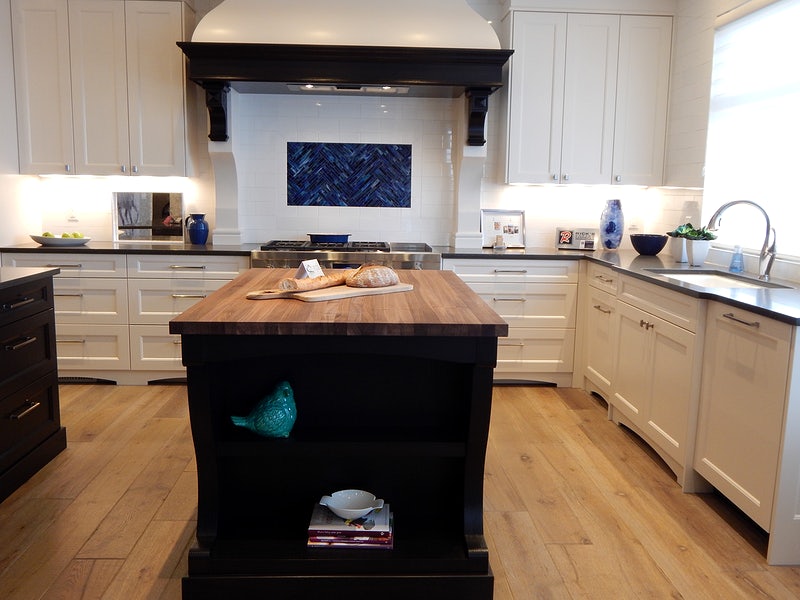
Credit: diamondkitchenandbath.com
Final Thoughts
So, does flooring go under kitchen cabinets? The answer is: it depends. The right choice comes down to your floor type, your budget, and how you see your kitchen changing in the future. For tile and glued-down vinyl, going under cabinets offers a clean look and flexibility. For floating floors, always install cabinets first to avoid costly problems. If you’re unsure, check with your flooring manufacturer or a trusted contractor.
Making the right decision now will save you time, money, and stress—whether you’re building your dream kitchen or just giving it a fresh look. And remember, it’s always smart to plan for the future, not just for today.
If you want to see what top flooring and remodeling experts recommend, check out this in-depth guide from This Old House.
Frequently Asked Questions
Should I Install Flooring Under Kitchen Appliances?
Yes, you should install flooring under movable kitchen appliances like dishwashers, ranges, and refrigerators. This makes it easier to remove or replace them in the future. For built-in appliances, check the manufacturer’s instructions to ensure proper fit and movement.
Does Installing Flooring Under Cabinets Increase The Kitchen Floor Height?
Yes, adding flooring under cabinets can raise the overall height of your kitchen floor. This can affect the fit of dishwashers, ranges, and other appliances. Always measure carefully and adjust cabinet or appliance legs as needed to maintain standard counter heights.
Can I Install Laminate Flooring Under Cabinets?
No, you should not install floating laminate flooring under cabinets. The weight of the cabinets can trap the floor, prevent natural expansion, and cause buckling or damage. Always install laminate around cabinets, leaving proper expansion gaps.
Is It Cheaper To Install Flooring Before Or After Cabinets?
It is usually cheaper to install flooring after cabinets because you only use flooring in visible areas. Installing flooring before cabinets means you’ll need more material and may pay extra for labor, but it gives a cleaner look and more flexibility for future changes.
What If My Kitchen Floor Gets Damaged Under The Cabinets?
If water or damage occurs under the cabinets, repairs can be difficult if the floor runs underneath. You may need to remove cabinets to fix the problem. For floating floors, only replace the visible area and leave the rest under cabinets untouched, if possible.
For tile or glued floors, patching may be more involved.
—
By understanding these details, you can make an informed decision and avoid the most common mistakes homeowners make with kitchen flooring and cabinets.