
Keeping your cast iron BBQ griddle in top condition does more than just improve your grilling. It ensures your food tastes better, prevents rust, and extends the life of your griddle. Many people feel nervous about cleaning cast iron because of myths and fear of damaging the surface. But with the right steps, cleaning a cast iron BBQ griddle is simple and satisfying. Whether you’re grilling steaks, vegetables, or pancakes, a clean griddle means reliable, delicious results every time. This article will guide you through every detail you need to know, from basic cleaning to deep maintenance, and even how to recover a rusty griddle. You’ll learn what tools to use, what to avoid, and how to make your cast iron BBQ griddle last a lifetime.
Why Clean A Cast Iron Bbq Griddle?
A cast iron griddle is a special cooking tool. Its unique surface gives food a great sear and flavor. But unlike stainless steel or non-stick pans, it needs regular care. If you don’t clean it well, old food bits, grease, and even rust can build up.
This affects how your food tastes and can shorten the griddle’s life.
Key reasons to clean your cast iron BBQ griddle:
- Food safety: Old food and grease can hold bacteria.
- Flavor: Leftover bits can burn, giving food a bad taste.
- Performance: A clean griddle heats evenly and doesn’t stick.
- Longevity: Good care prevents rust and damage.
- Seasoning: Cleaning helps maintain the non-stick coating, known as seasoning.
Many beginners worry that water will ruin cast iron. But with the right method, cleaning is safe and easy. The trick is to clean it soon after use and dry it well.
Tools And Materials You Need
Before you start, gather the right tools. This makes the job faster and protects the griddle.
Essential items:
- Stiff brush or scraper (plastic or metal, no sharp edges)
- Non-metal sponge or cloth
- Coarse salt (kosher salt works well)
- Mild dish soap (optional, not always needed)
- Paper towels or clean dry cloth
- Cooking oil (vegetable, canola, or flaxseed)
- Heat-proof gloves (optional, for hot griddles)
- Spray bottle (for water, optional)
What to avoid:
- Steel wool or harsh abrasives (they can strip seasoning)
- Dishwasher (can cause rust)
- Soaking in water (can lead to rust)
Even though cast iron is tough, it needs a gentle touch to stay in good shape.
Step-by-step: How To Clean A Cast Iron Bbq Griddle After Each Use
Cleaning a cast iron BBQ griddle right after cooking is the best way to keep it in top condition. Here’s the process:
1. Let It Cool Slightly
Never clean a very hot griddle. Wait 10–15 minutes after cooking so it’s warm, not blazing hot. This protects your hands and the griddle.
2. Remove Leftover Food
Use a stiff brush or scraper to gently take off large food bits. Do not use sharp tools that can scratch the surface.
3. Add Water (if Needed)
If food is stuck, pour a small amount of warm water onto the griddle. The heat will help loosen bits. Avoid using cold water on a hot griddle—this can cause warping or cracks.
4. Scrub Gently
Use a non-metal sponge or a brush to scrub the surface. If you need more power, sprinkle coarse salt and rub with a paper towel or cloth. Salt acts as a gentle abrasive without hurting the seasoning.
5. Rinse And Dry
Wipe away food and water with a paper towel or cloth. If you use water, rinse quickly—never soak the griddle. Then dry it completely with a towel. You can also place it on low heat for a few minutes to evaporate any moisture.
6. Oil The Surface
While the griddle is still warm, add a thin layer of cooking oil. Use a paper towel to spread it over the entire surface, including corners and edges. This step preserves the seasoning and prevents rust.
7. Store Properly
Let the griddle cool, then store it in a dry place. Avoid stacking heavy items on top.
Non-obvious tip: Even if you only grilled vegetables or foods with little oil, always finish with a light oil coating. This keeps the seasoning balanced and ready for next time.
Deep Cleaning: When And How
Sometimes, your cast iron BBQ griddle needs a deeper clean. Maybe food burned onto the surface, or you see sticky patches. Deep cleaning is also needed if you find rust or if the griddle smells bad.
When To Deep Clean
- Sticky or rough spots after regular cleaning
- Rust patches appear
- Griddle smells rancid or odd
- After long storage
Deep Cleaning Steps
- Scrape Off Debris: Use a scraper or stiff brush to remove as much as possible.
- Salt Scrub: Pour a generous amount of coarse salt onto the griddle. Add a bit of water for a paste. Scrub with a cloth or paper towel until the surface feels smooth.
- Mild Soap (If Needed): If smells or sticky spots remain, use a small drop of mild dish soap with a sponge. Rinse quickly and dry.
- Rinse and Dry: Wipe with a damp cloth, then dry completely.
- Heat to Remove Moisture: Place the griddle on your BBQ or stovetop over low heat for 5–10 minutes.
- Re-season: Add a thin layer of oil while still warm. Wipe away any excess oil.
Non-obvious tip: If you use soap, always re-season the griddle afterward. Soap can remove some of the protective oil layer.
How To Remove Rust From A Cast Iron Bbq Griddle
Rust is common if a griddle is left wet or stored in a damp place. Light rust is easy to remove, but heavy rust may take more work.
Light Rust
- Scrub the rusty area with a stiff brush or non-metal scrub pad.
- Sprinkle coarse salt and scrub again.
- Rinse, dry, and oil as usual.
Heavy Rust
- Use fine steel wool to gently sand away rust. Avoid grinding into the metal.
- Wipe away dust with a damp cloth.
- Rinse, dry, and heat the griddle to remove moisture.
- Oil and re-season well.
Important: Always remove all rust before using the griddle for cooking. Even small patches can spread quickly.
Preventing Rust
- Always dry the griddle right after washing.
- Store in a dry place.
- Add a thin layer of oil before storing.
Example: If you live in a humid area, consider storing the griddle with a paper towel inside to absorb moisture.
Seasoning: The Key To A Non-stick Surface
Seasoning is a natural oil layer baked onto the cast iron. It gives the griddle its famous non-stick surface and protects against rust.
How To Season Your Griddle
- Clean and dry the griddle completely.
- Rub a thin layer of cooking oil all over (inside and out).
- Place the griddle upside down in your oven or BBQ at 400–450°F (204–232°C) for 1 hour.
- Let it cool inside the oven/BBQ.
- Repeat if needed (for new or rusty griddles, 2–3 layers is best).
Tip: Use oils with a high smoke point (canola, vegetable, or flaxseed oil). Olive oil can be sticky.
Signs Your Seasoning Is Good
- The griddle looks shiny and smooth.
- Food doesn’t stick easily.
- No rust or flaking patches.
If you notice dull spots or sticking, add another seasoning layer.

Credit: www.youtube.com
What To Avoid When Cleaning
Many beginners make small mistakes that can damage their griddle.
Common mistakes:
- Soaking in water: This causes rust, even if for just a few minutes.
- Using harsh chemicals: Strong cleaners strip the seasoning.
- Scraping with metal tools: Sharp metal scrapers can scratch or gouge the surface.
- Skipping oil after cleaning: This leaves the griddle unprotected.
- Storing wet: Never put away the griddle while damp.
Non-obvious insight: Don’t use the dishwasher, even if it seems easier. Dishwashers use strong detergents and long water exposure, which can ruin cast iron.
Cleaning After Cooking Different Foods
Not all foods leave the griddle the same way. Some require special care.
After Cooking Meat
Meat leaves fat and protein bits. Scrape off all debris, then scrub with salt. Avoid soap unless there’s a strong smell.
After Cooking Fish
Fish can stick and leave odors. A salt scrub plus a quick rinse removes smells. Oil well afterward.
After Cooking Vegetables Or Pancakes
These usually leave less residue. A quick brush and oil layer is often enough.
After Cooking Acidic Foods (e.g., Tomatoes, Citrus)
Acidic foods can damage seasoning. Clean and re-oil right away. If you notice dull spots, re-season.
Comparing Cleaning Methods
Here is a comparison of common cleaning methods for cast iron BBQ griddles:
| Method | Effectiveness | Best For | Drawbacks |
|---|---|---|---|
| Salt Scrub | High | Routine cleaning, stuck food | Can be messy |
| Soap & Water | Moderate | Strong odors, sticky residue | May strip seasoning |
| Wire Brush | Very High | Heavy rust, thick buildup | Can scratch if used too hard |
| Non-metal Sponge | Moderate | Light cleaning | Not strong on tough stains |
Insight: Salt scrubs are a favorite among chefs because they clean without harming the seasoning.
How Often Should You Clean And Season?
Clean after each use: This keeps food from sticking and stops rust before it starts.
Deep clean and season: Do this once every few months, or whenever you notice food sticking or dull spots.
Season more often if:
- You cook acidic foods regularly.
- The griddle is new or recently restored.
- You see rust or rough areas.
Example cleaning schedule:
| Frequency | Task |
|---|---|
| After each use | Brush, wipe, and oil |
| Monthly | Salt scrub and oil |
| Every 3–6 months | Deep clean and season |
Storing Your Griddle To Prevent Damage
How you store your cast iron BBQ griddle matters as much as cleaning.
- Store in a dry, cool place.
- Keep the oiled surface exposed to air.
- Avoid stacking heavy pots or pans on top.
- If storing for a long time, place a paper towel or sheet of parchment inside to absorb moisture.
Non-obvious tip: If you live in a humid area, store your griddle in the oven or BBQ (when not in use). This keeps it away from damp air.
Troubleshooting Common Problems
Even with careful cleaning, you may face issues. Here’s how to solve the most common ones:
Sticky Surface
If your griddle feels sticky, too much oil was used during seasoning or cleaning. Wipe off excess oil and bake the griddle at 400°F (204°C) for 1 hour.
Food Keeps Sticking
This means the seasoning is thin or patchy. Scrub with salt, clean well, and apply 2–3 layers of seasoning.
Rust Returns Quickly
Check your drying and storage. Make sure the griddle is always dry and lightly oiled before storing.
Black Residue On Food
This is usually old seasoning flaking off. Clean with a salt scrub and re-season.
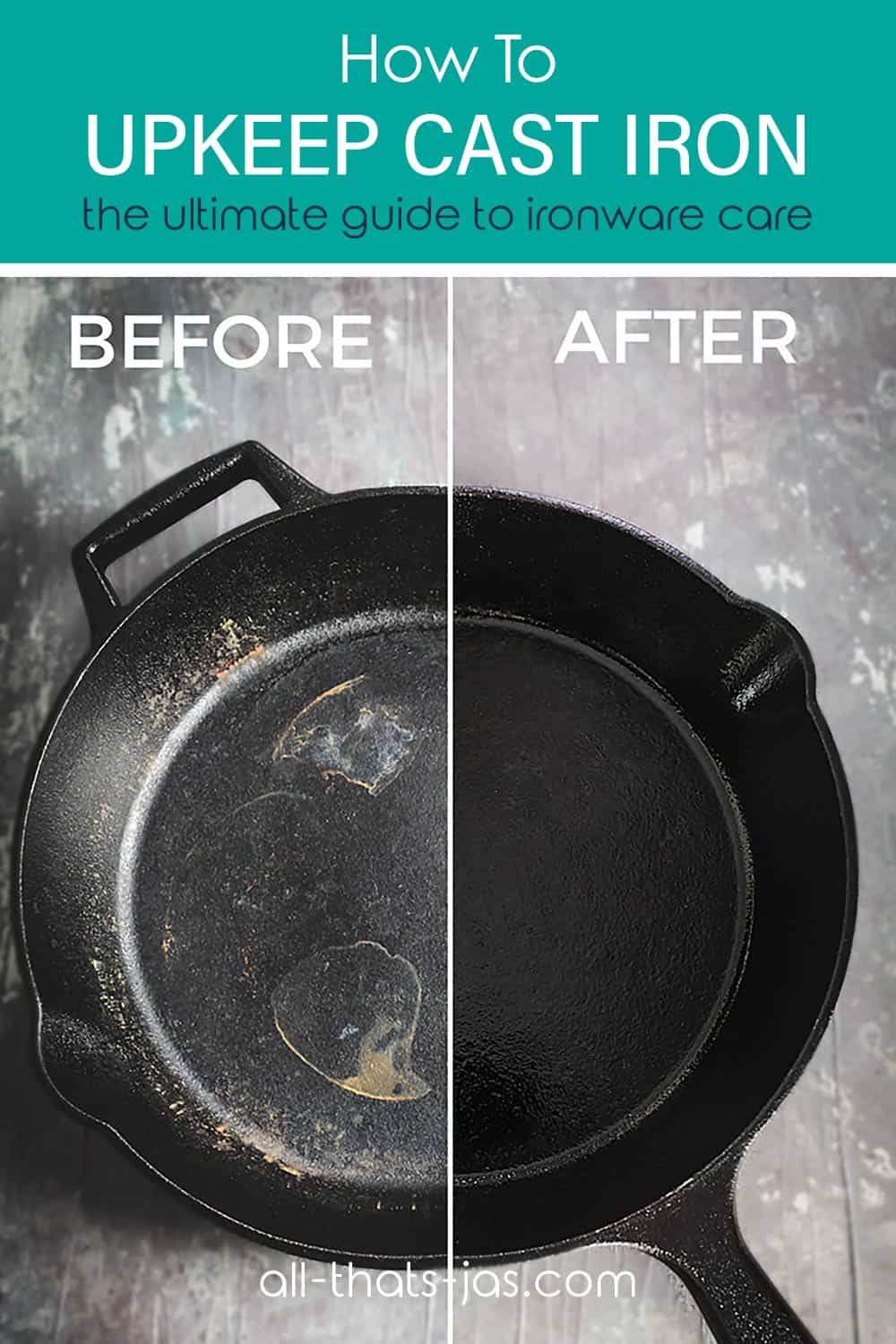
Credit: www.all-thats-jas.com
Caring For A Cast Iron Griddle On Different Bbq Types
Your cleaning method may change slightly depending on your BBQ.
Gas Bbq
- Heat the griddle for a few minutes to loosen food.
- Use water spray cautiously.
- Easy to control heat for drying and seasoning.
Charcoal Bbq
- Place griddle over hot coals to burn off residue.
- Use tongs to handle hot griddle (wear gloves).
- Let cool before oiling.
Electric Bbq
- Avoid large amounts of water.
- Wipe clean with a damp cloth.
- Dry with low heat.
Diy Cleaning Solutions: Are They Safe?
Many online hacks suggest using vinegar, baking soda, or lemon to clean cast iron. These can work, but they’re not always safe for the seasoning.
- Vinegar: Good for heavy rust, but can damage seasoning if left too long.
- Baking Soda: Mild, but not as effective as salt.
- Lemon: Acidic, can strip seasoning.
Advice: Stick to coarse salt, water, and oil for regular cleaning. Use other solutions only for serious rust, and always re-season after.
Is It Safe To Use Soap On Cast Iron?
This is a common question with much debate. In the past, soap was avoided because it could strip the seasoning. Modern soaps are milder, and a little soap won’t hurt well-seasoned cast iron.
- Use a small drop only when needed (sticky residue, strong smells).
- Rinse and dry quickly.
- Always oil and heat after using soap.
Non-obvious tip: Never soak a cast iron griddle, even with soap—quick washing is key.
Cast Iron Vs. Other Griddle Types: Cleaning Differences
Understanding why cast iron needs special care helps avoid mistakes.
| Griddle Type | Cleaning Needs | Seasoning Required | Rust Risk |
|---|---|---|---|
| Cast Iron | Brush, oil after use | Yes | High |
| Stainless Steel | Soap and water, dishwasher safe | No | Low |
| Non-stick | Gentle sponge, no abrasives | No | Low |
| Enamel-coated Cast Iron | Soap and water, avoid metal tools | No | Low |
Key difference: Cast iron needs seasoning and careful drying. Other materials are less sensitive to water and soap.

Credit: www.amazon.com
How To Recover An Old Or Neglected Cast Iron Bbq Griddle
If you find an old, rusty griddle at a garage sale, don’t throw it away. Most cast iron can be saved.
Steps To Restore:
- Remove loose rust with steel wool or a wire brush.
- Wash with mild soap and water (only now, since seasoning is gone).
- Dry completely.
- Heat in oven or BBQ to remove all moisture.
- Apply a thin layer of oil.
- Bake at 400–450°F (204–232°C) for 1 hour.
- Let cool and repeat oiling and baking 2–3 times.
After this, your griddle will be as good as new.
Example: Many old family cast iron pans are still used after 50 or even 100 years, just because of good restoration and care.
Environmentally Friendly Cleaning Options
If you want to avoid chemicals, cast iron is a great choice.
- Salt and water clean well without soap.
- Natural oils are safe for seasoning.
- Reusable brushes and cloths reduce waste.
Insight: Cast iron can last a lifetime with only simple, natural ingredients—better for you and the planet.
When To Replace Your Cast Iron Bbq Griddle
With proper care, most griddles will never need replacing. But sometimes, cracks or deep pits can’t be fixed.
Replace your griddle if:
- There’s a crack through the metal (can’t be repaired safely).
- Metal flakes or large pieces are missing.
- The surface is warped and won’t sit flat.
If you’re unsure, ask a local metal or cookware expert.
Additional Tips For A Perfect Griddle
- Always preheat before cooking. This helps food release easily.
- Never cut food directly on the griddle (protects seasoning).
- Avoid sudden temperature changes (let it cool slowly).
- Keep a dedicated brush or scraper just for your griddle.
Frequently Asked Questions
How Often Should I Season My Cast Iron Bbq Griddle?
You should season your griddle every few months or whenever food starts to stick. If you use it often or cook acidic foods, season more often. Always season after deep cleaning or rust removal.
Can I Use Soap To Clean Cast Iron?
A small amount of mild dish soap is safe for well-seasoned cast iron, but not every time. Rinse quickly and always re-oil after using soap.
What Oil Is Best For Seasoning?
Vegetable oil, canola oil, or flaxseed oil are best. They have high smoke points and form a hard, protective layer. Avoid olive oil, which can get sticky.
Is It Safe To Use Cast Iron On Any Bbq Type?
Yes, cast iron works on gas, charcoal, and electric BBQs. Just adjust your cleaning method to match the BBQ’s heat and moisture levels.
Where Can I Find More Information About Cast Iron Care?
For more details, check the Wikipedia page on cast iron cookware.
A well-cared-for cast iron BBQ griddle is a joy to use and can become a family treasure. With regular cleaning, oiling, and the right storage, you’ll enjoy perfect grilling results for many years—maybe even for generations. Remember, the extra effort now means less work and better meals every time you fire up your BBQ.