
Maximizing your kitchen space can feel like a puzzle, especially if you love to cook but your kitchen feels crowded. Many people struggle with finding places for pots, pans, food, and gadgets in a small area. Even large kitchens can become cluttered without smart planning.
But with the right strategies, you can transform a cramped kitchen into a model of efficiency—no remodeling needed. With a mix of clever tools, organization hacks, and simple habits, anyone can create a kitchen that feels bigger, works better, and looks great.
In this guide, you’ll discover the most effective kitchen space saving hacks. These ideas go beyond the usual advice. You’ll find specific examples, tips to avoid mistakes, and non-obvious tricks that even experienced cooks sometimes overlook. Whether you’re in a studio apartment, sharing a kitchen with roommates, or just want to make your cooking life easier, these solutions can help you reclaim your counters, cabinets, and sanity.
Rethink Your Shelves: Go Vertical
Most people use only the lower parts of their cabinets and walls. But vertical space is your secret weapon. Installing shelves or racks above counters, doors, and even windows can open up new storage areas. For example, a simple floating shelf above your stove can keep spices or oils within reach without taking up counter space.
Consider using adjustable shelves in your cabinets. This lets you match shelf height to what you actually store, so there’s no wasted space above short jars or plates. Corner shelves can turn awkward kitchen corners into prime storage spots. Don’t forget about the tops of your cabinets—sturdy bins up there can hold rarely used items.
A common mistake is filling vertical shelves with heavy or breakable items. Always keep lighter, less-used items higher up, and heavier, everyday things at arm’s reach.
Make The Most Of Cabinet Doors
Cabinet doors are often ignored, but they’re valuable real estate. Hanging organizers, hooks, or racks on the inside of cabinet doors can add space for lids, cleaning cloths, or utensils. A slim rack can hold cutting boards, baking sheets, or even food wrap boxes.
Use adhesive hooks for easy, no-drill installation. But check the weight limit—overloading can cause them to fall off. Magnetic strips can hold metal tools like knives or bottle openers.
Some people forget to measure door thickness before buying racks, so always check to avoid doors that won’t close properly.
Use Drawer Dividers And Organizers
Drawers can quickly become a jumbled mess. Drawer dividers keep everything separated and easy to find. They’re especially helpful for utensils, measuring spoons, or kitchen gadgets.
Expandable drawer organizers can fit different drawer sizes, so you don’t waste space at the sides. Try stacking shallow trays or using pegboard systems for deep drawers to create layers.
Here’s a quick look at how drawer organizers compare:
| Organizer Type | Best For | Space Efficiency | Price Range |
|---|---|---|---|
| Expandable Divider | Utensils, Cutlery | High | $10–$25 |
| Stacking Trays | Small Gadgets | Medium | $8–$20 |
| Pegboard Inserts | Pots, Pans (Deep Drawers) | Very High | $20–$40 |
If you find yourself digging for tools every time you cook, a few dividers can save time and stress.
Install Pull-out Shelves And Lazy Susans
Deep cabinets often hide things in the back where you forget them. Pull-out shelves and Lazy Susans solve this problem. Pull-out shelves slide forward, bringing items to you. Lazy Susans spin, making corner cabinets much more useful.
These tools are ideal for storing pots, pans, or canned foods. They’re especially helpful for people with limited mobility, as you don’t need to reach or bend as much.
The main downside is installation—you may need some basic tools or help. But many models now fit inside existing cabinets without permanent changes.
Hang Pots, Pans, And Utensils
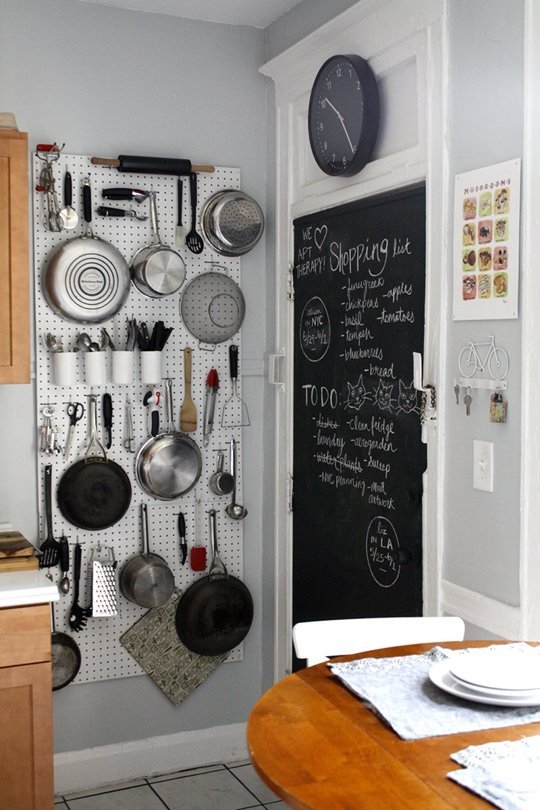
If your cabinets are full, look up! Hanging racks for pots and pans free up a lot of space. A wall-mounted rail with hooks can hold utensils, measuring cups, or even mugs. Overhead racks (also called pot racks) can turn empty ceiling space into storage.
Be sure to use strong anchors and screws, especially for heavy pots. If you rent or can’t drill holes, try a freestanding rack or a tension-rod system inside a window frame.
A non-obvious tip: Hang your most-used items, not everything. Too many things on display can look cluttered and collect dust.
Use Stackable Containers And Bins
Most kitchens waste space because of odd-shaped food packages and mismatched containers. Stackable containers solve this by letting you use all available vertical space in your pantry, fridge, or cabinets.
Choose clear containers so you can see what’s inside. Label everything—this helps with both organization and keeping track of food before it goes bad. Stackable bins also work well for cleaning products or snacks.
A common mistake is buying too many containers before measuring shelves. Always measure first, then shop for containers that fit perfectly.
Credit: www.huffpost.com
Try Over-the-sink And Over-the-stove Solutions
The areas above your sink and stove are often empty, but they can be very useful. An over-the-sink drying rack holds washed dishes, fruits, or vegetables, and saves counter space. Some models also have hooks for sponges or soap.
Over-the-stove shelves, often called spice shelves, are perfect for oils, condiments, or utensils you use while cooking. Make sure any shelf is heat-safe and doesn’t block your view or cooking area.
Don’t forget—steam and heat can damage some materials. Choose stainless steel or other heat-resistant options for over-the-stove storage.
Use Magnetic Strips And Boards
Magnetic strips are a simple way to store knives, scissors, or metal spice jars. They save drawer and counter space and keep tools in easy reach. Mount a magnetic strip on a backsplash, inside a cabinet, or even the side of your fridge.
Magnetic boards can also hold recipe cards, notes, or small containers with metal bottoms. Just be sure to mount them securely—loose magnets can be dangerous.
A non-obvious insight: You can use magnetic strips inside cabinet doors for small metal items like measuring spoons, freeing up even more space.
Choose Multi-function Appliances
Many kitchens are crowded with single-use gadgets. Instead, choose multi-function appliances that do several jobs. For example, a blender that also works as a food processor, or a rice cooker with a steaming tray.
Here’s a comparison of popular multi-function tools:
| Appliance | Main Uses | Replaces | Space Savings |
|---|---|---|---|
| Instant Pot | Pressure cook, slow cook, rice, yogurt | Rice cooker, slow cooker, steamer | High |
| Immersion Blender | Blend, puree, whip | Countertop blender, whisk | Medium |
| Toaster Oven | Toast, bake, broil | Toaster, oven (small meals) | Medium |
Buying fewer, smarter tools gives you more space and less clutter.
Foldable And Collapsible Tools
Look for foldable or collapsible kitchen items—these are designed for small spaces. Collapsible colanders, measuring cups, or dish racks can be stored flat when not in use.
Folding tables or wall-mounted drop-leaf counters give you extra prep space when needed, then fold away to open up the kitchen. Collapsible storage bins can hold snacks or cleaning supplies, then tuck away when empty.
Many people overlook these tools because they assume “foldable” means flimsy. However, many brands now make sturdy, long-lasting collapsible kitchenware.
:max_bytes(150000):strip_icc()/thd-busymom-supercab-0315_vert-2000-5060a9f7195c4e3b8bd29e72aa02d20a.jpg)
Credit: www.marthastewart.com
Add Rolling Carts And Moveable Islands
If you need more storage or prep space, consider a rolling cart or a moveable kitchen island. These can hold appliances, food, or dishes and be moved out of the way when not in use.
Choose models with shelves, drawers, or hooks for maximum versatility. Locking wheels keep the cart steady when you’re working. Some carts even double as serving stations for guests.
A useful trick: Store items you use less often on the bottom shelves, so everyday things are always within easy reach.
Use Under-shelf Baskets And Hanging Organizers
Under-shelf baskets attach to existing shelves and give you a second level for storing flat items like plates, napkins, or sandwich bags. Hanging organizers can be used in pantries, cabinets, or even on the back of doors.
These solutions are affordable and require no installation. They’re especially good for renters or anyone who doesn’t want to drill holes.
Just avoid overloading baskets—they have weight limits and can bend if too full.
Declutter And Store Smarter
Sometimes the best way to save space is to own less. Regularly declutter your kitchen. Donate or recycle gadgets you rarely use, expired food, or duplicate tools.
Store items by how often you use them. Everyday things should be easy to reach, while rarely used items can go in higher cabinets or the back of shelves.
One non-obvious tip: Group similar items in bins or baskets. For example, put all baking supplies together, so you only have to pull out one container when you want to bake.
Use The Space Above The Fridge
The area above the refrigerator is often wasted. This is a great place for large, lightweight items like trays, serving platters, or paper towels. Sturdy bins can keep the area organized and dust-free.
If your fridge is tall, use a step stool to access this space safely. Avoid putting heavy or breakable items up high.

Credit: youarecurrent.com
Install Toe-kick Drawers
The space below lower cabinets (the “toe-kick”) is usually empty. Toe-kick drawers are shallow drawers installed at floor level, perfect for flat items like baking sheets, cutting boards, or placemats.
While these require some installation, many modern kitchens include them. For older kitchens, kits are available to add toe-kick drawers without a full remodel.
People often forget about this space, but it can add several cubic feet of hidden storage.
Make Use Of Window Sills
If your kitchen has a window with a wide sill, use it for storage or display. Window sills can hold potted herbs, small containers, or cookbooks.
Just be careful not to block sunlight, especially if you have plants. Choose items that won’t be damaged by sun or heat.
Use Clear Jars And Labels For Pantry Items
Bulk foods like pasta, rice, or flour often come in bags that spill and waste space. Clear jars let you see exactly what you have, stack neatly, and keep food fresh.
Label each jar with both the food name and the expiration date. This helps you use up what you have and avoid buying duplicates.
A useful, less-known tip: Use square or rectangular jars instead of round ones—these fit together more tightly on shelves, saving more space.
Hang Baskets From The Ceiling
Hanging baskets are not just for fruit. They can hold onions, potatoes, or even dish towels. Hanging baskets save counter and shelf space, and make it easy to grab things quickly.
Install baskets near prep areas or above islands, and make sure they’re well-secured. Avoid overloading—each basket usually has a weight limit.
Store Appliances You Rarely Use
Appliances like waffle makers, bread machines, or ice cream makers can eat up valuable counter space. Store these in less-accessible places, like high shelves or even in a closet.
If you use an appliance only a few times a year, consider loaning it to a friend or using a shared appliance library. This way, you get the benefit without the clutter.
A practical example: If you bake bread only for holidays, store the bread maker in a hallway closet, not the kitchen.
Use Corner Units And Rotating Storage
Kitchen corners are often hard to reach and wasted. Install a corner carousel, “magic corner” pull-out, or rotating trays to make the most of these spots.
Corner units are especially useful for storing pots, pans, or food containers. They prevent items from getting lost in the back of cabinets.
A tip for beginners: Before installing, check that the rotating tray won’t hit cabinet doors or hinges.
Use Wall-mounted Dispensers
For items like paper towels, plastic wrap, or foil, wall-mounted dispensers save drawer and counter space. Install them near your prep area for easy access.
Some dispensers also include racks for spices or utensils. Choose models that are easy to refill and clean.
Avoid placing dispensers near the stove, where heat and grease can damage them.
Use Sink Caddies And Under-sink Organizers
The area under the sink is often messy and wasted. Under-sink organizers with pull-out bins or racks can double or triple your storage.
A sink caddy inside the sink or on the counter keeps sponges, brushes, and soap in one place. Use stackable drawers or tension rods to hang spray bottles.
A non-obvious insight: Place a small lazy Susan under the sink for cleaning supplies, so you can easily reach everything.
Install Pegboards For Tools
Pegboards are not just for garages. In the kitchen, a pegboard can hold pans, spatulas, whisks, or even baskets for produce. Paint or cover the board for a stylish look.
Pegboards are flexible—move hooks and shelves as your needs change. Just make sure the board is anchored well to handle heavy items.
Many people forget to use pegboards for odd-shaped tools that don’t fit in drawers.
Use Stackable Or Nesting Cookware
Traditional pots and pans can waste space if they don’t stack well. Choose nesting cookware sets that fit inside each other. Stackable mixing bowls, measuring cups, or storage containers also help.
A tip: Buy lids that fit multiple pans, or use universal lids, to cut down on clutter.
Here’s a quick comparison of cookware sets:
| Set Type | Typical Pieces | Storage Need | Best For |
|---|---|---|---|
| Nesting | 4–10 | Low | Small kitchens |
| Non-nesting | 3–8 | High | Large kitchens |
Stackable sets can save up to 50% of cabinet space compared to regular sets.
Maximize Pantry Space With Risers
Shelf risers (small, step-like shelves) in your pantry or cabinets let you see and reach items at the back. They’re perfect for cans, jars, or spices.
Use risers in both the pantry and fridge for easy access. Adjustable risers can be moved as your needs change.
A common mistake is using risers only on flat shelves—try them in deep drawers too.
Keep Counters Clear With Wall-mounted Holders
Cluttered counters make kitchens feel smaller. Use wall-mounted holders for knives, towels, or small appliances like a coffee maker. This keeps your workspace open.
Some holders also include charging stations for phones or tablets, freeing up even more space.
Be careful not to overload the walls—spread items out for a balanced look.
Use Stackable Or Tiered Fruit And Vegetable Baskets
Instead of bowls that use up counter space, choose stackable or tiered baskets for fruits and vegetables. These keep produce visible and fresh, and use vertical space efficiently.
Wire baskets let air circulate, which helps keep food longer. Place softer fruits like bananas on top, and hardier items like potatoes below.
A non-obvious tip: Use a small tiered basket inside your fridge for berries or small produce.
Add Hooks Under Shelves Or Cabinets
Hooks are a simple way to store mugs, utensils, or even pots under shelves or cabinets. Adhesive or screw-in hooks work for different weights.
Hooks are especially useful near the coffee station or prep area. Always check the material of your shelves before installing.
Avoid putting too many hooks in one place—space them out to prevent crowding.
Store Food Vertically In The Fridge
Stacking food in the fridge can lead to spills and forgotten leftovers. Store food in clear, stackable bins, and place items vertically—like upright bottles or jars.
Group similar items together, such as dairy, snacks, or vegetables. Use lazy Susans or pull-out bins on fridge shelves to reach everything easily.
A non-obvious insight: Use binder clips on fridge shelves to hang bags of food, creating extra space below.
Use Appliance “garages”
An appliance garage is a small cabinet or cover that hides appliances on your counter. This keeps toasters, coffee makers, or blenders accessible but out of sight.
Some appliance garages slide open or have roll-up doors. They help counters look tidy and make cleaning easier.
If you can’t install a built-in garage, use a storage bin or basket to group small appliances together.
Build Custom Nooks For Odd-shaped Items
Every kitchen has items that don’t fit standard shelves—like large cutting boards, baking trays, or tall bottles. Use custom nooks (small vertical slots) inside cabinets or pantries for these items.
Install dividers or use file organizers to create narrow spaces. This prevents stacking and makes it easy to grab what you need.
A non-obvious trick: Use a magazine rack inside a cabinet to hold trays or lids.
Embrace Minimalism: One In, One Out Rule
The “one in, one out” rule means every time you buy a new kitchen tool or dish, you get rid of an old one. This keeps your kitchen from overflowing.
Before buying something new, ask yourself if you really need it. If you do, donate or sell something you no longer use.
This habit is a long-term solution to kitchen clutter.
Frequently Asked Questions
How Can I Make A Tiny Kitchen Feel Bigger?
Focus on vertical storage, clear containers, and wall-mounted racks. Keep counters clear, use light colors, and add mirrors or reflective surfaces to open up the space visually.
What Are The Best Items To Hang On The Wall?
Hang pots, pans, utensils, and mugs on sturdy hooks or racks. Magnetic strips are great for knives or metal tools. Only hang items you use often to avoid clutter.
How Can I Organize A Deep Pantry Or Cabinet?
Use pull-out shelves, Lazy Susans, or shelf risers. Store rarely used items at the back, and group similar things together in bins. Label everything for quick access.
Is It Worth Installing Custom Kitchen Storage?
Custom storage, like toe-kick drawers or built-in nooks, can make a big difference in small kitchens. If you rent or can’t remodel, use portable solutions like rolling carts or stackable bins.
Where Can I Find More Ideas For Saving Kitchen Space?
Websites like The Container Store offer inspiration, tools, and expert advice for organizing every part of your kitchen.
Making your kitchen work better is about using every inch wisely and keeping only what you need. With these space saving hacks, you can create a kitchen that’s tidy, efficient, and enjoyable—no matter its size. Start small, try a few ideas, and soon your kitchen will feel twice as big.