
Washing sheer curtains in a washing machine can feel risky. These light, delicate fabrics make rooms look bright and fresh, but they also collect dust, odors, and stains over time. Many people hesitate to clean them at home, worried about tearing or shrinking.
The good news? With the right steps, you can safely wash sheer curtains in your washing machine and keep them looking beautiful for years.
In this guide, you’ll learn exactly how to prepare, wash, dry, and care for sheer curtains—without stress or damage. You’ll also discover practical tips, key mistakes to avoid, and answers to common questions. Whether your curtains are lace, voile, or organza, you’ll get confident, step-by-step advice for every part of the process.
Understanding Sheer Curtain Fabrics
Before you start, it’s important to know what sheer curtains are made of. Most sheer curtains use materials like polyester, nylon, cotton voile, or lace. These fabrics are thin, light, and allow plenty of light through. Their delicate nature means they can snag, fray, or stretch if handled the wrong way.
Common Types Of Sheer Fabrics
- Polyester Sheers: Most popular, durable, and machine-washable.
- Nylon Sheers: Lightweight and flexible, but can snag easily.
- Cotton Voile: Breathable, soft, and natural, but more prone to shrinking.
- Lace Sheers: Decorative, often with patterns, and require gentle care.
- Organza Sheers: Crisp, shiny, and beautiful, but very delicate.
Always check the fabric type on the curtain label. If there’s no label, feel the fabric. Polyester feels smooth and a little slippery; cotton voile feels soft and matte; lace is textured.
Why Machine Washing Works
Machine washing is possible for most sheer curtains because modern washing machines have gentle cycles designed for delicate fabrics. This method is fast, convenient, and effective at removing dust, pollen, and odors. However, it’s critical to follow safe washing steps to prevent damage.
Preparing Sheer Curtains For Washing
Preparation is key to a good result. Skipping these steps can lead to snags, tangling, or even permanent damage.
Step 1: Check The Care Label
First, look for a care label inside the curtain hem or side. This label tells you if machine washing is safe. Some curtains may say “Dry Clean Only”—if so, do not wash them at home.
If there’s no label, consider the fabric type and test a small area with water to see how it reacts.
Step 2: Remove All Hardware
Before washing, remove all hooks, rings, pins, or weights from the curtains. Leaving these on can cause tears or get caught in the machine.
Step 3: Shake Off Dust
Take the curtains outside and give them a gentle shake. This removes loose dust and dirt, reducing the load on your washer and preventing muddy water.
Step 4: Spot Clean Stains
If you notice any stains—such as food, insects, or water spots—pre-treat them:
- Mix a small amount of mild liquid detergent with water.
- Dab the stain gently with a soft cloth or sponge.
- Rinse with cold water.
- Avoid rubbing hard, as this can stretch or damage the fabric.
Step 5: Fold Or Roll The Curtains
Don’t throw sheer curtains into the machine as a tangled ball. Instead, fold or roll them loosely. This helps the fabric move gently in the wash and prevents twisting.
Step 6: Use A Mesh Laundry Bag
For extra protection, place your folded curtains inside a mesh laundry bag. This reduces friction and helps avoid snags. If you don’t have a bag, use a clean pillowcase and tie it shut.
Choosing The Right Washing Machine Settings
Your choice of settings makes a big difference in how well your sheer curtains survive the wash. The wrong cycle can lead to stretching, tearing, or wrinkling.
Water Temperature
Always use cold water or lukewarm water (never hot). Hot water can shrink or weaken delicate fibers, especially cotton voile or lace.
Cycle Type
Select the Delicate or Hand Wash cycle. These cycles use slow spins and gentle agitation. Never use Heavy Duty, Normal, or Quick Wash cycles for sheers.
Spin Speed
Use the lowest spin speed your machine allows. High-speed spins can twist and stretch the fabric, leading to misshapen curtains.
Detergent
Choose a mild liquid detergent—avoid powders, bleach, or fabric softeners. Liquid detergents dissolve better and leave fewer residues. You only need a small amount, about one-third of the usual dose.
Load Size
Do not overload the machine. Wash sheer curtains by themselves or with other delicate items only. Overcrowding leads to poor cleaning and increases the chance of damage.
Here’s a quick comparison of ideal machine settings for different types of sheer fabrics:
| Fabric Type | Cycle | Water Temp | Spin Speed | Detergent |
|---|---|---|---|---|
| Polyester | Delicate | Cold | Low | Mild Liquid |
| Nylon | Hand Wash | Cold | Low | Mild Liquid |
| Cotton Voile | Delicate | Lukewarm | Low | Mild Liquid |
| Lace | Delicate | Cold | Lowest | Mild Liquid |
| Organza | Hand Wash | Cold | Lowest | Mild Liquid |
Washing Sheer Curtains: Step-by-step
Now you’re ready to start washing. Following these steps will help your sheer curtains come out clean, fresh, and undamaged.
Step 1: Load The Machine Properly
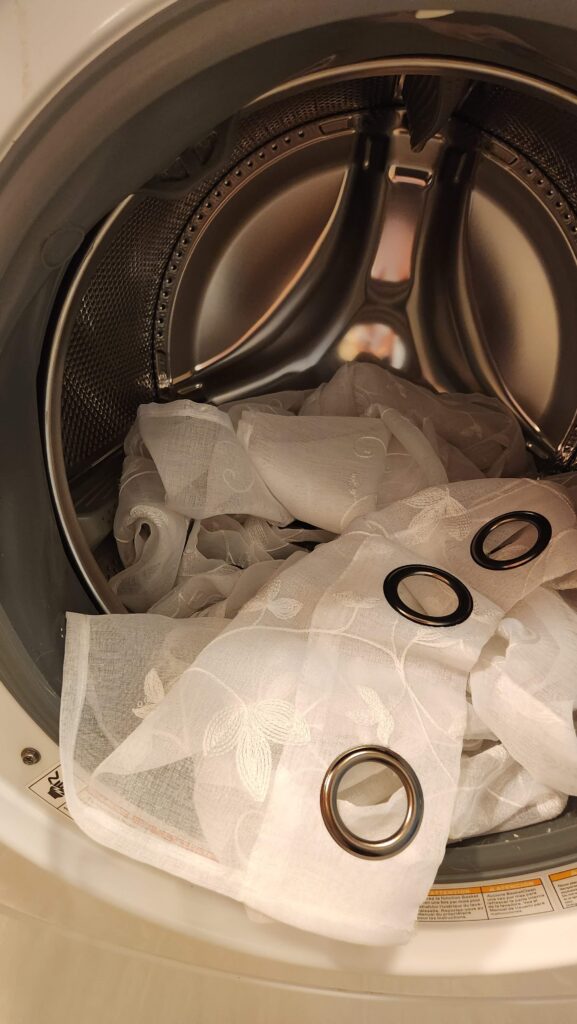
Gently place the mesh bag (or pillowcase) with your curtains into the washer. If you’re washing more than one panel, make sure they’re not packed tightly. Two to four panels are usually fine for a standard drum.
Step 2: Add Detergent
Pour a small amount of mild liquid detergent into the dispenser. Never pour detergent directly onto the fabric—it can leave marks.
Step 3: Select Cycle And Start
Double-check your settings: Delicate cycle, cold water, low spin. Start the machine and stay nearby during the first wash. If you hear loud thumping or the drum seems off-balance, pause and redistribute the load.
Step 4: Optional Second Rinse
Some sheer curtains, especially if heavily soiled or exposed to smoke, benefit from a second rinse. This removes any leftover detergent that can stiffen fabric.
Step 5: Remove Promptly
As soon as the cycle finishes, take the curtains out of the washer. Leaving them sitting in the drum can cause creases or musty smells.

Credit: www.youtube.com
Drying Sheer Curtains The Right Way
Drying is just as important as washing. The wrong drying method can ruin your curtains.
Air Drying: The Best Option
The safest way to dry sheer curtains is air drying. Here’s how:
- Gently shake each panel to remove wrinkles and excess water.
- Hang them back on the curtain rod while still damp. This helps them keep their shape and reduces ironing.
- Open windows for airflow or use a fan to speed drying.
If you can’t hang them right away, lay them flat on a clean towel and roll up to absorb more water, then lay them flat on a rack.
Avoid Using A Dryer
Never use a tumble dryer for sheer curtains. The heat and tumbling motion can cause shrinking, melting, or warping.
Outdoor Drying Tips
If drying outside, avoid direct sunlight for long periods—especially for colored sheers, as UV rays can fade fabric. Early morning or late afternoon is best.
Ironing (if Needed)
If your curtains come out with stubborn wrinkles, use a cool iron or garment steamer. Place a clean cloth between the iron and the curtain to avoid direct heat.
Here’s a comparison of drying methods:
| Method | Pros | Cons | Best For |
|---|---|---|---|
| Air Dry (Rod) | Keeps shape, reduces wrinkles | Needs space, slow in humid climates | All fabrics |
| Flat Dry | Prevents stretching, gentle | Can cause creases | Lace, organza |
| Tumble Dry | Fast | High risk of damage | Never recommended |
Aftercare: Keeping Sheer Curtains Fresh And Beautiful
Once your sheer curtains are clean and dry, a bit of regular care will keep them looking new.
Regular Dusting
Dust builds up quickly on sheers. Every week or two, gently shake the curtains or use a soft-bristle vacuum attachment to remove surface dust. This keeps them cleaner between washes.
Immediate Stain Treatment
Act fast if you spill something on your curtains. Blot stains with a damp cloth, using a little mild soap if needed. The sooner you treat a stain, the less likely it is to set.
Rotate Curtains
If your room gets a lot of sun, rotate your sheer curtains with a backup set every few months. This reduces fading and fabric wear.
Annual Deep Cleaning
Wash sheer curtains in the washing machine at least once or twice a year, even if they don’t look dirty. Regular washing removes hidden dust, pollen, and allergens.
Store Properly
If you take down your sheer curtains for a season, wash and dry them first. Fold loosely and store in a breathable cotton bag, not plastic, to prevent mildew.
Common Mistakes To Avoid
Many people damage sheer curtains by making simple mistakes. Here’s what to watch out for:
- Using Hot Water: This causes shrinking and can weaken fibers.
- Skipping the Mesh Bag: Direct contact with the drum or agitator leads to snags and tears.
- Overloading the Washer: Too many panels at once cause poor cleaning and more wrinkles.
- Using Bleach or Harsh Detergent: These chemicals break down delicate fabrics and cause discoloration.
- Tumble Drying: High heat and tumbling action ruin the texture and shape.
- Ignoring Care Labels: Some sheers are truly “dry clean only”—never risk machine washing them.
- Leaving Curtains in Washer: Sitting wet in the machine leads to creases and musty odors.
- Wringing Out Fabric: Twisting or wringing can stretch or deform sheers.
- Ironing Directly: Hot irons can burn or melt synthetic fibers.
- Not Rinsing Well: Leftover detergent stiffens fabric and attracts dust.
Advanced Tips For Better Results
If you want your sheer curtains to look as perfect as possible, try these extra tips:
- Add white vinegar (half a cup) to the rinse cycle. It softens fabric naturally and removes soap residue.
- For stubborn odors (like smoke), soak curtains in a mixture of cold water and baking soda for 30 minutes before washing.
- For lace or embroidered sheers, consider hand washing, or set the machine to the gentlest possible cycle.
- Wash sheer curtains on a sunny day, so you can hang them back up and let them dry quickly.
- If your window gets a lot of traffic (kids, pets), wash sheers every 3-4 months instead of just once a year.
Credit: www.henandhorsedesign.com
When To Seek Professional Cleaning
Not all sheer curtains are safe to wash at home. Some situations call for professional help:
- Antique or heirloom curtains: These may use fragile threads or dyes that can bleed.
- Curtains with heavy embellishments: Beads, sequins, or embroidery can be damaged in a machine.
- “Dry clean only” labeled fabrics: Follow the label, as some fibers can dissolve or deform in water.
Professional cleaners use special solvents and tools to protect delicate items. If you have doubts, consult a reputable service.
How Often Should You Wash Sheer Curtains?
Many people ask how often to wash sheer curtains. The answer depends on your home’s environment:
- Low Dust/No Smoking: Every 6-12 months.
- High Dust, Pets, Smokers: Every 3-4 months.
- Kitchen or High Traffic: Every 2-3 months.
If you have allergies or sensitive lungs, more frequent washing is better. Clean curtains help reduce indoor dust and allergens.
Here’s a quick reference:
| Environment | Recommended Wash Frequency |
|---|---|
| Low dust, no pets | Every 6-12 months |
| Pets, high traffic | Every 3-4 months |
| Kitchen windows | Every 2-3 months |
| Smokers/allergies | Every 2-3 months |
Real-world Example: Washing A Set Of Sheer Curtains
Let’s look at a practical example. Imagine you have four polyester sheer panels in your living room, each 54 x 84 inches.
- Check the label—it says machine washable, cold, gentle cycle.
- Remove all hooks and shake off dust outside.
- Fold the curtains loosely and place two panels in each mesh laundry bag.
- Load the first bag into the washer. Add a small amount of mild detergent.
- Set the machine to Delicate, cold water, low spin.
- Start the cycle. Afterward, check for any soap residue—if present, run a quick rinse.
- Remove curtains promptly, shake gently, and hang back on the rod to air dry.
- Repeat for the second set of panels.
Result: Your curtains dry without wrinkles, look brighter, and the room feels fresher. You avoided damage by using the right settings, bag, and drying method.
Non-obvious Insights Most Beginners Miss
- Curtains actually look best if hung up damp after washing. As they dry, gravity helps pull out minor wrinkles, so you usually don’t need to iron.
- Mesh bags are not just for washing—they’re perfect for storing sheer curtains, too. The breathable fabric prevents mildew and keeps curtains dust-free.
Trusted Sources For More Information
If you want more about caring for delicate fabrics, the Good Housekeeping curtain cleaning guide offers expert advice and additional methods.
Frequently Asked Questions
How Do I Know If My Sheer Curtains Are Machine Washable?
Check the care label sewn into your curtain’s hem or side. If it says “machine washable,” you’re safe to wash at home. If there’s no label, test a small hidden area with water. For valuable or antique sheers, consult a professional.
Can I Wash Sheer Curtains With Other Laundry?
It’s best to wash sheer curtains alone or with other delicate items. Mixing with heavy clothes (like jeans or towels) increases the risk of snags and damage.
What Should I Do If My Sheer Curtains Shrink?
Most synthetic sheers won’t shrink, but cotton or linen might. If your curtains shrink, gently stretch them while damp, or iron on low heat with a cloth between the iron and fabric. If they’re too small to re-hang, consider using them as valances or for craft projects.
Is It Safe To Use Stain Removers On Sheer Curtains?
Use only mild, non-bleach stain removers in small amounts. Always test on a hidden spot first. Avoid harsh chemicals, as they can discolor or weaken delicate fibers.
How Can I Prevent My Sheer Curtains From Yellowing?
Regular washing, dusting, and avoiding smoking indoors help a lot. For white sheers, add a little white vinegar to the rinse cycle to brighten fabric and prevent yellowing. Keep curtains out of direct sunlight for long periods, as UV rays can cause yellowing over time.
Keeping your sheer curtains clean doesn’t have to be a chore. With these tips, your home stays bright, beautiful, and healthy—without risking your delicate fabrics.

Credit: www.reddit.com