
Washing your down jacket at home can seem scary. Many people worry about ruining the insulation, making the jacket clumpy, or damaging the outer fabric. But you don’t need to pay for dry cleaning every time your jacket gets dirty. With the right steps, you can clean your down jacket safely, keep it fluffy, and save money. This guide will show you everything you need to know, from preparing your jacket to drying it, plus tips, common mistakes, and answers to popular questions. If you follow these steps, your jacket will stay warm, light, and comfortable for years.
Why Down Jackets Need Special Care
Down jackets use goose or duck feathers for insulation. The down inside is soft, light, and traps air to keep you warm. But down is sensitive to water, soap, and heat. If you wash a down jacket incorrectly, you can:
- Flatten the insulation
- Cause clumps inside the jacket
- Damage the outer fabric or water-resistant coating
- Leave soap residue that attracts more dirt
Manufacturers recommend gentle washing. Most jackets have a care tag with specific instructions. Still, many users miss a few important details that can make a big difference. Let’s look at why down is special, and what happens if you wash it incorrectly.
Down Vs Synthetic Insulation
Some jackets use synthetic fibers instead of down. Synthetic jackets are easier to wash and dry. Down jackets, however, need more attention. Here’s a quick comparison:
| Feature | Down | Synthetic |
|---|---|---|
| Warmth-to-weight | Excellent | Good |
| Compressibility | High | Medium |
| Water Resistance | Poor (unless treated) | Good |
| Care | Gentle, special | Easy |
| Price | Higher | Lower |
If your jacket uses down insulation, you need to follow special steps. If you’re not sure, check the label inside the jacket. Most brands mention the insulation type.
Before You Begin: What You Need
Washing a down jacket isn’t just about tossing it in a machine. Preparation is key. Here’s what you need:
- Mild detergent (special down soap, or gentle laundry soap)
- Front-loading washing machine (top-loaders can damage the jacket)
- Clean tennis balls or dryer balls (for drying)
- Large towel (for blotting water)
- Dryer (preferably with low heat)
- Soft-bristled brush (optional, for spot cleaning)
- Sink or tub (for hand washing if needed)
Avoid regular laundry detergents, as they leave residue and strip natural oils from the down. Down-specific detergents are designed to protect insulation and keep jackets fluffy.
Comparing Down Detergents
| Brand | Type | Price (USD) | Features |
|---|---|---|---|
| Nikwax Down Wash | Liquid | 9.99 | Protects natural oils, easy rinse |
| Granger’s Down Wash | Liquid | 10.95 | Restores loft, eco-friendly |
| Woolite | Liquid | 7.99 | Gentle, but not specialized for down |
For best results, use a detergent designed for down. If you can’t find one, use a mild soap with no bleach, fabric softener, or strong chemicals.
Step-by-step: How To Wash Your Down Jacket
Let’s break down the process so you can follow each step easily. This method works for most down jackets, including popular brands like Patagonia, The North Face, and Columbia.
Step 1: Check The Care Label
Every jacket is different. The care label tells you:
- Water temperature (cold or warm)
- Machine or hand wash
- Drying instructions
Some jackets may say “Dry Clean Only. ” In most cases, you can wash them at home if you follow gentle steps, but always check first.
Step 2: Prepare The Jacket
- Empty all pockets.
- Remove loose dirt or mud with a soft brush.
- Close zippers and Velcro.
- Fasten buttons or snaps.
- Turn the jacket inside out.
Turning the jacket inside out protects the outer fabric and helps water reach the down more easily.
Step 3: Treat Stains
If your jacket has visible stains, treat them before washing.
- Use a small amount of down-safe soap and a soft-bristled brush.
- Gently rub the stained area.
- Do not scrub hard—down can break or shift.
Spot cleaning helps prevent stains from setting during washing.
Step 4: Select The Right Detergent
Pour the recommended amount of down detergent into the machine. Usually, it’s less than regular soap—about 1–2 tablespoons for one jacket.
Do not use bleach, fabric softener, or strong detergents. They damage the down and the outer shell.
Step 5: Choose The Right Machine Settings
- Use a front-loading machine. Top-loading machines have a central agitator, which can tear fabric and push down into clumps.
- Set the cycle to gentle or delicate.
- Use cold water unless the label says warm is okay.
- Select an extra rinse cycle. This helps remove all soap residue.
If you don’t have a front-loading machine, hand wash in a bathtub or large sink.
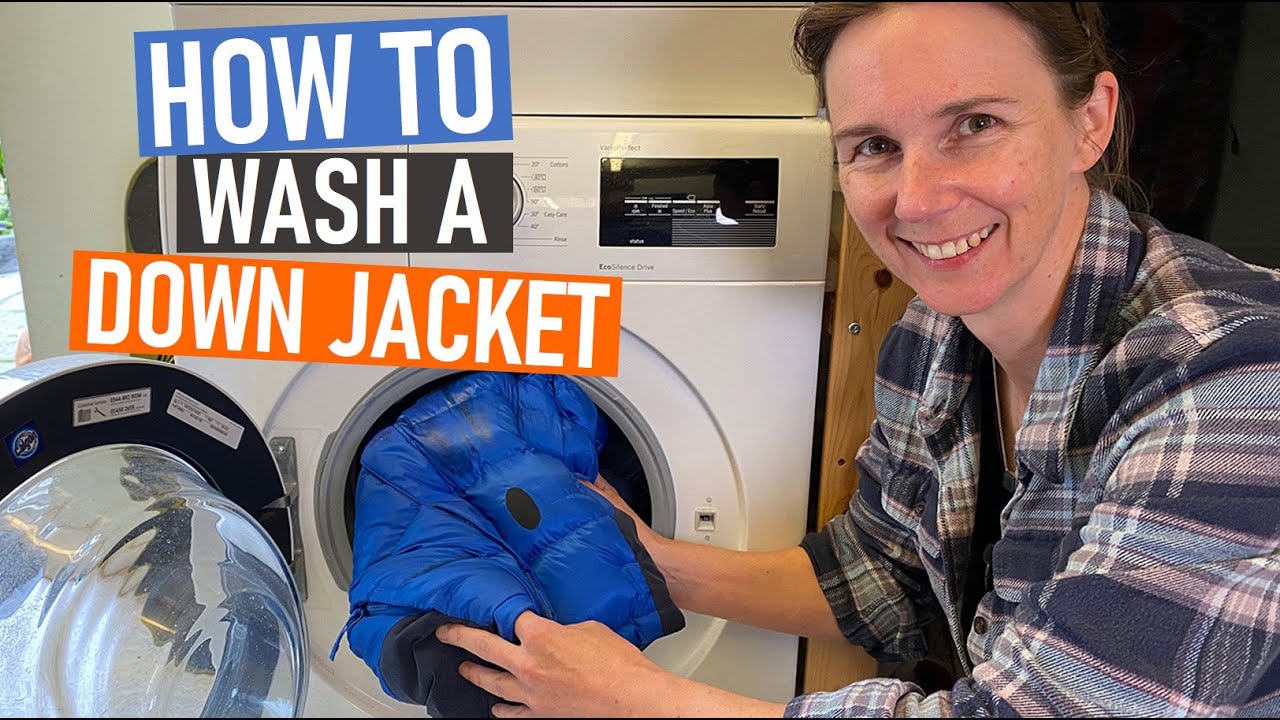
Step 6: Wash The Jacket
Place the jacket in the machine alone. Do not add other clothes, as zippers and buttons can snag the fabric.
Start the wash cycle. If your machine allows, add an extra rinse at the end.
Step 7: Remove Excess Water
After washing, take the jacket out. It will feel heavy and wet.
- Gently squeeze out water. Do not wring or twist.
- Lay the jacket flat on a large towel.
- Roll up the towel with the jacket inside to absorb water.
- Repeat with a dry towel if needed.
This step helps remove water without damaging the down.
Step 8: Drying Your Down Jacket
Drying is the most important step. Wet down clumps together and loses insulation. You need to restore loft (the fluffiness) without overheating.
Machine Drying
- Place the jacket in a dryer on low heat or “air dry.”
- Add 2–3 clean tennis balls or dryer balls. They help break up clumps and restore loft.
- Check every 30 minutes. Take the jacket out, shake it gently, and return to the dryer.
- Drying can take 2–4 hours, depending on the thickness.
Air Drying
If you don’t have a dryer, air drying is possible, but takes longer.
- Lay the jacket flat on a drying rack.
- Turn it over every hour.
- Gently fluff the jacket and break up clumps by hand.
- Keep away from direct sunlight or high heat.
Air drying can take up to 24–48 hours. Make sure the jacket is fully dry before storing. Wet down can cause mold and bad odors.
Step 9: Fluffing And Final Checks
After drying, check your jacket:
- Is it fluffy and light?
- Are there any clumps or flat spots?
- Does it smell fresh?
If you see clumps, run the jacket through the dryer again with tennis balls, or use your hands to gently break them up.
Hand Washing Your Down Jacket
Some people prefer hand washing, especially if their jacket is delicate or the machine is not suitable.
Steps For Hand Washing
- Fill a bathtub or large sink with cold water.
- Add a small amount of down detergent.
- Submerge the jacket and gently squeeze water through the fabric.
- Let soak for 10–15 minutes.
- Rinse several times with clean water, until no soap remains.
- Gently squeeze out water (never wring).
Lay the jacket flat on towels to remove excess water, then follow the drying steps above.
Hand Washing Vs Machine Washing
Hand washing is slower and needs more effort to rinse. However, it is safer for delicate jackets and prevents damage from rough machine cycles.
:max_bytes(150000):strip_icc()/how-to-wash-pufferr-jackets-GettyImages-1455953406-aff2caac833c408b9e63a797b9cbfb65.jpg)
Credit: www.realsimple.com
Common Mistakes When Washing Down Jackets
Even experienced users make mistakes. Here are some to avoid:
- Using regular detergent: This leaves residue and damages down.
- Wringing the jacket: Twisting breaks feathers and ruins loft.
- Skipping tennis balls: Jackets dry flat and clumpy without them.
- High heat drying: Heat can melt fabric and shrink the jacket.
- Storing when damp: Wet down causes mold and odor.
- Ignoring care label: Always follow manufacturer’s instructions.
- Overloading the washer: Wash only one down item at a time.
Most beginners miss the importance of extra rinsing and low heat drying. Soap residue is hard to remove from thick jackets, so rinse well. Low heat is slow, but prevents damage.
How Often Should You Wash Your Down Jacket?
You don’t need to wash your down jacket after every use. Over-washing can reduce insulation and wear out the fabric. Here are general guidelines:
- If you wear your jacket daily: Wash once every 2–3 months.
- For outdoor activities: Wash after heavy use (mud, sweat, spills).
- For light use: Wash once per season.
Spot clean stains between washes. If your jacket smells or loses loft, it’s time for a wash.
Caring For Your Jacket After Washing
Washing is just one part of care. To keep your jacket in good condition:
- Store it loosely, not compressed, so the down stays fluffy.
- Keep away from damp places.
- Reapply DWR (Durable Water Repellent) coating if water stops beading on the surface.
- Avoid sharp objects and rough surfaces.
Most jackets lose their water-resistant coating after several washes. You can buy spray-on DWR treatments to restore it. Follow the instructions on the product for best results.
Restoring Water Resistance
If your jacket is no longer repelling water, restore the coating:
- Buy a DWR spray from outdoor stores.
- Wash and dry your jacket.
- Lay the jacket flat and spray evenly.
- Let dry according to product directions.
Reapplying DWR helps keep your jacket useful in wet conditions.
Credit: www.greggio.com
Dealing With Clumps And Flat Spots
Down can form clumps after washing, especially if not dried properly. Here’s how to fix it:
- Put the jacket in the dryer with tennis balls again.
- Use your hands to break up clumps gently.
- Do not shake violently or pull hard.
Most clumps disappear after a few drying cycles. If not, air dry longer and repeat fluffing.
Washing Down Jackets With Fur Or Other Materials
Some jackets have faux fur, leather trims, or special fabrics.
- Remove fur or detachable parts before washing.
- Hand wash delicate materials.
- Use mild soap for leather areas.
- Air dry non-down parts separately.
Always check the label for materials used. Some trims need special care.
Comparing Professional Cleaning Vs Home Washing
Many people wonder if home washing is as good as professional cleaning. Here’s a comparison:
| Aspect | Home Washing | Professional Cleaning |
|---|---|---|
| Cost | $5–$15 (detergent + energy) | $30–$60 per jacket |
| Convenience | DIY, anytime | Drop-off, wait time |
| Risk | Possible mistakes | Expert care |
| Results | Excellent if done correctly | Consistent, professional |
| Frequency | Whenever needed | Less often (due to cost) |
For most people, washing at home is safe and cost-effective. Professional cleaning is useful for expensive or delicate jackets.
Expert Tips For Washing Down Jackets
Here are some practical tips that many beginners miss:
- Use a mesh laundry bag for extra protection if your jacket is lightweight.
- Pre-rinse before washing if the jacket is very dirty.
- Dry with patience: Don’t rush the drying step. Fluff every 30 minutes.
- Check for leaks: If down escapes during washing, stop and repair the jacket.
- Repair small holes before washing. Use fabric patches or sewing kits.
- Never store compressed: Down jackets lose loft if stored tightly.
These steps help keep your jacket in top shape and avoid costly mistakes.
Real-life Example: Washing A Patagonia Down Sweater
Let’s see a practical example. Suppose you have a Patagonia Down Sweater jacket.
- Check the label: Machine wash cold, gentle cycle.
- Prepare: Close zippers, empty pockets, turn inside out.
- Spot clean: Treat stains with mild soap.
- Use Nikwax Down Wash, 1 tablespoon.
- Wash alone in a front-loader.
- Extra rinse cycle.
- Remove, squeeze water, towel blot.
- Dry with two tennis balls, low heat.
- Fluff every 30 minutes, total drying time: 2 hours.
Result: The jacket is clean, fluffy, and ready for use. No clumps, no odor.
Environmental Impact Of Washing Down Jackets
Washing down jackets at home uses water, energy, and soap. Here are some ways to reduce impact:
- Use eco-friendly detergents.
- Wash only when necessary.
- Air dry when possible.
- Repair instead of replacing jackets.
Some brands use recycled down and fabrics, lowering their footprint. For more info on sustainability, see Patagonia Sustainability.

Credit: chatelaine.com
Frequently Asked Questions
How Can I Prevent My Down Jacket From Clumping After Washing?
Clumping happens when down gets wet and sticks together. To prevent this:
- Use tennis balls or dryer balls in the dryer.
- Dry on low heat, fluff every 30 minutes.
- Never wring or twist the jacket.
If clumps remain, run another drying cycle and break them up by hand.
Is It Safe To Wash A Down Jacket In A Top-loading Washing Machine?
Top-loading machines can damage jackets because of the agitator. If you must use one:
- Place the jacket in a mesh laundry bag.
- Use gentle cycle and cold water.
- Check for damage after washing.
Whenever possible, use a front-loading machine or hand wash.
What If My Jacket Starts Leaking Feathers After Washing?
Feather leaks mean there is a hole or weak seam. Stop washing, dry the jacket, and repair:
- Use fabric patches or sewing kits.
- Avoid washing again until repaired.
- Check seams before every wash.
Small leaks are common in older jackets but can be fixed easily.
How Do I Restore The Water-resistant Coating?
Water resistance fades after washing. To restore:
- Buy a DWR spray from outdoor stores.
- Wash and dry the jacket.
- Spray evenly and let dry.
Follow product instructions for best results.
Can I Wash My Down Jacket With Other Clothes?
No. Wash your down jacket alone. Other clothes can snag the fabric, leave lint, or prevent proper cleaning. Always wash one jacket at a time.
Final Thoughts
Washing your down jacket at home is safe and simple if you follow the right steps. Remember to use gentle detergent, protect the insulation during washing, and dry carefully with tennis balls. Avoid common mistakes like wringing, high heat, and skipping extra rinses. With a little patience, your jacket will stay warm, fluffy, and comfortable for many winters. If you’re unsure, check the care label or ask the manufacturer. Home washing saves money and keeps your gear ready for adventure.