
Wood floors add warmth and beauty to any space. But not all wood floors are the same. Some have a protective seal, while others are bare or only lightly finished. If you want to clean, refinish, or protect your wood floors, knowing whether they are sealed is essential. Using the wrong cleaning product or technique on unsealed wood can cause damage, while sealed wood has more flexibility. Yet, it can be surprisingly tricky to tell if your wood floor is sealed—especially if you just moved in or the finish has faded over time. This guide will walk you through every method, tip, and expert check to determine if your wood floor is sealed, plus what to do with that knowledge.
Why Knowing If Your Wood Floor Is Sealed Matters
Different cleaning and maintenance routines depend on whether your wood floor is sealed or unsealed. Sealed floors can resist water, stains, and scratches better. Unsealed floors absorb moisture, which can lead to warping, stains, or mold. Using a wet mop or harsh cleaner on an unsealed floor can cause expensive damage.
If you plan to refinish or restore your floors, the type of seal influences which products you use and how you prepare the surface. Even simple things like moving furniture or dealing with spills can change depending on your floor’s protection level.
Many homeowners make mistakes because they assume their floor is sealed. For example, cleaning with steam or water, or using strong chemicals that strip away what little finish remains. That’s why it pays to know for sure.
Types Of Wood Floor Seals
Before you test your floor, it helps to understand the common types of wood floor finishes. Each offers a different level of protection and appearance.
Surface Seals
Surface seals are the most common in modern homes. These create a protective layer on top of the wood.
- Polyurethane (oil-based or water-based): Clear, durable, and gives a glossy, semi-gloss, or satin finish.
- Aluminum oxide: Often found on factory-finished engineered floors; very hard and scratch-resistant.
- Acrylics: Used in commercial spaces, fast-drying.
Penetrating Seals
These soak into the wood fibers instead of sitting on top.
- Wax: Leaves a soft sheen; requires regular reapplication.
- Oil sealers: Penetrate deeply and enhance the natural color. Often used on older or high-quality hardwood.
Unsealed / Bare Wood
No protective layer, or only a very thin coating. Uncommon in high-traffic or modern homes, but found in older houses, rustic spaces, or after heavy sanding.
Visual Clues: What To Look For
At first glance, you can learn a lot by simply observing your floor. Here’s how to spot surface clues:
Shine And Texture
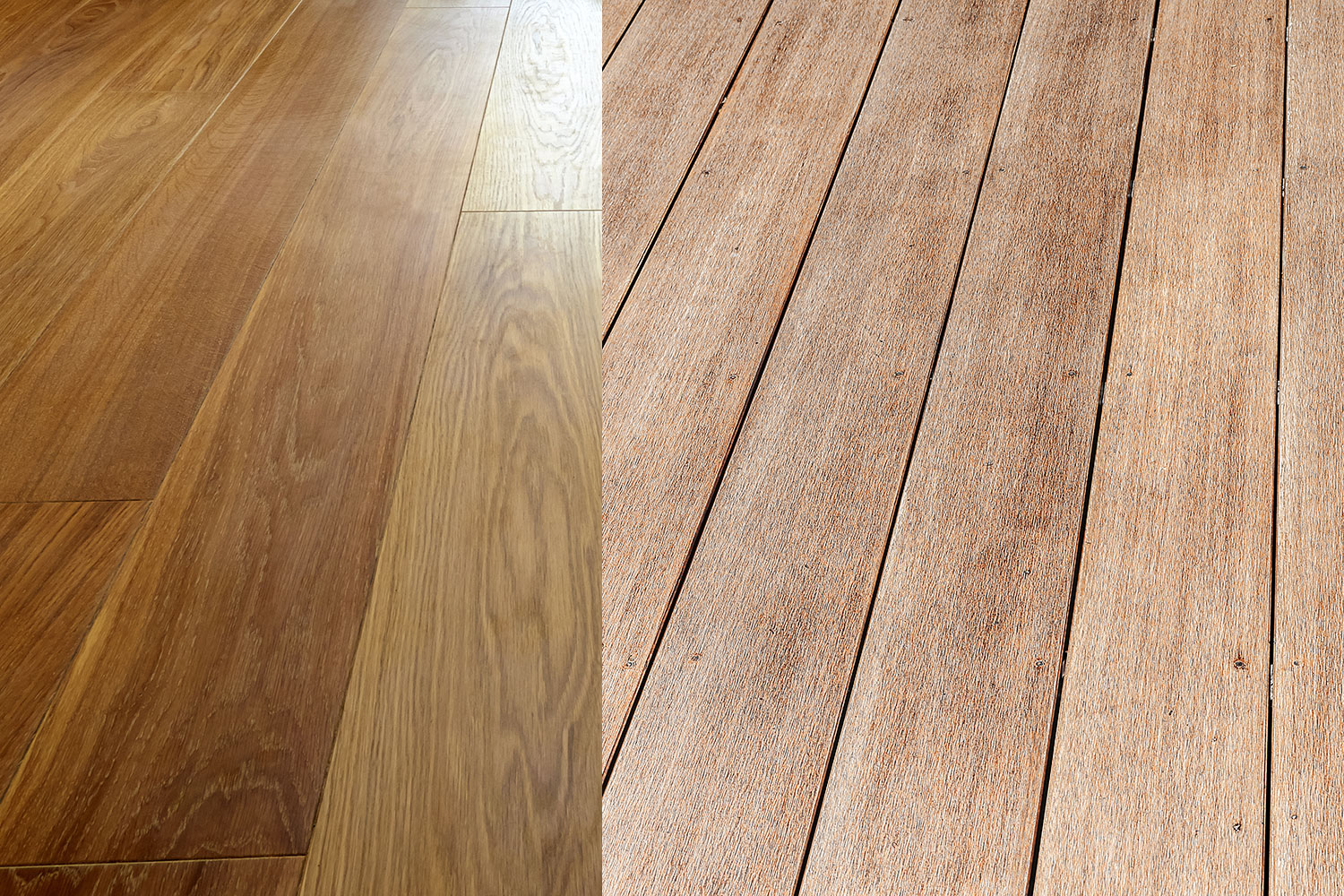
A shiny, smooth surface usually means the floor is sealed with polyurethane or a similar finish. If the floor has a matte or dull look, it could be waxed, oiled, or unsealed.
- Polyurethane: Glossy or semi-gloss and very even.
- Wax: Low sheen, often slightly slippery.
- Oil: Matte or low sheen; wood grain looks rich but not shiny.
- Unsealed: No shine; wood looks dry and may show scratches easily.
Color And Aging
Sealed floors tend to retain color better over time. Unsealed wood might darken or show water stains, especially near doors or under rugs.
Surface Imperfections
Look for scratches, dents, or stains. On a sealed floor, surface marks usually don’t go deep. On unsealed wood, stains and watermarks may be absorbed.
Edge Details
Check the edges where boards meet the wall or in hidden corners. Sometimes, the finish wears off in these spots first, revealing the true state of the floor.
The Water Drop Test: The Classic Check
One of the simplest and most reliable tests is the water drop test. Here’s how to do it:
- Choose an inconspicuous area, like behind a door.
- Clean the spot with a dry cloth.
- Place a few drops of water (about the size of a nickel) on the wood.
- Wait 2-3 minutes.
What happens next tells you a lot:
- If the water beads up or stays on the surface, your floor is sealed.
- If the water sinks in quickly or leaves a dark spot, your floor is unsealed or only lightly waxed/oiled.
- If the water sits for a while but eventually absorbs, you might have a thin or worn seal.
Important: Wipe up all water after the test to prevent any chance of damage.

Credit: home-ec101.com
The Solvent Test: For More Detail
If you want to get even more specific, you can test with household solvents. This helps identify not just if your floor is sealed, but what type of seal you have.
How To Test
- Find a hidden spot.
- Apply a small amount of mineral spirits or nail polish remover (acetone) to a soft cloth.
- Gently rub the spot for a few seconds.
Results:
- If the finish dissolves or comes off (you see color on the rag), it’s likely wax or an oil-based finish.
- If nothing happens, your floor probably has a polyurethane or aluminum oxide finish.
Never use this test on a large area. Always ventilate and follow safety instructions.
The Touch Test: Feel Matters
Running your fingers across the wood can reveal a lot.
- Sealed floors feel smooth, sometimes even slick or glassy.
- Waxed floors are smooth but not as slippery.
- Oiled or unsealed wood feels dry, rough, or textured. You might feel the grain.
Try comparing an area under a rug (less wear) with a high-traffic area. Sometimes you’ll notice a difference in feel that tells you about the seal’s condition.
Comparing The Main Seals: Quick Reference Table
Understanding the differences between the most common finishes can help you identify yours faster.
| Finish Type | Appearance | Durability | Common in Homes Built |
|---|---|---|---|
| Polyurethane | Glossy/Smooth | High | 1970s–Today |
| Wax | Low Sheen/Matte | Medium (needs re-waxing) | 1900s–1960s |
| Oil | Matte/Deep Color | Medium | Pre-1950s & Modern Luxury |
| Unsealed | Dull/Natural | Low | Older Homes, Rare Today |
Cleaning Clues: How Your Floor Reacts
How your floor responds to everyday cleaning can reveal its finish type.
- Water puddles and easy wipe-up? Probably sealed.
- Water leaves a mark or is quickly absorbed? Unsealed or only lightly protected.
- Mop leaves streaks or dull spots? May indicate wax.
- Cleaner leaves the floor sticky or cloudy? Could be an incompatible product or wax reacting to water.
If you notice that your floor needs frequent buffing to look good, it might be waxed. If it stays clean and shiny with little effort, it’s likely sealed with polyurethane.
Professional Inspection Methods
Sometimes, visual and touch tests aren’t enough—especially if you’re dealing with old, layered finishes or you want to refinish your floor. Flooring professionals use more advanced methods:
- Microscopic inspection: Examining a sample under a microscope to see how deep the finish goes.
- Finish thickness measurement: Using special tools to measure the finish layer.
- Lab testing: Rare, but can reveal exact chemicals used.
Most homeowners don’t need these steps, but if you’re investing in major repairs, a pro can help.
Real-life Examples: What Homeowners Found
To see how these tests work in the real world, let’s look at some examples.
- Laura’s 1920s Bungalow: She noticed her living room floor had no shine, felt rough, and darkened with every spill. The water drop test showed immediate absorption. Her floor was unsealed.
- Mike’s 2005 Condo: His floor was shiny, scratches stayed on the surface, and water beaded up. The solvent test had no effect. Clearly, polyurethane sealed.
- Rosa’s Family Home: The floor was dull in high-traffic areas but shiny under the couch. The water drop test showed slow absorption in dull spots, none in shiny areas. The solvent test removed finish in dull areas only. Some parts were worn wax, others still sealed.
Common Mistakes When Testing
Many people make errors when trying to identify their floor’s finish. Avoid these pitfalls:
- Testing in high-traffic areas: Wear can give a false impression. Always test a hidden, less-used spot.
- Using too much water: Even sealed floors can be damaged by standing water.
- Assuming all rooms are the same: Kitchens, bathrooms, and entryways often have different finishes or wear rates.
- Not waiting long enough: Water absorption can take a few minutes; don’t rush the test.
What To Do Once You Know
Once you’ve identified your floor’s status, you can plan cleaning and maintenance confidently.
If Your Floor Is Sealed
- Use damp mopping with a mild cleaner.
- Avoid harsh chemicals or abrasive tools.
- Repair scratches with finish-specific touch-up kits.
If Your Floor Is Waxed
- Sweep or vacuum often.
- Avoid water-based cleaners; use products made for waxed wood.
- Re-wax regularly to maintain protection.
If Your Floor Is Oiled
- Clean with a dry or barely damp mop.
- Refresh with oil as recommended.
- Avoid water and strong cleaners.
If Your Floor Is Unsealed
- Dust or vacuum only.
- Never use wet mops or standard cleaners.
- Consider sealing for protection and easier upkeep.
Maintenance And Longevity Comparison
The type of seal directly affects how long your floor will last and how much work you’ll need to keep it looking good.
| Finish Type | Typical Lifespan | Maintenance Level |
|---|---|---|
| Polyurethane | 7–12 years before full refinish | Low |
| Wax | 1–3 years before re-waxing | Medium |
| Oil | 1–2 years before re-oiling | Medium |
| Unsealed | Varies, but wears quickly | High |
Non-obvious insight: Many homeowners don’t realize that wax and oil finishes require more frequent maintenance than modern polyurethane but are easier to spot-repair. With polyurethane, you often need to refinish the whole floor if the finish wears through.
How Humidity And Environment Affect Seals
Climate and daily use impact your floor’s finish. In humid areas, moisture can sneak into even sealed wood if there are cracks or gaps. In cold, dry climates, wax finishes can crack, and oil finishes may dry out faster.
Tip: Always check for gaps or worn spots at windows, doors, and under furniture where finish failure starts first. Sealing these areas early prevents bigger problems.
Credit: www.bissell.com
Sealed Vs. Unsealed: Quick Comparison
For a fast reference, here’s how sealed and unsealed wood floors compare in key areas:
| Feature | Sealed Floor | Unsealed Floor |
|---|---|---|
| Water Resistance | High | Very Low |
| Stain Resistance | High | Low |
| Cleaning Ease | Easy (damp mop) | Only dry cleaning |
| Maintenance Needs | Low | High |
| Repair Approach | Refinish large areas | Spot repairs possible |
Less-known Tips For Identifying Floor Seals
- Check old records: Sometimes, floor finish details are included in home sale documents or renovation records.
- Sunlight test: Direct sunlight fades certain finishes faster. Compare areas near windows with hidden spots.
- Check for residue: Rub a white cloth on the floor. If you pick up a yellowish or gray film, it may be wax.
- Ask previous owners or contractors: They may recall which products were used.
- Professional-grade UV light: Some inspectors use UV lights to spot surface coatings or waxes invisible to the naked eye.

Credit: www.reddit.com
When To Call A Professional
If you’re unsure or planning major work, calling a flooring specialist can save money in the long run. Professionals can:
- Identify complex finish layers.
- Test for lead or other hazardous materials (in very old floors).
- Suggest the best cleaning or refinishing methods.
This is especially important if you have a historic floor or expensive hardwood.
What If Your Floor Is Partially Sealed?
Some floors have a patchwork of finishes due to uneven wear, spot repairs, or DIY attempts. In these cases:
- Test multiple spots across the room.
- Plan to re-seal or refinish the entire floor for consistency.
- Avoid using water or cleaners until you know which areas are protected.
Seasonal And Lifestyle Considerations
Your lifestyle affects your floor’s finish. For example:
- Pets and kids: More likely to scratch or wear away finish, revealing bare wood.
- High humidity: Increases risk of mold if wood is unsealed.
- Frequent cleaning: Can strip wax or oil finishes over time.
If your home is busy or you want low maintenance, a modern polyurethane seal is usually the best choice.
What To Avoid: Cleaning And Care Mistakes
- Never steam clean wood floors (even sealed ones).
- Don’t use vinegar or ammonia on polyurethane—these dull the finish.
- Avoid “all-purpose” cleaners on wax or oiled floors.
- Never sand or refinish without knowing the floor type first; you could destroy a valuable finish.
How To Protect Your Floor Going Forward
- Use felt pads under furniture to prevent scratches.
- Place mats at entrances to catch dirt and moisture.
- Clean up spills immediately, especially on unsealed or worn floors.
- Refresh wax or oil finishes as needed.
- Reseal polyurethane floors when high-traffic areas get dull.
Learning From Mistakes: Homeowner Stories
Case 1: A homeowner used a wet mop on what she thought was a sealed floor. Water seeped through and caused boards to swell. After a professional check, she found the finish was gone in high-traffic areas. She had to replace part of the floor.
Case 2: Another owner bought a “hardwood floor cleaner” not realizing his floor was waxed. The cleaner stripped off the wax, leaving a dull, sticky mess. Repairing it required professional buffing and re-waxing.
These examples show why correct identification is so valuable.
Where To Learn More
For more about wood floor finishes and maintenance, the National Wood Flooring Association provides extensive guides and advice. See their resources at NWFA.
Frequently Asked Questions
How Often Should I Check If My Wood Floor’s Seal Is Still Intact?
It’s wise to check every 1–2 years or whenever you notice dullness, water marks, or changes in texture. High-traffic areas may need checking more often.
Is There A Risk In Using Water On Sealed Wood Floors?
Small amounts of water are generally safe on well-sealed floors, but standing water or repeated soaking can still find cracks and cause damage. Always dry the floor quickly after cleaning.
Can I Reseal My Wood Floor Myself?
Yes, but the process depends on your floor’s current finish. Polyurethane is DIY-friendly, but removing old wax or oil can be challenging without professional tools. Always test a small area first.
What’s The Easiest Way To Spot A Waxed Floor?
Waxed floors often have a low sheen and may feel a little slick. If you rub with a soft cloth and pick up a waxy residue, that’s a strong clue.
Are There Any Modern Alternatives To Traditional Sealing Methods?
Yes, newer finishes like aluminum oxide are now common, especially in factory-finished wood. These offer excellent protection and often require less maintenance than older sealers.
Knowing how to tell if your wood floor is sealed saves time, money, and stress. With the right checks and ongoing care, you can keep your wood floors beautiful for years—no matter what type you have.