
Spray painting laminate furniture can change old, dull pieces into modern, stylish decor. Many people think laminate is hard to paint, but with the right approach, the result can look as good as new. If you want to save money, refresh your home, or love do-it-yourself projects, learning how to spray paint laminate furniture is a great skill.
This article will walk you through every step, share expert tips, and help you avoid common mistakes. You’ll discover the best tools, techniques, and finishing touches to get a professional look—even if you’re a beginner.
Understanding Laminate Furniture
Before you start, it’s important to know what laminate furniture really is. Unlike solid wood, laminate is made from a thin layer of plastic or paper that looks like wood and is glued to a base, often particleboard or MDF (medium-density fiberboard). This surface is slick, tough, and sometimes glossy. That’s why regular paint often peels or scratches off if you don’t prepare it correctly.
Why choose spray paint? Spray paint gives a smoother finish than a brush or roller. It can reach corners and edges easily, which is helpful with detailed furniture or curved surfaces. You also avoid brush marks, making your project look more professional.
Tools And Materials You Need
Having the right tools is crucial for a successful project. Here’s a complete list of what you’ll need before you start spray painting laminate furniture:
- Spray paint (choose a high-quality, multi-surface formula)
- Primer (specifically for laminate or glossy surfaces)
- Sandpaper (medium and fine grit, usually 120 and 220 grit)
- Tack cloth or microfiber cloth
- Drop cloths or old sheets to protect your floor
- Painter’s tape
- Screwdriver (for removing hardware)
- Gloves and mask (for safety)
- Degreaser or mild soap
- Clear sealer or topcoat (optional but recommended)
- Plastic sheeting or cardboard (for spray booth)
- Stir sticks (if using spray paint with a mixing ball)
- Lint-free rags
Expert tip: Not all spray paints are created equal. Brands like Rust-Oleum or Krylon have special spray paints made for plastic and laminate. These stick better and last longer.

Credit: www.blesserhouse.com
Preparing Your Workspace
Spray painting creates a fine mist that can settle everywhere. To avoid mess, you need a controlled area.
- Choose a well-ventilated space: Outdoors is best, like a garage with the door open. If you must work inside, open windows and use fans.
- Lay down drop cloths or old sheets to protect floors and walls.
- Hang plastic sheeting or cardboard around your work area to create a simple spray booth.
- Remove all pets, food, and valuable items from the area.
Non-obvious insight: Wind or dust can ruin your finish. Work on a calm day or in a wind-free space. Even small particles can stick to wet paint and show up later.
Prepping The Laminate Surface
Preparation is the most important step. Laminate is non-porous, so paint will not stick well unless you follow these steps:
Cleaning
First, clean the furniture with mild soap or a degreaser. Any oil, dust, or fingerprints can cause paint to bubble or peel.
- Wipe down the surface with a damp rag.
- Dry thoroughly with a clean towel.
Removing Hardware
Take off all handles, knobs, and hinges with a screwdriver. Place screws and hardware in a bag so you don’t lose them.
Sanding
Sanding helps the paint grip the surface.
- Use 120-grit sandpaper for a first pass.
- Sand all surfaces lightly—just enough to dull the shine. Do not sand too hard or you might damage the laminate.
- Wipe off dust with a tack cloth.
Then use 220-grit sandpaper for a final, smooth surface. Clean again with the tack cloth.
Filling Scratches And Holes
Check for any chips or dents. Fill these with wood filler or putty, let dry, then sand smooth.
Pro tip: Don’t skip the second cleaning with a tack cloth. Even tiny dust particles can cause bumps in the paint.
Applying Primer
Primer is essential for laminate. It creates a bonding layer that helps the paint stick.
- Use a bonding primer labeled for laminate, glossy, or plastic surfaces.
- Shake the can well and spray in light, even coats.
- Keep the can about 8–12 inches from the surface.
- Let each coat dry for the time listed on the primer can (usually 30–60 minutes).
- Two thin coats are better than one thick coat.
Common mistake: Rushing the primer step or using a primer not made for laminate. The wrong primer can cause paint to peel or chip within weeks.
Choosing The Right Spray Paint
Picking the right spray paint is key to a durable, smooth finish. Not all spray paints work well on laminate.
What To Look For
- Multi-surface spray paints (suitable for plastic, metal, and wood)
- Paint and primer in one (can be helpful, but a separate primer is still best for laminate)
- Matte, satin, or gloss finish (choose based on your style)
- Fast-drying formulas for quick projects
Popular brands: Rust-Oleum Universal, Krylon Fusion All-In-One, Valspar Premium Enamel
Color Choices
- Light colors can require more coats to cover dark laminate.
- Dark colors often cover faster but show dust more easily.
- Bold colors make a statement but require careful, even layers.
Paint Coverage Comparison
Here’s how three popular spray paint brands compare for laminate furniture:
| Brand | Coverage (per can) | Drying Time | Durability |
|---|---|---|---|
| Rust-Oleum Universal | 10–12 sq ft | 30 min touch dry | High |
| Krylon Fusion All-In-One | 10–15 sq ft | 20 min touch dry | High |
| Valspar Premium | 8–10 sq ft | 25 min touch dry | Medium-High |
Spraying Technique: Getting The Perfect Finish
Now you’re ready to spray paint. Technique is everything for an even, drip-free result.
Shaking And Testing
- Shake the spray can for at least 1–2 minutes. Listen for the ball inside to rattle.
- Test the spray on cardboard to check the flow and color.
Spraying Steps
- Hold the can 8–12 inches from the surface.
- Start spraying off the edge of the furniture, then move smoothly across.
- Use long, steady passes. Overlap each pass by about 50%.
- Do not stop in one spot—this causes drips.
- Apply several thin coats instead of one thick coat.
- Allow each coat to dry as directed (usually 20–30 minutes).
Non-obvious insight: Humidity and temperature affect spray paint. Paint between 50–90°F (10–32°C), and avoid humid days. Cold or damp conditions can make paint dry unevenly.
Dealing With Edges And Corners
Spray lightly on corners and edges. These areas can collect too much paint and drip. You can hold the can at a slight angle, but don’t get too close.
Drying And Curing
Drying and curing are not the same. Drying means the paint feels dry to touch. Curing means the paint has fully hardened and is strong enough to use.
- Touch dry: 20–30 minutes per coat (check your paint’s label)
- Handle dry: 1–2 hours
- Fully cured: 7 days (sometimes up to 30 days)
Pro tip: Wait at least 24 hours before reassembling or adding hardware. For heavy use, wait the full curing time.

Credit: www.youtube.com
Applying A Clear Topcoat
A clear topcoat adds extra protection. It’s especially important for tables, desks, and shelves.
- Choose a clear acrylic or polyurethane spray made for furniture.
- Apply in thin, even coats after the color is fully dry.
- Two coats are better than one. Let each coat dry completely.
This step helps your spray-painted laminate furniture resist scratches, stains, and water.
Reattaching Hardware And Final Touches
Once your paint is fully dry, it’s time to put everything back together.
- Reattach handles, knobs, and doors.
- Check for any missed spots or rough edges. You can touch up small areas with a spray paint pen or by spraying some paint into a cup and using a small brush.
- Move your furniture carefully back into place.
Expert tip: Add felt pads to the bottom of legs or corners to protect both your furniture and floors.
Troubleshooting: Common Problems And How To Fix Them
Even with good prep, problems can happen. Here’s how to fix them:
Drips And Runs
If you see drips, wait until the paint is dry. Sand the area lightly and spray again with a thin coat.
Bubbling
Bubbles often mean the surface was not clean or paint was applied too thick. Let it dry, sand gently, and re-spray.
Peeling
Peeling means poor adhesion, usually from skipping primer or not sanding enough. Strip the loose paint, sand well, and start over with primer.
Uneven Color
This happens with dark colors over light laminate or vice versa. Add another thin coat, allowing full drying between coats.
Non-obvious insight: Sometimes old laminate has a waxy finish that even primer can’t stick to. In this case, a special deglosser or more sanding is needed.
How To Care For Spray-painted Laminate Furniture
After all your hard work, you want your furniture to last. Here are simple care tips:
- Clean with a soft, damp cloth. Avoid harsh chemicals or rough sponges.
- Use coasters and placemats to prevent scratches and stains.
- Do not drag heavy objects across the surface.
- Touch up chips quickly to stop peeling.
With proper care, your spray-painted laminate furniture can look great for years.
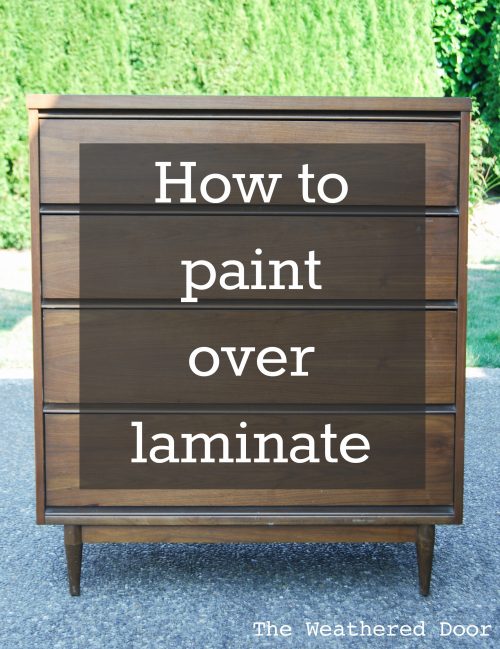
Credit: www.theweathereddoor.com
Real-life Example: Transforming A Laminate Dresser
Let’s look at a real-world example to see the process in action.
Before: A 10-year-old IKEA dresser with a fake wood grain, several scratches, and a sticky drawer handle.
- Removed all hardware and wiped down every surface with a degreaser.
- Sanded with 120-grit, then 220-grit sandpaper.
- Filled scratches with wood putty, let dry, and sanded again.
- Cleaned the dust with a tack cloth.
- Sprayed two coats of Zinsser BIN primer, letting each dry for 1 hour.
- Applied three thin coats of Rust-Oleum Universal Matte Black, waiting 30 minutes between coats.
- Finished with two coats of Minwax Polycrylic clear spray for extra durability.
- Let cure for 7 days before adding new gold handles.
Result: The dresser looked brand new with a smooth, modern finish. No chips or scratches after 6 months of daily use.
Comparing Spray Paint Vs. Other Methods
How does spray painting stack up against other ways to paint laminate furniture? Here’s a quick comparison.
| Method | Finish Quality | Ease of Use | Time Required | Durability |
|---|---|---|---|---|
| Spray Paint | Smooth, even | Easy | Fast | High (with primer/topcoat) |
| Brush Paint | Can show brush marks | Moderate | Slower | High (with primer/topcoat) |
| Roller Paint | Textured, can be uneven | Moderate | Slower | Medium |
Spray painting is usually best for large, flat, or detailed laminate pieces.
Safety Tips For Spray Painting
- Always wear a mask to avoid inhaling fumes.
- Use gloves to protect your hands from paint and chemicals.
- Keep spray paint away from open flames or heat sources.
- Store leftover cans in a cool, dry place.
Expert tip: Dispose of empty cans and used rags according to local rules. Some spray paints are flammable or toxic.
Extra Tips For Professional Results
- Label your screws and hardware: Use small bags or tape to mark where each piece goes. This makes reassembly easier.
- Use a lazy Susan: Placing your furniture on a turntable allows you to spray all sides evenly without moving the piece.
- Warm your spray paint: If painting in cool weather, put the spray can in warm water for 5–10 minutes before use. This helps the paint flow smoothly.
- Practice on scrap laminate: Before your main project, practice your technique on an old piece of laminate or cardboard.
- Photograph before and after: Tracking your progress is motivating and can help if you need to reference hardware or placement.
When To Avoid Spray Painting Laminate
Not every piece is a good candidate. Avoid spray painting if:
- The laminate is peeling or bubbling over large areas.
- The furniture is exposed to heavy moisture (like bathroom vanities).
- The surface is waxed or oiled and cannot be sanded or primed effectively.
In these cases, replacement or professional refinishing may be better.
Spray Paint Brands And Where To Buy
Most large hardware stores sell spray paint for laminate furniture. Top choices include:
- Rust-Oleum Universal: Home Depot, Lowe’s, Amazon
- Krylon Fusion All-In-One: Walmart, Target, Amazon
- Valspar Premium: Lowe’s
It’s worth reading reviews or checking color samples in-store. If you want more detailed technical info, the Wikipedia Spray Paint page is a helpful resource.
Cost Breakdown: Diy Vs. Professional
How much does it cost to spray paint laminate furniture yourself compared to hiring a professional?
| Item | DIY Cost | Professional Cost |
|---|---|---|
| Spray Paint (3 cans) | $18–$24 | Included |
| Primer (1 can) | $7–$10 | Included |
| Topcoat (1 can) | $8–$12 | Included |
| Sandpaper, Cloths, Tape | $10–$20 | Included |
| Labor | $0 | $80–$200 |
| Total | $43–$66 | $80–$200+ |
DIY is usually much cheaper, especially for small projects.
Mistakes To Avoid When Spray Painting Laminate Furniture
- Skipping sanding or priming: Leads to peeling and chips.
- Spraying too close or too thick: Causes drips and runs.
- Not cleaning well: Oil and dust prevent good adhesion.
- Painting in humid or cold weather: Paint will not dry properly.
- Rushing between coats: Each layer needs time to dry.
Taking your time and following each step will reward you with a long-lasting, beautiful finish.
Frequently Asked Questions
How Long Does Spray Paint Last On Laminate Furniture?
Spray paint can last several years on laminate furniture if you use the right primer, apply thin coats, and finish with a clear topcoat. Regular cleaning and gentle use help keep the finish looking fresh.
Can I Spray Paint Laminate Furniture Without Sanding?
Sanding is strongly recommended. It helps the primer and paint stick. If you skip sanding, the paint may peel or chip quickly. Some new bonding primers say “no sanding needed,” but even a light sanding improves results.
What Is The Best Primer For Laminate Furniture?
A bonding primer made for glossy or laminate surfaces is best. Popular choices include Zinsser BIN, KILZ Adhesion, and Rust-Oleum Universal Bonding Primer. These products create a strong base for the spray paint.
How Many Coats Of Spray Paint Do I Need?
Usually, 2 to 3 thin coats give good coverage. Let each coat dry before adding the next. Darker colors or covering a dark laminate with a light color may need more coats.
Is Spray Painting Safe For Indoor Furniture?
Yes, if you work in a well-ventilated area and let the paint cure fully. Use a mask and gloves. Once cured, spray-painted furniture is safe for indoor use and does not give off harmful fumes.
Spray painting laminate furniture is a skill that can save money and transform your space. With patience, the right products, and careful preparation, you can achieve a smooth, lasting finish. Even if you’re new to DIY, following these steps will help you avoid common problems and give your furniture a new life.