
If you’ve noticed dark patches or a musty smell coming from your fabric sofa, you might be dealing with mold. This is more common than people think, especially in humid or poorly ventilated homes. Mold isn’t just an eyesore—it can also cause health problems and damage your furniture for good if not treated quickly. Many people try to cover up the problem or use the wrong cleaning methods, making things worse. But with the right approach, you can remove mold from your fabric sofa, prevent it from coming back, and keep your living space safe and comfortable.
This guide will walk you step by step through the entire process. Whether you’re facing a tiny spot or a serious outbreak, you’ll learn what causes mold, which cleaning methods work (and which don’t), and how to protect your sofa in the future.
You’ll also get insider tips that most cleaning guides miss, plus practical advice for tackling even tough cases. Let’s get started on restoring your sofa—and your peace of mind.
Understanding Mold On Fabric Sofas
Mold is a type of fungus that grows in moist, warm environments. When it appears on a fabric sofa, it often starts as small spots—green, black, or white—and can quickly spread if left untreated. Mold releases spores that can float in the air and cause allergies, breathing problems, or even infections in sensitive people.
Why Does Mold Grow On Sofas?
- Humidity: High indoor humidity gives mold the moisture it needs.
- Spills and Stains: Food or drink spills that aren’t cleaned properly can create a perfect spot for mold.
- Poor Ventilation: Rooms with little air flow trap moisture inside fabric.
- Flooding or Water Damage: Soaked sofas after leaks or floods are at high risk.
Why Is Mold A Serious Problem?
Besides being unsightly, mold:
- Weakens fabric fibers, shortening your sofa’s life.
- Creates odors that are hard to remove.
- Triggers allergies and asthma, especially in children and older adults.
- Spreads easily to other fabrics and furniture.
Mold is often hidden inside cushions or deep in seams, so by the time you see it, the problem may be bigger than it looks.
How To Identify Mold On A Fabric Sofa
Spotting mold early is key to stopping its spread. But not all stains or smells are mold. Here’s how to be sure.
Signs Of Mold
- Musty Smell: Mold has a strong, earthy, damp smell, unlike regular dust or dirt.
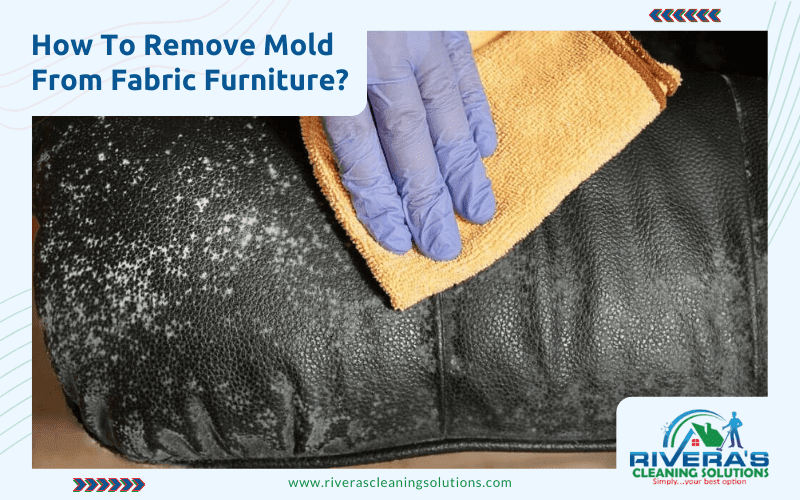
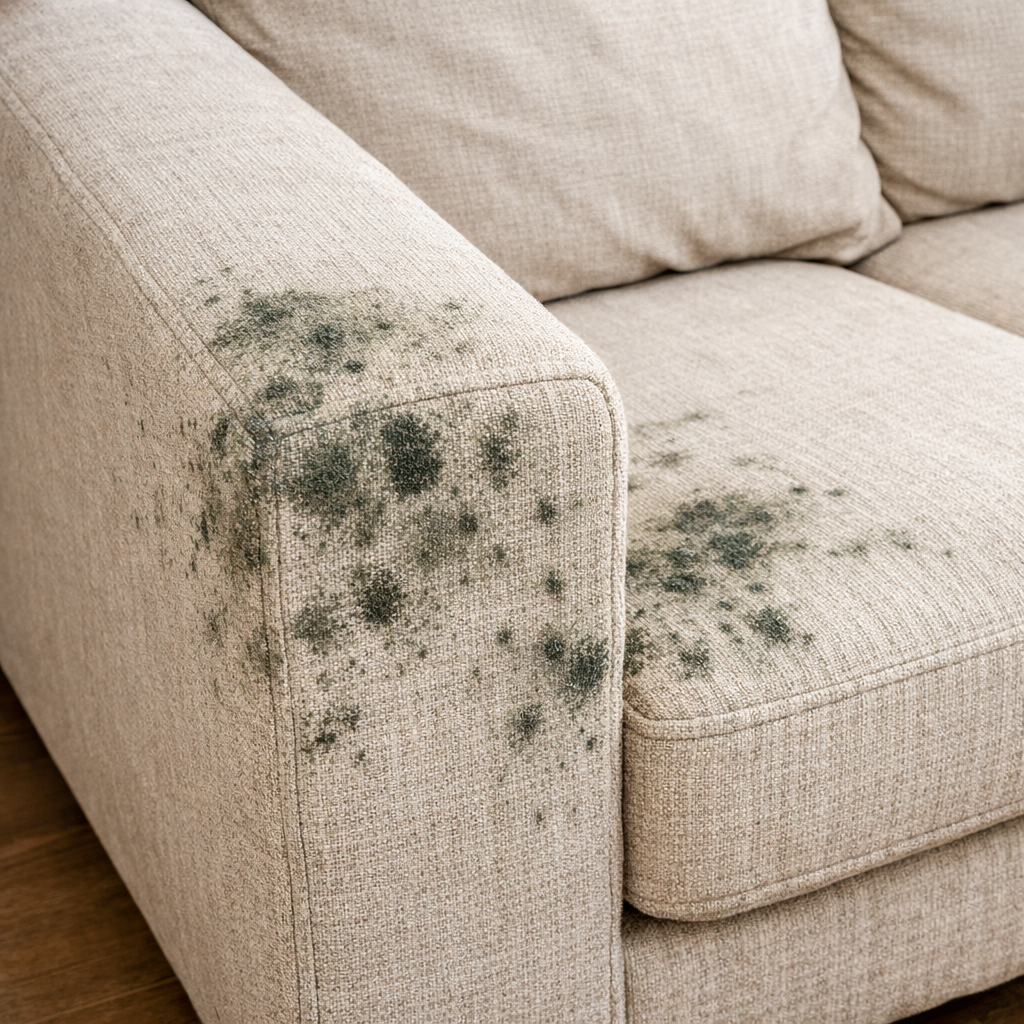
- Visible Spots: Look for green, black, gray, or white patches—often fuzzy or slimy.
- Discoloration: Fabric may look faded or stained in certain spots.
- Texture Changes: Mold can make fabric feel rough, sticky, or slimy.
- Health Symptoms: Sneezing, coughing, or itchy skin when near the sofa.
Where To Check
- Under cushions and covers
- Along seams and crevices
- On the back or bottom of the sofa
- Near areas where spills have happened
Pro Tip: Use a flashlight to examine hidden areas, as mold often starts out of sight.
Preparing To Clean Mold From Your Sofa
Before you start cleaning, a bit of preparation will make the process safer and more effective.
Gather The Right Supplies
You’ll need:
- Vacuum cleaner with upholstery attachment
- Soft brush (old toothbrush or upholstery brush)
- White vinegar
- Baking soda
- Mild detergent (fragrance-free is best)
- Rubbing alcohol (isopropyl alcohol)
- Clean white cloths or towels
- Spray bottle
- Bucket of warm water
- Fan or dehumidifier
- Rubber gloves
- Mask (N95 or similar, to avoid breathing in spores)
- Protective glasses (if you’re sensitive to dust/mold)
Safety First
Mold spores can irritate your lungs and skin. Always:
- Work in a well-ventilated area (open windows and doors).
- Wear gloves and a mask.
- Keep children and pets away from the area until it’s clean and dry.
Test Your Sofa Fabric
Not all cleaning methods are safe for every type of fabric. Before applying any solution:
- Check the care tag on your sofa. Look for cleaning codes:
- W: Water-based cleaner is safe.
- S: Use solvent-based cleaner only.
- WS: Water or solvent-based cleaner is OK.
- X: Vacuum only—don’t use liquids.
- Test your cleaning solution on a hidden part of the sofa to check for color fading or damage.
Insider Tip: Some older sofas may not have a care tag. When in doubt, start with the mildest solution and avoid soaking the fabric.
Step-by-step: How To Remove Mold From A Fabric Sofa
Let’s walk through the full process for removing mold, from first touch to final drying. Adjust the method based on how much mold you have and your sofa’s fabric type.
1. Take The Sofa Outside (if Possible)
If your sofa is small enough and you have space, move it outside. Sunlight and fresh air help kill mold and keep spores from spreading in your home. If you can’t move it, open all nearby windows.
2. Vacuum The Sofa Thoroughly
Use a vacuum with a HEPA filter if possible. Carefully vacuum:
- All cushions (both sides)
- Arms, back, and seat
- Under the sofa and in crevices
Important: Empty or throw away the vacuum bag outside, as it may contain mold spores.
3. Brush Off Loose Mold
With a soft brush, gently scrub visible mold spots. Do this outside if possible. Don’t brush too hard—this can force spores deeper into the fabric.
4. Apply A Mold-killing Solution
Choose the safest cleaner for your fabric:
For Most Fabrics (w, Ws)
Mix equal parts white vinegar and water in a spray bottle. Lightly spray affected areas—don’t soak the fabric. Let it sit for 10-15 minutes.
For Stubborn Stains
Mix 1 tablespoon of baking soda with 2 cups of warm water. Dip a clean cloth in the solution and gently blot moldy spots.
For S-code Fabrics (solvent Only)
Use a small amount of rubbing alcohol (test first). Dampen a cloth and blot the area—never pour alcohol directly onto the fabric.
5. Clean With Mild Detergent
Mix a few drops of mild detergent with water. Use a cloth to blot the area, working from the outside of the stain inward to avoid spreading.
6. Rinse And Blot
Dampen another clean cloth with plain water and blot to remove any leftover cleaning solution. Don’t over-wet the fabric.
7. Dry Thoroughly
- Use a fan or dehumidifier to speed up drying.
- Place the sofa in a sunny spot if possible.
- Remove cushions and stand them on edge for better airflow.
Warning: Never use a hair dryer on high heat—it can damage some fabrics.
8. Repeat If Necessary
Tough mold stains may need a second cleaning. Wait for the sofa to dry completely before repeating any step.
9. Deodorize (optional)
Sprinkle baking soda over the dry sofa. Let it sit for 30 minutes, then vacuum. This helps remove any lingering odors.
10. Inspect And Reassemble
Check for any remaining mold or stains. Once you’re sure the sofa is clean and dry, replace cushions and covers.
What To Do With Removable Sofa Covers
If your sofa has zip-off covers or removable cushions, the process is a bit different.
- Remove covers carefully to avoid spreading spores.
- Wash in hot water (if care label allows) with detergent and a cup of white vinegar.
- Dry completely in the sun or tumble dry on low.
- Inspect before replacing on the sofa.
Never put damp covers back on—this can restart the mold problem.
When To Call A Professional
Some mold problems are too big for DIY cleaning:
- Mold covers a large area (bigger than a dinner plate)
- Mold has soaked deep into the foam or structure
- You have expensive or delicate upholstery (silk, antique, etc.)
- You or your family have allergies, asthma, or immune issues
Professional cleaners use specialized tools and solutions. In severe cases, consider replacing the sofa—especially if it smells musty even after cleaning.
Comparing Common Mold Cleaning Methods
Below is a comparison of common cleaning agents, their effectiveness, and safety for fabric sofas.
| Cleaning Agent | Effectiveness | Safe for Most Fabrics? | Odor After Use |
|---|---|---|---|
| White Vinegar | High | Yes (test first) | Mild, fades quickly |
| Baking Soda | Moderate | Yes | None |
| Rubbing Alcohol | High | Yes (S-code fabrics) | Strong, fades quickly |
| Bleach | Very High | No (damages color) | Strong, lingers |
| Commercial Mold Remover | Varies | Check label | Varies |
Key Takeaway: Avoid bleach on fabric sofas—it can ruin colors and weaken fibers. Natural solutions like vinegar and baking soda are safer and effective for most cases.
Hidden Dangers: What Most People Miss
Many guides skip over these crucial points:
- Mold can grow inside foam: If the inner cushion stays damp or smells musty, surface cleaning won’t solve the problem. In these cases, foam inserts may need to be replaced.
- Air quality matters: Even after cleaning, mold spores can linger in the room. Run a HEPA air purifier or open windows for several hours after cleaning.
- Delicate fabrics: Materials like silk or wool are easily damaged by water or strong cleaners. When in doubt, call a pro.
Credit: riverascleaningsolutions.com
How To Prevent Mold From Returning
Prevention is easier than cleaning. Here’s how to protect your fabric sofa from future mold outbreaks.
Control Humidity
- Keep indoor humidity below 60%. Use a dehumidifier if needed.
- Ventilate rooms by opening windows regularly.
- Use exhaust fans in kitchens and bathrooms.
Act Quickly On Spills
- Blot up spills right away—don’t let moisture soak in.
- Remove and wash covers after big spills.
Let Air Flow
- Leave space between your sofa and the wall.
- Fluff and turn cushions every week to let air circulate.
Clean Regularly
- Vacuum your sofa at least once a week.
- Wash removable covers every few months.
Sunlight Is Your Friend
- Place the sofa in a spot that gets indirect sunlight.
- On sunny days, open curtains to let light in—UV rays help kill mold.
Insider Tip: If your home is prone to dampness, keep a small bowl of baking soda or activated charcoal near your sofa. These absorb excess moisture.
Comparing Mold On Different Types Of Sofas
Here’s how fabric sofas compare to leather and microfiber when it comes to mold risk and cleaning.
| Sofa Material | Mold Risk | Ease of Cleaning | Special Considerations |
|---|---|---|---|
| Fabric (Cotton, Linen, Polyester) | High | Moderate | Absorbs moisture easily |
| Leather | Low to Moderate | Easy | Needs special cleaner, avoid water |
| Microfiber | Moderate | Easy to Moderate | Resists stains, but still absorbs some moisture |
Fabric sofas are the most vulnerable to mold because they trap moisture and organic material (like crumbs), making regular cleaning even more important.
Credit: thea2zfurniture.com
Common Mistakes To Avoid
Even well-intentioned cleaning can go wrong. Here are mistakes to avoid:
- Soaking the fabric: Too much water can push mold deeper or cause new mold to grow.
- Using bleach: This damages color and weakens the fabric.
- Ignoring the foam: Cleaning only the surface won’t help if the inside is moldy.
- Not drying fully: Dampness leads to mold’s return.
- Skipping a test spot: Always check your cleaning method on a hidden area first.
- Delaying action: Waiting too long allows mold to spread and set in.
Pro Tip: Never cover up moldy spots with air fresheners or sprays—these only mask the smell and can react with mold, making odors worse.
When Mold Damage Is Too Severe
Sometimes, despite your best efforts, a fabric sofa is too far gone. Signs you may need to replace rather than clean:
- The smell remains after cleaning and airing out.
- The mold covers large or deep areas.
- The sofa feels damp or “soggy” inside.
- You or your family have ongoing allergy symptoms near the sofa.
In these cases, cleaning may not be enough to remove all spores, and continued use could affect your health. Always put safety first.

Credit: fj-outdoors.com
How To Choose Mold-resistant Sofa Fabrics
If you’re shopping for a new sofa or planning to reupholster, consider materials less likely to attract mold.
- Synthetic fibers (like polyester or acrylic) resist moisture better than cotton or linen.
- Microfiber is tightly woven, making it harder for mold to take hold.
- Some manufacturers offer mold-resistant treatments—ask before you buy.
Insider Tip: Fabrics labeled as “performance” or “outdoor” often have built-in resistance to moisture and mold, making them a smart choice for humid climates.
The Role Of Professional Cleaning
Not all mold problems need a pro, but sometimes it’s the safest bet—especially for large, old, or expensive sofas. Professional cleaners use:
- Steam cleaning: Hot steam kills mold and removes stains.
- Dry cleaning: For delicate fabrics that can’t handle water.
- Specialized mold treatments: Kills spores deep inside cushions.
The cost varies ($75–$300 or more), but can save a prized piece of furniture and protect your family’s health.
For more on professional mold removal, check resources like the EPA’s official mold page.
Frequently Asked Questions
How Do I Know If The Mold Is Completely Gone From My Sofa?
After cleaning, check for any lingering musty smell and visible spots. If the sofa smells fresh and looks clean after drying, you’ve likely removed the mold. For extra safety, run a HEPA air purifier in the room for a few hours.
Can I Use Bleach To Clean Mold On A Fabric Sofa?
No, avoid using bleach on fabric sofas. Bleach can discolor the fabric, weaken fibers, and is often not effective at reaching mold deep inside cushions. Stick to vinegar, baking soda, or rubbing alcohol for safer results.
Is It Safe To Use A Steam Cleaner On My Fabric Sofa?
Only if the care label allows it. Steam can kill mold spores, but it may damage delicate fabrics or shrink covers. Always test on a small, hidden spot first and follow the manufacturer’s instructions.
What If The Mold Keeps Coming Back After Cleaning?
Repeated mold growth usually means there’s a moisture problem in your home or inside the sofa. Check humidity levels, improve ventilation, and make sure all parts of the sofa (including foam) dry completely. In some cases, you may need to replace the cushions or call a professional.
How Can I Prevent Mold On My Sofa If I Live In A Humid Climate?
Use a dehumidifier to keep indoor humidity below 60%, open windows for air flow, and clean spills right away. Choose mold-resistant fabrics if possible, and vacuum your sofa regularly to keep it dry and clean.
Keeping your fabric sofa free from mold is a mix of quick action, the right cleaning techniques, and a focus on prevention. With these steps, you can restore your sofa, keep your home healthy, and avoid the hidden risks that catch most people by surprise.