
Raising your bed without using legs might sound unusual, but it’s a clever solution for many living situations. Maybe you want more storage under your bed. Maybe your bed frame’s legs broke, or you’re looking for a more modern, minimal look.
Sometimes, you simply want to avoid damaging your floors with wheels or metal legs. Whatever the reason, there are practical ways to elevate your bed safely and attractively—no legs required. This guide will walk you through all the best methods, giving you step-by-step directions, important safety tips, and creative ideas.
By the end, you’ll know exactly how to raise your bed without legs, using materials that fit your home, budget, and style.
Why Raise Your Bed Without Legs?
People choose to raise their beds for different reasons. The most common is extra storage. When your bed sits higher, you can place bins, boxes, or even suitcases underneath. This is especially useful in small apartments or dorm rooms, where space is limited.
Another reason is aesthetic preference. Some people love the look of floating beds or platform beds. Raised beds can also make cleaning easier, letting you reach under with a vacuum or mop.
Finally, for some, it’s about comfort and health. Raising your bed can make it easier to get in and out, especially for older adults or those with joint pain. Sometimes people want better airflow around the mattress, which can reduce mold or dust buildup.
Safety First: What To Consider Before Raising Your Bed
Before you start, it’s important to think about safety. A bed must be stable. If it wobbles or shifts, you risk falls or injuries. Here’s what you need to check:
- Mattress and Frame Weight: Some beds are heavier than others. Memory foam and latex mattresses can weigh over 100 pounds (45 kg). Your support method must handle this weight.
- Floor Type: Soft floors (like carpet) and hard floors (like wood or tile) behave differently. Some supports might slide on hard floors or sink into soft ones.
- Room Space: Raising the bed makes it higher to climb in and out. Make sure it’s not too high for you or anyone who will use the bed.
- Allergies and Cleaning: Make sure your method allows easy cleaning to avoid dust and allergens.
Main Methods To Raise A Bed Without Legs
Let’s explore the most effective and popular ways to raise your bed without using traditional legs. Each method has its pros and cons, so choose the one that fits your needs best.
1. Platform Bed Frames
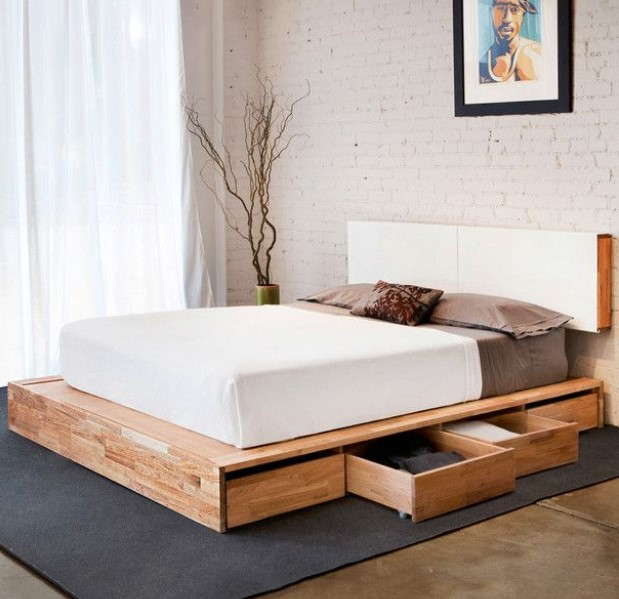
Platform bed frames are designed to support mattresses without legs. They often have a solid or slatted base, lifting your mattress several inches off the floor. Many platform frames come with built-in storage, such as drawers or shelves.
Advantages:
- Very sturdy
- Modern design
- Often includes extra storage
- Compatible with most mattresses
Drawbacks:
- Can be heavy or expensive
- Assembly required
Pro Tip: Choose a frame with a solid base for heavier mattresses. Slatted bases can bend or break if the slats are thin.
2. Storage Boxes Or Custom Platforms
You can create a custom platform using sturdy boxes, crates, or storage units. This method gives you flexibility in height and style. For example, stacking wooden crates or IKEA storage cubes can make a strong, attractive base.
Steps:
- Measure your mattress size.
- Buy or build boxes/crates that match or slightly exceed the mattress dimensions.
- Arrange them side by side to cover the floor area.
- Place a thick plywood sheet on top for even support.
- Lay your mattress on the platform.
Advantages:
- Adds a lot of storage
- Customizable height and look
- Easy to disassemble and move
Drawbacks:
- Must ensure all boxes are the same height
- Edges can be sharp if not finished well
Non-obvious insight: Use anti-slip pads under the boxes to prevent sliding on hardwood floors.
3. Wooden Pallets
Many people raise their beds with wooden pallets. Pallets are cheap, strong, and easy to find. Arrange 2–3 layers of pallets for a higher bed. Sand and paint them for a stylish look.
Steps:
- Collect clean, solid pallets (usually 4–6 for a queen-size bed).
- Sand to remove splinters.
- Paint or stain if desired.
- Lay pallets side by side in rows.
- Place mattress on top.
Advantages:
- Inexpensive or free
- Rustic, trendy look
- Good air circulation for the mattress
Drawbacks:
- Hard to clean under pallets
- Must check for pests or mold in used pallets
Practical tip: Only use pallets marked “HT” (heat treated), not “MB” (methyl bromide), to avoid chemicals.
4. Adjustable Bed Risers (without Legs)
Usually, bed risers fit under bed legs. But you can use flat, wide risers under a bed frame’s corners or under a platform. Look for risers designed to support the whole bed frame’s edge, not just small posts.
Steps:
- Choose risers with a large, flat surface.
- Position them under each corner of the frame or platform.
- Make sure the frame sits evenly.
Advantages:
- Adjustable height
- Affordable
- Easy to install and remove
Drawbacks:
- Not suitable for all frame types
- Some risers can be slippery on smooth floors
Beginner’s mistake: Using small risers that don’t fully support the bed’s weight can cause wobbling.
5. Concrete Blocks Or Bricks
If you want something sturdy and very strong, concrete blocks or bricks are an option. They can support a lot of weight and are cheap. Place them at the corners and sides, making sure the bed frame or platform is fully supported.
Steps:
- Buy enough blocks/bricks to support the bed’s perimeter.
- Lay them flat, making sure they are level.
- Add a plywood sheet if needed for an even surface.
- Place the mattress on top.
Advantages:
- Very strong and stable
- Inexpensive
- Can be painted for style
Drawbacks:
- Heavy and hard to move
- Can scratch floors
Safety tip: Always use felt pads under blocks on wooden floors.
6. Stackable Furniture Or Cabinets
For those who want a more furniture-like look, consider using low dressers, cabinets, or sideboards as the bed base. This option gives you both height and usable drawers.
How to do it:
- Choose sturdy cabinets or dressers of equal height.
- Place them in a rectangle matching your mattress size.
- Secure them together with brackets or screws.
- Add a plywood sheet for a flat surface.
- Place the mattress on top.
Advantages:
- Tons of storage
- Looks built-in and elegant
- Makes use of existing furniture
Drawbacks:
- Furniture must be sturdy enough to hold mattress and people
- Harder to move if you relocate
Non-obvious insight: Use anti-tip brackets to prevent cabinets from shifting or falling.
7. Foam Or Rubber Blocks
For a soft, quieter base, use high-density foam blocks or thick rubber pads. These are sold for industrial or gym use but can work well under beds.
How to use:
- Buy foam or rubber blocks rated for heavy loads.
- Place them under each corner and along the sides.
- Cover with a plywood sheet for even support.
Advantages:
- Lightweight and easy to move
- Reduces noise (no creaking)
- Won’t scratch floors
Drawbacks:
- Can compress over time under heavy weight
- Not as much height as other methods
Practical tip: Check the load rating before buying—some foam is too soft.
8. Diy Raised Bed Frame (no Legs)
If you like building things, you can make a frame with solid sides instead of legs. These are basically wooden boxes with open tops for the mattress.
Steps:
- Measure your mattress.
- Cut plywood or MDF panels for four sides (height as desired).
- Screw panels together to form a box.
- Place slats or a plywood sheet on top for mattress support.
Advantages:
- Super sturdy
- Customizable height and size
- Can be painted or covered
Drawbacks:
- Requires tools and skill
- Heavier than other solutions
Beginner’s mistake: Not reinforcing the corners can make the box flex or break.
9. Modular Bed Systems
Some companies sell modular bed systems that snap together and allow height adjustment. These often use interlocking blocks or panels, letting you choose the height and shape.
Advantages:
- Easy assembly
- Modern look
- Expandable or reconfigurable
Drawbacks:
- More expensive than DIY
- Limited availability in some countries
Example: The Floyd platform bed system is popular for renters and small spaces.
10. Stackable Plastic Crates
If you want a light, affordable option, plastic crates can work. Use heavy-duty milk crates or similar, stacked and zip-tied together for strength.
Steps:
- Arrange crates in rows to match mattress size.
- Secure with zip ties or bungee cords.
- Place a plywood sheet on top.
- Add mattress.
Advantages:
- Cheap and lightweight
- Easy to clean
- Good for kids’ rooms or dorms
Drawbacks:
- Lower weight capacity
- Can look informal
Non-obvious insight: Choose crates with solid sides to avoid sagging.
11. Tatami Mats Or Japanese Futon Bases
In Japan, tatami mats and futon bases are traditional ways to raise beds slightly off the floor. These mats are made from compressed straw and wood. You can stack two or three for more height.
Advantages:
- Natural materials
- Good for allergies
- Quiet and stable
Drawbacks:
- Limited height (usually 1–3 inches per mat)
- Hard to find outside Asia
Practical tip: Air out tatami mats regularly to prevent mold.
12. Layered Carpets Or Mats
If you only want a little extra height and floor protection, layering thick carpets, yoga mats, or exercise mats under your mattress can help.
Advantages:
- Soft, quiet base
- Protects floors from scratches
- Cheap and easy
Drawbacks:
- Limited height increase
- Can shift or bunch up
Beginner’s mistake: Using thin mats—these compress quickly and provide little height.
13. Bed Wedges Or Incline Platforms
Some people want to raise only the head or foot of their bed for medical reasons (like acid reflux). You can use bed wedges or adjustable incline platforms under the mattress.
Advantages:
- Adjustable incline for health needs
- Easy to remove or adjust
Drawbacks:
- Only raises part of the bed
- Expensive for full-size wedges
Practical tip: Combine wedges with other methods for both incline and overall height.
14. Stackable Wooden Blocks
Like bricks or concrete, you can use wooden blocks—but these are lighter and easier to move.
How to use:
- Cut or buy thick wooden blocks (at least 4″ x 4″).
- Place at corners and sides.
- Add felt or rubber pads to protect floors.
- Cover with a plywood sheet.
Advantages:
- Customizable height
- Lighter than concrete
- Can stain or paint to match décor
Drawbacks:
- Can split if not solid hardwood
- Needs regular checks for cracks
Non-obvious insight: Use laminated wood for more strength and less splitting.
15. Metal Bed Platforms
If you want maximum strength, try a metal platform. These are usually steel frames with a mesh or slatted top, but without legs.
Advantages:
- High weight capacity
- Durable and long-lasting
- Good airflow
Drawbacks:
- Can be noisy if not padded
- More expensive
Practical tip: Use rubber pads at corners to reduce noise.
16. Old Doors Or Solid Boards
A creative way to reuse materials is to lay old doors or thick boards flat as a bed base. Make sure they’re strong and not warped.
Steps:
- Clean and sand the door/board.
- Paint or seal if desired.
- Lay flat, supported by blocks or crates.
- Place mattress on top.
Advantages:
- Recycles materials
- Very strong
- Can be cut to size
Drawbacks:
- Heavy
- May need sanding for smoothness
Beginner’s mistake: Not checking for nails or splinters in old doors.
17. Inflatable Platforms
For temporary setups, an inflatable base is a fun and unique option. These are heavy-duty air mattresses or special platforms made for beds.
Advantages:
- Lightweight and portable
- Quick setup and removal
- Good for guests or travel
Drawbacks:
- Can lose air over time
- Not as stable as solid bases
Non-obvious insight: Place a non-slip mat under inflatable platforms to prevent sliding.
18. Under-bed Drawers (with Solid Tops)
Large, sturdy drawers with reinforced tops can serve as both storage and a bed base. Make sure the drawer tops are strong enough to hold the mattress and your weight.
How to do it:
- Use several wide, shallow drawers.
- Line up under the mattress area.
- Secure together for stability.
- Place a plywood sheet on top.
Advantages:
- Maximizes storage
- Easy access to items
- Looks tidy
Drawbacks:
- Hard to move
- Needs careful measuring for fit
Practical tip: Use child-safe locks if you have kids to prevent drawer accidents.
19. Concrete Slab Or Platform
If you own your home or want a permanent solution, a poured concrete platform creates a modern, industrial look. This is common in some loft apartments.
Advantages:
- Permanent and very strong
- Won’t shift or wobble
- Can be polished for style
Drawbacks:
- Expensive and not reversible
- Cold to the touch
Beginner’s mistake: Not adding a moisture barrier under the mattress.
20. Combination Methods
Many people combine two or more methods for the perfect height and look. For example, you could use crates for storage and pallets for height, or combine foam blocks with a platform bed frame.
Advantages:
- Custom height and function
- Mixes style and practicality
Drawbacks:
- More complex setup
- Needs careful measuring
Practical tip: Always check the final height before assembly—it’s easy to end up with a bed that’s too tall to climb into comfortably.
Comparison: Popular Bed Raising Methods
To help you choose, here’s a side-by-side look at common solutions:
| Method | Cost | Max Height | Storage | Ease of Setup |
|---|---|---|---|---|
| Platform Frame | Medium-High | 12–18 inches | Yes | Medium |
| Pallets | Low | 16 inches | Limited | Easy |
| Storage Boxes | Medium | 12–24 inches | Yes | Medium |
| Concrete Blocks | Low | Up to 24 inches | No | Hard |
| Stackable Furniture | Medium-High | Up to 30 inches | Yes | Hard |
Factors To Consider When Choosing A Method
Choosing the right way to raise your bed without legs depends on your needs and space. Here are the main things to think about:
- Height Needed: Measure how much height you want. Standard bed height is 18–25 inches from floor to mattress top.
- Weight Capacity: Check the combined weight of your mattress and sleepers. Some materials hold more weight than others.
- Aesthetics: Do you want a modern look, rustic style, or just a practical solution?
- Budget: Some methods are nearly free (pallets, blocks), while others (modular systems, metal frames) cost more.
- Ease of Moving: If you move often, lightweight options are better.
- Storage Needs: If you want storage, choose boxes, crates, or furniture-based solutions.
Common Mistakes When Raising A Bed Without Legs
Many beginners make similar mistakes when trying to raise a bed. Avoid these to save time and money:
- Unstable Base: Using uneven or slippery materials can make the bed wobble or shift.
- Overloading: Using weak crates or thin plywood can lead to cracks or even collapse.
- Ignoring Floor Protection: Hard materials can scratch or dent wooden floors.
- Poor Airflow: Solid platforms that touch the floor on all sides can trap moisture. Always leave some space for air if possible.
- Too Much Height: Beds that are too tall can be hard to get into, especially for kids or older adults.
- Not Securing Parts: Loose crates, boxes, or blocks can move and become unsafe.
- Using Treated or Dirty Wood: Pallets or boards with chemicals or pests can harm your health.
Creative Ideas: Decorating And Finishing Touches
A raised bed is more than just practical—it can also look great. Here are some ideas to make your raised bed stylish:
- Paint or stain wooden bases to match your room.
- Add LED strip lights under the bed for a soft glow.
- Use matching baskets or boxes for under-bed storage.
- Sew a custom fabric skirt to hide the base.
- Attach a headboard to the wall behind the bed.
- Use decorative trim or panels on visible sides.
Non-obvious insight: If you’re renting, use temporary adhesive hooks or Velcro strips for decorations so you don’t damage walls or furniture.
Safety And Maintenance Tips
To keep your bed safe and long-lasting:
- Check supports every few months for cracks or wear.
- Clean under the bed regularly to prevent dust buildup.
- If using blocks or pallets, make sure there are no sharp edges.
- Avoid stacking too many layers—stick to two or three for stability.
- Use a moisture barrier if you live in a humid climate.
Practical tip: If you hear creaks or feel shifting, stop using the bed until you fix the problem.

Credit: hairpin.com
Real-life Examples
Let’s look at a few real-world cases:
- College Student: Used 8 milk crates, zip-tied together, with a plywood top for a full-size mattress. Gained 14 inches of storage height and could pack up everything for summer break.
- Small Apartment Owner: Combined IKEA KALLAX storage cubes with a solid plywood sheet. Created a 20-inch-high sleeping platform with 16 cubbies for shoes and books.
- Minimalist Couple: Used three layers of sanded pallets, finished with matte black paint and LED lights. Achieved a trendy, loft-style look at very low cost.
- Elderly Parent: Built a 12-inch wooden box base for the bed, allowing easy access without bending or climbing. Added felt pads for safety and noise reduction.
Table: Typical Bed Heights By Method
Here’s a quick reference of how high your bed might be, depending on the method you choose:
| Method | Typical Height Added | Total Bed Height (with 10″ Mattress) |
|---|---|---|
| Platform Frame | 12 inches | 22 inches |
| Pallets (2 layers) | 10 inches | 20 inches |
| Concrete Blocks | 8–16 inches | 18–26 inches |
| Storage Boxes | 12–18 inches | 22–28 inches |
| Foam Blocks | 6–10 inches | 16–20 inches |
Credit: constructionhow.com
Where To Get Materials
- Pallets: Local warehouses, garden centers, hardware stores.
- Storage cubes/boxes: Furniture stores, home improvement outlets, or online.
- Concrete/wood blocks: Hardware or building supply stores.
- Foam/rubber blocks: Specialty foam suppliers or gym equipment stores.
- Modular platforms: Specialty furniture brands, such as Floyd Home.
For more ideas on DIY and home improvement, you can also check guides on Wikipedia.
Frequently Asked Questions
What Is The Safest Way To Raise A Bed Without Legs?
The safest way is to use a sturdy platform frame or a solid base, such as tightly joined storage boxes with a thick plywood sheet. Make sure the weight is evenly spread and the materials are rated for heavy loads. Always check for wobbling before use.
How Much Can I Raise My Bed Without Making It Unsafe?
It’s best to keep the added height between 6 and 18 inches. Beds higher than 28 inches can be hard to get into and less stable. Always measure the total height to make sure it’s comfortable for you.
Can I Use Cinder Blocks Or Bricks Under A Bed?
Yes, cinder blocks and bricks are strong and affordable. Place them under all corners and along the sides, and always protect your floor with felt or rubber pads. Check regularly for cracks or shifting.
Will Raising My Bed Improve Airflow And Reduce Mold?
Usually, yes. Raising your bed increases air circulation under the mattress, which can help reduce moisture and mold, especially if you live in a humid area. Avoid blocking all airflow with a solid box base.
Is It Hard To Move A Raised Bed Without Legs?
It depends on the method. Lightweight options like foam blocks or plastic crates are easy to move. Heavy choices like concrete or stacked furniture are much harder to relocate. Plan for your needs if you expect to move often.
Raising your bed without legs opens up new possibilities for both storage and design. With the right method, you can create a sleeping space that’s comfortable, practical, and stylish—no legs needed.

Credit: www.amazon.com