
Measuring for pinch pleat curtains is more than just holding a tape measure against your window. It is about understanding the style you want, the function of the space, and the details that make your curtains hang perfectly. Many people get stuck with ill-fitting curtains or are disappointed after spending money because they missed a key step.
If you want to enjoy the classic, structured look of pinch pleat drapes, knowing how to measure them precisely is essential. This guide will walk you through the entire process, from understanding what makes pinch pleat curtains unique to double-checking your measurements before ordering.
Along the way, you’ll discover practical tips, common mistakes, and expert insights that most beginners overlook.
What Are Pinch Pleat Curtains?
Pinch pleat curtains have a timeless look, with evenly spaced pleats pinched at the top. These pleats create fullness and a tailored appearance that suits both modern and traditional interiors. The pleats are usually sewn into the fabric, making the folds more structured and long-lasting compared to simpler header styles like rod pocket or tab top.
There are several types of pinch pleats:
- Double pinch pleats: Two folds pinched together at intervals.
- Triple pinch pleats: Three folds, offering a more luxurious, fuller look.
- Single pinch pleats: One fold, for a softer and lighter style.
The type of pleat affects how much fabric you need and how the curtains will look when closed or open. Knowing your preference helps guide your measuring process.
Why Precise Measurement Matters
Curtains are not just decoration—they control light, privacy, and even help with insulation. The right measurement ensures your pinch pleat curtains look professional, hang smoothly, and function well. If the curtains are too short, they look awkward. If they are too long or wide, they can bunch up or drag on the floor, collecting dust.
A small mistake in measuring—sometimes just an inch—can affect the final result. Unlike eyelet or grommet curtains, pinch pleat drapes are custom-made more often, and errors are harder to fix. For custom orders, most manufacturers won’t accept returns if the measurement is wrong.
That’s why understanding each step before picking up the tape measure is so important.
Tools And Materials You’ll Need
Before you start, gather these essential items:
- Steel measuring tape: Cloth tapes can stretch, so a steel tape is more accurate.
- Step stool or ladder: For high windows or tall curtain tracks.
- Notepad and pen: To record your measurements. Don’t trust your memory.
- Smartphone camera: Snap photos for reference, especially if you’re sending measurements to someone else.
- Helper: Not required, but a second person makes measuring easier and safer.
Some people try to use laser measures or apps, but for curtains, a standard tape is still best. Even a small error can be costly.
Understanding Curtain Hardware
Curtain Tracks Vs. Poles
Pinch pleat curtains can hang from either a curtain track or a curtain pole (rod). Your hardware choice changes where you start and finish your measurements.
- Curtain track: The pleat hooks attach directly to the gliders on the track.
- Curtain pole: The hooks hang from rings, which slide along the pole.
Knowing your hardware is key because:
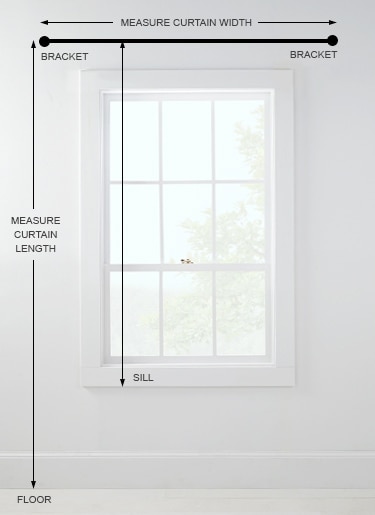
- For tracks, you measure the full length of the track.
- For poles, you measure the width between the finials (decorative ends), not the overall pole length.
Hook Position
Pinch pleat drapes use curtain hooks that insert into the back of each pleat. The hook position can adjust the curtain’s hanging height slightly, but most people set the hook near the top or in the middle of the heading tape. Some hardware allows for micro-adjustments to fine-tune how the curtain sits, but this only gives you about half an inch of leeway.
Credit: www.vermontcountrystore.com
Step-by-step Guide: Measuring For Pinch Pleat Curtains
Measuring for pinch pleat curtains involves three main steps: measuring the width, measuring the drop (length), and accounting for fullness.
1. Measuring The Width
For Curtain Tracks
- Place the tape measure at one end of the track.
- Measure straight across to the other end (do not include any overhanging ends beyond the gliders).
- Write down the measurement to the nearest 1/8 inch.
For Curtain Poles
- Measure the distance between the two finials (decorative ends). Do not include the finials themselves.
- If the pole has brackets in the middle, measure between them if they block curtain movement.
Special Cases
- For bay windows, measure each section of track or pole separately. Add up the totals if you want one long curtain.
- For overlapping tracks (where one side overlaps the other in the middle), measure the total width including the overlap.
Insight: Beginners often measure the window frame, not the track or pole. This leads to curtains that are too narrow.
2. Measuring The Drop (length)
The drop is the vertical length from the top of the hardware to where you want your curtains to end. The measuring point changes depending on your hardware.
For Curtain Tracks
- Start at the top of the track and measure down to your chosen endpoint (windowsill, below-sill, or floor).
For Curtain Poles
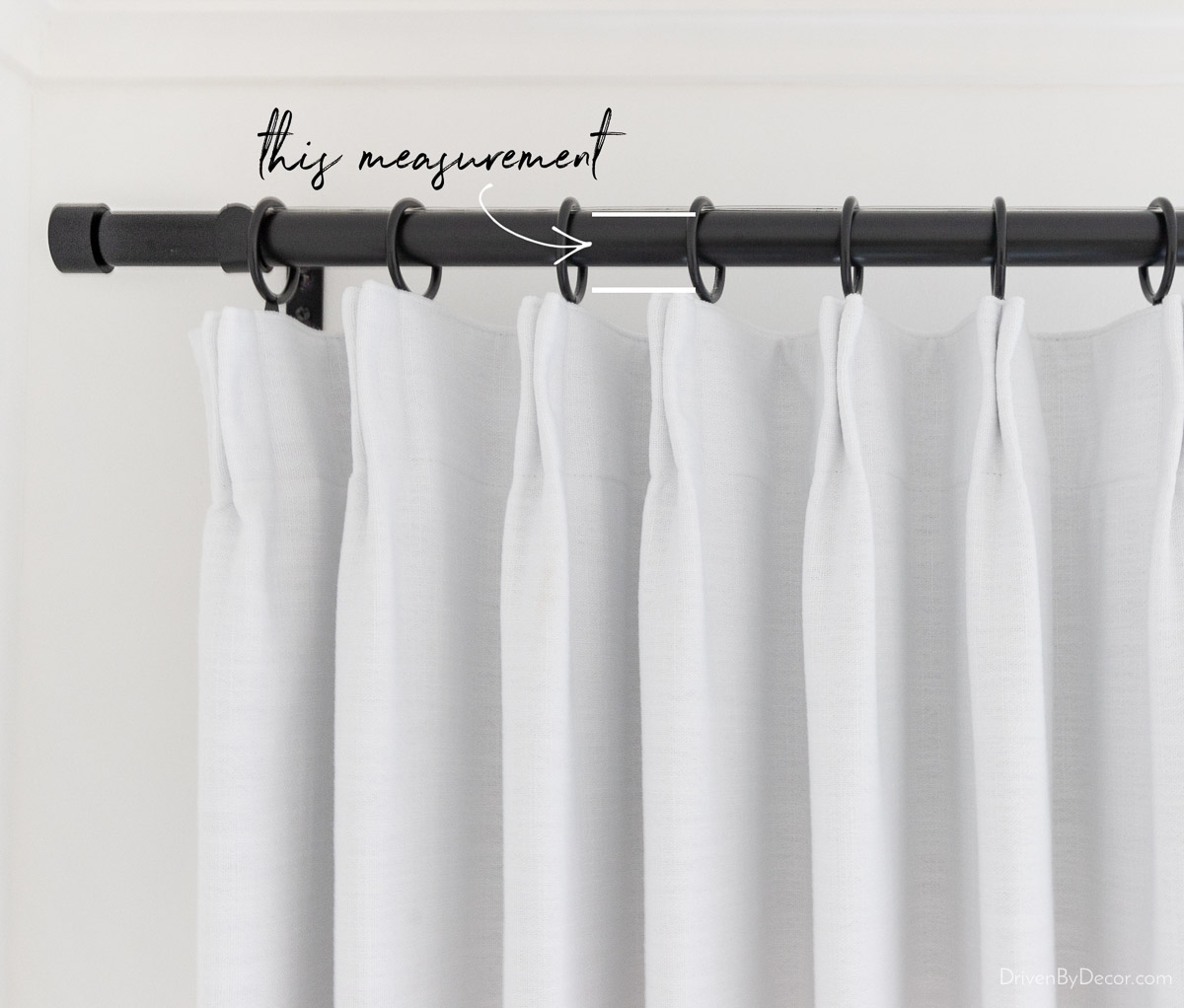
- Start at the underside of the curtain ring (not the top of the pole) and measure down.
Common Drop Options
- To the windowsill: Stop 1/2 inch above the sill for a neat look.
- Below the sill: Drop 6 to 8 inches below the sill, or to a point that lines up with other architectural features.
- To the floor: Stop 1/2 inch above the floor for a crisp look. For a more relaxed style, add 1–2 inches so the fabric “pools” slightly.
Insight: Many people forget to check for radiators, baseboards, or window seats that could block the curtain’s path. Always check for obstructions before finalizing the drop.
3. Deciding Curtain Fullness
Pinch pleat curtains need extra fabric to create the structured pleats. Fullness is usually 2 to 2. 5 times the width of your track or pole.
- For a lush, classic look: Multiply your width by 2.5
- For a tailored, modern look: Multiply by 2
Manufacturers sometimes ask for the track/pole width only and calculate the fullness themselves. Always check what your curtain maker requires.
Non-obvious tip: If you want blackout curtains, add a little extra fullness. This helps the curtain overlap more at the center, blocking light better.
4. Measuring For Multiple Panels
Most windows need two curtain panels—one for each side. Measure the total width, then divide by two if you want equal panels. If your window is very wide or you prefer a one-way draw (curtains stack to one side), measure accordingly.
5. Double-check Measurements
Before ordering, check your measurements again. Even experienced decorators double-check every number. If possible, have someone else measure too. If both numbers match, you can be confident.
Practical Example: Measuring A Living Room Window
Let’s say your curtain track is 80 inches wide. You want your curtains to fall to 90 inches from the top of the track to just above the floor.
- Width: 80 inches (track length)
- Fullness: 80 x 2.5 = 200 inches total fabric needed.
- Panels: Two panels, so each panel should be about 100 inches wide (fabric width before pleating).
- Drop: 90 inches from top of track to floor.
Now, when you order, you’ll give the supplier:
- Track width: 80 inches
- Finished curtain drop: 90 inches
- Number of panels: 2
Most curtain makers will ask for the track/pole width and the finished drop. They calculate the amount of fabric needed for pleats.
Common Mistakes And How To Avoid Them
- Measuring the window, not the hardware: Always measure the track or pole, not the frame or glass.
- Ignoring obstructions: Radiators, handles, or furniture under the window can affect the drop. Check before finalizing.
- Not allowing for overlap: For overlapping tracks, include the overlap in your total width.
- Ordering finished width, not track width: Pinch pleat curtains are custom-made to fit the measured hardware, not the window.
- Guessing the fullness: Don’t assume—ask your curtain supplier how much fullness they recommend for the pleat style you want.
Special Scenarios
Measuring For Bay Windows
Bay windows are beautiful but tricky. Measure each section of the bay separately, following the line of the track or pole. For angled sections, measure along the bend, not straight across. Add the segments for the total width.
Ceiling-to-floor Curtains
For a dramatic look, some people hang curtains from the ceiling. Measure from the ceiling down to the floor, but check if you need to leave room for the curtain gliders or rings. If you want the curtains to just touch the floor, measure carefully—floors are not always perfectly level.
French Doors And Sliding Doors
For doors, it’s best to let the curtains clear the glass completely when open. Extend the track or pole past the door frame so the curtains can stack to the side. Measure the width of the glass and add at least 8–12 inches on each side for stacking.
Credit: www.sew-helpful.com
How To Measure If You Already Have Curtains
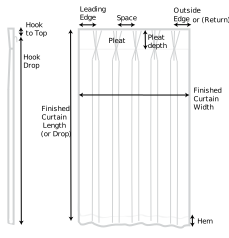
If you’re replacing old curtains and liked how they hung, you can measure them as a shortcut. Lay the curtain flat and measure the full width (including pleats) and the drop from the top edge to the bottom. However, always check the hardware—you may want to change the track or pole for a better fit.
Data Table: Common Curtain Drop Options
Here’s a quick reference for standard curtain drop measurements:
| Drop Style | Recommended Measurement | Common Use |
|---|---|---|
| To Windowsill | 1/2 inch above sill | Small windows, kitchens |
| Below Sill | 6–8 inches below sill | Bedrooms, living rooms |
| To Floor | 1/2 inch above floor | Formal spaces |
| Puddling | 1–2 inches onto floor | Luxurious look |
Advanced Tips For A Perfect Fit
Consider Curtain Stack
When open, pinch pleat curtains don’t fold flat. The stack—the part that gathers at the side—uses up space. If you want to keep your window clear, extend your pole or track by 8–12 inches beyond the window frame on each side.
This allows the curtains to stack off the glass, letting in more light.
Lining And Weight
Heavier lining (like blackout or thermal) adds bulk. Heavier curtains stack wider and may need stronger hardware. If you’re ordering lined or interlined pinch pleat curtains, ask your supplier if you need stronger tracks or brackets.
Ceiling Height And Visual Tricks
Hanging curtains higher than the window can make the room feel taller. Even a few extra inches above the frame can change the feel of the space. Just remember to measure from your chosen mounting point—not the window frame.
Comparison Table: Pinch Pleat Vs. Other Curtain Headings
How do pinch pleat curtains compare to other popular styles? Here’s a quick look:
| Curtain Heading Style | Appearance | Fullness Needed | Ease of Measuring |
|---|---|---|---|
| Pinch Pleat | Structured, tailored | 2–2.5x track width | Medium |
| Eyelet/Grommet | Soft, modern waves | 1.5–2x track width | Easy |
| Rod Pocket | Casual, gathered | 1.5–2x track width | Easy |
| Tab Top | Relaxed, casual | 1.5–2x track width | Easy |
Table: Minimum Recommended Track/ Pole Extension
For optimal curtain stack-back and window coverage:
| Window Width | Minimum Extension Each Side | Total Track/Pole Length |
|---|---|---|
| 48 inches | 8 inches | 64 inches |
| 72 inches | 10 inches | 92 inches |
| 96 inches | 12 inches | 120 inches |
Measuring For Pinch Pleat Curtains: Frequently Missed Details
- Check bracket positions: Some poles have fixed brackets that may block curtain movement. Measure between them, not the finials, if the curtain can’t slide past.
- Account for floor slopes: Floors are rarely perfectly flat. Measure the drop at both sides of the window; use the shorter measurement to avoid dragging.
- Order swatches first: Before ordering, get a fabric swatch. Fabrics with large patterns or texture may hang differently than plain ones. Some shrink after cleaning.
- If in doubt, round down the drop: Curtains that are slightly short look better than those that drag on the floor.
Ordering Your Pinch Pleat Curtains
When ordering, most suppliers will ask for:
- Track or pole width (not window width)
- Finished curtain drop (from track/pole to where you want the curtain to end)
- Number of panels (one or two)
- Preferred fullness (if not standard)
- Lining type (unlined, lined, blackout, thermal)
Some may request the distance from the floor to the track or pole, especially for floor-length styles.
Non-obvious insight: If you’re measuring for a new build or renovation, wait until all trim, flooring, and hardware are installed. Even a small change in flooring height can affect the drop.
Cleaning And Maintenance Considerations
Pinch pleat curtains are often dry-clean only, especially if lined or made from delicate fabrics. If you plan to wash them at home, check the fabric care instructions before measuring. Some fabrics can shrink after the first wash, so pre-wash if possible before final hemming.
Credit: www.drivenbydecor.com
Useful External Resource
If you want to dive deeper into curtain styles and window treatments, the Wikipedia Curtain Entry offers a broad overview.
Frequently Asked Questions
How Do I Measure For Pinch Pleat Curtains If My Window Is Very Wide?
For wide windows, measure the full length of your track or pole. Consider using three or four panels instead of two to reduce bulk and make opening/closing easier. Always check that your hardware can support the weight of the curtains.
Can I Use The Same Measurements For Blackout And Regular Pinch Pleat Curtains?
Yes, but add a little extra fullness for blackout curtains to improve light blocking. Also, check if you need stronger tracks or poles since blackout fabric is heavier.
Should I Allow Extra Length If I Want My Curtains To “puddle” On The Floor?
If you prefer a puddled look, add 1–2 inches to your drop measurement. For a dramatic puddle, add up to 4–6 inches. Remember, this style is harder to keep clean and works best in low-traffic rooms.
What If My Floor Is Uneven Under The Window?
Measure at several points across the window and use the shortest measurement for the drop. This prevents the curtains from dragging on one side.
Do I Need To Measure Differently For Double Or Triple Pinch Pleats?
No, the measuring process is the same. However, triple pinch pleats need more fullness (closer to 2. 5x the width) than double or single pleats. Check with your supplier for their recommended fullness ratio.
Measuring for pinch pleat curtains is not complicated, but attention to detail makes all the difference. Take your time, double-check your numbers, and don’t hesitate to ask for help if you’re unsure. A well-measured, well-made curtain can transform a room, adding beauty, privacy, and comfort for years to come.