
Making a trundle bed is a practical project that can transform a room, add sleeping space, and even save money. Many people look for ways to maximize small spaces or create flexible sleeping options for guests, children, or family. A trundle bed is a smart solution. It is a low bed on wheels that can be stored under a standard bed and pulled out when needed. Building your own trundle can be a rewarding experience, especially if you want a custom fit or style. In this guide, you will learn everything you need to know to make a trundle, from planning and choosing materials, to step-by-step building instructions, safety tips, and even common mistakes to avoid. Whether you are a beginner or have some woodworking experience, you will find clear advice, useful examples, and practical tips for every stage.
Understanding The Trundle Bed
Before you start, it’s important to know what a trundle bed is and why it’s useful. A trundle is a rolling platform that holds a mattress and can slide under another bed or piece of furniture. It usually sits lower than a normal bed and is designed for easy movement. Trundle beds are perfect for small apartments, children’s rooms, or guest spaces because they add an extra bed without taking up much room.
A traditional trundle bed has:
- A simple, low frame
- Four or more wheels (casters)
- No headboard or footboard (these would prevent sliding under another bed)
- Enough support for a mattress without a box spring
You can design a trundle to fit under almost any bed, but you need to measure carefully and plan for smooth movement.
Planning Your Trundle: What To Consider
Building a trundle bed starts with good planning. Here are the most important things to think about:
1. Measuring The Space
The first step is to measure the height under your main bed. The trundle, plus the mattress and wheels, must fit under this space. Don’t forget to leave a little extra room so you can pull the trundle out easily.
- Measure the distance from the floor to the bottom edge of your main bed’s side rail.
- Measure the width and length under the bed. Make sure there are no supports or posts in the way.
For example, if you have 12 inches of space under your bed and you want to use a 6-inch thick mattress, you’ll need to build a trundle no taller than 5 inches including wheels.
2. Choosing The Mattress Size
Most trundles use a twin-size mattress (usually 38” x 75”). However, you can build a trundle for any mattress size as long as it fits under your main bed. Measure your mattress before you start building.
3. Deciding On Materials
The most common material for a trundle frame is solid wood, such as pine, poplar, or plywood. Wood is strong, easy to work with, and can be painted or stained to match your decor. Some people use metal frames, but these are harder to build at home.
4. Picking The Right Wheels
Wheels (also called casters) are essential for a trundle. They must be strong enough to hold the weight of the mattress and a person, and they should roll smoothly on your floor. Choose wheels that are at least 2 inches in diameter for carpet, or smaller for hard floors.
5. Planning The Support System
A trundle doesn’t use a box spring. Instead, it uses slats (wooden strips) or a solid plywood base to support the mattress. Slats are lighter and allow airflow, which helps keep the mattress fresh.
6. Tools And Hardware
You’ll need:
- Saw (circular, miter, or hand saw)
- Power drill and bits
- Measuring tape and pencil
- Screwdriver
- Wood screws and wood glue
- Sandpaper
- Paint or stain (optional)
- Safety glasses and gloves
Gathering Materials And Tools
Careful selection of materials will make your trundle sturdy and long-lasting. Here’s a suggested list for a standard twin-size trundle:
Materials
- 2 pieces of 1” x 6” solid wood, 75” long (side rails)
- 2 pieces of 1” x 6” solid wood, 38” long (end rails)
- 10-12 pieces of 1” x 3” solid wood, 38” long (slats)
- Four sturdy casters (2” diameter or larger)
- 1 sheet of ½” plywood (optional, for solid base)
- Wood screws (1¼” and 2”)
- Wood glue
Tools
- Saw (for cutting wood to size)
- Power drill
- Screwdriver
- Measuring tape
- Sandpaper
- Pencil
- Square (for checking corners)
- Safety gear
Cost Estimate
Building your own trundle is usually less expensive than buying one. Here’s a comparison for a basic DIY trundle bed:
| Item | DIY Cost (USD) | Pre-made Cost (USD) |
|---|---|---|
| Materials & Hardware | $60–$120 | — |
| Basic Tools (if needed) | $50–$100 | — |
| Pre-made Trundle Bed | — | $150–$400 |
This shows that building your own can save you money, especially if you already have some tools.
Step-by-step Guide: How To Make A Trundle
Now let’s move to the most important part—actually building the trundle. These steps assume you are making a simple twin-size trundle with a slatted base.
Step 1: Cut The Wood Pieces
Using your measurements, cut the side rails and end rails. For a standard twin mattress, you’ll need two 75” long pieces for the sides and two 38” pieces for the ends. Also, cut the slats (about 10-12 pieces, each 38” long).
Tip: Double-check your mattress size and bed space before cutting. Some mattresses are slightly different in size.
Step 2: Assemble The Frame
Lay out the four main pieces (two sides and two ends) on a flat surface. Use the square to make sure the corners are at 90 degrees. Apply wood glue to the ends and secure with 2” wood screws. You should now have a rectangular frame.
Step 3: Install The Slats
Turn the frame upside down. Evenly space the slats inside the frame, leaving about 3-4 inches between each one. Attach the slats with 1¼” wood screws. Make sure the slats are flush with the top edge of the frame, so the mattress will sit evenly.
Tip: If you prefer a solid surface, you can use a single sheet of ½” plywood instead of slats. Just screw the plywood to the frame.
Step 4: Sand And Finish
Use sandpaper to smooth all surfaces, paying special attention to corners and edges. This will prevent splinters and make the trundle safe, especially for children. If you want, paint or stain the frame to match your furniture.
Step 5: Attach The Wheels
Flip the frame over so the bottom is facing up. Attach a caster to each corner using screws. Make sure the wheels are positioned so they won’t bump into the main bed’s legs or supports when you slide the trundle in and out.
Tip: Some casters have locks. This is helpful if you don’t want the trundle to roll when in use.
Step 6: Place The Mattress
Turn the trundle right side up and place the mattress on the slats. Slide the trundle under your main bed to check the fit. Adjust anything if necessary.
Tips For A Better Trundle
Making a trundle bed can be straightforward, but small details make a big difference. Here are some tips that most beginners miss:
- Test the fit often. During building, keep sliding the frame under your main bed to make sure it fits. This avoids surprises at the end.
- Choose smooth wheels. Hard plastic casters are noisy and can damage floors. Rubber or polyurethane wheels are quieter and safer for wood or tile.
- Add handles. Attaching small handles or cutouts to the front of the trundle makes it much easier to pull out, especially for kids.
- Seal the wood. Even if you don’t paint, seal the wood with a clear finish to protect against moisture and stains.
- Consider weight limits. Most DIY trundles can hold up to 200-250 lbs if built well. If you expect heavier use, use thicker wood or add more slats.
Safety And Maintenance
Safety is often overlooked but is very important, especially for children’s rooms or guest spaces.
- Check for sharp edges. Sand all corners and screw heads flat.
- Secure the wheels. Loose casters can make the trundle tip over. Check them every few months and tighten if needed.
- Avoid overloading. Don’t use the trundle for jumping or as a storage bin for heavy things.
- Clean regularly. Dust and clean under the trundle to keep it rolling smoothly and to avoid dust mites.
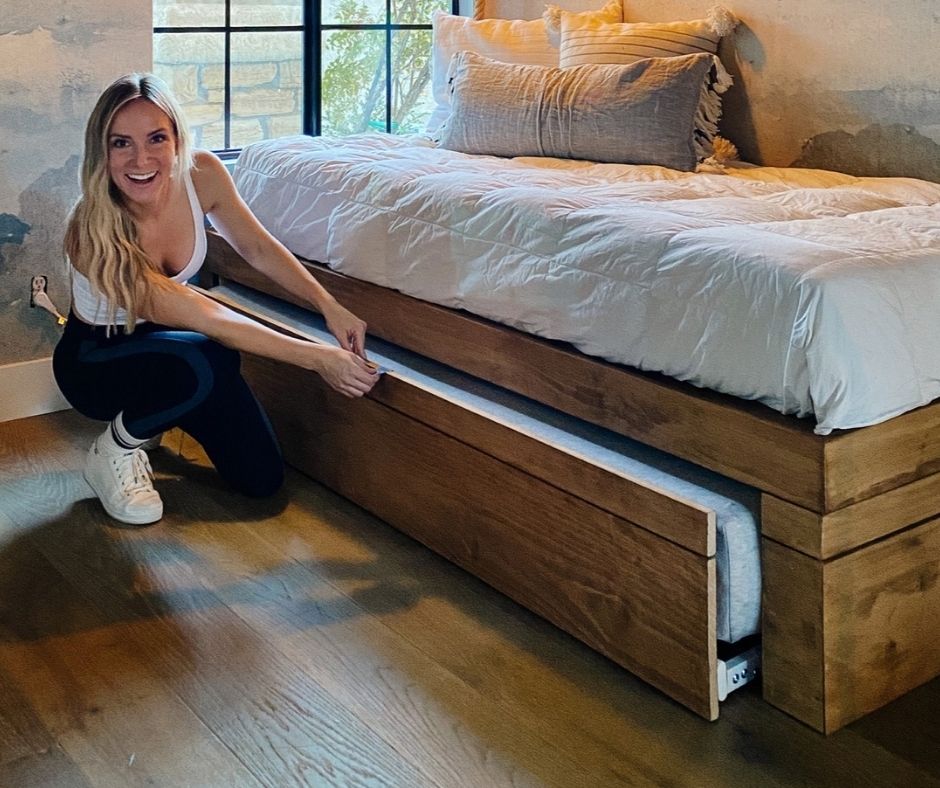
Credit: angelarosehome.com
Customizing Your Trundle
One advantage of making your own trundle is that you can customize it. Here are some popular ideas:
Paint And Finish
You can paint the frame any color or use wood stain for a natural look. For children, bright colors or patterns can make the bed fun and inviting.
Storage Drawers
Some people add low drawers under the trundle for extra storage. This is helpful for toys, bedding, or clothes. Just remember, drawers will need extra space under the main bed.
Upholstered Sides
Adding padded fabric to the sides can make the trundle look stylish and protect the bed frame above from scratches.
Fold-out Legs
For more support, you can add fold-out legs to the trundle. When pulled out, these legs lift the trundle to the same height as the main bed, creating a large sleeping surface.
Comparing Diy And Store-bought Trundles
If you’re unsure about building your own, it helps to see how a DIY trundle compares to a store-bought one:
| Feature | DIY Trundle | Store-Bought Trundle |
|---|---|---|
| Cost | Lower (materials only) | Higher (labor, shipping) |
| Customization | Full control | Limited styles/sizes |
| Time Required | 4–8 hours (build time) | Ready to use |
| Skill Needed | Basic woodworking | None |
| Durability | High (if built well) | Varies by brand |
For most people, building your own trundle means better fit, style, and savings. However, it does require time and some basic skills.
Common Mistakes And How To Avoid Them
Many first-time builders make small mistakes that can cause problems later. Here are common issues and how to avoid them:
Choosing The Wrong Wheels
Small or cheap wheels can break or get stuck in carpet. Always use strong, high-quality casters that match your floor type.
Forgetting Mattress Thickness
If the mattress is too thick, the trundle won’t fit under the main bed. Always measure the mattress before building the frame.
Weak Frame Joints
If you only use nails or weak screws, the frame may wobble or break. Use both wood glue and screws for stronger corners.
Not Checking Floor Clearance
Make sure your main bed frame is high enough off the floor before you start building. Some beds, especially platform beds, are too low for a trundle.
Skipping Sanding
Rough wood can cause splinters or damage bedding. Take time to sand all surfaces smooth.
Upgrading Your Trundle: Advanced Ideas
If you want to go beyond a basic trundle, here are some advanced options:
Pop-up Trundle
A pop-up trundle uses a special frame that raises to the same height as the main bed. This creates a large, flat sleeping area when needed. Pop-up mechanisms can be bought online, but you’ll need to follow the manufacturer’s instructions for safe installation.
Built-in Trundle
If you are building a new bed from scratch, you can design the main bed and trundle together for a perfect fit. This often looks more professional and can include matching trim or decorative panels.
Daybed With Trundle
A daybed is a bed that looks like a sofa during the day. Adding a trundle under a daybed is a great way to create a guest bed that doesn’t look like a bedroom all the time.

Credit: www.anikasdiylife.com
Real-life Example: Building A Trundle For A Child’s Room
Let’s look at a practical example. Suppose you want to build a trundle for your child’s room, and you have 13 inches of clearance under a twin bed. You want the trundle to be easy for your child to pull out and safe for sleepovers.
- Measure the space: 13 inches from floor to bottom of bed rail.
- Choose mattress: 8-inch thick foam twin mattress (leaving 5 inches for frame and wheels).
- Buy materials: 1” x 5” pine boards for the frame, 1” x 3” for slats, 2.5” rubber casters, wood screws.
- Cut and assemble: Frame size is 74” x 37” (slightly smaller than the mattress for easy fit).
- Add handles: Simple rope handles at the front make it easy for a child to pull out.
- Test for fit: Slide under the bed and check for smooth movement.
- Safety check: Sand all edges and test the weight.
This trundle takes about 5 hours to build and costs around $90, including paint and hardware.
Maintenance Tips For Long-lasting Use
To keep your trundle in great shape for years:
- Check screws and wheels every 6 months.
- Clean under the bed and trundle regularly to prevent dust build-up.
- Rotate the mattress to avoid sagging.
- Check for splinters or cracks in the frame, especially if used by children.

Credit: www.youtube.com
When Not To Build Your Own Trundle
DIY trundles are great, but sometimes buying makes more sense. If you have no tools, no time, or your main bed is too low, a store-bought trundle might be better. Also, if you need a pop-up trundle for regular adult use, buying a strong, certified frame can be safer.
Popular Trundle Bed Uses
Trundle beds are popular in many settings:
- Kids’ rooms: Great for sleepovers or siblings sharing a room.
- Guest rooms: Offers a second bed without using extra space.
- Studio apartments: Use during the night, slide away for more space in the day.
- Vacation homes: Adds flexible sleeping options for visitors.
Environmental Benefits Of Diy Trundles
Building your own trundle can be more eco-friendly. You can:
- Use sustainably sourced wood
- Avoid plastic packaging and shipping emissions from store-bought beds
- Reuse old wood or hardware for less waste
Comparing Mattress Types For Trundles
The mattress is as important as the frame. Here’s a quick look at common mattress types for trundles:
| Mattress Type | Pros | Cons |
|---|---|---|
| Foam | Lightweight, easy to move, affordable | May be too soft for adults |
| Innerspring | Good support, long-lasting | Heavier, more expensive |
| Hybrid | Mix of support and comfort | Can be thick (check height) |
Foam mattresses are usually best for DIY trundles because they’re light and easy to handle.
Learning More And Getting Help
If you’re new to woodworking, many community centers offer beginner classes. You can also find video guides and plans online. For more building ideas, see resources like Family Handyman, which offers project guides and safety tips.
Frequently Asked Questions
What Is The Best Wood For Making A Trundle?
Pine and poplar are popular because they are strong, easy to work with, and affordable. Hardwoods like oak are even stronger but cost more and are heavier.
How Much Weight Can A Diy Trundle Hold?
A well-built trundle using solid wood and strong slats can usually support 200–250 pounds. For heavier use, use thicker slats and reinforce the frame.
Can I Add A Trundle To Any Bed?
Most beds with at least 10–12 inches of clearance underneath can fit a trundle. Platform beds that sit very low are not suitable unless you modify them.
How Long Does It Take To Build A Trundle?
Most DIY trundles take 4 to 8 hours to build, depending on your skills and tools. Painting or finishing adds extra time.
Do I Need Special Tools To Make A Trundle?
Basic tools like a saw, drill, and screwdriver are enough for most trundles. A power saw makes the job easier, but you can use hand tools if needed.
—
Building your own trundle is a project that gives lasting value, practical space-saving, and a touch of pride every time you use it. With careful planning and attention to detail, you can create a sturdy, stylish, and useful piece of furniture that fits your needs perfectly.