
Installing a wall mount faucet can completely change the look and feel of your kitchen or bathroom. Compared to traditional deck-mounted faucets, wall mount faucets give you more counter space, a cleaner look, and easier cleaning around the sink area.
But putting in a wall mount faucet is a bigger project than a simple swap of an old faucet. It involves working with plumbing inside your wall, careful measurements, and some special tools. If you’re planning to do this yourself, you need to understand each step well.
With the right approach, you’ll get a professional finish and a faucet that works perfectly for years.
This article explains how to install a wall mount faucet in detail. You’ll learn how to choose the right faucet, prepare your plumbing, cut and patch walls, and avoid costly mistakes. Even if you’re a first-timer, by the end of this guide you’ll feel more confident about tackling this project.
Understanding Wall Mount Faucets
Before starting the installation, it’s important to know what makes wall mount faucets different from regular ones. A wall mount faucet attaches directly to the wall above your sink, not to the countertop or sink itself. This design means:
- Plumbing connections are hidden in the wall.
- The faucet sits higher, making it easier to fill large pots or wash your face.
- You get a modern, minimalist look.
Wall mount faucets are popular in both kitchens and bathrooms. However, they need the right wall depth and plumbing layout. Some older homes may need extra work to make these faucets possible.
Tools And Materials You’ll Need
To do a safe and effective installation, gather all tools and supplies before you start. Here’s a list of what you’ll need:
- Wall mount faucet kit (make sure it includes the rough-in valve)
- Adjustable wrench and pipe wrench
- Drill and drill bits
- Pipe cutter (for copper, PEX, or CPVC pipes)
- Measuring tape
- Level
- Screwdrivers
- Plumber’s tape (Teflon tape)
- Pipe thread sealant
- Shut-off valves (if not already installed)
- Flexible supply lines (if needed)
- Bucket and rags
- Pencil
- Stud finder
- Drywall saw or oscillating multi-tool
- Safety glasses and gloves
- Soldering kit (if using copper pipes)
You may also need extra materials for wall repair, like drywall, putty, and paint.
Choosing The Right Wall Mount Faucet
Not all wall mount faucets are the same. Here’s what to consider when choosing one:
1. Faucet Configuration
Wall mount faucets come in two-handle and single-handle designs. Two-handle models offer more precise control over hot and cold water. Single-handle faucets are easier for quick adjustments.
2. Spout Reach
Measure from the wall to the center of your sink. Choose a spout reach that lands the water stream in the middle of the sink. Too short, and you’ll splash water on the wall. Too long, and water may miss the bowl.
3. Valve Type
Most wall mount faucets use a rough-in valve inside the wall. Make sure your faucet comes with the correct valve, or buy one separately.
4. Material And Finish
Choose a material that resists corrosion, like brass or stainless steel. Finishes like chrome, matte black, or brushed nickel can match your bathroom or kitchen style.
5. Installation Requirements
Check the installation manual for the faucet’s required wall thickness and pipe spacing. Most wall mount faucets need 6–8 inches between hot and cold connections.
6. Quality And Warranty
High-quality faucets last longer and leak less. Look for a lifetime warranty or at least a 5-year warranty.
Common Mistakes
- Choosing a faucet with the wrong spout reach for your sink
- Forgetting to check valve compatibility
- Buying a faucet with a finish that scratches easily
Planning Your Installation
A successful wall mount faucet installation starts with careful planning.
Measuring And Marking
- Find the centerline of your sink. Mark it lightly on the wall.
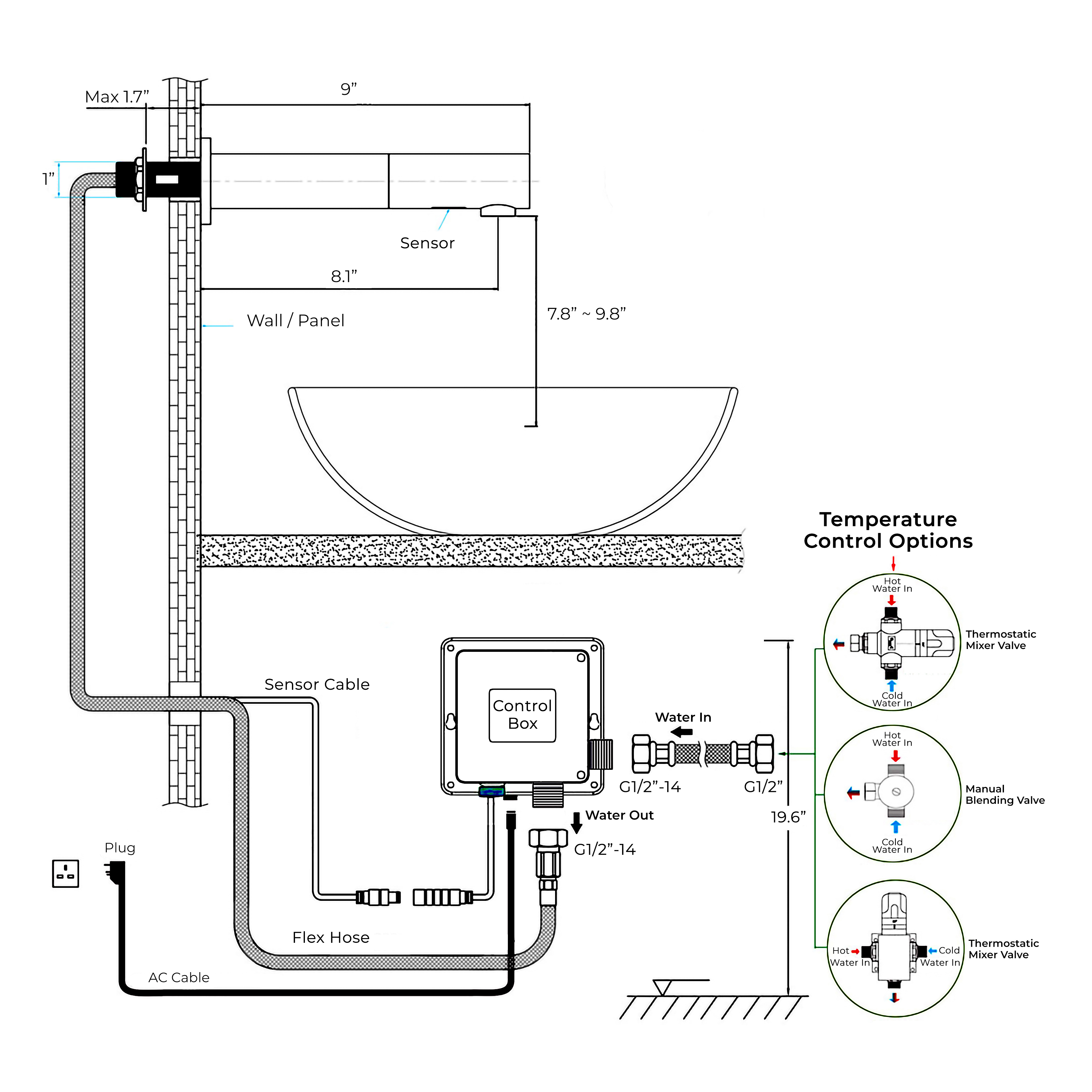
- Decide the height. Most people install wall mount faucets 8–10 inches above the countertop for bathrooms, or 10–12 inches for kitchens.
- Use a level to mark a straight line where the faucet body will go.
Locating Studs And Pipes
Use a stud finder to locate wall studs. You want to avoid cutting through studs or electrical wires. If possible, position the faucet between two studs.
Checking Plumbing
Look at your existing plumbing. Are your supply pipes (hot and cold) already in the wall? If not, you may need to reroute pipes from below or above. This can add time and cost.
Turning Off Water
Before starting any plumbing work, turn off water at the main shut-off valve. Open the lowest faucet in your house to drain the lines.
Opening The Wall
To install a wall mount faucet, you need access to the inside of the wall.
Cutting The Opening
- Mark the area to open based on your measurements.
- Use a drywall saw or oscillating multi-tool to cut a clean rectangle. Make the hole large enough to work on pipes and fit the faucet valve.
- Save the cut drywall piece for patching later.
Checking Inside The Wall
Shine a flashlight inside. Look for:
- Water supply lines (copper, PEX, or CPVC)
- Electrical wires (avoid touching or cutting them)
- Studs (work around them if possible)
If you see mold or water damage, stop and fix these problems first.
Rough-in Plumbing Work
This is the most technical part. If you’re not comfortable working with pipes, consider hiring a licensed plumber.
Adjusting Water Supply Lines
If your hot and cold pipes are not in the right place:
- Cut and reroute them using pipe fittings.
- Pipes should be spaced to match your faucet (usually 6–8 inches apart, center-to-center).
- Pipes should stick out far enough for the rough-in valve, but not too far.
Pipe Types
- Copper: Cut with a pipe cutter, clean, and solder new fittings.
- PEX: Cut and use push-fit or crimp fittings.
- CPVC: Cut and glue new fittings.
Installing Shut-off Valves
If you don’t have shut-off valves inside the wall, now is the time to add them. This makes future repairs easier.
Securing The Rough-in Valve
- Attach the rough-in valve to the supply pipes using the correct method (threaded, soldered, or push-fit).
- Use plumber’s tape on threaded connections to prevent leaks.
- Check the valve is level and at the right height. Secure it to blocking between studs with screws.
Pressure Testing
Before closing the wall, turn on water and check for leaks. Use a dry rag around each connection to spot drips. Fix leaks now—this is much harder after the wall is closed.
Patching And Prepping The Wall
Once plumbing is leak-free, close the wall.
Drywall Repair
- Replace the drywall piece you saved or cut a new one to fit.
- Screw or nail it in place.
- Use joint compound to patch seams. Let it dry, then sand smooth.
- Prime and paint to match the rest of the wall.
Making Faucet Cutouts
Cut precise holes for the faucet body and handles. The faucet’s trim kit should cover these holes. Check the instructions for the right size.
Installing The Faucet Trim
Now you install the visible parts of the faucet.
Attaching The Faucet Handles And Spout
- Slide the handles and spout onto the valve stems.
- Tighten set screws or nuts as directed.
- Install escutcheons (decorative plates) to cover wall openings.
Sealing
Apply a thin bead of silicone caulk around the base of each escutcheon. This keeps water out of the wall.
Final Assembly
Attach any aerators, filters, or other parts. Double-check that everything is tight, but don’t overtighten and damage the finish.
Testing The Faucet
Turn on the water supply at the shut-off valves.
- Open both hot and cold fully and check for leaks around all fittings.
- Let the water run for a minute to clear out debris.
- Test the handles for smooth operation.
- Check the water stream—make sure it lands in the center of the sink.
If you see drips or leaks, tighten connections or add more plumber’s tape as needed.
Finishing Touches
A few small steps can make your new faucet look and work even better:
- Clean the faucet with a soft cloth—don’t use abrasive cleaners on new finishes.
- Touch up paint around the faucet if needed.
- If you patched the wall, wait 24–48 hours before using the faucet heavily, so paint and caulk set fully.
- Add a backsplash behind the faucet for extra protection if your sink area gets a lot of splashes.
Credit: www.fontanashowers.com
Example Wall Mount Faucet Installation Timeline
Here’s a real-world example of how much time each step may take:
| Step | Estimated Time | Difficulty |
|---|---|---|
| Planning & Measuring | 1–2 hours | Easy |
| Opening Wall | 1 hour | Medium |
| Plumbing Rough-In | 2–4 hours | Hard |
| Drywall Repair | 2 hours (plus drying time) | Medium |
| Faucet Trim Install | 1 hour | Easy |
| Testing & Finish | 30 minutes | Easy |
The whole project can take a full day, especially if you need to reroute pipes.
Comparing Wall Mount Vs. Deck Mount Faucets
Is a wall mount faucet right for you? Here’s a quick comparison:
| Feature | Wall Mount Faucet | Deck Mount Faucet |
|---|---|---|
| Installation Difficulty | Hard (needs wall work) | Easy (fits existing holes) |
| Cleaning | Very easy (no base on counter) | Counter can collect grime |
| Style | Modern, minimalist | Classic, traditional |
| Space Saving | Frees up counter space | Takes up counter space |
| Repairs | Harder (inside wall) | Easier (on top of sink) |
If you like a sleek look and don’t mind the extra work, wall mount faucets are a great choice.
Safety And Building Codes
Never ignore safety or local codes.
- Always turn off water before starting work.
- Wear safety glasses when cutting drywall or pipes.
- Check your local building codes. Some areas require a licensed plumber for certain jobs, especially in kitchens or near bathtubs.
- Use proper wall reinforcement (blocking) to support heavy faucets.
- If you find lead pipes or old galvanized steel, replace them with modern pipes.
Two Insights Beginners Often Miss
- Wall thickness matters: Many people start installing a wall mount faucet only to find their wall is too thin for the rough-in valve. Always check your wall’s depth (usually 4–6 inches needed) before buying a faucet.
- Tile and backsplash impact: If you plan to tile or add a backsplash after installing the faucet, you must plan the rough-in depth carefully. Tile adds thickness, which can make handles too short or spouts look awkward if not measured correctly.

Credit: www.youtube.com
Common Problems And How To Avoid Them
Leaks At The Wall
Cause: Loose connections, missing plumber’s tape, or over-tightening.
Solution: Use enough plumber’s tape, don’t overtighten, and check each joint before closing the wall.
Misaligned Faucet
Cause: Poor measuring or not using a level.
Solution: Double-check all measurements and use a level before securing the valve.
Water Hits Wrong Spot In Sink
Cause: Wrong spout reach or height.
Solution: Measure from the wall to the center of the sink, and choose a faucet with the right spout reach.
Wall Damage
Cause: Cutting too large an opening or hitting wires.
Solution: Use a stud finder, measure twice, and cut carefully.
Real-world Example
A family in Chicago wanted a wall mount faucet in their new kitchen. Their contractor found the existing wall was only 3. 5 inches deep—too thin for the faucet’s rough-in valve. The solution was to build out the wall an extra inch, add new blocking, and then install the faucet.
This added $400 to the project but gave them the look they wanted. This shows why checking wall depth early is so important.
Maintenance Tips For Wall Mount Faucets
Wall mount faucets need less cleaning than deck mounts, but you should:
- Wipe the faucet with a soft cloth after each use to prevent water spots.
- Clean aerators every few months to remove mineral build-up.
- Check for leaks once a year—early leaks can often be fixed by tightening fittings.
- Reseal around the escutcheon every few years to keep moisture out of the wall.
When To Call A Professional
While many handy homeowners can install a wall mount faucet, call a pro if:
- You’re not comfortable with plumbing or drywall repair.
- You find old, unsafe pipes (like lead or corroded steel).
- You hit unexpected obstacles, like electrical wires or vents.
- Building codes require a licensed plumber.
A professional plumber can often finish this job in 3–5 hours and will guarantee leak-free results.
Cost Breakdown
Here’s a sample cost estimate for a DIY wall mount faucet installation:
| Item | Typical Cost |
|---|---|
| Wall Mount Faucet Kit | $150–$400 |
| Rough-In Valve (if separate) | $40–$80 |
| Pipe & Fittings | $30–$100 |
| Drywall & Paint | $20–$50 |
| Tools (if buying new) | $50–$200 |
| Professional Labor (optional) | $300–$700 |
DIY can save money, but don’t cut corners on quality or safety.
Sources For More Information
If you want to learn more about plumbing codes, rough-in valves, or faucet styles, check out the Family Handyman guide for step-by-step visuals and expert advice.
Credit: www.webstaurantstore.com
Frequently Asked Questions
How High Should I Install A Wall Mount Faucet Above The Sink?
Most wall mount faucets are installed 8–10 inches above the bathroom sink and 10–12 inches above a kitchen sink. Always measure from the finished countertop or sink rim. The goal is to have enough space for washing but not so high that water splashes outside the bowl.
Can I Install A Wall Mount Faucet On Any Wall?
Not always. The wall must be deep enough for the valve, usually 4–6 inches. If the wall is too thin, you may need to build it out or use a special shallow rough-in valve. Make sure there’s no electrical wiring or studs in the way.
Do I Need Special Plumbing For A Wall Mount Faucet?
Yes. The hot and cold supply lines must be inside the wall and spaced to match the faucet. If your existing pipes are not in the right place, you’ll need to reroute them. This is often the hardest part for DIYers.
How Do I Avoid Leaks Behind The Wall?
Test all plumbing connections with water before closing the wall. Use plumber’s tape or pipe thread sealant on threaded joints. After closing the wall, check for leaks regularly for the first few weeks.
Can I Replace A Deck Mount Faucet With A Wall Mount Faucet?
Yes, but it’s a bigger project. You’ll need to reroute water lines into the wall and patch the old deck holes. Make sure your wall can handle the new faucet and that you’re comfortable with plumbing and drywall work.
Installing a wall mount faucet is a rewarding project that adds style and function to your space. With careful planning, the right tools, and attention to detail, you’ll enjoy a modern faucet that makes everyday tasks easier and your kitchen or bathroom more beautiful.