
Transforming your bathroom floor with epoxy is a powerful way to update the look and feel of your space. Many homeowners are surprised by how much epoxy flooring can improve both style and function. It provides a glossy, seamless finish that is waterproof, stain-resistant, and easy to clean. If you want a modern bathroom without the cost and mess of full remodeling, learning how to epoxy a bathroom floor could be the best solution.
This guide will walk you through the complete process, from planning and prep to application and aftercare. Whether you’re a DIY beginner or have some experience, you’ll find practical tips, warnings, and expert insights that many tutorials miss. Let’s explore how you can achieve a professional, long-lasting finish that transforms your bathroom floor.
Why Choose Epoxy For A Bathroom Floor?
Epoxy is more than just a pretty face. It’s a unique flooring solution with several advantages:
- Waterproof barrier: Bathrooms have high moisture levels. Epoxy creates a non-porous surface that protects against water damage and mold. This is especially important in humid climates, where water can seep into cracks and cause hidden problems over time.
- Easy to clean: The smooth surface makes cleaning simple—dirt, soap, and hair wipe off easily. Unlike tile, there are no grout lines for grime or mildew to hide in.
- Durability: Epoxy resists scratches, stains, and most chemicals found in homes. Everyday spills like shampoo, bleach, or toothpaste won’t stain or damage the floor if wiped up quickly.
- Custom appearance: You can choose from solid colors, metallic effects, patterns, and even add flakes for texture. This allows you to match almost any décor style, from minimal to bold.
Many homeowners also find that epoxy flooring makes a small bathroom look larger. The glossy finish reflects light, adding a sense of space. For anyone tired of grout lines or worn vinyl, epoxy is a game-changer.
Another overlooked benefit is that epoxy can cover up imperfections in older floors. If your concrete has stains or your tiles have faded, epoxy creates a brand-new surface without the cost of replacement. It also creates a seamless look—no joints or seams—making cleaning and maintenance less work.
Understanding Epoxy Flooring Basics
Before diving in, it’s important to understand what epoxy is and how it works. Epoxy flooring is a two-part system—resin and hardener. When you mix them, they start a chemical reaction and turn into a hard, plastic-like surface that bonds tightly to your floor.
There are several types of epoxy, but for bathrooms, most people use water-based or 100% solid systems. Water-based epoxy is easier for beginners and has less odor, while 100% solid epoxy is tougher and more glossy. Most kits you find in stores are water-based.
Epoxy is not paint. Paint dries by evaporation, but epoxy cures by chemical reaction, which makes the result much harder and longer-lasting. Epoxy is also thicker than paint—one coat of epoxy can be as thick as several coats of paint.
Two non-obvious insights beginners miss:
- Humidity matters: High humidity can stop epoxy from curing properly, causing a sticky or cloudy finish. Always check the weather, and use a dehumidifier if needed.
- Subfloor movement: Epoxy is rigid. If your subfloor flexes or has cracks, the epoxy can crack too. Fixing the base is essential.
Many beginners also don’t realize that once you start mixing epoxy, the clock is ticking. The material begins to harden soon after mixing, so you need to work quickly and efficiently. Reading all instructions before you start will save you stress later.
Planning Your Epoxy Bathroom Floor Project
Good results start with good planning. Here’s what you need to consider before you begin:
- Evaluate your current floor: Epoxy works best on concrete, but can also cover tile, vinyl, or wood if properly prepared. The surface must be stable, clean, and dry. If your floor is bouncy or squeaks, fix this before applying epoxy.
- Measure your bathroom: Calculate the square footage to know how much epoxy to buy. Most kits cover 200-300 sq ft, but bathrooms are usually much smaller. Don’t forget to account for closets or odd shapes. Buying a little extra is better than running out halfway.
- Choose your design: Solid color? Metallic? Flakes? Think about the look you want. Consider color samples in your space and lighting. Remember, dark colors can make a space feel smaller and show dust more easily.
- Check the weather: Ideal application temperature is 60–85°F with low humidity. If your bathroom is in a basement or rarely heated, use space heaters or dehumidifiers as needed.
- Plan for drying time: Your bathroom will be off-limits for at least 2-3 days. Arrange alternatives if needed. If you have only one bathroom, this can be a big inconvenience, so plan accordingly.
Extra tip: Take photos of your bathroom before starting. This helps if you want to match colors or show the transformation to friends later.
Tools And Materials Needed
Gathering the right supplies makes the job easier and avoids delays. Here’s what you’ll need:
- Epoxy kit (choose water-based or 100% solid for bathrooms)
- Concrete or tile cleaner (if prepping an old surface)
- Degreaser
- Sandpaper or floor grinder
- Vacuum
- Painters tape and plastic sheeting
- Paint rollers and extension pole
- Paint brushes
- Mixing bucket and drill with mixing paddle
- Protective gloves and goggles
- Respirator mask (especially for 100% solid epoxy)
- Non-slip additive (optional, for safety)
- Epoxy flakes or metallic pigment (optional, for design)
You might also need a putty knife for crack repair, and a moisture meter to check for hidden dampness. For best results, use new rollers and brushes—old ones can shed fibers and ruin the finish.
If you’re working in a small space, choose tools with short handles and covers for tight corners. Having all your tools ready before you mix the epoxy will make the process less stressful.

Credit: www.youtube.com
Preparing The Bathroom Floor
Preparation is where most DIY epoxy projects fail. Don’t rush this step—epoxy only sticks well to a clean, rough, and dry surface.
Step 1: Remove Everything
Take out the toilet, vanity, baseboards, and any other removable fixtures. This gives you full access to the floor and avoids awkward edges. Even small items like towel racks or heating vents should be removed or carefully masked.
If you cannot remove a fixture, mask it completely with plastic sheeting and tape. Some people leave the toilet in place, but this makes sealing the edges much harder and can look unprofessional.
Step 2: Clean Thoroughly
Use a strong degreaser and scrub the floor to remove all oils, soap residue, and dirt. Rinse well and let dry. Even invisible oils from skin can affect epoxy’s bond. Pay attention to corners and under baseboards, where grime often hides.
If your bathroom has old adhesive or wax, use a floor stripper for best results. Leftover chemicals can cause fish-eye spots (small craters) in the epoxy.
Step 3: Repair And Level
Patch any cracks or holes with a concrete filler or compatible patching compound. If the floor is uneven, use a leveling compound. Epoxy shows every dip and bump, so spend time here.
Let all repairs dry completely before moving to the next step. Even small cracks can grow over time and ruin your new floor, so be thorough.
Step 4: Sand Or Etch The Surface
Epoxy needs something to grip. For concrete, use a floor grinder, sander, or acid etching solution to roughen the surface. For tile or vinyl, sand with coarse grit sandpaper until the gloss is gone.
If you’re etching with acid, always wear protective gear and ventilate the space well. Rinse the floor thoroughly after etching and let it dry. You should feel a slight roughness when you run your hand over the surface.
Step 5: Vacuum And Mask
Vacuum all dust. Wipe with a damp cloth and let dry. Use painters tape and plastic sheeting to protect walls, tub, and anything you don’t want coated.
Be careful to seal edges well. Epoxy is very fluid at first and can run under loose tape. Press tape down firmly and check all corners.
Step 6: Dry Completely
Moisture is epoxy’s enemy. Use a moisture meter to check the floor, or tape a 2’ square of plastic to the floor for 24 hours. If condensation forms, wait—your floor is not dry enough.
Drying is especially important in basements or ground-floor bathrooms. Moisture coming up from below can ruin the finish even if the top feels dry.
Applying The Epoxy: Step-by-step Process
Once your floor is ready, it’s time for the fun part. Epoxy is not hard, but you must work quickly and carefully. Here’s how:
Step 1: Mix The Epoxy
Open your kit and follow the manufacturer’s instructions exactly. Mix the resin and hardener for the recommended time, usually 2–3 minutes. Use a drill with a mixing paddle for even results. Do not mix more than you can use in 30 minutes.
Scrape the sides and bottom of your mixing bucket to make sure everything is blended. Unmixed epoxy will not cure and can leave sticky spots.
Step 2: Cut In The Edges
Use a brush to “cut in” around the edges of the room—next to walls, fixtures, and corners. This helps you get a neat line and avoids missing spots.
Work quickly but carefully. If the epoxy sits too long in the bucket, it will start to harden and become unusable.
Step 3: Roll Out The Epoxy
Pour the epoxy in a line along the far wall. Use a roller to spread it evenly, working toward the door so you don’t get trapped. Apply in small sections and keep a wet edge.
Roll in multiple directions for even coverage. If you see bubbles, gently roll over them—most will pop as the epoxy settles. Do not step back over wet epoxy.
Step 4: Add Design Elements
If you want flakes, sprinkle them over the wet epoxy as you go. For metallic effects, swirl pigment with a brush for a marbled look.
Be creative, but don’t overdo it. It’s better to start simple and add more later. If you want heavy flakes, sprinkle them generously, then sweep up the excess after curing.
Step 5: Apply A Non-slip Additive
Bathrooms can get slippery. Mix in a non-slip additive for safety, especially if you have kids or seniors. You can also sprinkle fine sand over the wet surface and seal it with a topcoat.
Choose a fine, clear additive so it doesn’t change your floor’s color. Test a small area first to see how it feels underfoot.
Step 6: Let It Cure
Most epoxies need 12–24 hours before you can walk on them, and 2–3 days for full cure. Keep the room ventilated and avoid water or heavy traffic during this time.
Don’t rush to reinstall fixtures—wait until the epoxy is fully hardened. Placing heavy items too soon can dent or mark the surface.
Comparing Epoxy To Other Bathroom Floor Options
To help you understand how epoxy stacks up, here’s a comparison with common bathroom flooring types:
| Floor Type | Water Resistance | Durability | Maintenance | Cost (per sq ft) | Installation Difficulty |
|---|---|---|---|---|---|
| Epoxy | Excellent | High | Very Easy | $3–$7 | Medium |
| Tile | Excellent | High | Medium (grout lines) | $5–$15 | Hard |
| Vinyl | Good | Medium | Easy | $2–$6 | Easy |
| Laminate | Fair | Low | Easy | $2–$8 | Easy |
Epoxy stands out for its combination of waterproofing, easy cleaning, and customization at a moderate price.
A less obvious advantage is that you don’t need to remove old tile or vinyl in most cases, saving time and landfill waste. Plus, epoxy has no seams for water to get under, unlike laminate or vinyl planks.
Common Mistakes To Avoid
Epoxy looks simple, but some mistakes can ruin the finish. Here are key errors to watch out for:
- Skipping preparation: Not cleaning, sanding, or leveling means the epoxy can peel, bubble, or look uneven.
- Ignoring moisture: Applying epoxy on a damp floor leads to cloudy patches and poor adhesion.
- Poor mixing: Incomplete mixing causes soft spots that never harden.
- Working too slowly: Epoxy starts curing fast. If you pause too long, you’ll see roller marks and seams.
- Not using enough product: Thin layers can look patchy and wear out quickly.
- Forgetting non-slip: Glossy epoxy is slippery when wet. Always add a non-slip element in bathrooms.
Other beginner pitfalls include not ventilating the room, which can make fumes overwhelming, and not reading the instructions in advance. Some brands require a primer coat—skipping it can cause peeling.
Adding Style: Colors, Flakes, And Finishes
One of the best things about epoxy is its design flexibility. You can go classic, bold, or even metallic. Here are popular options:
Solid Colors
A single color gives a clean, modern look. Light grays, white, or pale blue make small bathrooms feel bigger. Dark colors can add drama but show dust more.
Decorative Flakes
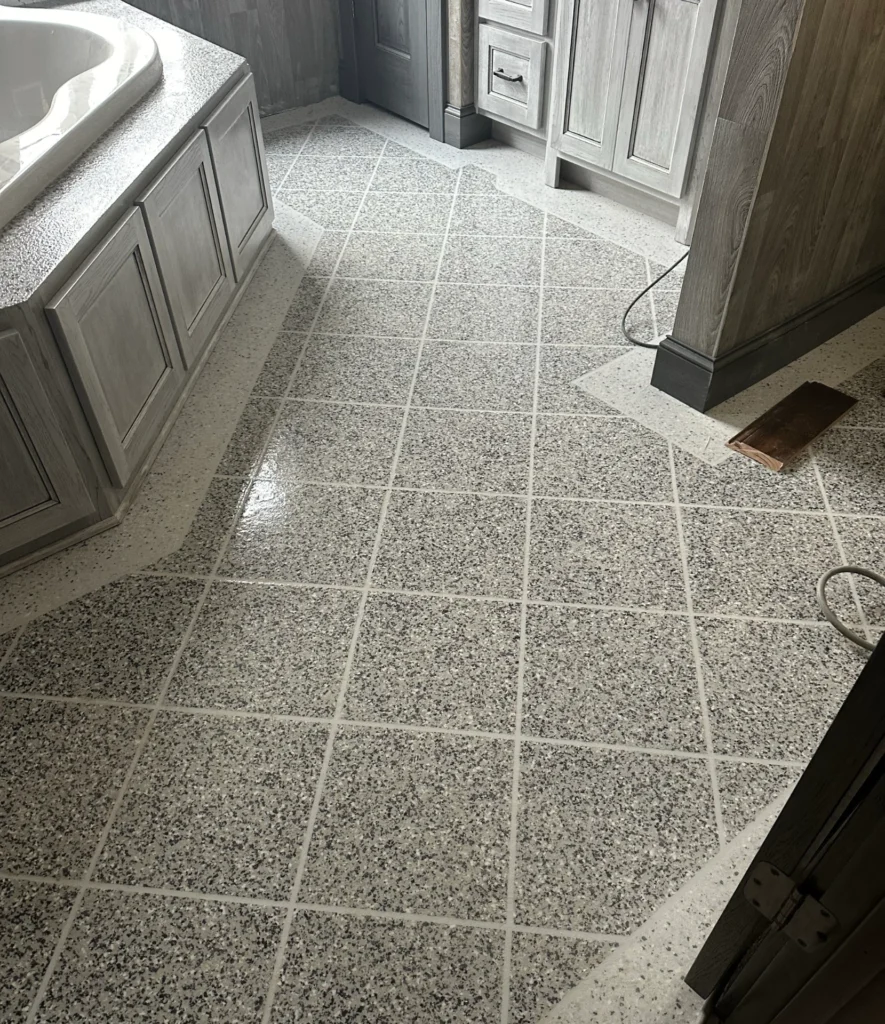
Epoxy flakes add color and hide dirt or minor flaws. They’re sprinkled on wet epoxy and come in endless color mixes. You can use small flakes for a subtle look or large, colorful flakes for a bold style.
Metallic Effects
Metallic epoxy creates a marbled, three-dimensional look. This is more advanced but stunning in modern bathrooms. Practice on a sample board if you’re new to this effect.
Matte Or Gloss Finish
Most people choose high gloss, but matte finishes are available if you prefer less shine and more traction. A matte topcoat can also reduce the appearance of scratches.
Extra tip: If you want to personalize your floor, you can embed small objects (coins, shells, or even photos) under a clear topcoat for a unique touch.
Maintenance And Cleaning Tips
Epoxy floors are low maintenance, but a few habits will keep them looking new:
- Sweep or vacuum often to remove dust and grit.
- Mop with mild soap and water—avoid harsh chemicals or abrasive pads.
- Wipe spills quickly. Although epoxy is waterproof, standing water can stain if left for days.
- Use soft pads under heavy objects to avoid scratches.
- Recoat every 5–7 years for best appearance.
Don’t use wax or polish—epoxy doesn’t need it and wax can make the floor slippery. If you notice dull spots after years of use, a quick buff or new topcoat will restore the shine.
Cost Breakdown: Diy Vs. Professional
Is it worth doing epoxy yourself? Here’s a cost comparison for a standard 60 sq ft bathroom:
| Method | Materials | Tools Rental | Labor | Total Cost |
|---|---|---|---|---|
| DIY | $80–$180 | $40–$60 | $0 | $120–$240 |
| Professional | Included | Included | $300–$800 | $400–$950 |
DIY epoxy saves money, but you need time, patience, and good prep. Hiring a pro costs more but means flawless results and a warranty.
A hidden cost of DIY is time—if you make mistakes, you may need to strip and redo the floor, which can double your expenses. Weigh your skills and schedule before deciding.
Safety Considerations
Epoxy is safe when used correctly, but take precautions:
- Ventilate the room well to avoid fumes.
- Wear gloves, goggles, and a respirator (especially for 100% solids).
- Keep children and pets away until fully cured.
- Dispose of leftovers safely—never pour down the drain.
Some people are sensitive to epoxy odors. Choose water-based kits for less smell.
If you have allergies or asthma, consult with your doctor before using strong chemicals. Epoxy is much safer once cured, but proper handling during installation is important.
Credit: idealcoatings.com
Troubleshooting: Common Issues And Fixes
Even with care, problems can occur. Here’s how to handle them:
Bubbles
Usually caused by trapped air or applying over a damp surface. Sand lightly and recoat.
Uneven Color
Often due to poor mixing or thin spots. Apply a second coat for even color.
Peeling
Means poor surface prep or moisture. Remove loose epoxy, prep again, and patch.
Slippery Surface
If you forgot non-slip, add a special topcoat with grit, or use non-slip mats.
Pro tip: Test a small area first if you’re unsure about adhesion or color.
Many issues can be fixed with a light sanding and another coat. The key is not to panic—most mistakes are fixable, and each layer makes the floor more durable.
How Long Does Epoxy Last In A Bathroom?
With proper prep and care, epoxy floors last 10–20 years in bathrooms. High traffic or heavy cleaning can wear the topcoat, but recoating is easy.
Epoxy outlasts most vinyl and even some tiles, especially in homes with pets or kids. Regular cleaning and avoiding harsh chemicals will help your floor last longer.

Credit: www.bestbartopepoxy.com
Sustainability And Health Impact
Epoxy is a synthetic material, but its long life and low maintenance can be more eco-friendly than replacing tile or vinyl often. Choose low-VOC or water-based systems for better indoor air quality.
If you’re concerned about the environment, look for brands that advertise low emissions or recycled content. Epoxy’s smooth surface also reduces the need for harsh cleaning chemicals, which is better for the environment and your health.
When To Call A Professional
Some jobs are better left to experts:
- If your floor has serious cracks or movement
- If you want a complex metallic or multi-color design
- If you need a perfect finish and warranty
Otherwise, most DIYers can get great results with patience and careful prep.
A professional can also help if your bathroom has drainage slopes, built-in features, or very uneven floors. Their experience can save you time and stress.
Additional Resources
For more details on epoxy chemistry, curing, and applications, visit Wikipedia’s epoxy article.
Frequently Asked Questions
How Long Does It Take To Epoxy A Bathroom Floor From Start To Finish?
Most projects take 2–3 days. Day one is for preparation and cleaning. Day two is for applying the epoxy and design elements. Day three is for curing. Larger bathrooms or poor weather (cold or humid) can add extra time.
Can I Put Epoxy Over Old Tiles Or Vinyl?
Yes, but you must sand the surface until dull and fill grout lines for a smooth finish. The key is removing all oils and roughening the surface so epoxy can bond. Skipping these steps can cause peeling.
Is Epoxy Safe For Bathroom Floors With Heated Flooring?
Epoxy works well with most heated floors, as it tolerates temperatures up to 140°F. Make sure the heating system is off during installation and curing, and check with the epoxy manufacturer for compatibility.
How Slippery Is An Epoxy Bathroom Floor?
A plain epoxy floor can be slippery when wet, but you can add non-slip additives or flakes for traction. Always include a non-slip element for bathrooms to reduce fall risk.
What Should I Do If My Epoxy Floor Gets Scratched?
Small scratches can be buffed with a fine abrasive pad or recoated with a clear epoxy sealer. For deep damage, sand the area lightly and apply a new layer. Regular cleaning and soft pads under furniture help prevent scratches.
Transforming your bathroom with epoxy is a rewarding project. With careful planning, patience, and the right materials, you can create a floor that is both beautiful and practical for years to come.