
Compressing a mattress might sound like a job for a factory, but with the right steps, you can do it at home. Whether you’re moving, shipping, or storing your bed, knowing how to compress a mattress can save space, money, and effort.
But mattress compression isn’t just about shoving foam into a bag. If you do it wrong, you could damage your mattress or even void its warranty. This guide walks you through everything—from preparation to safe storage—so you can handle mattress compression like a pro, even if it’s your first time.
Why Compress A Mattress?
There are practical reasons people want to compress a mattress. Moving homes, fitting a mattress into a small car, or storing it in a tight space are all common situations. Sometimes, you might even need to ship a mattress after selling it online. A compressed mattress takes up less room, weighs less, and is much easier to transport.
But there’s more. Compressing your mattress the right way can also help you avoid tears, unwanted bends, or permanent sagging. Foam mattresses (like memory foam) are especially suited for compression, but even some hybrid and latex models can be safely reduced in size—if you know the right technique.
Can All Mattresses Be Compressed?
Not every mattress is a good candidate for home compression. Memory foam and latex mattresses are most commonly compressed, and manufacturers often ship them this way. However, innerspring mattresses (with coils) are more difficult and sometimes risky to compress without professional equipment.
Here’s a quick look at which mattresses handle compression best:
| Mattress Type | Can Be Compressed at Home? | Notes |
|---|---|---|
| Memory Foam | Yes | Ideal for DIY compression |
| Latex Foam | Yes | Check manufacturer guidelines |
| Hybrid | Sometimes | Foam hybrids are safer; pocket coils risk bending |
| Innerspring | No/Not Recommended | Springs may bend or break |
| Pillow Top | No/Not Recommended | Compression can damage structure |
Non-obvious insight: Even if a mattress seems compressible, always check the warranty. Some brands will void your warranty if you compress your mattress at home.
Essential Tools And Materials
Before you start, gather everything you need. The right tools make compression easier and safer for your mattress.
- Mattress vacuum bag – These are large, airtight bags (sometimes called mattress compression bags) designed for mattresses.
- Vacuum cleaner – A vacuum with a hose attachment is necessary to suck the air out of the bag.
- Ratchet straps or rope – These help keep the mattress compressed after vacuum sealing.
- Duct tape or packing tape – For sealing the bag and securing straps.
- A helper – Compressing and rolling a mattress is easier with two people.
- Clean, flat workspace – A floor is best; avoid outdoor surfaces that could dirty the mattress.
Tip: Do not use regular plastic sheets or trash bags. Mattress vacuum bags are made to handle the pressure and size.
Preparing Your Mattress
A little preparation goes a long way. Make sure your mattress is clean, dry, and ready to be compressed.
- Remove all bedding – Strip sheets, blankets, pillows, and mattress protectors.
- Clean the surface – Use a vacuum or lint roller to pick up dust and debris.
- Check for moisture – Compressing a damp mattress can trap moisture, leading to mildew or odor.
- Inspect for damage – Look for tears, sagging, or weak spots. Compression can make problems worse.
Non-obvious insight: If your mattress has handles, tuck them in or cover them with tape to prevent tearing the bag.
Step-by-step: How To Compress A Mattress
Now for the main event. Follow these steps carefully for best results.
1. Place Mattress In Vacuum Bag
Lay the mattress flat on the floor. Open the vacuum bag and slide the mattress inside. This can be a tight fit—rolling the mattress slightly can help guide it in. Make sure the mattress is centered and the bag is smooth, with no large wrinkles.
2. Seal The Vacuum Bag
Close the bag’s zipper or seal. Most mattress vacuum bags use a double-zip or clamp to ensure an airtight closure. If your bag has an extra adhesive strip, press it firmly.
Tip: Go over the seal twice to check for leaks.
3. Attach The Vacuum Hose
Find the valve on the bag. Remove the cap and fit your vacuum hose snugly over the opening. Some vacuum bags have adapters for different hose sizes.
Turn on the vacuum. You should see the bag start to shrink as air gets sucked out. This can take anywhere from 2 to 10 minutes, depending on mattress size and vacuum power.
Warning: Do not rush this step. Let the vacuum do its work—forcing the mattress can cause uneven compression.
4. Roll The Mattress (if Needed)
As the mattress flattens, you can start rolling it from one end to the other. This makes it easier to carry and store. Roll slowly and evenly, pressing out extra air as you go.
Ask your helper to keep the bag taut and smooth out wrinkles. When finished, your mattress should look like a large, heavy sleeping bag.
5. Secure With Straps
Wrap ratchet straps or strong rope around the rolled mattress. Tighten until snug, but don’t over-tighten—too much pressure can damage the foam. Secure with a knot or ratchet.
Use tape to reinforce the bag ends, especially if you see any loose flaps or small leaks.
6. Double-check Everything
Inspect your compressed mattress. Look for:
- Leaks or hissing sounds
- Bag tears or weak spots
- Straps that are too loose or too tight
If all looks good, your mattress is now ready for moving or storage.
Storage And Transportation Tips
A compressed mattress is easier to handle, but it still needs care.
- Keep it flat or upright – Store the mattress on a flat surface or upright against a wall. Avoid bending it in half.
- Avoid heat and moisture – Extreme temperatures and humidity can damage the foam or the vacuum bag.
- Don’t store too long – Most experts recommend decompressing within 2 to 4 weeks. Prolonged compression can cause the foam to lose its shape.
Practical example: If you’re moving across the country, compress your mattress right before moving day. Unpack and let it expand as soon as you arrive.

Credit: www.amazon.com
How Long Can You Leave A Mattress Compressed?
Most memory foam mattresses can safely remain compressed for up to two months if the bag is airtight. However, the sooner you decompress it, the better. Long-term compression can cause permanent indentations.
Manufacturers usually ship compressed mattresses and recommend opening them within a few weeks. If you leave a mattress compressed for too long, it may not fully return to its original size.
Key takeaway: If you’re storing your mattress, plan to unroll it and let it breathe as soon as possible.
What About Innerspring And Hybrid Mattresses?
Compressing innerspring mattresses is risky. The coils inside are not designed to handle the pressure and may bend or break. Even some hybrids with springs should not be compressed without factory equipment.
If you have an innerspring mattress, consider these alternatives:
- Use a mattress box for moving instead of compressing
- Hire a moving company with experience handling large mattresses
- Sell or donate and buy a new one at your destination
Comparison example:
| Mattress Type | Home Compression Safe? | Risk Level |
|---|---|---|
| Memory Foam | Yes | Low |
| Hybrid (foam core) | Sometimes | Moderate |
| Innerspring | No | High |
Mattress Compression Vs. Mattress Folding
People often confuse mattress compression with simply folding a mattress. There’s a big difference.
- Compression removes air from inside foam, shrinking the mattress evenly
- Folding bends the mattress, which can damage foam or springs
Never fold an innerspring mattress. Some memory foam mattresses can be bent gently for short periods, but rolling (not folding) is safer when combined with compression.
Mistakes To Avoid When Compressing A Mattress
It’s easy to make mistakes during mattress compression. Here are common problems and how to avoid them:
- Using the wrong bag – Regular plastic bags are not airtight or strong enough.
- Compressing a damp mattress – Always dry first to prevent mold.
- Leaving compressed too long – More than 2 months can permanently deform foam.
- Overtightening straps – This can cause foam to crack or split.
- Compressing innerspring mattresses – Risk of permanent structural damage.
Expert tip: Always read the manufacturer’s instructions before you start. Some brands have specific rules for compression.
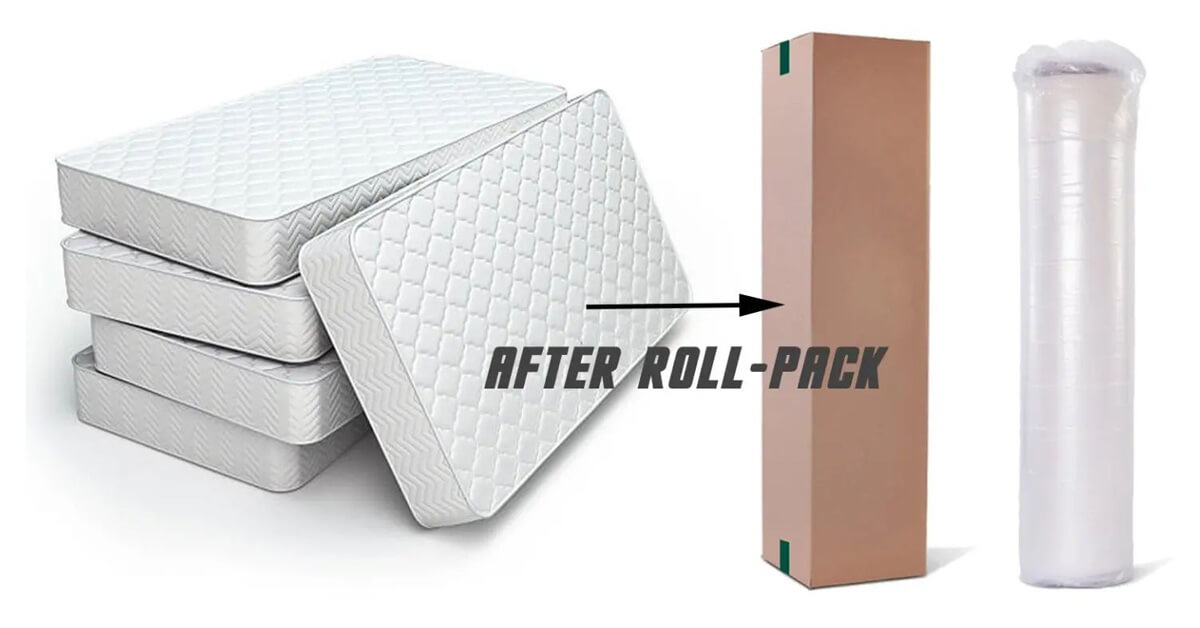
Credit: www.zimlin.com
How To Decompress And Restore Your Mattress
When you’re ready to use your mattress again, proper decompression is important.
- Remove straps and tape – Do this gently to avoid tearing the vacuum bag.
- Unroll and position – Place the mattress on your bed frame or a clean surface.
- Open the vacuum bag – Air will rush in and the mattress should start expanding.
- Wait for full expansion – Most mattresses need 24–72 hours to reach their full size.
Tip: Don’t sleep on the mattress until it’s fully expanded. Early use can cause uneven settling.
Is Diy Mattress Compression Safe?
For memory foam and latex mattresses, DIY compression is generally safe. However, always consider:
- Warranty limitations – Some brands don’t allow home compression
- Mattress age – Older mattresses may have weak foam or seams
- Bag quality – A poor-quality bag can burst or leak
If you’re unsure, contact the mattress manufacturer. Some even sell approved compression kits.
Environmental Impact And Recycling
Compressing and moving a mattress can be more eco-friendly than buying a new one, especially if you’re relocating. However, make sure to recycle your mattress responsibly if you’re disposing of it. Many states have laws about mattress recycling.
Quick fact: Over 50,000 mattresses end up in US landfills every day. Compressing for transport and donation is better for the environment.
For more on recycling programs, see the EPA’s mattress management guide.
Is Professional Compression Worth It?
Some moving companies and mattress stores offer professional compression services. This is often safer for large or expensive mattresses. Professionals have industrial machines that can compress any mattress type without damage.
If you have a king-size, hybrid, or innerspring mattress, this might be the best option. It’s also a good idea if your mattress warranty is important to you.

Credit: www.youtube.com
Mattress Compression For Shipping
If you plan to ship a mattress (for example, after selling it online), compression is essential. Most shipping companies require mattresses to be vacuum-sealed and rolled. Check with your shipper for size and weight limits.
Shipping tip: Weigh your mattress after compressing. Some carriers charge extra for oversized or overweight packages.
Mattress Compression: Myths And Misconceptions
Let’s clear up a few myths:
- Myth 1: Compressing ruins all mattresses.
- Fact: Foam mattresses are designed for this. Innerspring and pillow-top mattresses are not.
- Myth 2: You can compress a mattress with any vacuum.
- Fact: You need a strong vacuum with a hose attachment for best results.
- Myth 3: Mattress won’t expand after compression.
- Fact: If done correctly and not left compressed too long, mattresses bounce back well.
Mattress Compression Kit Vs. Diy Materials
You can buy a mattress compression kit online. These kits usually include:
- Vacuum-seal bag
- Valve adapter
- Ratchet straps
- Instructions
While you can use your own materials, a kit ensures everything fits and is designed for mattress size.
Here’s a side-by-side look:
| Feature | Compression Kit | DIY Materials |
|---|---|---|
| Bag Quality | High, custom size | Varies |
| Valve Fit | Guaranteed | May leak |
| Cost | Higher ($20–$40) | Lower |
| Ease of Use | Easier | More effort |
Advice: For first-timers, a compression kit is often worth the small extra cost.
When Not To Compress A Mattress
There are times when mattress compression is not a good idea:
- The mattress is very old or already sagging
- It’s an innerspring or pillow-top model
- The foam has visible cracks or tears
- The warranty prohibits compression
- You need to store it for more than two months
In these cases, consider professional moving or mattress recycling services.
Mattress Compression For Travel And Camping
Some people compress small foam mattresses or mattress toppers for camping or RV use. The steps are the same, but smaller bags and less powerful vacuums may be needed. Always let the foam expand fully before use.
Travel tip: For camping mats, manual air pumps or hand vacuums can work in a pinch.
Mattress Compression And Health
A properly compressed and expanded mattress should not lose its support or comfort. But if the foam doesn’t return to shape, you might experience poor sleep or back pain. Always check for lumps or uneven areas after decompression.
Non-obvious insight: The “new mattress smell” (off-gassing) can be stronger after decompression. Air out your mattress for a day before putting on sheets.
Common Questions About Mattress Compression
Many people have the same questions when compressing a mattress. Here are the most frequent:
- Will compressing a mattress ruin it? If you follow the steps and don’t leave it compressed too long, foam mattresses recover well.
- Can I compress a mattress more than once? Most mattresses can be compressed 1–2 times. Repeated compression can weaken foam.
- Is it normal for the mattress to look flat after opening? Yes, give it 1–3 days to expand fully.
- What if my mattress doesn’t fit in the bag? Try a larger bag or compress partially before rolling.
- Is a mattress compression bag reusable? High-quality bags can be reused, but check for leaks.
Frequently Asked Questions
What Types Of Mattresses Can Be Safely Compressed At Home?
Memory foam and most latex mattresses can be compressed safely using a vacuum bag and household vacuum. Some hybrid mattresses (with mostly foam layers) are also suitable, but innerspring and pillow-top mattresses should not be compressed at home. Always check your mattress type and manufacturer guidelines before starting.
How Long Does It Take For A Mattress To Fully Expand After Decompression?
Most mattresses take 24 to 72 hours to fully expand and regain their original shape and comfort. Some thin memory foam toppers may expand in a few hours, while thick mattresses may need up to three days. Wait for full expansion before sleeping on the mattress for best support.
Will Compressing A Mattress Void Its Warranty?
It depends on the brand and warranty terms. Some manufacturers allow home compression, while others warn that it may void your warranty. Always read your warranty details or contact customer support before compressing your mattress.
Is It Safe To Compress A Mattress For Long-term Storage?
It’s safest to keep a mattress compressed for no more than two months. Longer storage can permanently deform the foam and reduce comfort. For long-term storage, consider leaving the mattress uncompressed or using professional services.
Where Can I Buy A Mattress Compression Kit?
Mattress compression kits are available online from major retailers like Amazon, Walmart, and specialty bedding stores. These kits usually include a vacuum-seal bag, valve adapter, and straps. Always choose a kit sized for your mattress (twin, queen, king, etc. ) For the best fit.
Compressing your mattress at home is a smart way to save space and money when moving or storing your bed. With the right tools, careful preparation, and a little patience, you can protect your mattress and enjoy a smooth move or storage experience. Remember: not all mattresses should be compressed, so check your mattress type and warranty first. When in doubt, consult the manufacturer or consider professional help. With the right steps, your mattress will be ready to support your dreams—no matter where life takes you.