
Cleaning suspended ceiling tiles may seem simple, but many people underestimate just how important and detailed this task can be. Whether you’re responsible for an office, a classroom, a hospital, or even your own home, keeping these tiles clean not only improves how the space looks, but also supports a healthier environment.
Dust, mold, stains, and even pests can hide above your head, out of daily sight. If ignored, they can affect air quality, trigger allergies, and even shorten the lifespan of your tiles.
In this article, you’ll learn how to clean suspended ceiling tiles the right way—from simple dust removal to tackling stubborn stains and mold. You’ll also find out which cleaning products are safe, which tools work best, and how to avoid common mistakes.
Even if you’ve never cleaned a ceiling tile before, you’ll finish this guide knowing exactly what to do, and why it matters.
What Are Suspended Ceiling Tiles?
Suspended ceiling tiles, also known as drop ceiling tiles, are panels set into a metal grid that hangs below the structural ceiling. They’re common in commercial buildings, schools, hospitals, and basements. People use them to hide ductwork, wires, and pipes, while improving acoustics and making spaces look neat.
These tiles come in different materials:
- Mineral fiber: Most common; absorb sound and are lightweight.
- Vinyl-faced gypsum: Durable and moisture-resistant.
- Fiberglass: Good for insulation and sound reduction.
- Metal: Often used for design or industrial look.
- PVC/plastic: Water-resistant and easy to clean.
Understanding your tile type matters because each material has its own cleaning needs and limits. For example, too much water can damage mineral fiber, but PVC tiles can handle it.
Why Regular Cleaning Matters
Many people overlook their ceilings, but cleaning suspended ceiling tiles is more important than you might think. Here’s why:
- Air quality: Dust, mold, and pollen can collect on tiles and fall into the air you breathe.
- Allergy control: Clean tiles help prevent sneezing, itchy eyes, and other allergy symptoms.
- Appearance: Dirty or stained tiles make a room look neglected and can even impact business reputations.
- Tile lifespan: Regular cleaning prevents damage and reduces the need for early replacements.
- Fire safety: Dust buildup can be a fire risk, especially near lights.
Surprisingly, OSHA and other health agencies recommend regular ceiling cleaning in workplaces, especially in areas like health care, food service, and schools.
Safety First: Preparing For The Job
Cleaning ceiling tiles isn’t just about grabbing a mop and bucket. Safety and preparation are key. Before you start, think about these steps:
- Turn off power to any ceiling lights or electrical fixtures nearby.
- Wear safety gear: Use goggles, gloves, and a mask if you’ll be dealing with dust or mold.
- Cover furniture and floors with plastic sheeting or old sheets to catch dirt and drips.
- Check for asbestos: If your building was built before 1980, some tiles may contain asbestos. If you suspect this, do not clean them yourself—call a licensed professional.
Non-obvious tip: If you’re working in a busy area, schedule cleaning for evenings or weekends to reduce disruption and avoid people walking under your ladder.
Tools And Supplies You’ll Need
Having the right tools and cleaning products makes the job safer, faster, and more effective. Here’s a list:
- Step ladder or scaffold: Choose one tall enough for your ceiling height.
- Vacuum with a brush attachment: Great for removing loose dust without spreading it.
- Soft microfiber cloths: For gentle wiping.
- Sponge: For spot cleaning stains.
- Bucket: For mixing cleaning solution.
- Spray bottle: For controlled application of liquid cleaners.
- Gentle cleaning solution: Mild dish soap, diluted all-purpose cleaner, or a mix of vinegar and water.
- Stain remover: For tough marks; always test first.
- Mold remover: Only for non-porous tiles or severe cases.
- Protective gear: Gloves, safety goggles, and a dust mask.
Hidden insight: Some people use feather dusters, but they often just move dust around. A vacuum with a HEPA filter actually traps particles and is much better for allergy control.
How To Clean Suspended Ceiling Tiles Step By Step
Let’s break down the cleaning process so you can do it efficiently and safely.
1. Dry Dusting
Start with dry cleaning to remove loose dust and cobwebs. This reduces mess and makes later steps easier.
- Use a vacuum cleaner with a soft brush attachment.
- Work gently—don’t press hard or you may damage the tile surface.
- Start in one corner and move across each tile.
- Don’t forget the metal grid, which also collects dust.
If you don’t have a vacuum, a microfiber cloth or electrostatic duster can work, but be careful not to press too hard.
2. Spot Cleaning Stains
After dust is gone, check for stains, water marks, or yellowing. These are common near AC vents, pipes, or lights.
- Mix a few drops of mild dish soap in warm water.
- Dampen (not soak) a sponge or soft cloth.
- Gently blot the stain—don’t scrub, as this can damage the tile.
- For stubborn stains, use a diluted hydrogen peroxide solution (3% or less).
- Always test cleaning products on a hidden area first.
Non-obvious tip: For ink or marker stains, a white eraser can sometimes lift marks without chemicals.
3. Removing Mold And Mildew
Mold loves damp ceilings, especially in basements or bathrooms. If you see black or green spots, act quickly.
- Use a mask and gloves for protection.
- Mix one part vinegar with one part water, or use a commercial mold remover for non-porous tiles.
- Spray lightly and let sit for 10 minutes.
- Wipe gently with a clean cloth.
- Dry the area completely with a towel.
Important: Do NOT soak mineral fiber or porous tiles, as water can make mold worse or damage them.
4. Cleaning The Metal Grid
Don’t ignore the metal frame. Dust and fingerprints build up here too.
- Wipe with a damp microfiber cloth and mild cleaner.
- For rust spots, use a little white vinegar on a cloth.
- Dry with a clean towel to prevent streaks.
5. Deep Cleaning (if Needed)
Sometimes, tiles need more than a surface clean—especially after leaks or in kitchens.
- Carefully lift tiles from the grid (wear gloves).
- Lay them flat on a clean surface.
- Clean both sides with a barely damp sponge.
- Let them dry completely before replacing.
Never soak tiles. Too much moisture can warp or weaken them. If a tile is badly stained, warped, or smells musty, it’s usually best to replace it.
Cleaning Different Types Of Suspended Ceiling Tiles
Each tile material has its own cleaning needs. Here’s a quick comparison:
| Tile Type | Best Cleaning Method | What to Avoid |
|---|---|---|
| Mineral Fiber | Vacuum or dry cloth, damp sponge for stains | Soaking, harsh chemicals |
| Vinyl-faced Gypsum | Wet cloth, mild cleaner | Abrasive pads, bleach |
| Fiberglass | Vacuum with HEPA filter | Water, scrubbing |
| Metal | Damp cloth, non-abrasive cleaner | Acidic cleaners, steel wool |
| PVC/Plastic | Soap and water, soft sponge | Solvents, rough brushes |
How Often Should You Clean Suspended Ceiling Tiles?
Cleaning frequency depends on your location and use:
- Offices and homes: Every 6–12 months.
- Kitchens or food areas: Every 3–6 months, due to grease and smoke.
- Healthcare and schools: Every 3–6 months, or more often if dust is a problem.
- After leaks, renovations, or pest issues: Immediately.
Non-obvious insight: Even in “clean” areas, ceiling tiles collect surprising amounts of dust and allergens. Regular checks can catch problems before they become big issues.
Professional Vs. Diy Cleaning: Which Is Better?
You might wonder if you need a professional, or if you can clean ceiling tiles yourself. Here’s a comparison to help you decide:
| Factor | DIY Cleaning | Professional Cleaning |
|---|---|---|
| Cost | Low (just supplies) | Higher (service fee) |
| Convenience | Can be time-consuming | Quick and efficient |
| Skill Needed | Basic cleaning skills | Trained and experienced |
| Best For | Small spaces, regular upkeep | Large spaces, special stains, mold, asbestos |
Tip: For most homes and small offices, DIY is fine. For hospitals, schools, or old buildings (risk of asbestos), hire a pro.
Stain Removal: Special Cases
Some stains need more than soap and water. Here’s how to handle the most common tough stains:
Water Stains
- Mix one part hydrogen peroxide (3%) with one part water.
- Apply with a spray bottle; don’t soak the tile.
- Let it sit for 15–20 minutes, then blot dry.
- Repeat if needed.
Note: Water stains often mean there’s a leak above—fix this before cleaning or the stain will return.
Nicotine Or Smoke Stains
- Use a mixture of vinegar and water (1: 1 ratio).
- Dampen a cloth and gently wipe the tile.
- For heavy smoke buildup, a specialized smoke remover may be needed.
Grease Stains
Common in kitchens, these are stubborn:
- Mix mild dish soap with warm water.
- Use a soft sponge to dab the stain.
- For heavy grease, try a degreaser, but test on a hidden spot first.
Marker Or Pen Ink
- Use a soft eraser to gently rub the mark.
- For stubborn ink, try a cotton swab dipped in rubbing alcohol—apply carefully to avoid spreading.
Mold And Mildew: When To Replace Tiles
Sometimes, cleaning isn’t enough. If you see:
- Black, green, or fuzzy patches that return after cleaning
- A musty smell that won’t go away
- Tile feels soft, crumbly, or warped
It’s time to replace the tile. Mold can spread quickly and affect indoor air quality. Always fix leaks or moisture issues before installing new tiles.

Credit: www.reddit.com
Preventing Future Stains And Dirt
Prevention is easier than deep cleaning. Here’s how to keep tiles looking good:
- Control humidity: Use dehumidifiers in damp areas to prevent mold.
- Fix leaks fast: Water is the enemy of ceiling tiles.
- Use air filters: High-quality HVAC filters reduce dust and pollen.
- Clean vents and lights: These are common sources of dust and stains.
- Install washable tiles: In kitchens or bathrooms, choose tiles made for wet cleaning.
Pro tip: Some modern ceiling tiles have a stain-resistant coating. If you’re replacing tiles, consider these for easier upkeep.
Common Mistakes To Avoid
Even well-meaning cleaners can make errors that ruin tiles or create bigger problems. Watch out for:
- Over-wetting: Too much water damages most tiles.
- Scrubbing: This can roughen surfaces, making them attract more dirt.
- Using harsh chemicals: Bleach, ammonia, or strong solvents can damage finishes.
- Ignoring leaks: Cleaning stains without fixing leaks is pointless.
- Skipping safety gear: Mold, dust, and cleaning sprays can irritate your eyes and lungs.
- Not testing cleaners: Always try new products on a small, hidden spot first.

Credit: buildingservicesinc.com
Quick Reference: Ceiling Tile Cleaning Do’s And Don’ts
Here’s a summary to keep in mind:
| Do | Don’t |
|---|---|
| Dust regularly | Soak tiles in water |
| Use mild cleaners | Use abrasive pads |
| Wear safety gear | Ignore stains or mold |
| Fix leaks before cleaning | Skip testing new cleaners |
| Replace damaged tiles | Delay cleaning after a leak |
Cleaning Tips For Large Or High Ceilings
Cleaning in a small room is simple, but tall or wide ceilings need more planning:
- Use a stable scaffold for safety—never balance on chairs or tables.
- Work in pairs: One person cleans, the other spots and passes tools.
- Use extension poles for dusting hard-to-reach areas.
- Divide the ceiling into sections and finish one area at a time.
- Take breaks to avoid neck or back strain.
Hidden insight: For very large areas, consider a commercial vacuum with a long hose. It’s safer and faster than ladders.
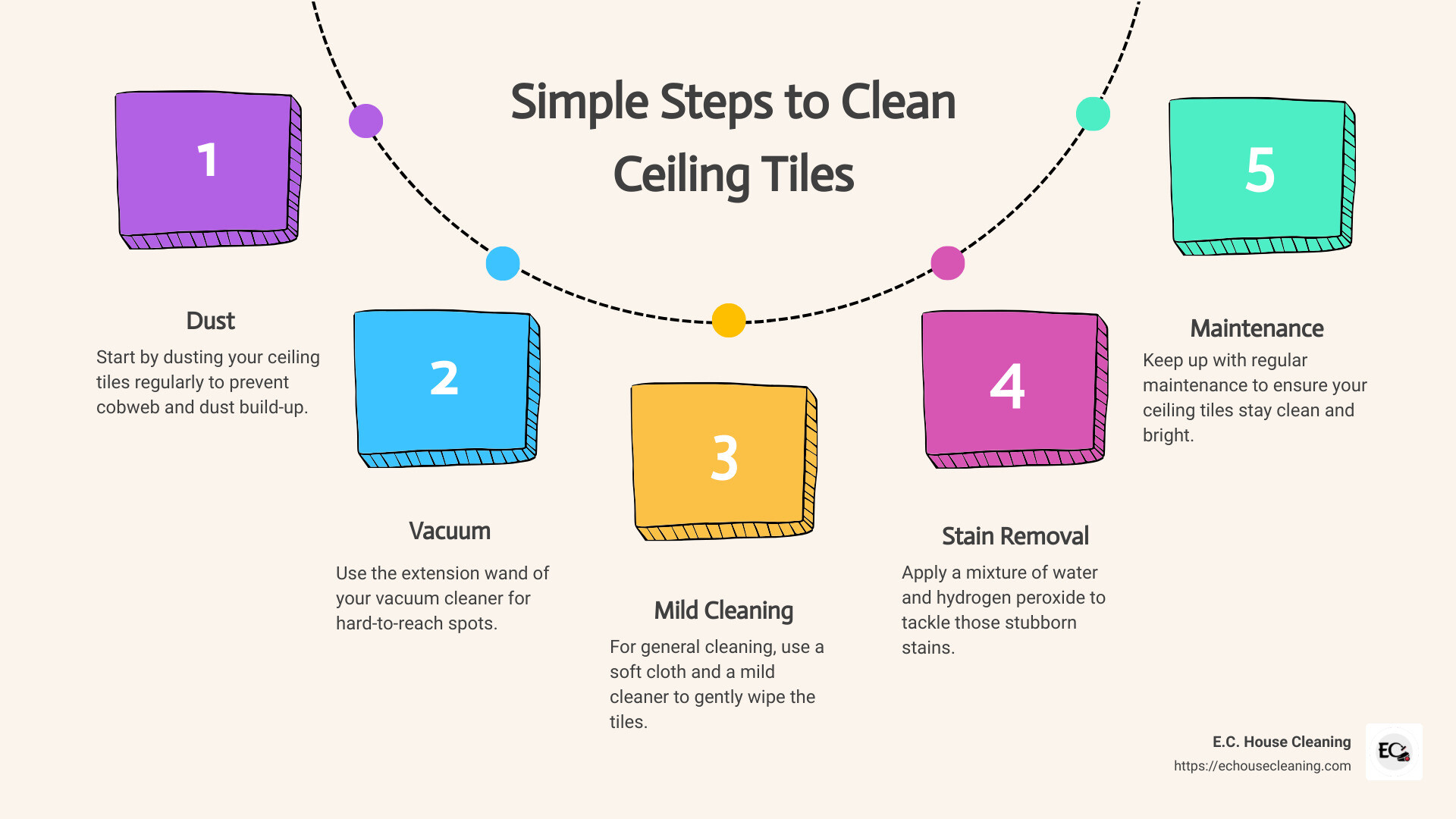
Credit: echousecleaning.com
Environmental Considerations
If you want to clean in an eco-friendly way:
- Use biodegradable cleaners—these are safe for people and the planet.
- Reuse cloths and sponges instead of disposable wipes.
- Avoid aerosols, which can affect indoor air quality.
- Ventilate the space well during and after cleaning.
Did you know? Some new ceiling tiles are made from recycled materials and can be recycled again when replaced. Check with your manufacturer for eco-friendly options.
What If The Tile Is Damaged Or Won’t Come Clean?
Not every tile can be saved. If you have:
- Large holes or broken corners
- Sagging or warped tiles
- Persistent odor after cleaning
- Stains that won’t fade after two or three attempts
It’s time to replace the tile. Always keep a few spare tiles from your original installation, as it can be hard to match color and pattern years later.
If you need to buy new tiles, measure carefully and check the brand and size—most are 2×2 feet or 2×4 feet, but there are exceptions.
External resource: For more details on ceiling tile materials and replacement, visit Wikipedia: Suspended Ceiling.
When To Call A Professional
Some cleaning jobs are best left to experts:
- Asbestos risk: Old tiles (pre-1980) may contain asbestos. Don’t disturb them.
- Severe mold: If more than 10 square feet are affected, or if people are getting sick, call a mold remediation company.
- Large buildings: Schools, hospitals, or factories often have safety rules and need specialized equipment.
Professionals have the right gear and chemicals to clean safely without damaging tiles or risking health.
Cost Of Cleaning Suspended Ceiling Tiles
How much will it cost to clean your ceiling tiles? Here’s a rough guide:
- DIY: Supplies (cleaner, cloths, gloves) usually cost $15–$50 for a medium-sized room.
- Professional: Cleaning service costs range from $0.50 to $2.00 per square foot, depending on location, stains, and building type.
- Replacement: New tiles cost $2–$5 each, plus installation.
Tip: For small stains, DIY is almost always cheaper. For severe problems, professionals may save money in the long run by preventing bigger damage.
Frequently Asked Questions
How Do I Know If My Ceiling Tiles Contain Asbestos?
If your building was built before 1980, there’s a chance your tiles may contain asbestos. The only way to be sure is to have a sample tested by a certified laboratory. Never sand, drill, or scrape old tiles—if you suspect asbestos, contact a licensed professional for testing and removal.
Can I Paint Over Stained Ceiling Tiles Instead Of Cleaning Them?
Painting is possible, but it’s not always the best solution. Paint can seal in stains but may also trap moisture or mold, leading to bigger problems later. Cleaning or replacing stained tiles is usually safer. If you must paint, use a stain-blocking primer and paint made for ceiling tiles.
What’s The Best Way To Clean Ceiling Tiles In Kitchens?
Kitchens often have grease and smoke stains. Use a mild degreaser or a mix of dish soap and warm water. Wipe gently with a soft sponge and rinse with a damp cloth. Avoid harsh chemicals, as they can damage the tile’s finish.
Clean more often—every 3–6 months is best.
How Can I Remove Mold From Suspended Ceiling Tiles?
Wear gloves, a mask, and safety goggles. For non-porous tiles, use a vinegar-water solution (1:1) or a commercial mold remover. Spray, let sit for 10 minutes, then wipe clean. For porous tiles (like mineral fiber), avoid too much moisture. If mold returns or covers a large area, replace the tile and fix any water leaks.
Is It Safe To Clean Ceiling Tiles With Bleach?
Bleach is not recommended for most ceiling tiles. It can discolor or weaken the material, and the fumes can be harmful in enclosed spaces. Use milder solutions like vinegar, hydrogen peroxide, or specialized tile cleaners. Always test in a hidden area first.
Cleaning suspended ceiling tiles takes some effort, but the results are worth it—healthier air, better looks, and a longer life for your ceiling. With the right tools and knowledge, you can keep your ceilings spotless and safe for years to come.