
Does Pam Cooking Spray Contain Butane
Pam Cooking Spray is a staple in many kitchens around the world. It helps food not stick to pans, makes cleanup easier, and is often seen as a healthier alternative to using oil or butter. But over the years, people have started asking more questions about what’s actually inside that yellow can. One question that comes up often is: Does Pam Cooking Spray contain butane? It’s a fair question. Butane is commonly known as a fuel for lighters or small camping stoves, so why would it be in a food product? If you’ve ever turned the can around and read the ingredients, you might have seen names like “butane” or “propellant,” which can be confusing or even alarming.
In this article, we’ll break down everything you need to know about Pam Cooking Spray and butane. We’ll look at the ingredients, explain what butane does, and discuss its safety in food products. We’ll also clear up common myths, compare Pam to other brands, and help you make an informed choice for your kitchen. By the end, you’ll know exactly what you’re spraying on your pans and whether it’s something to worry about.
What Is Pam Cooking Spray?
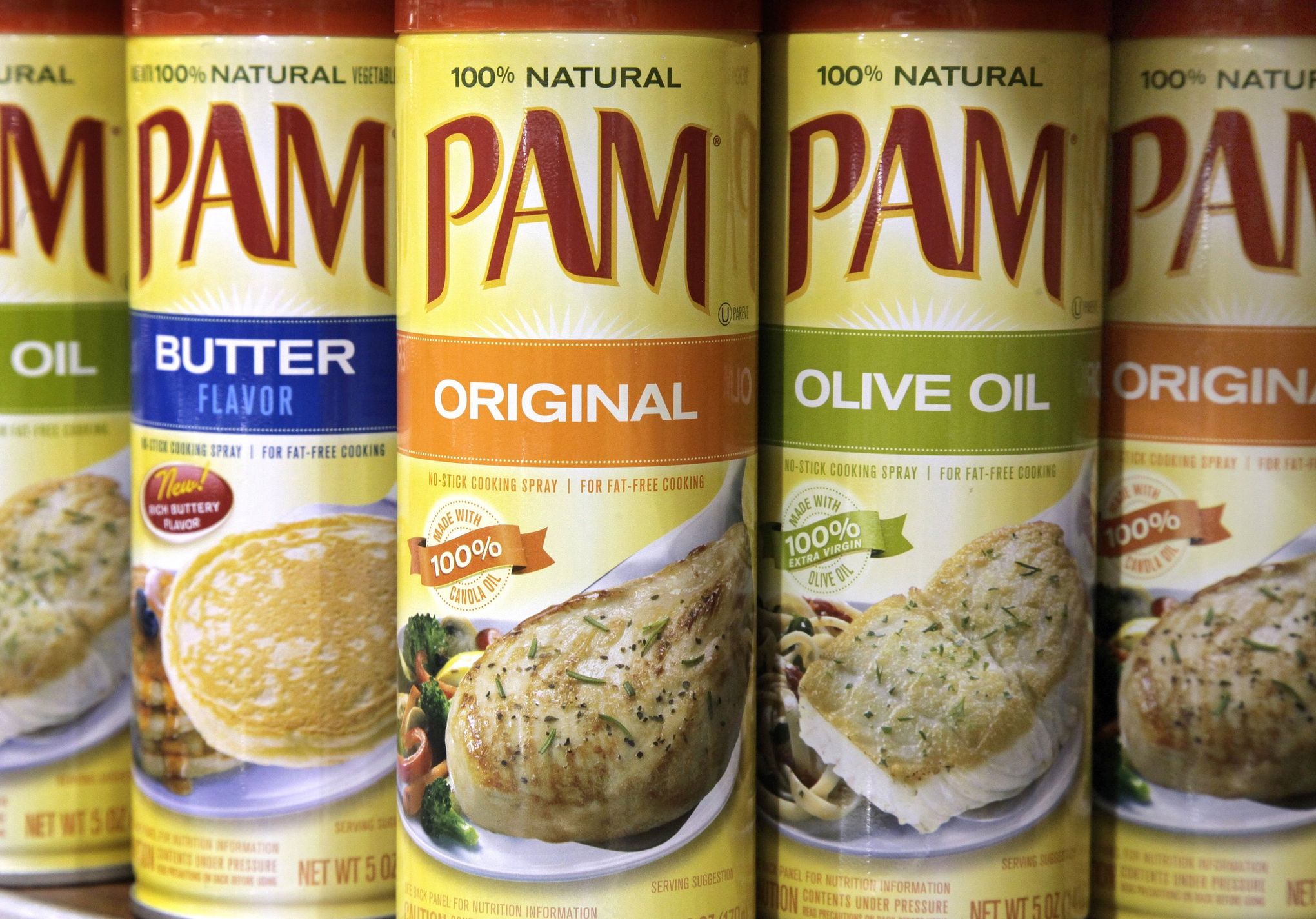
Pam is a well-known brand of nonstick cooking spray. It was first introduced in the 1960s and quickly became popular for its convenience and effectiveness. The main purpose of Pam is to create a thin, even layer of oil on a pan to stop food from sticking.
This is especially useful for baking, frying eggs, and cooking pancakes.
Main Ingredients
Most Pam sprays contain the following basic ingredients:
- Vegetable oil (such as canola, soybean, or palm oil)
- Lecithin (an emulsifier that helps oil coat the pan evenly)
- Propellant (a gas that pushes the spray out of the can)
- Anti-foaming agent (prevents bubbles and splattering)
- Natural or artificial flavoring (in some varieties)
The part that confuses many people is the propellant. This is where butane may come in.
What Is Butane?
Butane is a colorless, odorless gas that is highly flammable. It’s a type of hydrocarbon, which means it’s made from hydrogen and carbon atoms. You might be familiar with butane as the fuel inside cigarette lighters or small portable stoves.
Butane is also used in some industrial processes and as a propellant in aerosol cans. In the food industry, it can act as a propellant to help push liquid out of a pressurized can, like Pam.
Why Use Butane?
Butane is used as a propellant because:
- It’s effective at spraying liquids in a fine mist.
- It’s cheap and widely available.
- It doesn’t react with the product inside the can.
Butane is not unique to Pam; it’s used in many aerosol sprays, including some whipped creams and cooking sprays.

Credit: www.reddit.com
Does Pam Cooking Spray Really Contain Butane?
The short answer is: some varieties of Pam Cooking Spray contain butane as a propellant, while others do not. Let’s look at the details.
Ingredient Labeling
The ingredient list on Pam cans often shows “propellant. ” In the United States, food labeling laws allow some ingredients to be grouped under general terms. If you want to know exactly what’s inside, you have to dig deeper.
Pam’s official website and product safety sheets (SDS) sometimes list the propellant as butane, propane, or isobutane. These are all gases that help spray the oil evenly.
Example
A typical Pam Original Cooking Spray ingredient list:
- Canola oil
- Grain alcohol
- Soy lecithin
- Propellant
- Dimethyl silicone (anti-foaming agent)
On the Safety Data Sheet, the propellant is often specified as butane or a mix of butane and propane.
Is All Pam The Same?
Not all Pam products use butane. Some use only propane or isobutane. Others, like organic or all-natural sprays, may use other gases or even compressed air. The exact ingredients can change based on the type (Original, Butter, Olive Oil, etc.) and the country where it’s sold.
Why Is Butane Used In Cooking Sprays?
Spraying oil in a fine mist is not easy. If you just put oil in a pump bottle, it often comes out in thick drops and doesn’t cover the pan well. Butane solves this problem.
How Butane Works In Sprays
When you press the spray button, the butane in the can turns from a liquid to a gas. This rapid change pushes the oil out in a fine, even mist. As soon as the spray leaves the can, the butane evaporates quickly, leaving only the oil on your pan.
Other Propellants
Pam and similar sprays sometimes use a mix of gases:
- Butane: Used for its good spray properties.
- Propane: Another hydrocarbon, similar to butane.
- Isobutane: A slightly different form of butane, also used in sprays.
These gases are considered Generally Recognized As Safe (GRAS) by the US Food and Drug Administration (FDA) when used as propellants in food products.
Is Butane In Cooking Spray Safe?
Many people worry about spraying butane on their pans. After all, it’s a fuel! But the safety question depends on how it’s used and how much is left in your food.
Food Safety Regulations
The FDA and other health organizations have studied butane and set strict limits on how it can be used in food. The main rules are:
- Butane must be high purity, suitable for food use.
- The amount of butane left in the food after spraying must be very small.
- Butane must not change the taste, smell, or look of the food.
Does Butane Stay On Your Food?
When you spray Pam on a pan, the butane evaporates almost instantly due to its low boiling point. This means:
- Almost none of the butane ends up in your food.
- What little remains evaporates during cooking, especially with heat.
The FDA considers this exposure so small that it’s not a risk for most people.
Scientific Studies
Studies have shown that butane and similar gases evaporate so quickly that they don’t leave behind harmful residues. The European Food Safety Authority (EFSA) and the FDA both agree that using butane as a propellant in food sprays is safe when used as directed.
Common Myths About Butane In Pam
Many myths circulate on the internet about cooking sprays and butane. Let’s clear up some of the most common ones.
- Myth: Butane is dangerous in all forms.
- Fact: Butane is dangerous if inhaled in large amounts or used as a fuel. In small amounts, as a propellant in food sprays, it’s considered safe.
- Myth: Cooking spray leaves butane on food.
- Fact: The butane evaporates before it reaches your food. Most of what ends up on the pan is just oil.
- Myth: All Pam sprays have butane.
- Fact: Some Pam products use other gases or compressed air. Always check the label if you’re unsure.
- Myth: Cooking spray is worse than using oil or butter.
- Fact: Cooking spray is just oil in a different form, plus a small amount of gas to help it spray.
Comparing Pam To Other Cooking Sprays
If you’re worried about butane, you might wonder if other brands use it too. Here’s a simple comparison of common brands and their typical propellants.
| Brand | Main Oil | Propellant | Notes |
|---|---|---|---|
| Pam Original | Canola | Butane/Propane | Most common formula |
| Crisco Spray | Canola | Propane/Isobutane | Similar to Pam |
| Baker’s Joy | Soybean | Propane/Butane | Used for baking |
| Spectrum Organics | Olive | Compressed Air | No butane/propane |
As you can see, most mainstream sprays use some form of butane or propane, but some specialty or organic brands avoid these gases and use compressed air instead.
Are There Butane-free Alternatives?
Yes, if you want to avoid butane or any propellants, you have several options.
Butane-free Sprays
Some brands make sprays that use only compressed air. These work like a pump and do not need any flammable gas.
- Spectrum Organics
- Trader Joe’s Olive Oil Spray (in some regions)
- Homemade oil spray bottles
Manual Oil Misters
You can buy a refillable oil mister. These bottles let you fill with your favorite oil and spray it on pans using air pressure, not gas. They’re reusable and avoid all propellants.
Using Paper Towels
Another simple option: pour a little oil in the pan and spread it with a paper towel. It takes a few seconds longer but works just as well.
The Role Of Propellants In Food Safety
Understanding propellants is key to knowing if Pam is safe. Let’s look deeper into the science and regulations behind them.
What Are Food-grade Propellants?
Food-grade propellants are gases that meet high purity standards and are safe to use with food. The main ones are:
- Butane (E943a)
- Propane (E944)
- Isobutane (E943b)
- Nitrous oxide (used in whipped cream)
- Carbon dioxide
These gases must be at least 99% pure and free from dangerous impurities.
Regulations And Testing
In the United States, the FDA sets rules for propellants in food. Manufacturers must:
- Use only approved gases.
- Test for purity and safety.
- Make sure the propellants evaporate fully during use.
The European Union has similar rules. Both regions agree that these gases are safe in small amounts for food applications.
Exposure Compared To Other Sources
You’re likely exposed to more butane from city air than from cooking spray. The amount from food sprays is tiny by comparison. For most people, this is not a significant health risk.
Health Impact Of Butane In Pam
Many people worry about the health effects of butane. Here’s what science says.
Short-term Exposure
If you use Pam as directed, you’ll get almost no butane in your food. The main risk is if you breathe in a large amount of spray directly. This can irritate your nose or throat, but this is rare in normal kitchen use.
Long-term Exposure
There’s no evidence that regular use of Pam (even with butane) causes cancer or major health problems. Butane is not considered a carcinogen or toxin at the levels found in food sprays.
Special Populations
People with asthma or sensitive lungs might want to avoid all aerosol sprays, including Pam, just to be safe. Using a manual oil mister is a good alternative.
Environmental Impact Of Butane Propellants
Another question is whether butane is bad for the environment. Let’s look at the facts.
Does Butane Harm The Ozone Layer?
Butane, propane, and isobutane are not CFCs. They do not destroy the ozone layer like old aerosol propellants did. This change was made in the 1970s and 1980s.
Greenhouse Gas Concerns
Butane is a greenhouse gas, but the amount released from food sprays is very small. Cooking spray use is not a major source of greenhouse gases compared to cars or factories.
Eco-friendly Options
If you want to be greener, choose a spray with compressed air or use a refillable mister. These have a lower environmental footprint.
Reading Pam Cooking Spray Labels
It’s not always easy to know if your Pam has butane. Here’s how to read the label like a pro.
- Look for “propellant”: If you see this, it’s likely butane, propane, or isobutane.
- Check for specifics: Some cans specify “propane” or “butane.”
- Read the fine print: The back of the can or the manufacturer’s website may have details.
- Search the Safety Data Sheet (SDS): Most big brands have these online. They often list the exact gases used.
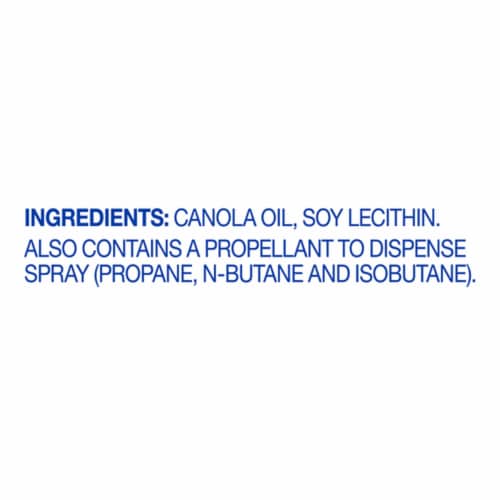
Example Ingredient List
Pam Original Cooking Spray:
- Canola oil
- Grain alcohol
- Soy lecithin
- Propellant (butane, propane)
- Dimethyl silicone
Pam Organic Olive Oil Spray:
- Olive oil
- Propellant (compressed air)
Credit: www.foodsco.net
Practical Tips For Safe Use
Using Pam or any cooking spray is generally safe. Here are some practical tips:
- Spray in a well-ventilated area
- Keep the can away from direct heat or open flames
- Do not spray near your face
- Use only as directed on the label
Never use Pam on a hot pan directly over a flame, as the propellant is flammable before it evaporates.
Pam Cooking Spray Vs Traditional Oils
Should you use Pam or just regular oil? Here’s a comparison.
| Feature | Pam Cooking Spray | Traditional Oil |
|---|---|---|
| Calorie Control | Lower per spray | Higher (easier to use too much) |
| Convenience | Very convenient | Requires pouring and spreading |
| Even Coating | Excellent | Varies (can pool) |
| Propellants | Yes (butane/propane or air) | No |
| Flavor Options | Many varieties | Depends on oil type |
If you want absolute control over ingredients, traditional oil or a manual mister is best. If convenience is your top concern, Pam is hard to beat.
What Happens If You Inhale Butane By Accident?
Inhaling large amounts of butane is dangerous. This is a risk with intentional inhalation (like “huffing” aerosols), not normal kitchen use.
- Small amounts from cooking sprays are not a health risk if used properly.
- If you feel dizzy or lightheaded after spraying, get fresh air and avoid breathing in the mist directly.
Pam cans warn against inhaling the spray for this reason.
Regulatory Positions On Butane In Food
Major health organizations have reviewed the safety of butane in food products.
- FDA (US): Lists butane as “Generally Recognized As Safe” for use as a propellant in food.
- EFSA (Europe): Approves butane, propane, and isobutane for food use.
- Health Canada: Allows butane as a propellant in food sprays.
These groups base their rules on scientific studies showing that butane evaporates and does not leave dangerous residues.
For more on this topic, see the Wikipedia page on Butane.
Should You Be Worried About Butane In Pam?
For most people, butane in Pam Cooking Spray is not a reason for worry. The amount you are exposed to is extremely small, and it almost all evaporates before it can get into your food.
If you have special health concerns, want to avoid all chemicals, or just prefer simpler ingredients, choose a butane-free spray or use a manual oil mister. Otherwise, Pam and similar sprays are safe and convenient for most households.
Frequently Asked Questions
Does Pam Cooking Spray Contain Butane In All Versions?
Not all Pam sprays contain butane. The original and some flavored varieties use butane or a mix of butane and propane as a propellant. Some natural or organic Pam sprays use compressed air instead. Always check the label for details.
Is Butane In Cooking Spray Safe To Eat?
You do not actually eat butane when using Pam as directed. The butane acts as a propellant and evaporates almost instantly, leaving only oil on your pan. Health authorities consider this use safe for food.
Can I Buy Cooking Spray Without Butane?
Yes. Several brands offer sprays that use compressed air instead of butane or propane. You can also use a manual oil mister, which sprays oil without any propellants at all.
What’s The Difference Between Butane, Propane, And Isobutane In Sprays?
All three are gases used as propellants in aerosol sprays. They are very similar in terms of safety and performance. The choice often depends on cost, spray performance, and the manufacturer’s preference.
Are There Health Risks If I Accidentally Inhale Pam Cooking Spray?
Small accidental inhalation during normal use is not dangerous for most people. However, intentionally breathing in large amounts of aerosol spray can be harmful. Always use Pam in a well-ventilated area and avoid spraying near your face.
Pam Cooking Spray has been a trusted kitchen helper for decades. While butane in the can may sound strange, it’s a common and approved ingredient for making oil spray evenly. For most people, there’s no need to worry about butane in Pam—unless you have special sensitivities, in which case, there are plenty of butane-free options.
Cooking should be about flavor, not fear. Now you know what’s in your spray, so you can make the choice that feels right for you.
Credit: www.seattletimes.com