
Getting rid of baked-on grease can feel impossible. You scrub, scrape, and soak, but the sticky, brown layer just won’t budge. This stubborn mess builds up on oven trays, pans, stove tops, and even inside your oven. It not only looks dirty but can make your food taste off and even cause smoke while cooking. If you’ve ever felt frustrated trying to clean these greasy stains, you’re not alone. But the good news is, with the right methods and a little know-how, you can restore your cookware and kitchen surfaces to a shine.
In this guide, you’ll find simple, practical ways to clean baked-on grease from different kitchen items. We’ll cover why grease gets so tough, what tools you need, and step-by-step instructions for everything from pans to oven racks. You’ll also learn handy tips, common mistakes to avoid, and even some solutions you might not have heard before.
If you want a kitchen that looks and feels truly clean, this article is your complete roadmap.
Why Does Baked-on Grease Happen?
Baked-on grease forms over time as oil, fat, and food particles get exposed to high heat. When you bake, roast, or fry, some grease splatters or drips. Instead of wiping it up right away, it cools down, hardens, and sticks. Each time you use the item again, the grease layer gets thicker and more difficult to remove.
This process is called polymerization. Under heat, the oil changes its structure and bonds tightly to metal or glass. That’s why regular soap and water often don’t work. The longer you leave it, the harder it gets.
Essential Tools And Products For Cleaning
Before you start scrubbing, gather the right tools. Cleaning baked-on grease is much easier with the right supplies. Here are the must-haves:
- Baking soda – A gentle abrasive that helps lift stains.
- White vinegar – Loosens grease and reacts with baking soda to fizz away grime.
- Dish soap – Cuts through oil and fat.
- Plastic scraper or old credit card – For scraping without scratching.
- Steel wool or scrubbing pads – For heavy-duty surfaces (use carefully).
- Non-scratch sponges – Safe for most cookware.
- Oven cleaner – For extreme cases (read instructions and ventilate).
- Rubber gloves – Protect your hands from harsh chemicals.
- Microfiber cloths – For wiping clean and drying.
- Spray bottle – Useful for applying vinegar or cleaner.
Different surfaces need different care. For example, you should never use steel wool on nonstick pans or glass. Always check the manufacturer’s instructions first.

Credit: www.youtube.com
Cleaning Baked-on Grease From Pans And Pots
Pans and pots are some of the most common places for baked-on grease. Here’s how to tackle them:
Step-by-step For Stainless Steel And Aluminum
- Fill the pan with hot water and a few drops of dish soap. Let it soak for 20–30 minutes.
- Pour out most of the water, leaving a little at the bottom. Sprinkle a thick layer of baking soda over the greasy area.
- Use a non-scratch sponge or pad to scrub the area in small circles.
- If the grease is still stubborn, add a small amount of white vinegar to the baking soda. It will fizz—let it sit for 10 minutes.
- Scrub again and rinse with hot water.
- For any remaining spots, use a plastic scraper gently.
Pro Tip: For extra-tough stains, bring a mixture of water and vinegar to a boil in the pan before scrubbing.
Cleaning Nonstick Pans
Nonstick coatings are sensitive. Avoid abrasives and harsh chemicals.
- Fill the pan with hot, soapy water and let it soak for 30 minutes.
- Use a soft sponge to scrub. Never use steel wool or metal tools.
- For stubborn grease, make a paste of baking soda and water. Apply to the spot and let sit for 15 minutes, then gently scrub and rinse.
Insight: Many nonstick pans get ruined by using the wrong cleaning tools. Always use soft materials to protect the coating.
Cast Iron Pans
Cast iron needs special care, but you can still remove baked-on grease.
- While the pan is still warm (not hot), sprinkle coarse salt over the greasy area.
- Scrub with a paper towel or soft brush.
- For tougher spots, pour in a little warm water and use a plastic scraper.
- Dry completely and re-season with a bit of oil to prevent rust.
Tip: Never soak cast iron or put it in the dishwasher. It can rust and lose its seasoning.
How To Clean Baked-on Grease From Oven Trays And Baking Sheets
Oven trays and baking sheets can get very dirty, especially if you roast meats or bake cookies often. Here’s what to do:
Deep-cleaning Instructions
- Sprinkle a generous layer of baking soda over the tray.
- Spray or pour white vinegar until it starts to fizz.
- Let the mixture sit for at least 30 minutes (overnight for heavy grease).
- Use a scrubbing pad or sponge to work the grime loose.
- Rinse with hot water and repeat if needed.
For Enamel Or Nonstick Trays
- Soak in hot, soapy water for an hour.
- Use only non-scratch sponges.
- Avoid harsh chemicals and metal scrapers.
For Heavy Buildup
If the grease is really baked on, try this method:
- Make a thick paste of baking soda and water.
- Spread it over the greasy areas and cover with plastic wrap.
- Leave overnight. The next day, remove the wrap and scrub.
- Rinse well.
Non-Obvious Insight: Sometimes, greasy buildup has formed a “shell” that resists cleaning. By letting cleaning agents sit overnight, you soften this layer and make it much easier to remove.
Cleaning Baked-on Grease From Oven Interiors
Ovens are grease magnets. Over time, splatters and drips form a hard, brown-black layer inside the oven. Here’s how to handle it safely and effectively.
Self-cleaning Ovens
Many modern ovens have a self-cleaning function. This heats the oven to a very high temperature, turning grease into ash. Follow your oven’s manual closely, and always ventilate the kitchen.
Manual Cleaning
If you don’t have a self-cleaning oven (or if the stains are too tough), try this:
- Remove oven racks and soak them separately.
- Mix half a cup of baking soda with water to make a spreadable paste.
- Spread the paste over all greasy areas inside the oven (avoid heating elements).
- Let it sit for 8–12 hours (overnight is best).
- Wipe off with a damp cloth. Stubborn spots can be scraped gently with a plastic scraper.
- Spray with white vinegar to remove any baking soda residue.
- Wipe clean and dry.
Using Commercial Oven Cleaner
If homemade solutions don’t work, use a commercial oven cleaner. Always read the instructions and wear gloves. Open windows for good airflow. Do not use oven cleaner on aluminum or painted surfaces.
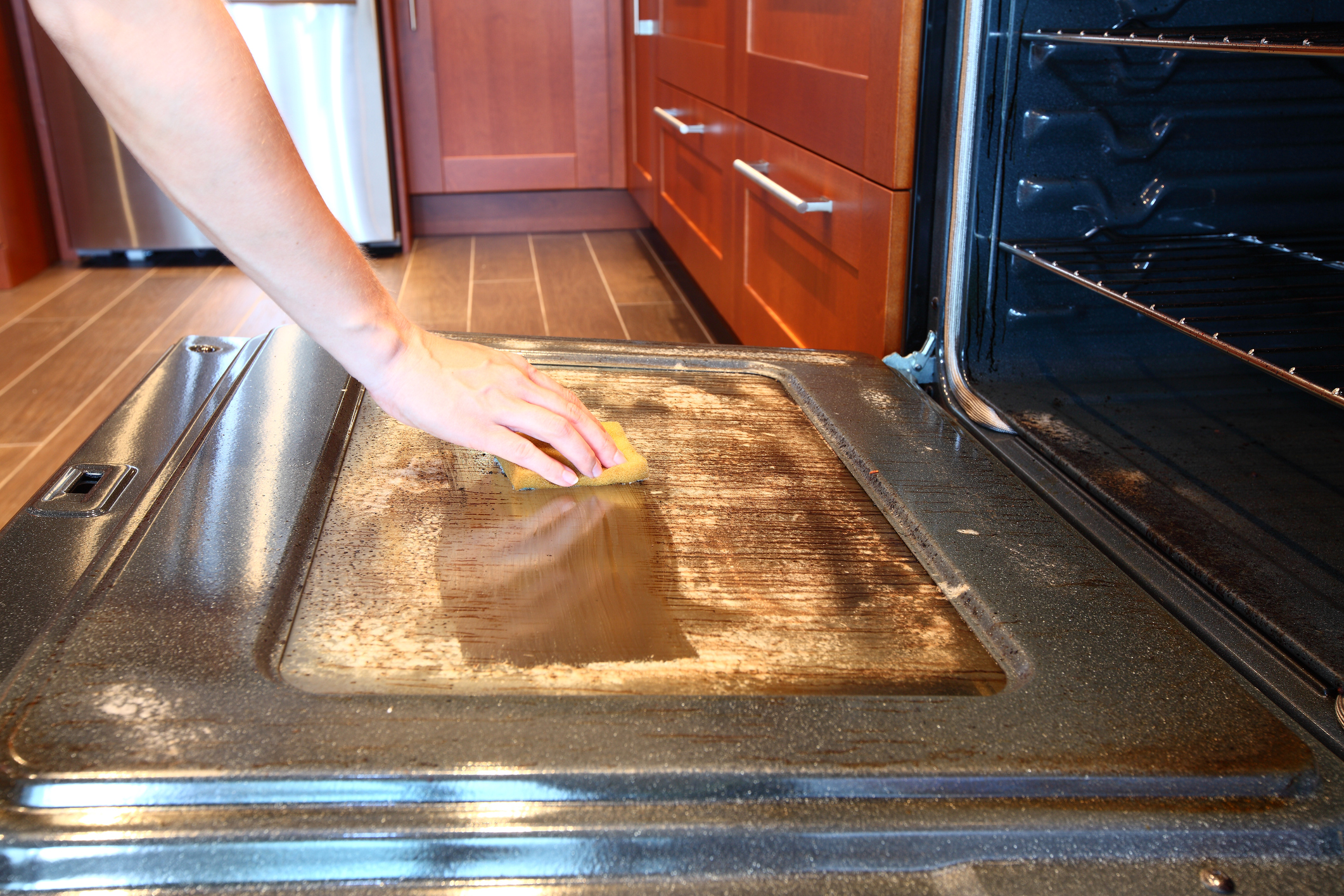
Oven Door Glass
Oven doors often get a sticky film of baked-on grease.
- Make a paste of baking soda and water.
- Spread it on the glass and let sit for 30–60 minutes.
- Wipe clean with a damp cloth.
Little-Known Tip: For double-pane glass doors, baked-on grease can get between the panes. If your oven allows, carefully remove the door and separate the glass to clean inside.
Cleaning Stove Tops And Burners
Stove tops and burners can collect grease quickly, especially gas stoves.
Gas Stoves
- Remove grates and burner covers.
- Soak grates in hot, soapy water for an hour.
- Scrub with a non-scratch pad. For stubborn grease, use a paste of baking soda and water.
- For burners, wipe with a damp sponge. Avoid getting water in the gas ports.
- Dry all parts before reassembling.
Electric Stove Tops
- Remove and unplug burners.
- Wipe the surface with a damp cloth and dish soap.
- For baked-on grease, use a baking soda paste and let sit for 15 minutes before scrubbing.
Glass Or Ceramic Cooktops
- Use a special cooktop cleaner or a baking soda paste.
- Avoid anything abrasive—use only soft sponges or microfiber cloths.
- Wipe and polish for a streak-free finish.
Data Table: Stove Top Cleaning Methods
| Surface Type | Recommended Cleaner | Scrubbing Tool | Key Precaution |
|---|---|---|---|
| Gas Grates | Baking soda, dish soap | Non-scratch pad | Avoid steel wool on enamel |
| Electric Coils | Dish soap, baking soda | Soft cloth | Never soak coils |
| Glass/Ceramic | Cooktop cleaner | Soft sponge | No abrasives |
Uncommon Insight: If you clean stove tops regularly, baked-on grease becomes much less of a problem. A quick wipe after each use prevents buildup.
Credit: www.ovenclean.com
How To Clean Baked-on Grease From Kitchen Appliances
Many kitchen appliances, like toaster ovens, air fryers, and microwaves, can get greasy fast. Here’s how to clean them safely.
Toaster Ovens And Air Fryers
- Unplug and remove trays or baskets.
- Soak trays in hot, soapy water.
- Use a baking soda paste for baked-on grease. Let sit, then scrub.
- Wipe the inside of the appliance with a damp cloth—never immerse in water.
- Dry fully before reassembling.
Microwaves
- Place a bowl of water with a few tablespoons of vinegar inside. Microwave for 3–5 minutes.
- Steam will loosen grease. Wipe inside with a cloth.
- For stubborn spots, use a baking soda paste and a soft sponge.
Practical Example: For air fryers, always check if the basket is dishwasher safe. If not, hand wash with care to protect the coating.
Effective Homemade Solutions For Baked-on Grease
You don’t always need harsh chemicals. Many people prefer homemade cleaners for safety and cost.
Baking Soda And Vinegar
This classic combo works for most surfaces. Baking soda scrubs, while vinegar dissolves grease.
Lemon And Salt
- Cut a lemon in half and dip in salt.
- Use as a “scrubber” on greasy spots.
- The acid in lemon cuts grease and leaves a fresh scent.
Hydrogen Peroxide And Baking Soda
- Mix 1/4 cup baking soda with enough hydrogen peroxide to make a paste.
- Apply to the stain, let sit 30 minutes, then scrub and rinse.
Insight: Hydrogen peroxide is especially good on white enamel or tile, but test on a small area first.
Using Commercial Cleaners Safely
Sometimes, homemade solutions aren’t enough. Commercial degreasers or oven cleaners can help, but they require caution.
- Always wear rubber gloves.
- Ventilate the area—open windows and use fans.
- Rinse surfaces well after cleaning.
- Never mix cleaners (like bleach and ammonia).
Example Products: Easy-Off oven cleaner, Bar Keepers Friend, Simple Green. Follow all label instructions.
Non-Obvious Warning: Commercial cleaners can damage certain finishes (like aluminum or painted surfaces). Test on a small area first.
Mistakes To Avoid When Cleaning Baked-on Grease
People often make simple mistakes that make cleaning harder or even damage cookware.
- Using steel wool everywhere: Steel wool can scratch nonstick, glass, or enameled surfaces.
- Skipping the soak: Not soaking means you have to scrub much harder.
- Mixing chemicals: Some combinations (like bleach and ammonia) make dangerous fumes.
- Using oven cleaner on non-oven items: These cleaners are too harsh for many surfaces.
- Letting water sit on cast iron: This causes rust and ruins seasoning.
- Ignoring manufacturer’s instructions: Some pans or appliances need special care.
Data Table: Common Mistakes vs. Best Practices
| Mistake | Consequence | Better Choice |
|---|---|---|
| Using steel wool on nonstick | Scratches, ruins coating | Use soft sponge |
| Not soaking pans | Harder scrubbing, more effort | Soak in hot, soapy water |
| Mixing harsh chemicals | Toxic fumes, health risk | Use one cleaner at a time |
| Leaving water on cast iron | Rust, loss of seasoning | Dry and oil after washing |
How Often Should You Clean To Prevent Baked-on Grease?
Prevention is better than cure. Regular cleaning stops grease from turning into a hard, baked-on mess.
- After each use: Wipe down pans, oven trays, stove tops, and counters.
- Weekly: Deep clean oven racks, stove grates, and baking sheets.
- Monthly: Clean oven interiors and appliance trays.
Example: If you roast meats often, clean your oven tray right after it cools. Don’t let grease sit overnight.
Troubleshooting: When Grease Just Won’t Come Off
Sometimes, even the best methods don’t work right away. Here’s what to do:
- Repeat the soak: Soak the item again, longer, and try a stronger cleaner.
- Heat helps: Warm water and even gently heating the pan can loosen grease.
- Try a different method: If baking soda isn’t enough, try a commercial degreaser or hydrogen peroxide paste.
- Be patient: Some stains take several rounds of treatment.
Little-Known Fix: For really tough oven stains, place a hot, wet towel on the greasy area for 10–15 minutes. The steam helps loosen the mess before you scrub.

Credit: www.reddit.com
Eco-friendly Cleaning Options
If you want to avoid chemicals, focus on eco-friendly methods.
- Use biodegradable dish soap and natural scrubbing pads (like coconut fiber).
- Choose vinegar and baking soda as your go-to cleaners.
- Lemon juice and salt are also compostable and safe.
Pro Insight: You can even make your own citrus vinegar cleaner by soaking lemon peels in vinegar for a week, then using the liquid in a spray bottle.
How To Keep Your Kitchen Grease-free
It’s much easier to prevent baked-on grease than to remove it. Here’s how:
- Line trays and pans with parchment paper or foil when roasting.
- Clean as you go: Wipe splatters right away, before they cool.
- Cover food that’s likely to splatter in the oven or microwave.
- Use splatter guards on pans when frying.
- Keep cleaning supplies handy so you don’t put off the job.
Unexpected Tip: Sometimes, changing your cooking oils can help. Oils with high smoke points (like avocado or peanut) are less likely to burn and leave sticky residue.
Comparing Cleaning Methods
Different cleaning methods have pros and cons. See how they stack up:
| Method | Effectiveness | Safety | Best For |
|---|---|---|---|
| Baking soda & vinegar | High | Very safe | Most surfaces |
| Commercial oven cleaner | Very high | Use with caution | Ovens, heavy grease |
| Steel wool | High (but risky) | Can scratch | Stainless steel only |
| Lemon & salt | Medium | Very safe | Light grease, small spots |
| Hydrogen peroxide paste | High | Test first | White enamel, tiles |
Guidance: Try the safest methods first, and only use strong chemicals as a last resort.
When To Replace Instead Of Clean
Sometimes, cookware or trays are beyond saving. If you see deep rust, peeling nonstick coating, or cracks, it’s safer to replace the item. Old, damaged pans can leach metals or chemicals into food.
Example: If your baking tray is warped, pitted, and still greasy after many cleanings, it’s time for a new one.
More Resources For Cleaning Baked-on Grease
If you want to go deeper, check out the cleaning and home care guides at the Good Housekeeping Institute. They test many cleaning products and offer science-backed advice.
Frequently Asked Questions
What Is The Easiest Way To Clean Baked-on Grease?
The easiest way is to soak the item in hot, soapy water, then use a baking soda paste and a non-scratch sponge. Letting the cleaner sit for at least 30 minutes makes scrubbing much easier.
Can I Use Oven Cleaner On All Kitchen Surfaces?
No. Oven cleaner is very strong and can damage nonstick, aluminum, and painted surfaces. Only use it inside ovens and always check the label for warnings.
Is It Safe To Use Baking Soda And Vinegar Together?
Yes. Baking soda and vinegar are safe to use together and work well for most grease. The fizzing helps lift dirt, but always rinse well after cleaning.
How Can I Prevent Baked-on Grease In The Future?
Wipe surfaces and cookware immediately after use. Line trays with parchment or foil, cover food that can splatter, and clean your oven regularly to stop grease from building up.
What If Grease Still Won’t Come Off After Cleaning?
Try soaking the item again, use a different cleaning method (like hydrogen peroxide paste or a commercial degreaser), and be patient. Some stains take several treatments to remove completely.
A clean kitchen is not only healthier but makes cooking more enjoyable. With the right methods, some patience, and a few clever tips, you can beat baked-on grease for good.