
Covering uneven floors is a common challenge for homeowners and renters alike. Whether you live in an old house with sloping wood planks, a basement with concrete cracks, or a modern apartment with lumpy tiles, uneven floors can affect comfort, safety, and even the look of your space.
You might trip over a bump, watch furniture wobble, or struggle with noisy, shifting floorboards. The good news is, you don’t have to live with these problems. There are practical solutions for every budget and skill level. With the right approach, you can transform a bumpy, unattractive floor into a smooth, stylish surface.
In this guide, you’ll learn how to cover uneven floors step by step. You’ll discover which materials work best, how to prepare your floor, and the common mistakes to avoid. We’ll explore the best floor coverings for different types of uneven surfaces, from high-traffic areas to damp basements.
By the end, you’ll know exactly what to do—and what not to do—to create a floor you’ll love.
Understanding Uneven Floors
Before choosing a solution, it’s important to understand what makes a floor uneven. Not all unevenness is the same, and different problems require different fixes.
Types of uneven floors include:
- Sloping floors: The entire floor tilts to one side. Common in older homes due to foundation settling.
- Wavy or bumpy floors: High spots and low spots, often caused by poor installation or subfloor damage.
- Cracked or chipped surfaces: Often seen in basements or garages with concrete floors.
- Loose or squeaky boards: Wooden floors that have gaps, movement, or creaking sounds.
- Sagging spots: Areas that feel soft or dip when you walk on them, usually from water damage or structural issues.
What causes uneven floors?
- Settling foundations
- Moisture problems
- Poor installation
- Wear and tear over time
- Earth movement (especially in earthquake zones)
Why does it matter? Uneven floors can cause:
- Tripping hazards
- Furniture instability
- Problems with new floor installations
- Water pooling and damage
Some uneven floors are just cosmetic. Others signal bigger problems, like structural weakness or water leaks. If you notice rapid changes, large cracks, or your doors stop closing properly, consult a professional before covering the floor.
Assessing Your Floor
Before you start, you need to know exactly what you’re working with. Take time to check your floor’s condition and decide how much prep work is needed.
How To Check Floor Unevenness
- Visual inspection: Look for visible dips, bumps, cracks, or stains.
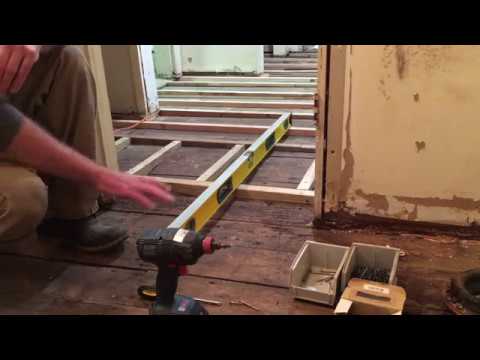
- Use a level: Place a long spirit level or straightedge on the floor. See if it rocks or if there are gaps beneath it.
- Marble test: Roll a marble or small ball across the floor. Watch where it stops or changes direction—these are your high and low spots.
- Check for movement: Walk slowly and feel for spots that bounce, squeak, or flex.
Tip: Mark uneven areas with chalk or tape for easy reference.
Document The Problem
- Take photos of problem areas.
- Note the size and location of dips, bumps, or cracks.
- Measure the depth or height difference (a 1/8 inch gap can be enough to cause trouble for some floor coverings).
Knowing your floor’s true condition helps you choose the right solution and avoid surprises during installation.
Credit: www.hardrockconcretecoatings.com
Preparing The Floor For Covering
Good preparation is the secret to a lasting, attractive floor. Skip this step and your new covering may fail, bubble, or wear out too soon.
Essential Preparation Steps
- Clean thoroughly: Remove dirt, dust, grease, and old adhesives. Use a vacuum and a damp mop.
- Remove loose material: Pull up loose tiles, carpet, or boards. Scrape away debris.
- Dry the surface: Make sure the floor is completely dry, especially in basements or bathrooms.
- Repair as needed: Patch small holes, cracks, or gaps. Use a floor patch compound for concrete, or wood filler for planks.
When To Level The Floor
In some cases, you must level the floor before adding a new covering. If the unevenness is more than 1/4 inch over 6 feet, most experts recommend using a self-leveling compound or a plywood underlayment.
Basic Leveling Options
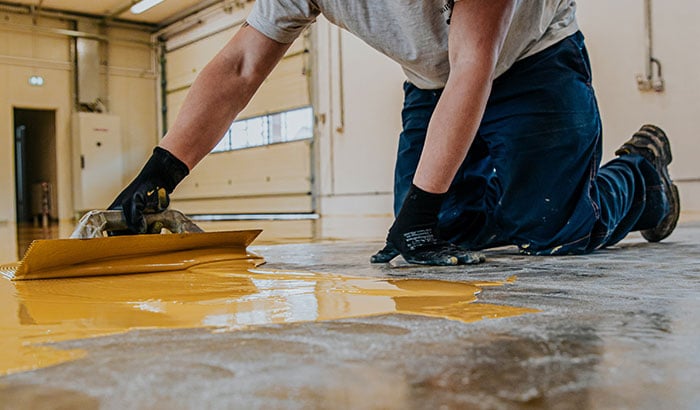
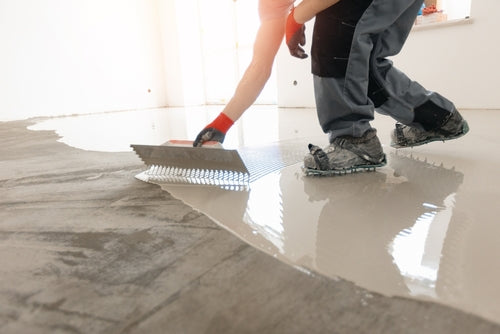
- Self-leveling compound: A liquid that fills low spots and hardens flat. Works well for minor dips.
- Plywood underlayment: Sheets of plywood installed over the old surface. Good for severe unevenness or old wood floors.
- Floor patch: Thick paste for small holes or cracks.
Leveling adds cost and work, but it helps your new floor last longer and look better.
Best Floor Coverings For Uneven Floors
Choosing the right floor covering depends on how uneven your floor is, your budget, and your style. Some materials are flexible and hide flaws. Others require a flat, stable base. Here’s a look at the most popular options.
1. Carpet And Carpet Tiles
Carpet is one of the most forgiving floor coverings for uneven surfaces. Its soft backing and thick pile can hide minor bumps and dips.
Advantages:
- Cushions minor unevenness.
- Warm and soft underfoot.
- Many colors and patterns.
Carpet tiles are even better for DIY projects. You can install them piece by piece and replace single tiles if needed.
Limitations:
- Not ideal for damp areas (basements).
- Major unevenness may still show over time.
Tip: Use a thick carpet pad for extra comfort and to help even out small flaws.
2. Luxury Vinyl Plank (lvp) And Tile (lvt)
Luxury vinyl plank and luxury vinyl tile are flexible, durable, and water-resistant. They can handle small imperfections in the floor.
Advantages:
- Hides minor bumps and dips (up to 1/8 inch).
- Easy to clean and maintain.
- Many designs that mimic wood or stone.
Installation tip: Floating LVP/LVT (click-lock) works best on slightly uneven floors. For very rough surfaces, glue-down vinyl may not stick well.
3. Laminate Flooring
Laminate is a popular choice for covering uneven floors, but it needs a relatively flat base.
Advantages:
- Affordable and stylish.
- Click-lock installation is DIY-friendly.
Limitations:
- Can’t handle large dips or bumps.
- Needs an underlayment for best results.
Tip: Use a high-quality foam underlayment to absorb minor unevenness. For bigger problems, add a plywood layer first.
4. Engineered Wood Flooring
Engineered wood is more stable than solid hardwood and can work over slightly uneven subfloors.
Advantages:
- Looks like real wood.
- Handles small imperfections.
Limitations:
- Not suited for very uneven floors without extra leveling.
- More expensive than laminate or vinyl.
Tip: Floating installation (not glued or nailed) is best for uneven floors.
5. Sheet Vinyl
Sheet vinyl is flexible and waterproof, making it a good option for kitchens, bathrooms, and basements.
Advantages:
- Covers small bumps and cracks.
- Seamless look.
- Easy to clean.
Limitations:
- Large imperfections can cause visible bubbles or wear spots.
- Not as durable as LVP.
Tip: Use a high-quality underlayment for best results.
6. Floating Floors
A floating floor is not attached to the subfloor. It “floats” above it, which helps cover minor unevenness.
Types include:
- Laminate
- Engineered wood
- Luxury vinyl plank
Advantages:
- Simple installation.
- Hides slight flaws.
Limitations:
- Severe unevenness still requires leveling.
7. Interlocking Rubber Tiles
Rubber tiles are ideal for home gyms, playrooms, or workshops.
Advantages:
- Extremely flexible.
- Cushions bumps and gaps.
- Easy to install and replace.
Limitations:
- Not for living areas (industrial look).
- Can trap moisture if not installed correctly.
Tip: Choose tiles with a textured bottom for better grip on uneven floors.
8. Cork Flooring
Cork is naturally soft and flexible, making it good for slightly uneven floors.
Advantages:
- Eco-friendly.
- Comfortable to walk on.
- Reduces noise.
Limitations:
- Sensitive to moisture.
- Needs sealing in kitchens or bathrooms.
Installation tip: Floating cork planks are easier to install over uneven areas.
9. Rigid Core Flooring
Rigid core flooring (SPC or WPC vinyl) has a hard, stable core. It’s designed to handle subfloor issues better than standard vinyl.
Advantages:
- Works over most minor unevenness.
- Waterproof.
- Stable under heavy furniture.
Limitations:
- More expensive than regular vinyl.
- Needs underlayment for best results.
10. Plywood Subfloor With New Covering
For severe unevenness, the best solution is often to install a plywood subfloor over the old surface. Then, you can add any floor covering you like.
Advantages:
- Flattens even very rough floors.
- Long-lasting results.
- Supports all types of floor coverings.
Limitations:
- Costly and time-consuming.
- Requires basic carpentry skills.
Tip: Use tongue-and-groove plywood for extra strength.
Quick Comparison: Floor Coverings For Uneven Floors
Here’s a side-by-side look at how popular floor coverings perform over uneven subfloors.
| Covering Type | Handles Minor Unevenness? | Handles Major Unevenness? | Waterproof | Ease of DIY Install |
|---|---|---|---|---|
| Carpet | Yes | Somewhat | No | Moderate |
| Luxury Vinyl Plank | Yes | No | Yes | Easy |
| Laminate | Yes | No | No | Easy |
| Engineered Wood | Yes | No | No | Moderate |
| Sheet Vinyl | Yes | No | Yes | Moderate |
| Rubber Tiles | Yes | Yes | Yes | Easy |
| Cork | Yes | No | No | Easy |
| Rigid Core Vinyl | Yes | No | Yes | Easy |
| Plywood + Any Covering | Yes | Yes | Depends | Hard |
Step-by-step Guide: How To Cover Uneven Floors
Let’s break down the process for a typical DIY project. While each material has its own instructions, these steps apply to most situations.
1. Choose The Right Material
Pick a floor covering suited to your floor’s condition, your room’s purpose, and your budget. Remember, not all floors can be fixed with covering alone—some may need leveling first.
2. Gather Tools And Materials
You’ll need:
- Floor covering (carpet, vinyl, laminate, etc.)
- Underlayment or padding (if needed)
- Utility knife, tape measure, straightedge
- Adhesive, glue, or tape (for some materials)
- Cleaning supplies
- Level or straight board
- Rubber mallet (for click-lock floors)
Tip: Always buy 10% more material than you need to allow for mistakes or future repairs.
3. Prepare The Surface
Clean, dry, and repair your subfloor as described earlier. Remove baseboards if possible.
4. Install Underlayment
Most uneven floors benefit from a good underlayment. This is a thin, cushioned layer that smooths out small bumps and provides moisture protection.
Common underlayments:
- Foam rolls (for laminate or vinyl)
- Plywood sheets (for severe problems)
- Rubber or cork pads (for sound and comfort)
Example: For a basement with small cracks, use a plastic vapor barrier plus foam underlayment.
5. Lay The Floor Covering
Follow the manufacturer’s instructions for your material. Here’s a quick overview for popular types:
- Carpet tiles: Start in the center of the room. Lay tiles edge to edge, pressing firmly. Cut to fit edges.
- Luxury vinyl plank: Snap planks together, stagger seams, and use spacers at walls.
- Laminate: Lay underlayment, then click planks together, working from one wall to the other.
- Sheet vinyl: Roll out and cut to fit. Use double-sided tape or adhesive at edges.
- Rubber tiles: Interlock tiles, starting in one corner. Trim as needed.
6. Trim And Finish
- Cut covering to fit around walls, doors, and other obstacles.
- Replace baseboards or add trim to cover gaps.
- Clean up and inspect for bubbles, loose edges, or gaps.
7. Inspect And Maintain
- Walk over the floor to check for soft spots or movement.
- Add extra adhesive or nails if needed.
- Clean and protect your new floor according to the manufacturer’s guidelines.
Credit: merseyflooring.co.uk
Common Mistakes To Avoid
Even experienced DIYers can make mistakes with uneven floors. Watch out for these pitfalls:
- Skipping the prep: Laying new flooring over dirt, moisture, or loose material leads to problems.
- Ignoring moisture: In basements or bathrooms, always use a vapor barrier.
- Choosing the wrong material: Some floor coverings simply won’t work over uneven surfaces.
- Not leveling enough: Large bumps or dips will show through most coverings, even carpet.
- Poor installation: Gaps, bubbles, or misaligned seams can ruin the look and shorten the life of your new floor.
- Forgetting expansion gaps: Floating floors need space to expand and contract with temperature changes.
Pro tip: If you’re unsure, do a small test area before covering the whole floor.
Advanced Solutions: When Simple Coverings Aren’t Enough
Sometimes, covering alone isn’t enough. Severe unevenness, sloping, or structural damage may require more work.
Self-leveling Compound
This is a pourable mix that spreads itself out and hardens flat. It’s ideal for concrete floors with minor dips.
How it works:
- Mix the compound with water.
- Pour onto the floor.
- Spread with a trowel.
- Let dry (usually 24 hours).
Best for: Concrete, tile, or wood with shallow dips.
Plywood Subfloor System
For very rough or damaged floors, install a new plywood layer.
Steps:
- Screw plywood sheets to joists or existing floor.
- Stagger seams for strength.
- Tape or fill joints.
- Lay new floor covering on top.
Best for: Old wood floors, major height differences.
Joist Sistering Or Structural Repair
If your floor sags or bounces, the problem may be with the structure underneath. This requires advanced carpentry, and sometimes a professional.
Signs you need this:
- Large dips (over 1 inch).
- Floor feels unstable or unsafe.
- Cracks in walls or doors not closing.
Solution: Add support beams, jack up low spots, or repair damaged joists.
Raised Flooring Systems
In basements or commercial spaces, a raised floor system creates a new flat surface above the old one. It’s expensive but very effective for extreme unevenness or moisture.
Best for: Basements with flooding, commercial renovations.
Cost Comparison: Covering Uneven Floors
Costs vary widely by material, labor, and how much prep is needed. Here’s a rough guide.
| Floor Covering | Material Cost (per sq ft) | Leveling/Prep Cost (per sq ft) | DIY Friendly |
|---|---|---|---|
| Carpet | $2–$7 | $0.50–$2 | Yes |
| Luxury Vinyl Plank | $2–$5 | $0.50–$2 | Yes |
| Laminate | $1–$3 | $1–$3 | Yes |
| Rubber Tiles | $3–$10 | $0–$1 | Yes |
| Plywood Subfloor | $2–$4 | $2–$5 | No |
| Self-Leveling Compound | $1–$3 | $2–$5 | Maybe |
Note: Labor costs are extra if you hire a pro. DIY can save money but requires more time and effort.
Practical Tips For Success
Here are some expert tips you won’t find in most guides:
- Test moisture before installing: Tape a plastic sheet to the floor overnight. If water forms, you need a vapor barrier.
- Check door clearance: New flooring can raise the floor height. Trim doors if needed.
- Plan for transitions: Use transition strips where your new floor meets other rooms or surfaces.
- Don’t trap problems: If you have mold, pests, or leaks, fix them first. Don’t just cover them up.
Non-obvious insight: In rooms with heavy furniture, rigid core vinyl or plywood-backed systems prevent dents and keep floors flat over time.
Real-world Example
Imagine you have a 200-square-foot basement with a concrete floor. There are some small dips (1/8 inch), a few cracks, and it feels cold. You want a warm, attractive floor that’s easy to clean.
Recommended approach:
- Clean and repair cracks with floor patch.
- Install a plastic vapor barrier.
- Lay foam underlayment for warmth.
- Install luxury vinyl plank (floating).
- Add transition strips and reinstall baseboards.
Result: A smooth, waterproof, and comfortable floor—without the cost of major leveling.
When To Call A Professional
DIY works for minor unevenness. Call a pro if:
- The floor is more than 1/2 inch out of level over 6 feet.
- There are signs of structural damage.
- You’re unsure about moisture or mold issues.
- You need a warranty or insurance coverage.
Professionals can diagnose hidden problems and guarantee a safe, lasting result. Sometimes, spending a bit more upfront saves you money in repairs later.
For further technical details, the Family Handyman website has in-depth guides on subfloor leveling and repair.
Credit: www.youtube.com
Frequently Asked Questions
What Is The Easiest Way To Cover An Uneven Floor?
For minor unevenness, carpet tiles or floating vinyl planks are the easiest DIY solutions. They are flexible and can hide small bumps or dips without much prep work.
Can I Put Laminate Flooring Over An Uneven Floor?
Laminate needs a fairly level surface. Small imperfections are okay if you use a good underlayment, but major unevenness requires leveling or a plywood subfloor first.
How Much Floor Unevenness Is Too Much?
Most floor coverings can handle up to 1/8 inch difference over 6 feet. More than 1/4 inch typically needs leveling or repair for best results.
What Type Of Flooring Is Best For Uneven Basement Floors?
Luxury vinyl plank or sheet vinyl with a vapor barrier works best in basements. Both are waterproof and flexible enough for small imperfections.
Is It Safe To Cover A Sloping Floor?
It’s safe if the slope is minor and stable. For steep slopes or signs of foundation issues, consult a professional before covering the floor to avoid bigger problems.
—
Covering uneven floors can transform your space and improve comfort, but success depends on choosing the right material, preparing carefully, and knowing when to get help. With the steps and tips in this guide, you can create a beautiful, safe, and lasting floor—no matter how uneven you start.