
Can You Put A Hot Pan On Quartz?
Quartz countertops have become a popular choice for kitchens and bathrooms. Their modern look, durability, and low maintenance make them attractive for busy homes. But if you enjoy cooking, you may wonder: Can you put a hot pan on quartz without damaging it? This question often comes up when people want both style and function in their kitchen.
Let’s look deeply at what happens when heat meets quartz, what experts recommend, and how you can keep your surfaces beautiful for years. This guide will give you clear answers, real examples, and practical advice. Whether you are considering quartz for your next remodel or you already have it in your home, you’ll find everything you need to know below.
What Is Quartz And How Is It Made?
Quartz countertops are not made from solid stone cut from the earth. Instead, they are engineered stone surfaces. The main ingredient is natural quartz crystals, which are among the hardest minerals found in nature.
The Manufacturing Process
To make a quartz countertop, manufacturers mix about 90-93% crushed quartz with 7-10% resins, polymers, and pigments. The mixture is pressed into slabs and heated to set the resin. The result is a hard, non-porous surface.
This mixture gives quartz countertops their strength and stain resistance. The resin binds the quartz together and gives it a smooth, glossy finish. Pigments allow for a wide range of colors and patterns that mimic natural stone like marble or granite.
Why Does This Matter For Heat?
The key thing to remember is that resin is a type of plastic. While the quartz itself can handle very high heat, the resin cannot. This is the reason heat can be a problem for quartz surfaces.
How Does Heat Affect Quartz Countertops?
Many people assume that because quartz is a stone, it must be heatproof. However, the presence of resin changes how quartz surfaces react to heat.
What Happens When A Hot Pan Touches Quartz?
When you place a hot pan (for example, one just off the stove or out of the oven) directly on a quartz countertop, the heat can cause:
- Discoloration: The resin can burn or change color, leaving white spots, yellowing, or dark marks.
- Cracking or Warping: Sudden temperature changes (thermal shock) can crack the surface or cause it to warp.
- Surface Damage: The glossy finish may become dull or rough in the area exposed to high heat.
Most kitchen pans reach temperatures of 300°F (149°C) to 500°F (260°C). The resin in quartz countertops typically starts to degrade at temperatures above 150°F (65°C).
Real-world Example
If you take a baking sheet out of a 425°F oven and place it directly on your quartz counter, the area under the sheet may turn white or yellow. This damage is permanent and usually not covered by warranty.
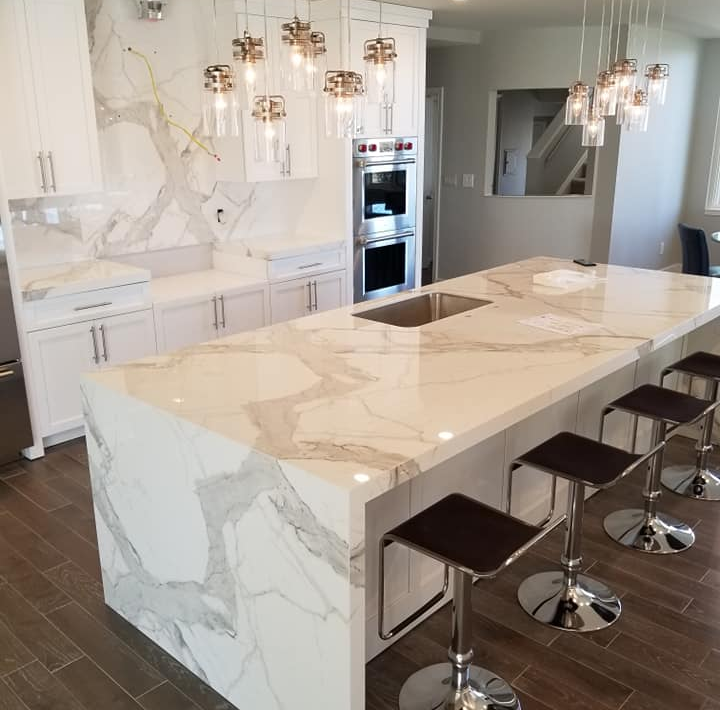
Credit: www.lemarbleandgranite.com
Comparing Quartz To Other Countertop Materials
To understand quartz’s heat resistance, it helps to compare it to other common countertop materials.
| Material | Heat Resistance | Maintenance | Typical Issues |
|---|---|---|---|
| Quartz | Low to Moderate (up to 150°F) | Low | Discoloration, surface burns |
| Granite | High (up to 1200°F) | Medium (needs sealing) | Stains if unsealed, chips |
| Marble | Low to Moderate (up to 180°F) | High (easily scratched) | Etching, stains, burns |
| Laminate | Low (up to 150°F) | Low | Melting, bubbling |
| Solid Surface (e.g., Corian) | Low (up to 212°F) | Low | Burns, scratches |
As you can see, quartz is more heat-resistant than laminate or solid surface, but less than granite. It’s important to understand where quartz stands before choosing how to use it in your kitchen.
Manufacturer Guidelines On Heat And Quartz
All major quartz countertop brands offer clear guidelines about heat. While the numbers may vary a bit, the message is the same: Do not place hot cookware directly on quartz.
Common Manufacturer Recommendations
- Use trivets or hot pads under all hot pans or appliances.
- Avoid sudden temperature changes (for example, don’t take something from the freezer and put it directly on the counter, then add heat).
- Do not use quartz as a cutting surface for hot pots, electric skillets, or roasting pans.
Brand Examples
- Caesarstone: Direct contact with very hot pots may cause damage. Always use a hot pad.
- Silestone: Sudden temperature changes can cause cracks. Use trivets.
- Cambria: Hot cookware can damage the surface. Protection is necessary.
If you ignore these instructions and damage your countertop with heat, the warranty usually does not cover the repair.
What Types Of Heat Can Damage Quartz?
It’s not just pans that can cause problems. Other heat sources can also damage quartz countertops.
Types Of Dangerous Heat
- Oven trays and baking sheets
- Slow cookers or instant pots (these can get hot at the base)
- Toasters and toaster ovens
- Hair styling tools (in bathrooms)
- Electric grills or skillets
Anything that gets hot enough to be uncomfortable to touch could risk damaging your quartz. Leaving a hot appliance running for a long time on the same spot can also cause heat buildup, even if the appliance is not as hot as a pan.
What Does Heat Damage On Quartz Look Like?
Not all heat damage is obvious right away. Sometimes, the signs appear slowly over time.
Signs Of Heat Damage
- White spots or rings where hot objects sat
- Yellowing or brown marks under appliances
- Cracked or crazed areas (like tiny spiderweb cracks)
- Dull, rough, or blistered finish
These marks usually do not come out with cleaning. They are permanent changes to the resin that binds the quartz.
Credit: www.reddit.com
Can You Repair Heat Damage On Quartz?
One common question is whether heat damage can be fixed. Unfortunately, most heat marks on quartz are permanent.
What Are Your Options?
- Surface Polishing: Very light surface marks (slight dullness) may be improved by a professional using fine abrasives and polishing compounds. This works only for shallow damage.
- Professional Restoration: For deep burns, discoloration, or cracks, the only real solution is to replace the affected section of quartz. This can be expensive and may leave a visible seam.
- DIY Fixes: Home remedies like baking soda, lemon, or vinegar do not work. They can even make the damage worse or etch the surface.
If heat damage is small and not very noticeable, you may choose to live with it. But for larger or obvious marks, repair usually means replacement.
How To Protect Quartz Countertops From Heat
The good news is that quartz countertops are easy to protect. A few simple habits will keep them looking great for years.
Best Practices
- Always use a trivet or hot pad under hot pans, pots, or appliances.
- Let hot cookware cool for a few minutes before placing it on the counter.
- Avoid leaving hot appliances (like slow cookers or toasters) running on the counter for long periods.
- Educate family members and guests about not placing hot items directly on quartz.
- Use cutting boards when preparing food, especially if you are working with both hot and cold items.
Choosing The Right Protection
Not all trivets are the same. Here’s a quick guide:
| Trivet Material | Heat Resistance | Best Use |
|---|---|---|
| Silicone | Up to 450°F | Pans, baking sheets |
| Wood | Up to 350°F | Dishes, moderate heat |
| Cork | Up to 300°F | Plates, light pans |
| Metal with rubber feet | Up to 500°F | Very hot cookware |
| Ceramic | Up to 500°F | Oven trays, grill pans |
Choose trivets that match your cooking style. If you use cast iron pans or baking stones, pick high-heat options.
Common Myths About Quartz And Heat
There are many misunderstandings about quartz countertops and heat. Let’s clear up a few of the most common myths.
Myth 1: “quartz Is Stone, So It’s Heatproof”
Quartz is mostly stone, but the resin binder is not. This means it does not have the same heat resistance as granite or concrete.
Myth 2: “a Quick Rest Won’t Hurt”
Even a few seconds with a hot pan can cause a white ring or burn. Damage happens quickly, not just with long exposure.
Myth 3: “if It Didn’t Break, It’s Fine”
Sometimes, heat damage does not show up for days or weeks. The color change or crack can develop slowly.
Myth 4: “warranties Cover Everything”
Most quartz warranties do not cover heat damage. Always check your warranty before assuming you are protected.
Expert Tips For Long-lasting Quartz Surfaces
Here are a few expert-level insights that many new quartz owners miss:
- Beware of Overhanging Appliances: Appliances like slow cookers can heat the countertop below even if the feet are small. Place a trivet under the whole appliance, not just the feet.
- Watch Out for Sunlight: Quartz can discolor over time if exposed to strong sunlight and heat together. Keep curtains closed during the hottest part of the day.
- Don’t Use Boiling Water for Cleaning: Some people pour boiling water directly on countertops to clean spills. This can cause resin damage. Use warm, soapy water instead.
- Consider Countertop Placement: If your kitchen design puts quartz near a stove, consider using a strip of stainless steel or a built-in trivet in that area.
- Never Iron Clothes on Quartz: This may sound strange, but some people use the counter as an ironing surface. The heat from an iron can burn the resin quickly.
What To Do If You Accidentally Put A Hot Pan On Quartz
Mistakes happen. If you accidentally place a hot pan on your quartz countertop, act quickly.
Immediate Steps
- Remove the pan immediately.
- Cool the area with a damp (not soaking wet) towel. Do not use ice, as sudden cooling can cause cracks.
- Check for damage once the area is cool. Look for color changes, cracks, or dull spots.
- Contact a professional if you see damage. Sometimes early intervention can prevent the problem from spreading.
Even if you do not see damage right away, watch the area over the next few days. Some changes take time to appear.
Is Quartz A Good Choice For Kitchens?
Even with its heat limits, quartz remains a top choice for busy kitchens. Here’s why:
- Stain resistance: Quartz is non-porous, so it doesn’t stain easily.
- Scratch resistance: It’s harder than most other countertop materials.
- Easy cleaning: Mild soap and water are enough for daily care.
- Variety of styles: Many colors and patterns are available.
If you follow simple rules about heat, quartz can last for decades and stay beautiful.
Real Homeowner Experiences
Let’s look at some experiences from real users.
- Megan, Ohio: “I put a hot coffee pot on our quartz counter, and after a few days, a light ring appeared. It’s not huge, but it does bother me. Now, I always use a pad.”
- Daniel, California: “We have three kids and lots of cooking. After one year, the only marks on our quartz are from heat. All other stains wipe off easily. I wish I’d been more careful.”
- Susan, Texas: “Our installer warned us about hot pans. We bought metal trivets for every counter area. No issues after three years.”
These stories show that with a little care, you can avoid the most common problems.
The Science Behind Quartz Heat Resistance
Quartz is one of the hardest minerals, rated 7 out of 10 on the Mohs scale. The quartz crystals themselves can handle temperatures up to 1,100°F (593°C). However, the resin binder starts to break down at much lower temperatures.
- Resin melting point: Around 150°F to 180°F (65°C to 82°C)
- Resin starts to discolor: As low as 140°F (60°C)
- Pan from oven: 350°F (177°C) or more
Because heat damage occurs in the resin layer, even though the quartz is unaffected, the countertop is still ruined.
How Does Quartz Compare To Granite For Heat?
Many people choose between quartz and granite. Here’s a quick side-by-side look at their heat resistance.
| Feature | Quartz | Granite |
|---|---|---|
| Max Safe Temperature | ~150°F (65°C) | Up to 1200°F (650°C) |
| Direct Hot Pan Safety | Not Safe | Generally Safe |
| Common Damage | Discoloration, cracks | Chips, stains (if unsealed) |
| Maintenance Needs | Low | Medium (needs sealing) |
Granite is more heat-resistant, but quartz is easier to clean and does not need sealing.
Non-obvious Insights For Quartz Owners
Many new quartz owners miss these important details:
- Appliance Placement Matters: Place slow cookers, air fryers, and toasters on a wooden or silicone board to prevent gradual heat buildup.
- Color Makes a Difference: Lighter quartz colors may show heat marks more than darker ones. If you want to minimize the risk of visible marks, choose a medium or dark shade.
- Edge Profiles Are Vulnerable: The edges of quartz counters are more likely to crack from thermal shock. Avoid placing hot items near the edge or overhanging surfaces.
Environmental Impact Of Quartz And Heat Damage
Quartz countertops are designed to last. But if you damage your countertop with heat and need to replace a section, it can create waste. Large sections of quartz cannot be recycled easily. This is another reason to protect your investment with careful use.
When To Call A Professional
If you notice any of these signs after heat exposure:
- Deep cracks
- Large discolored patches
- Surface feels rough or bubbled
Contact a countertop professional or the installer. Sometimes, early action can prevent further damage. Most installers can give advice on whether repair or replacement is possible.
Summary: Should You Put A Hot Pan On Quartz?
The simple answer: No, you should not put a hot pan directly on quartz countertops. The risk of permanent damage is high, and repair is difficult or impossible. Use trivets and hot pads every time, and teach everyone in your household to do the same.
Quartz offers many advantages, but it’s not indestructible. By understanding its limits and following best practices, you can enjoy beautiful, low-maintenance surfaces for years.
If you want more technical details or user guides, you can check trusted sources like Caesarstone.
Frequently Asked Questions
Can You Put A Hot Pan On Quartz Even For A Few Seconds?
No. Even a few seconds with a very hot pan can cause permanent discoloration or surface burns. Always use a trivet or hot pad, no matter how short the time.
What Temperature Can Quartz Countertops Handle Safely?
Quartz countertops are generally safe up to 150°F (65°C). Most cookware from the oven or stove is much hotter than this. Anything above this temperature can cause damage.
Is Heat Damage Covered Under Quartz Countertop Warranties?
Most manufacturers do not cover heat damage under warranty. Always read the warranty details. Damage from hot pans is usually considered user error, not a manufacturing defect.
How Do You Fix Heat Marks On Quartz?
Most heat marks, such as white or yellow spots, are permanent. A professional may improve minor surface dullness, but deep discoloration or cracks require replacing the damaged section.
What Should You Do If You Accidentally Put A Hot Pan On Quartz?
Remove the pan right away and cool the area gently with a damp towel. Watch for color changes or cracks over the next days. If you see damage, contact a professional for advice.
With the right care, quartz countertops can look great and last a lifetime. Remember: a little prevention saves a lot of trouble.

Credit: www.reddit.com