
Are Calphalon Pans Oven Safe
When you invest in quality cookware, you want it to do more than just sit on your stovetop. Many home cooks wonder if their pans can move from the stove into the oven. Calphalon pans are popular in kitchens around the world, known for their durability, stylish look, and even heating. But the question remains: are Calphalon pans oven safe? Understanding this can help you cook better and protect your investment. This guide gives you everything you need to know—practical advice, key details, and insights most people miss.
Understanding Calphalon Cookware
Calphalon is a respected brand in the cookware industry. They offer a wide range of products: nonstick pans, stainless steel sets, ceramic cookware, and more. Each line is designed for different cooking needs and budgets. Some use advanced hard-anodized aluminum for strength, while others focus on nonstick performance.
What makes Calphalon stand out is their commitment to innovation. Many of their pans have features like stay-cool handles, pour spouts, and tempered glass lids. But not all lines are built the same, especially when it comes to oven safety.
What Does “oven Safe” Mean?
When a pan is called “oven safe,” it means you can put it in the oven without causing damage to the pan, its handle, or any nonstick coating. But oven safety is not a simple yes or no. It depends on:
- The maximum temperature the pan can handle
- The type of materials used (body, handle, lid)
- The manufacturer’s guidelines
Using a pan beyond its safe temperature can cause warping, handle melting, or nonstick coating breakdown. This is why it’s important to know the limits of your cookware.
Types Of Calphalon Pans And Oven Safety
Calphalon offers several main types of pans. Not all are equally oven safe, and the safety limit varies by line. Here’s how the main Calphalon lines compare:
| Calphalon Line | Main Material | Oven Safe Max Temp | Handle Type | Lid Type |
|---|---|---|---|---|
| Classic Nonstick | Hard-Anodized Aluminum | 450°F | Stainless Steel | Tempered Glass |
| Premier Nonstick | Hard-Anodized Aluminum | 450°F | Stainless Steel | Tempered Glass |
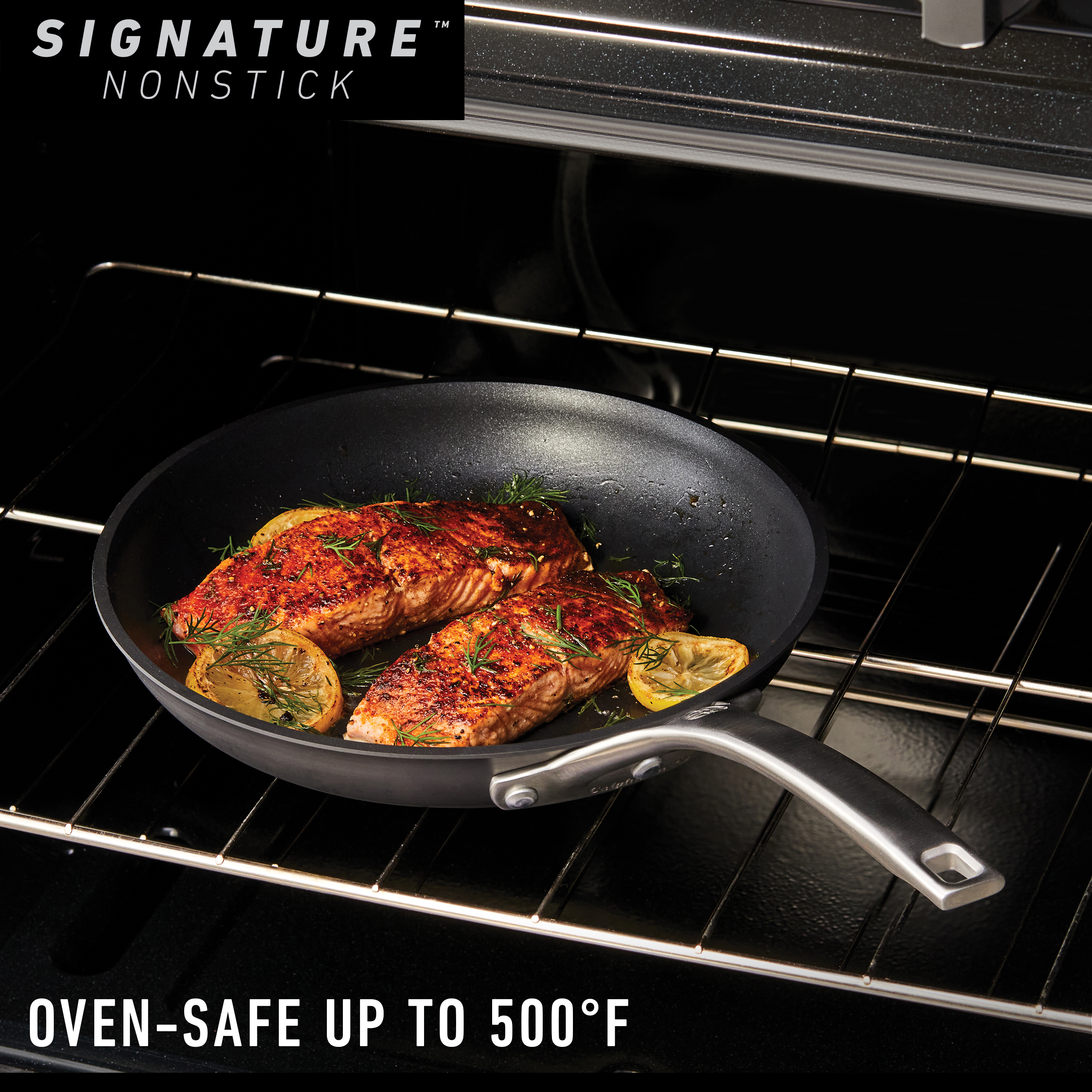
| Signature Nonstick | Hard-Anodized Aluminum | 500°F | Stainless Steel | Tempered Glass |
| Contemporary Nonstick | Hard-Anodized Aluminum | 450°F | Stainless Steel | Tempered Glass |
| Stainless Steel | Stainless Steel | 500°F | Stainless Steel | Stainless Steel/Tempered Glass |
| Ceramic Nonstick | Ceramic/Aluminum | 400°F | Bakelite | Tempered Glass |
| Unison Nonstick | Hard-Anodized Aluminum | 500°F | Stainless Steel | Tempered Glass |
These numbers come from the official Calphalon care guidelines. Always check your specific pan’s manual, as some older models have different limits.
What Makes A Calphalon Pan Oven Safe?
Core Materials
The main body of most Calphalon pans is made from hard-anodized aluminum or stainless steel. These materials are designed to withstand high temperatures. Hard-anodized aluminum is especially popular because it combines strength with excellent heat distribution.
Handle Construction
Handles are usually made from stainless steel. These are oven safe and can handle the same high temperatures as the pan itself. However, some Calphalon pans use Bakelite or rubberized handles. These cannot handle as much heat—usually up to 350°F or 400°F. Always check the handle type before using your pan in the oven.
Lid Material
Lids are often the weak point. Most Calphalon lids are tempered glass. They are oven safe, but usually only up to 450°F. If your pan can go up to 500°F but the lid can’t, you must remove the lid or risk breakage. Some sets use stainless steel lids, which can handle higher heat.
Maximum Oven Temperatures By Calphalon Line
To make it easier to check, here’s another comparison of maximum oven temperatures for popular Calphalon lines:
| Calphalon Series | Max Oven Temp | Notes |
|---|---|---|
| Classic Nonstick | 450°F | Glass lids up to 450°F |
| Signature Nonstick | 500°F | Glass lids up to 450°F |
| Premier Nonstick | 450°F | Glass lids up to 450°F |
| Stainless Steel | 500°F | Glass lids up to 450°F |
| Ceramic Nonstick | 400°F | Bakelite handles; glass lids up to 400°F |
One non-obvious detail: the oven-safe temperature is set by the weakest material—often the handle or lid, not the pan body.
How To Tell If Your Calphalon Pan Is Oven Safe
If you’re unsure about your specific pan, here are steps to check:
- Read the bottom: Most Calphalon pans have oven-safe info stamped on the bottom.
- Check the manual: The product guide often lists oven safety details.
- Visit the Calphalon website: Manuals and FAQs for each product are online.
- Look at the handle: Stainless steel is usually oven safe to higher temps. Plastic or rubber handles are not.
- Inspect the lid: Tempered glass is oven safe to 400°F–450°F. If it’s plastic or has a plastic knob, it’s not oven safe.
If you still can’t find the answer, it’s safest to use the pan only on the stovetop or contact Calphalon customer support.
Common Calphalon Pan Uses In The Oven
Calphalon pans are versatile because they move easily from stovetop to oven. Here are some common ways people use them:
- Searing meat on the stove, then finishing in the oven
- Baking frittatas, cornbread, or casseroles in a skillet
- Broiling (only if the pan and handle are safe for broiler use)
- Roasting vegetables in a shallow pan
A practical tip: Preheat your oven fully before placing your Calphalon pan inside. Sudden temperature changes can cause warping, especially for aluminum pans.
What About Nonstick Calphalon Pans?
Many Calphalon pans use a nonstick coating. These are oven safe, but only up to a point. Overheating nonstick surfaces can cause:
- Fumes that are unhealthy
- Surface breakdown, making the pan less effective
- Warping or discoloration
Never use nonstick Calphalon pans under the broiler. Broilers can reach 550°F–700°F, much higher than the safe limit for nonstick coatings.

Credit: www.amazon.com
Can Calphalon Lids Go In The Oven?
This is a common source of confusion. Most Calphalon glass lids are oven safe up to 450°F. Stainless steel lids are generally safe up to 500°F. If your recipe needs higher heat, use aluminum foil instead.
Never use lids with plastic knobs or details in the oven. They can melt or release chemicals.
Practical Tips For Using Calphalon Pans In The Oven
Making the most of oven-safe cookware is about more than just temperature. These tips will help you protect your pans and get better results:
- Avoid sudden temperature changes: Don’t move a hot pan straight from the oven to a cold surface or water.
- Use oven mitts: Handles will get extremely hot, even if they are designed to stay cool on the stovetop.
- Don’t exceed the recommended temperature: Even for a short time, overheating can damage your pan.
- Keep lids in mind: If your recipe needs higher heat, leave the lid off or cover with foil.
- Clean after cooling: Let the pan cool before washing to avoid warping and protect the nonstick surface.
What Happens If You Use Calphalon Pans Above Safe Temperatures?
If you accidentally exceed the oven-safe temperature, several things can happen:
- Handles can melt or loosen: Especially with plastic or rubber.
- Nonstick coating may degrade: Leading to sticking and possible fumes.
- Glass lids may shatter: Tempered glass can break if overheated.
- Pan warping: Aluminum pans may bend out of shape.
If you notice any damage, stop using the pan in the oven and contact Calphalon for advice. Using a damaged pan can be dangerous.
Calphalon Pans Compared To Other Brands For Oven Safety
Many people choose Calphalon because of its reputation for durability. But how does it compare to other leading brands for oven use? Here’s a quick look:
| Brand | Material | Max Oven Temp | Notes |
|---|---|---|---|
| Calphalon Signature | Hard-Anodized Aluminum | 500°F | Glass lids up to 450°F |
| All-Clad D3 | Stainless Steel | 600°F | Stainless steel lids |
| GreenPan Valencia | Ceramic Nonstick | 600°F | Stainless steel handles |
| T-fal Ultimate | Hard-Anodized Nonstick | 400°F | Bakelite handles |
| Cuisinart Chef’s Classic | Stainless Steel | 500°F | Glass lids up to 350°F |
One insight: Some premium stainless steel pans from other brands can handle higher oven temperatures (up to 600°F), but few nonstick pans go above 500°F. Calphalon’s Signature line is competitive, but always check the handle and lid materials.
Credit: www.calphalon.com
Non-obvious Insights Most People Miss
- Many people forget about the oven rack position. Keeping your pan too close to the heating element (especially in gas ovens) can expose handles and lids to higher temperatures than the oven setting. Always use the middle rack for even heating.
- Residual heat matters. Even if you turn off the oven, pans and lids can keep absorbing heat if left inside. Remove them promptly to avoid accidental overheating.
Caring For Calphalon Pans After Oven Use
Proper care extends the life of your pans:
- Let the pan cool before washing: Sudden cooling can warp aluminum or damage nonstick coatings.
- Hand wash is best: Although some pans are dishwasher safe, hand washing is gentler on coatings and keeps the finish looking new.
- Inspect for damage: Look for cracks, chips, or loose handles after heavy oven use.
- Avoid metal utensils: These can scratch nonstick surfaces, making the pan less safe for oven and stovetop use.
Broiling With Calphalon Pans: Is It Safe?
Broiling is a different story. Most Calphalon nonstick pans are not safe for broiler use. Broilers can reach much higher than 500°F, which will damage nonstick coatings and plastic handles. Only stainless steel pans without any nonstick or plastic parts should be used under the broiler, and even then, check the manufacturer’s recommendation.
What About Induction Cooking And The Oven?
Many newer Calphalon lines are induction compatible. This means they have a magnetic base, often stainless steel. Induction compatibility has no impact on oven safety—the maximum oven temperature is still set by the handle and lid materials.

Credit: www.amazon.com
When Should You Replace Your Calphalon Pan?
If you notice the following after oven use, it may be time for a new pan:
- Loose or wobbly handles
- Chipped or peeling nonstick coating
- Deep scratches or dents
- Warped bottom that no longer sits flat
Cooking with damaged pans is risky because of possible chemical release or uneven heating. Calphalon sometimes offers warranties or replacements for manufacturing defects—check your product manual for details.
Environmental Considerations: Safe Disposal
If your Calphalon pan is no longer oven safe, don’t just throw it in the trash. Many city recycling programs accept metal cookware. Remove any plastic or rubber parts first. For nonstick pans, check local guidelines—they often require special handling. For more on recycling cookware, see the EPA’s guidance at EPA Recycle.
Real-life Examples: Using Calphalon Pans In The Oven
Sarah, a home cook from Chicago, uses her Calphalon Premier Nonstick skillet to make frittatas every weekend. She starts on the stove, then finishes in the oven at 400°F. After years of use, her pan’s nonstick coating still looks new—because she never exceeds the recommended temperature and always lets it cool before washing.
John, a busy parent, accidentally put his Calphalon Ceramic pan under the broiler. The handle melted, and the nonstick surface discolored. He learned the hard way that ceramic pans and broilers don’t mix.
These examples show that following the correct oven-safe limits really matters.
How To Read Calphalon Product Labels For Oven Safety
Every Calphalon pan comes with a label or manual. Look for these details:
- “Oven Safe to ___°F” (the blank is the maximum temperature)
- “Not for Broiler Use”
- “Lid oven safe to ___°F”
- Handle material (stainless steel, silicone, Bakelite)
If the label is missing, check the Calphalon website or contact support with your model number.
Upgrading To Newer Calphalon Lines
Older Calphalon pans sometimes have lower oven-safe temperatures, especially if they use rubber or plastic handles. Newer lines focus on all-metal construction and higher limits. Upgrading can give you more flexibility in the kitchen and better safety.
When shopping for a new Calphalon pan, focus on:
- Handle and lid material (for higher oven safety)
- Nonstick quality (for easy cleaning, but watch oven limits)
- Warranty coverage (for peace of mind)
Summary: Are Calphalon Pans Oven Safe?
The answer is clear: Most Calphalon pans are oven safe, but the temperature limit depends on the specific line, handle, and lid material. Nonstick pans usually max out at 450–500°F, while stainless steel can go higher. Always check your pan’s guidelines, avoid broiling nonstick surfaces, and use care when moving pans from oven to countertop.
This knowledge lets you cook more confidently—baking, roasting, and searing with the right pan every time.
Frequently Asked Questions
Are All Calphalon Pans Oven Safe?
Not every Calphalon pan is oven safe. Most are, but the safe temperature depends on the pan’s line and materials. Always check the handle and lid for oven-safe details before use.
Can I Use Calphalon Nonstick Pans Under The Broiler?
No. Calphalon nonstick pans should not be used under the broiler. The high heat can damage the nonstick coating and handles, causing fumes and warping.
How Do I Know The Oven-safe Temperature For My Calphalon Pan?
Check the bottom of your pan, the manual, or the Calphalon website. The oven-safe temperature is usually marked clearly, but if not, contact Calphalon with your model number.
Is It Safe To Put Calphalon Glass Lids In The Oven?
Yes, most Calphalon tempered glass lids are oven safe up to 450°F. Never use them over this temperature, and avoid broiling. If your lid has plastic parts, do not use it in the oven.
What Should I Do If My Calphalon Pan Gets Damaged In The Oven?
Stop using the pan for oven cooking. Check your warranty and contact Calphalon for advice. Damaged pans can be unsafe and may need to be replaced.
Calphalon pans make cooking easier and more flexible, but using them safely in the oven is key. With the right knowledge, you can enjoy oven-to-table meals without worry.